Office Writing Paper Roll
CN → USProduct Images
AI Analysis
📄 Office Writing Paper Roll (Ream Paper in Roll Form)
🌐 HS Code Reference & Customs Clearance Guide | 2026 Latest Tariff Analysis | Professional Clearance Strategy 📌 1. Product Definition & Classification: What exactly is "Paper Roll"?
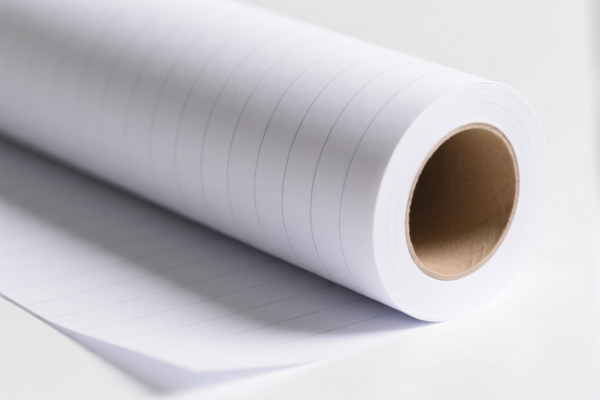
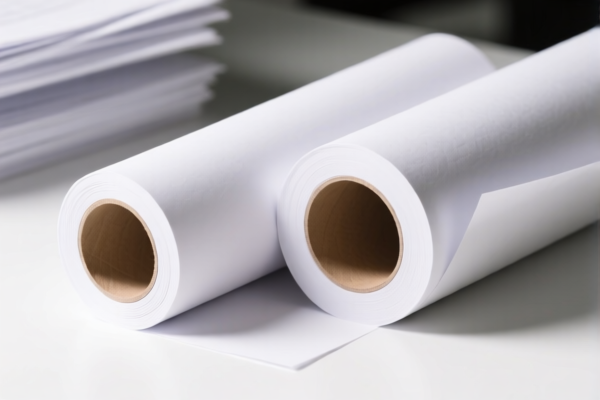
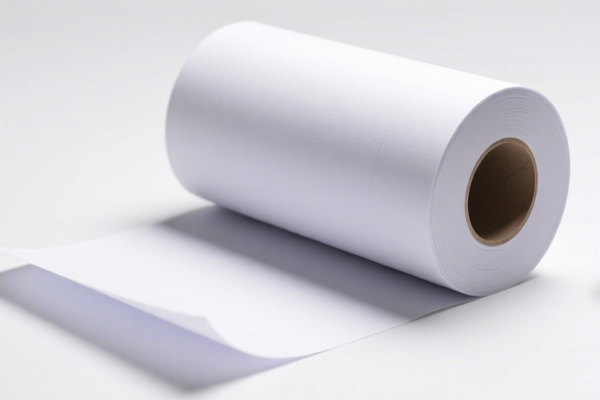
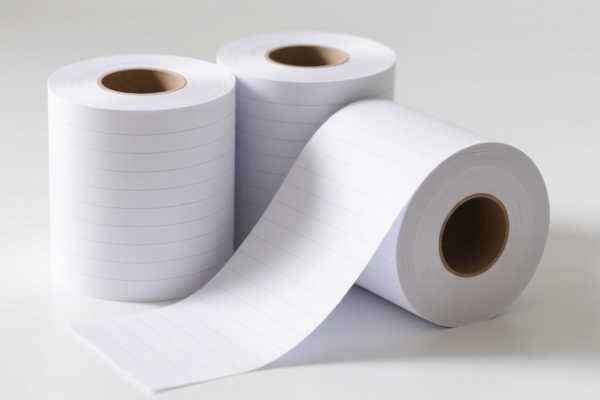
"Office Writing Paper Roll" typically refers to continuous-feed paper used in dot-matrix printers, thermal printers, or legacy office equipment. However, the classification depends heavily on the paper grade, weight, and intended use. It is distinct from standard sheets (which are cut to size) and thermal receipt paper (which has a chemical coating).
Key Distinctions: * Standard Writing Paper (Bond/Offset): Plain white paper, usually >60gsm, used for general writing or dot-matrix printing. → HS 4802 * Thermal Paper (Receipt/Label): Paper with a heat-sensitive coating. → HS 4821 or 4811 (depending on whether it’s in rolls for specific machines). * Newsprint: Low-quality, yellowish paper often used in bulk rolls for newspapers or low-cost office printing. → HS 4802.5 or 4802.61
⚠️ Critical Classification Point: * If the paper is plain white, uncoated, and intended for office writing/printing → It falls under Chapter 48, Heading 4802. * If the paper is thermal (turns black when heated) → It falls under Heading 4811 (coated paper) or 4821 (paper labels), depending on width and backing. * If it is newsprint (greyish, low quality) → It falls under Heading 4802.5.
📦 2. HS Code Classification Details (2026 Latest Tariff Authority)
| HS Code | Product Description | Applicable Scenario | Coating/Type |
|---|---|---|---|
| 4802.56.00.00 | Other paper, singly sided with one side completely coated after printing, in rolls | Uncommon for standard writing; usually printed materials. | Coated |
| 4802.61.20.00 | Other paper, uncoated, weighing >40g/m² but ≤150g/m², in rolls | Most common for standard office bond paper in roll form (e.g., dot-matrix paper). | Uncoated |
| 4802.61.40.00 | Other paper, uncoated, weighing >40g/m² but ≤150g/m², in rolls (specific sub-category) | General purpose writing paper, rolls. | Uncoated |
| 4811.41.00.00 | Thermal paper, in rolls or sheets, <61cm width | Thermal receipt paper, invoice paper, fax paper. | Thermal Coated |
| 4821.10.00.00 | Paper or paperboard labels, whether or not printed | Thermal labels, adhesive labels in rolls. | Adhesive/Label |
🔍 Key Reminder: * Standard Office Paper in Rolls (white, uncoated, >40gsm) is almost always 4802.61.20.00 or 4802.61.40.00. * Thermal Paper is NOT 4802. It is 4811.41.00.00. Misclassification here leads to significant tariff differences. * If the roll is cut to size (sheets), it falls under 4802.55/4802.56, but the prompt specifies "Roll," so 4802.61 is the primary focus.
💰 3. 2026 Latest Tariff Rate Details (Including Surcharges, Policy Add-ons)
✅ Applicable Country: United States (US) ✅ Country of Origin: China (CN) ✅ Effective Date: From November 10, 2025 (including subsequent imports)
🎯 1. 4802.61.20.00 & 4802.61.40.00 —— Uncoated Paper, Writing, in Rolls (Standard Office Paper)
| Item | Content |
|---|---|
| Base Rate | 0% (ad valorem) |
| USITC Surcharge | +25% (from USITC Footnote 9903.88.01 - 301 Tariffs) |
| IEEPA Surcharge | +10% (针对中国/香港产品,自2025年11月10日起) |
| Total Rate | 35% |
| Tax Calculation | CIF Value × 35% |
| De Minimis Eligibility | ❌ No (deny_de_minimis for paper products from China under 301) |
| Legal Basis Path | IEEPA:9903.01.25 → IEEPA:9903.01.24 → USITC:4802.61.20.00 → FOOTNOTE:9903.88.01 |
📌 Explanation: * "USITC Surcharge 25%" comes from Section 301 of the Trade Act. * "IEEPA 10%" is the emergency tariff on Chinese products. * Total 35%: This is a high tariff for paper products. Paper is considered a basic commodity, and while the base rate is 0%, the political tariffs are steep. * No De Minimis: Under $800 shipments from China are not exempt from these specific tariffs for paper products.
🎯 2. 4811.41.00.00 —— Thermal Paper, Rolls (Receipt/Invoice Paper)
| Item | Content |
|---|---|
| Base Rate | 0% (ad valorem) |
| USITC Surcharge | +25% (301 Tariffs apply to coated paper products) |
| IEEPA Surcharge | +10% |
| Total Rate | 35% |
| Tax Calculation | CIF Value × 35% |
| De Minimis Eligibility | ❌ No |
| Legal Basis Path | IEEPA:9903.01.25 → IEEPA:9903.01.24 → USITC:4811.41.00.00 → FOOTNOTE:9903.88.01 |
📌 Note: * Thermal paper is treated similarly to other paper products under 301 tariffs. * Even if the base rate is 0%, the 35% total applies.
🛠️ 4. Customs Clearance Practical Advice (Battle-Tested Pitfall Guide)
✅ 1. Documentation Checklist (Must-Haves)
| Document | Required | Description |
|---|---|---|
| ✅ Product Specification Sheet | ✔️ | Must specify: GSM (Grams per Square Meter), Width, Length, Type (Thermal vs. Plain), Material (Wood Pulp/Synthetic). |
| ✅ Certificate of Origin (CO) | ✔️ | To prove Country of Origin. If not CN, check for FTZ benefits. |
| ✅ Commercial Invoice | ✔️ | Must clearly state "Rolls of Paper," not "Paper Sheets." |
| ✅ FSC Certificate (Optional but Recommended) | ✔️ | Shows sustainable sourcing; helps with customs scrutiny on wood products. |
| ✅ Packaging List | ✔️ | Detail number of rolls, core size, packaging type. |
✅ 2. Declaration Tips (Key Mantra)
🔥 “Correct Type, Right Weight, No Thermal Confusion!”
| Scenario | Correct Declaration | Wrong Practice |
|---|---|---|
| Standard White Paper in Rolls | 4802.61.20.00 (Uncoated, Writing) |
Call it "Printing Paper" without GSM → Delayed Inspection |
| Thermal Receipt Paper | 4811.41.00.00 (Thermal, <61cm) |
Call it "Office Paper" → Wrong HS Code, 35% vs. Potential Different Rate |
| Newsprint Rolls | 4802.51.00.00 (Newsprint, <50gsm) |
Call it "Bond Paper" → Higher Tariff Risk |
| Paper in Sheets | 4802.55/56 (Not rolls) |
Declare as Rolls → Misdeclaration |
✅ 3. Special Cases
| Scenario | Handling Advice |
|---|---|
| Thermal Paper with Adhesive | Classify as 4821.10.00.00 (Labels), not 4811. |
| Paper Coated with Clay (Art Paper) | Classify as 4810.22/24 (Coated paper), not 4802. |
| Import from Vietnam/Mexico | Check USMCA or FTA benefits. If originating from these countries, tariffs may be 0%. Provide valid Origin Certificate. |
| Sample Shipments (De Minimis) | Even if under $800, if declared as Paper from China, 301 tariffs still apply. Do not rely on $800 exemption for paper products from CN. |
🌍 5. Global Main Market Clearance Comparison (2026 Latest)
| Country/Region | Recommended HS Code | Tariff (CN Origin) | Certification Requirements | Notes |
|---|---|---|---|---|
| 🇺🇸 USA | 4802.61.20.00 |
35% (25% + 10%) | FSC (Recommended) | High tariff; strict 301 enforcement. |
| 🇨🇳 China | 4802.61.20.00 |
5% | None | Low tariff for domestic trade. |
| 🇪🇺 EU | 4802.56 or 4802.61 |
6.5% | FSC, REACH | No 301-equivalent, but standard MFN applies. |
| 🇦🇺 Australia | 4802.61 |
5% | None | Low tariff, simple clearance. |
| 🇯🇵 Japan | 4802.61 |
0% | JIS | Free trade agreement (JPEPA) may apply if certified. |
📌 Conclusion: * USA is the most challenging market for Chinese paper products due to the 35% total tariff. * EU, Australia, Japan have lower or no tariffs, making them more cost-effective destinations for Chinese paper exports.
📌 6. Common Errors & Pitfalls (Lessons Learned)
❌ Error 1: Declaring Thermal Paper as 4802 (Standard Paper)
👉 Consequence: Customs may reclassify, impose additional penalties, and delay clearance. Thermal paper has different chemical regulations (REACH in EU, Prop 65 in CA).
❌ Error 2: Not specifying GSM in documentation 👉 Consequence: Customs cannot determine if it’s Newsprint (<50gsm) or Writing Paper (>50gsm). Leads to higher duty assessment (conservative classification).
❌ Error 3: Assuming De Minimis ($800) applies to Paper 👉 Consequence: Paper products from China are excluded from the $800 exemption under Section 301. Full tariffs apply even for small shipments.
❌ Error 4: Using "Printing Paper" as the Description 👉 Consequence: Vague. Must specify "Uncoated, Writing Paper, Rolls, GSM, Width."
✅ Correct Declaration Example:
"ROLLS OF UNCOATED PAPER, WROUGHT FROM FIBERS, FOR WRITING/PRINTING, 80GSM, 210MM WIDTH, 500M LENGTH, HS 4802.61.20.00, MADE IN CHINA."
🎯 7. Conclusion: Precise Classification Saves Money!
🎯 Remember the Mantra:
🔹 "Paper in Rolls is 4802, Thermal is 4811, GSM Matters!" 🔹 "35% Tariff on CN Paper, No De Minimis, Plan Ahead!"
📌 Pro Tip:
If your paper rolls are originating from Vietnam, Thailand, or Malaysia, apply for Rules of Origin Certification to potentially reduce the 301 tariffs. For example, some ASEAN countries may have 0% or lower tariffs under US Trade Agreements.
📣 Immediate Action:
📞 Contact your freight forwarder + Provide GSM & Type (Thermal/Plain) + Verify Country of Origin 🚀 Clear Customs Smoothly, Avoid Penalties, Maximize Profit!
✨ Professional Clearance Starts with Accurate Classification! 💼 Every Penny Saved is a Penny Earned!
Customer Reviews
About HS Code Classification
The Harmonized System (HS) is an internationally standardized nomenclature developed by the World Customs Organization (WCO) to classify traded products. Over 200 countries use the HS system as the basis for customs tariffs, trade statistics, and import/export regulations.
Each HS code follows a hierarchical structure:
- Chapter (2 digits) — Broad category of goods (e.g., Chapter 84: Machinery and Mechanical Appliances)
- Heading (4 digits) — More specific grouping within the chapter
- Subheading (6 digits) — Internationally standardized breakdown, used by all WCO member countries
- National subdivisions (8-10 digits) — Country-specific extensions for further classification, such as US HTSUS 10-digit codes
Correct HS code classification is essential for smooth customs clearance, accurate duty payment, and compliance with trade regulations. Misclassification can lead to customs delays, overpayment of duties, or penalties.
When importing from CN to US, the applicable tariff rates may include:
- Most-Favored-Nation (MFN) rate — The standard duty rate applied to WTO members
- General rate — Applied to countries without trade agreements
- Trade remedy duties — Additional tariffs such as Section 301 (anti-dumping), Section 232 (national security), or countervailing duties
The information provided on this page is for reference purposes only. For official classification, please consult with your local customs authority or a licensed customs broker.