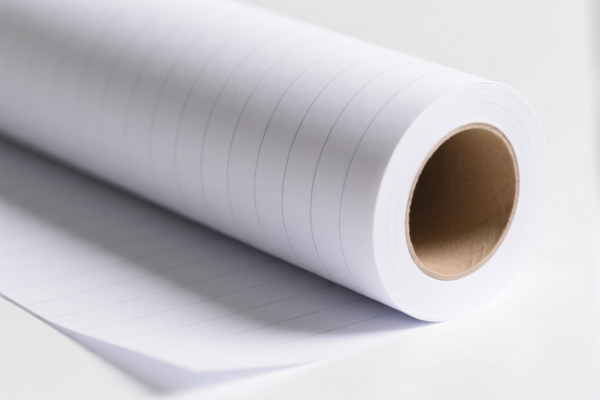
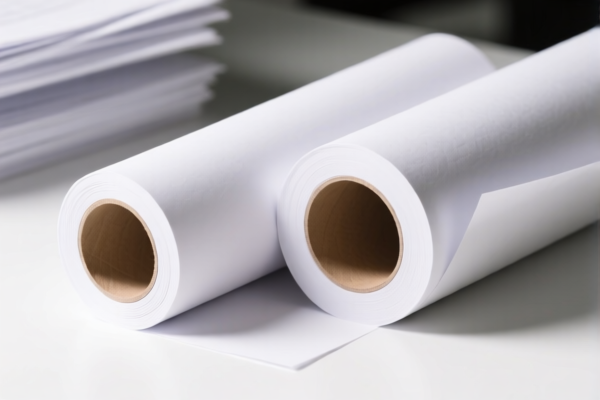
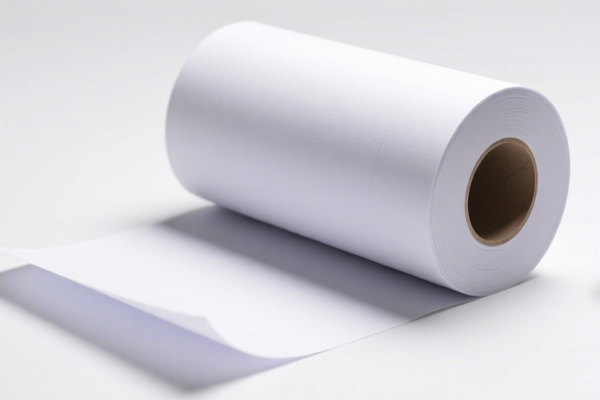
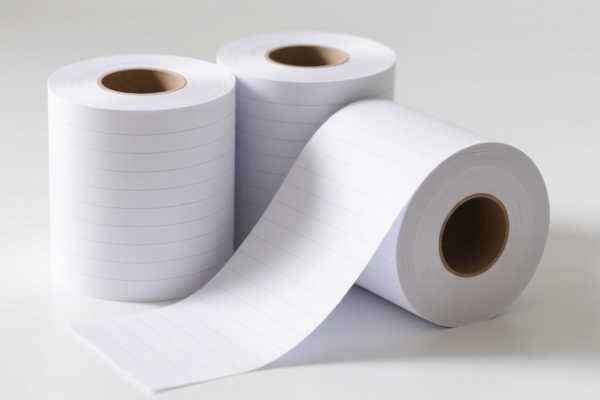
Office Writing Paper Rolls
CN → US| HS Code | Tariff Rate | Origin | Destination | Doc |
|---|---|---|---|---|
| 4802541000 | 35.0% | CN | US | Official Doc |
| 4802551000 | 35.0% | CN | US | Official Doc |
Product Images
AI Analysis
📜 Office Writing Paper Rolls (Uncoated Paper for Writing/Printing)
🌐 HS Code Reference & Customs Clearance Guide | 2026 Updated Tariff Analysis | Professional Entry Strategy
📌 1. Product Definition & Classification: What Exactly Are You Importing?
"Office Writing Paper Rolls" refers to uncoated paper and paperboard, specifically designed for writing, printing, or other graphic purposes. In international trade, these are categorized under Chapter 48 (Paper and Paperboard).
The critical distinction for customs clearance lies in the weight (basis weight) and the format (roll dimensions). Not all "paper rolls" are treated equally. They are primarily split into two categories based on grammage (grams per square meter, g/m²) and width.
⚠️ Key Classification Logic:
- Lightweight Paper (< 40 g/m²): Falls under specific width and sheet size rules.
- Standard/Medium Paper (40–150 g/m²): Includes writing paper, cover paper, etc.
- Mechanical Content: Must contain ≤10% fibers from mechanical/chemi-mechanical processes to qualify for these specific subheadings.
- Coating Status: Must be Uncoated. (If coated, it would fall under different headings like 4810 or 4811).
📦 2. HS Code Classification Details (2026 Latest Tariff Data)
Based on the provided data, there are two specific HS Codes applicable to office writing paper rolls, distinguished by weight and width/sheet size.
| HS Code | Product Description | Key Specifications | Typical Use Case |
|---|---|---|---|
4802.54.10.00 |
Uncoated paper for writing/printing, < 40 g/m² | Weight: < 40 g/m² Form: Rolls > 15 cm wide OR Sheets with one side > 36 cm and other > 15 cm |
Thin office paper, copy paper rolls, thermal paper bases (non-thermal specific), light-weight stationery |
4802.55.10.00 |
Uncoated paper for writing/printing, 40–150 g/m² | Weight: 40 g/m² to 150 g/m² Form: Rolls > 15 cm wide Type: Writing and cover paper |
Standard A4/Letter paper rolls, cardstock rolls, heavy-duty writing paper, covers |
🔍 Critical Checkpoints:
- Width Requirement: Both codes generally require the roll to exceed 15 cm in width (or specific sheet dimensions). Narrower rolls (e.g., receipt paper < 15 cm) may fall under different headings (e.g., 4802.69 or 4811).
- "Writing Paper": The description explicitly mentions "Writing and cover paper" for the 40–150 g/m² category. Ensure the paper is suitable for writing/graphics, not just industrial wrapping.
- Fiber Content: The paper must not contain more than 10% mechanical/chemi-mechanical fibers. If it’s wood-free (chemical pulp), it qualifies easily. If it’s mixed, proof of fiber content is required.
💰 3. 2026 Tariff Rate Breakdown (Including Additional Duties)
✅ Applicable Country: United States (US)
✅ Origin: China (CN)
✅ Effective Time: Current rates apply (as per data provided)
🎯 1. 4802.54.10.00 —— Uncoated Paper, < 40 g/m²
| Item | Detail |
|---|---|
| Base Tariff | 0.0% (Ad Valorem) |
| Additional Duty (Section 301/Trade War) | +25.0% |
| Total Effective Tariff | 25.0% |
| Tax Calculation | CIF Value × 25% |
| De Minimis Exemption (Section 321) | ❌ NOT APPLICABLE (Items under 301 are explicitly excluded from the $800 de minimis threshold for China-origin goods in most enforcement contexts, though legal nuances exist, high-risk importers should assume full duty). |
| Legal Basis | HTSUS 4802.54.10.00 + USITC Footnote 301 (25% surcharge) |
📌 Explanation:
- The base rate is 0%, meaning the product is considered non-sensitive in normal trade.
- However, due to geopolitical trade measures (Section 301), a 25% additional duty is applied to most Chinese-origin paper products.
- Total Cost Impact: A $10,000 shipment incurs $2,500 in duties. This is a significant cost factor.
🎯 2. 4802.55.10.00 —— Uncoated Paper, 40–150 g/m²
| Item | Detail |
|---|---|
| Base Tariff | 0.0% (Ad Valorem) |
| Additional Duty (Section 301/Trade War) | +25.0% |
| Total Effective Tariff | 25.0% |
| Tax Calculation | CIF Value × 25% |
| De Minimis Exemption (Section 321) | ❌ NOT APPLICABLE |
| Legal Basis | HTSUS 4802.55.10.00 + USITC Footnote 301 (25% surcharge) |
📌 Explanation:
- Identical tariff structure to the lightweight paper.
- The 25% surcharge is consistent across these paper headings from China.
- Total Cost Impact: A $10,000 shipment incurs $2,500 in duties.
🛠️ 4. Customs Clearance Practical Advice (Pitfall Avoidance Guide)
✅ 1. Required Documentation Checklist (Non-Negotiable)
| Document | Mandatory? | Purpose |
|---|---|---|
| Commercial Invoice | ✅ Yes | Must clearly state "Uncoated Writing Paper Rolls," HS Code, Weight (g/m²), and Roll Width. |
| Packing List | ✅ Yes | Detail net/gross weight, number of rolls, and dimensions of each roll. |
| Product Specification Sheet | ✅ Yes | Crucial: Must explicitly state: 1. Basis Weight (g/m²) – e.g., "80 g/m²" 2. Width (cm) – e.g., "Rolls 25 cm wide" 3. Fiber Content – e.g., "100% Chemical Pulp" or "≤10% Mechanical Fiber" 4. Coating Status – "Uncoated" |
| Certificate of Origin (CO) | ✅ Yes | Required to prove China origin (and thus subject to 25% duty). If transshipped, ensure no tariff evasion is suspected. |
| Bill of Lading / Air Waybill | ✅ Yes | Standard shipping documents. |
✅ 2. Declaration Tips (Golden Rules)
🔥 "Be Precise: Weight, Width, and Fiber!"
| Scenario | Correct Declaration | Incorrect Declaration | Consequence |
|---|---|---|---|
| Paper is 80 g/m² | HS 4802.55.10.00 |
Misdeclare as 4802.54.10.00 (<40g) |
Misclassification → Penalty + Back Duties |
| Rolls are 10 cm wide | May fall under 4802.69 or 4811 |
Declare as 4802.55.10.00 (>15cm) |
Rejection/Seizure → Width mismatch |
| Paper is Coated | HS 4810.xxxx or 4811 |
Declare as 4802.55.10.00 (Uncoated) |
Major Fraud → Heavy fines |
| High Mechanical Fiber (>10%) | Different subheading (e.g., 4802.61) |
Declare as 4802.55.10.00 |
Misclassification → Audit risk |
✅ 3. Special Case Handling
| Situation | Handling Advice |
|---|---|
| Mixed Widths in Shipment | If some rolls are <15 cm and others >15 cm, separate declarations are needed. Do not lump them under one HS Code unless all meet the criteria. |
| "Writing Paper" vs. "Newsprint" | Newsprint (fast printing paper) often has different rules. Ensure the paper is for "writing/graphic purposes" (higher quality) not just bulk newspaper printing (which may be heading 4801). |
| De Minimis ($800) Attempt | ⚠️ Warning: While small packages might physically enter under de minimis, CBP is actively targeting Section 301 items. If the value is high or the product is clearly China-origin paper, assume 25% duty is due. Do not rely on de minimis for commercial volumes. |
🌍 5. Global Market Comparison (2026 Outlook)
| Country/Region | Recommended HS Code | Base Tariff | Additional Duty (China) | Total Effective Rate | Notes |
|---|---|---|---|---|---|
| 🇺🇸 USA | 4802.54.10.00 / 4802.55.10.00 |
0% | +25% | 25% | High barrier due to trade war. |
| 🇨🇳 China (Import) | 4802.54.10.00 / 4802.55.10.00 |
Varies (often 5-10%) | 0% | 5-10% | Lower cost to import into China. |
| 🇪🇺 EU | 4802.54 / 4802.55 |
~6.5% | 0% (No Section 301) | ~6.5% | No additional punitive tariffs. |
| 🇬🇧 UK | 4802.54 / 4802.55 |
~6.5% | 0% | ~6.5% | Post-Brexit tariffs similar to EU base rates. |
📌 Conclusion:
- The USA is the most expensive market for Chinese-made writing paper rolls due to the 25% surcharge.
- EU and UK offer significantly lower entry costs (~6.5%).
- If targeting the US, consider supply chain diversification (e.g., sourcing from Vietnam or Malaysia) to avoid the 25% duty, provided the country of origin rules are strictly met.
📌 6. Common Mistakes & Pitfalls (Lessons Learned)
❌ Mistake 1: Ignoring the 15 cm width rule.
👉 Result: Customs rejects the declaration because narrow rolls (<15 cm) fall under different HS codes.
✅ Fix: Measure every roll. If <15 cm, reclassify.
❌ Mistake 2: Misstating Basis Weight (g/m²).
👉 Result: If you declare 80 g/m² but the paper is actually 50 g/m², you may underpay duties (if rates differ) or face audits for inconsistent product specs.
✅ Fix: Provide lab test results or manufacturer certificates confirming g/m².
❌ Mistake 3: Assuming De Minimis applies to all small shipments.
👉 Result: CBP seizure of "low-value" shipments that are actually large volumes of Section 301 goods.
✅ Fix: For commercial intent, pay the 25% duty. Do not risk seizure.
❌ Mistake 4: Not specifying "Uncoated".
👉 Result: If the paper is lightly coated (e.g., for better ink reception), it may be classified as coated paper (higher tariffs or different codes).
✅ Fix: Clearly state "Uncoated" on the invoice and spec sheet.
🎯 7. Conclusion: Professional Clearance for Paper Rolls
🎯 Key Takeaway:
🔹 "Weight & Width are King: <40g vs 40-150g defines the HS Code."
🔹 "25% Duty is Inevitable for China: Budget for Section 301 surcharge."
🔹 "Document Everything: Spec sheets must prove g/m², width, and fiber content."
📌 Pro Tip:
If you are importing into the USA, calculate the Total Landed Cost including the 25% duty. If your margin is thin, consider:
1. Transshipment: Legally sourcing from third countries (Vietnam, Thailand) with proper origin documentation.
2. Advance Ruling: Apply for a CBP Bind Ruling if your product specifications are borderline (e.g., width exactly 15 cm, or fiber content exactly 10%).
📣 Immediate Action:
📞 Verify Roll Dimensions & Weight before booking shipping.
📄 Prepare Spec Sheet highlighting "Uncoated," "g/m²," and "Width."
💰 Budget for 25% Duty on China-origin goods entering the US.
✨ Precision in Paper, Profit in Trade!
💼 Don’t let 25% duties eat your margin. Declare Right, Import Smart!
Customer Reviews
About HS Code Classification
The Harmonized System (HS) is an internationally standardized nomenclature developed by the World Customs Organization (WCO) to classify traded products. Over 200 countries use the HS system as the basis for customs tariffs, trade statistics, and import/export regulations.
Each HS code follows a hierarchical structure:
- Chapter (2 digits) — Broad category of goods (e.g., Chapter 84: Machinery and Mechanical Appliances)
- Heading (4 digits) — More specific grouping within the chapter
- Subheading (6 digits) — Internationally standardized breakdown, used by all WCO member countries
- National subdivisions (8-10 digits) — Country-specific extensions for further classification, such as US HTSUS 10-digit codes
Correct HS code classification is essential for smooth customs clearance, accurate duty payment, and compliance with trade regulations. Misclassification can lead to customs delays, overpayment of duties, or penalties.
When importing from CN to US, the applicable tariff rates may include:
- Most-Favored-Nation (MFN) rate — The standard duty rate applied to WTO members
- General rate — Applied to countries without trade agreements
- Trade remedy duties — Additional tariffs such as Section 301 (anti-dumping), Section 232 (national security), or countervailing duties
The information provided on this page is for reference purposes only. For official classification, please consult with your local customs authority or a licensed customs broker.