Oil Absorption Pad
CN → US| HS Code | Tariff Rate | Origin | Destination | Doc |
|---|---|---|---|---|
| 4818900080 | 17.5% | CN | US | Official Doc |
| 3921904090 | 39.2% | CN | US | Official Doc |
| 4823908000 | 35.0% | CN | US | Official Doc |
| 3921904010 | 39.2% | CN | US | Official Doc |
| 4823908680 | 35.0% | CN | US | Official Doc |
Product Images
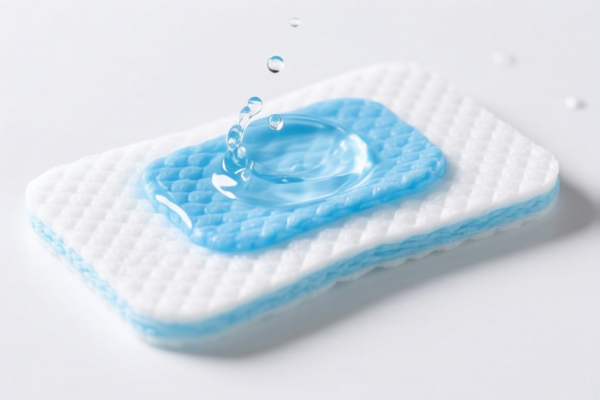


AI Analysis
🛢️ Oil Absorption Pads (Industrial Consumables)
🌐 HS Code Reference & Customs Clearance Guide | 2026 Latest Tariff Breakdown | Professional Clearance Strategy
📌 I. Product Definition & Classification: Do You Really Understand "Oil Absorption Pads"?
Oil absorption pads are essential industrial consumables designed to clean up oil, coolant, and other hazardous fluids in manufacturing, automotive, and marine environments. They are typically made from synthetic fibers, polypropylene, or cellulose-based materials.
In international trade, classification hinges on the material composition and specific functional form:
1. Paper-based Absorbents (Non-woven/Coated):
- Made primarily from paper or cellulose, possibly with plastic coatings or reinforcements.
- Often used for general industrial cleanup.
2. Synthetic Plastic/Film-based Absorbents:
- Made from polypropylene, PVC, or other plastic films, sometimes with paper reinforcement.
- Typically hydrophobic plastics designed to absorb oil only (repel water).
⚠️ Key Distinction Point:
- If the product is primarily paper (even if cut to size or coated) → It falls under Chapter 48 (Paper/Paperboard).
- If the product is primarily plastic film/structure (even if used for absorption) → It falls under Chapter 39 (Plastics and Articles Thereof).
- Critical Check: Is there a significant "plastic coating" or "plastic layer" that defines the structure? If yes, it may shift to Chapter 39.
📦 II. HS Code Classification Details (2026 Latest Tariff Authority Cross-Reference)
Based on the provided data, here is the breakdown for Oil Absorption Pads:
| HS Code | Product Description | Applicable Scenario | Primary Material |
|---|---|---|---|
4823.90.80.00 |
Paper, oil-absorbing function, pads or seals consumables | General industrial oil absorbents, cellulose-based pads | ✅ Paper/Cellulose |
4823.90.86.80 |
Paper, cut into size or shape, paper articles | Pre-cut oil absorbent pads, shaped paper consumables | ✅ Paper |
4818.90.00.80 |
Paper products, sheet/consumable, for sanitary or cleaning | Cleaning paper products, general paper wipes | ✅ Paper (General Cleaning) |
3921.90.40.10 |
Paper-reinforced film structure, thin sheet | Plastic-coated paper absorbents, reinforced plastic films | ✅ Plastic/Paper Composite (Plastic dominant) |
3921.90.40.90 |
Plastic film or plastic-coated, other categories | Pure plastic absorbent pads, non-paper plastic sheets | ✅ Plastic |
🔍 Priority Logic:
-4823.90.80.00is the most common for traditional oil-absorbing paper pads.
-3921.90.40.90applies if the pad is plastic-based (e.g., polypropylene) or has a significant plastic film structure.
-4818.90.00.80is a fallback for general paper cleaning products, but4823is more specific for "oil-absorbing" functions.
💰 III. 2026 Latest Tariff Rate Breakdown (Including Surcharges & Policy Add-ons)
✅ Applicable Country: United States (US)
✅ Origin: China (CN)
✅ Effective Date: Post-2025 policies (Section 301 + IEEPA)
🎯 1. 4823.90.80.00 & 4823.90.86.80 — Paper Oil Absorbents
| Item | Content |
|---|---|
| Base Tariff | 0.0% (ad valorem) |
| Section 301 Surcharge | +25.0% (From USITC Footnote 9903.88.01) |
| 122 Clause / IEEPA Surcharge | +10.0% (Against China/HK products, effective Nov 10, 2025) |
| Total Tax Rate | 35.0% |
| Tax Calculation | CIF Value × 35% |
| De Minimis Exemption | ❌ Not Eligible (deny_de_minimis) |
| Legal Basis Path | IEEPA:9903.01.25 → IEEPA:9903.01.24 → USITC:4823.90.80.00 → FOOTNOTE:9903.88.01 |
📌 Explanation:
- Base Rate 0%: Paper products often have low base tariffs.
- Section 301 +25%: Standard surcharge for many Chinese goods.
- IEEPA 10%: Additional "122 Clause" tariff for China-origin goods.
- Total 35%: High cost for paper-based absorbents imported from China.
🎯 2. 4818.90.00.80 — General Paper Cleaning Products
| Item | Content |
|---|---|
| Base Tariff | 0.0% |
| Section 301 Surcharge | +7.5% (Note: Lower 301 rate for specific subcategories) |
| 122 Clause / IEEPA Surcharge | +10.0% |
| Total Tax Rate | 17.5% |
| Tax Calculation | CIF Value × 17.5% |
| De Minimis Exemption | ❌ Not Eligible (deny_de_minimis) |
| Legal Basis Path | IEEPA:9903.01.25 → IEEPA:9903.01.24 → USITC:4818.90.00.80 |
📌 Explanation:
- This rate is significantly lower (17.5% vs 35%) if the product is classified as a general "paper cleaning consumable" rather than a "technical oil-absorbing pad."
- Strategy: If the pad is generic white paper, argue for this classification to save ~17.5% in taxes. However, if it's specifically marketed as "oil-absorbing" with technical specs, Customs may insist on4823.
🎯 3. 3921.90.40.90 & 3921.90.40.10 — Plastic/Composite Absorbents
| Item | Content |
|---|---|
| Base Tariff | 4.2% |
| Section 301 Surcharge | +25.0% |
| 122 Clause / IEEPA Surcharge | +10.0% |
| Total Tax Rate | 39.2% |
| Tax Calculation | CIF Value × 39.2% |
| De Minimis Exemption | ❌ Not Eligible (deny_de_minimis) |
| Legal Basis Path | IEEPA:9903.01.25 → IEEPA:9903.01.24 → USITC:3921.90.40.90 |
📌 Explanation:
- Plastic-based absorbents have a higher base rate (4.2%) compared to paper (0%).
- Total 39.2% is the highest tax bracket in this list.
- Strategy: Avoid this classification if possible. Paper-based (4823) is cheaper than plastic-based (3921) due to the lower base rate.
🛠️ IV. Customs Clearance Practical Advice (Battle-Tested Pitfall Guide)
✅ 1. Required Documentation Checklist (Mandatory)
| Document | Must Provide | Notes |
|---|---|---|
| ✅ Product Spec Sheet | ✔️ | Material composition (Paper vs. Plastic), absorption capacity, dimensions. |
| ✅ Product Photos | ✔️ | Clear images showing the pad texture, packaging, and any "Oil Absorbent" labeling. |
| ✅ Commercial Invoice | ✔️ | Must describe goods as "Oil Absorption Pads" or "Industrial Cleaning Pads". Avoid vague terms like "Wipes." |
| ✅ Material Declaration | ✔️ | Explicitly state % of paper vs. plastic. Crucial for Chapter 48 vs. 39 distinction. |
| ✅ Packing List | ✔️ | Weight and dimensions per carton. |
| ✅ Certificate of Origin | ✔️ | To prove China origin (triggers the 25% + 10% surcharges). |
✅ 2. Declaration Tips (Key Mnemonics)
🔥 "Material Matters: Paper is 35%, Plastic is 39%, Generic Paper is 17.5%!"
| Scenario | Correct HS Code | Reason |
|---|---|---|
| White cellulose pad, marketed as "Oil Absorbent" | 4823.90.80.00 |
Most accurate for functional paper pads. Tax: 35% |
| Pre-cut white paper, no special "oil" claim | 4818.90.00.80 |
Risky but cheaper. Tax: 17.5%. Use only if generic. |
| Polypropylene (synthetic) pad | 3921.90.40.90 |
Synthetic absorbents are plastic. Tax: 39.2% |
| Paper pad with plastic coating/laminate | 3921.90.40.10 |
Plastic structure dominates. Tax: 39.2% |
⚠️ Warning:
- Do not misdeclare synthetic pads as paper to save taxes. Customs may seize goods for false classification.
- Do not use "3921" if the product is >50% paper by weight/structure unless the plastic is a mere coating.
✅ 3. Special Cases & Mitigation
| Situation | Handling Advice |
|---|---|
| OEM Custom Pads | Provide client’s design specs. If custom-shaped, still 4823.90.86.80 (35%) or 3921 (39.2%). |
| Mixed Containers | Declare separately. Do not mix HS codes in one line item. Separate paper vs. plastic. |
| Low-Value Shipments | ❌ No De Minimis Exemption. The 122 Clause and Section 301 taxes apply regardless of value. |
| Origin Diversification | If sourced from Vietnam, Mexico, or Thailand, you may avoid the 10% IEEPA and 25% Section 301 surcharges. Check for FTAs (USMCA for Mexico). |
🌍 V. Global Market Comparison (2026 Latest)
| Country/Region | Recommended HS Code | Tariff Rate (China Origin) | Notes |
|---|---|---|---|
| 🇺🇸 USA | 4823.90.80.00 |
35.0% | High due to Section 301 + IEEPA |
| 🇪🇺 EU | 4823.90.80 |
~6.5% | No Section 301 surcharge. Lower overall cost. |
| 🇨🇳 China | 4823.90.80 |
0% (Import Duty) | Domestic trade only. |
| 🇲🇽 Mexico | 4823.90.80 |
0% (Under USMCA) | If manufactured in Mexico, duty-free to USA! |
📌 Conclusion:
- USA imports from China are taxed heavily (35-39.2%).
- Supply Chain Strategy: Consider sourcing oil absorbents from Mexico (USMCA) or Vietnam to reduce tariffs.
📌 VI. Common Mistakes & Pitfalls (Lessons from Blood and Tears)
❌ Mistake 1: Declaring plastic absorbent pads as "Paper"
👉 Result: Customs audit, re-classification to 3921 (39.2%), plus penalties.
❌ Mistake 2: Using "General Wipes" for specific "Oil Absorbent" pads
👉 Result: May get away with 17.5% (4818), but if Customs verifies "oil-absorbing" function, they may force 4823 (35%) + penalties.
❌ Mistake 3: Ignoring the 10% IEEPA surcharge
👉 Result: Underpayment of taxes. The 10% is mandatory for China-origin goods post-Nov 2025.
❌ Mistake 4: Assuming De Minimis ($800) exemption applies
👉 Result: Denied. The IEEPA surcharge explicitly denies de minimis exemption for Section 301/122 goods.
✅ Correct Approach:
"Oil Absorption Pads, Paper-Based, 100% Cellulose, Industrial Grade, Model XYZ, HS Code 4823.90.80.00"
🎯 VII. Conclusion: Professional Declaration, Save Costs, Ensure Smooth Clearance!
🎯 Remember the Mnemonic:
🔹 "Paper is 35%, Plastic is 39%, Generic Paper 17.5%!"
🔹 "Section 301 + IEEPA = 35-39% for China! No De Minimis!"
🔹 "Consider Mexico/Vietnam for Duty-Free or Lower Rates!"
📌 Pro Tip:
If your product is plastic-based, explore alternatives or re-engineer to paper-based (4823) to save ~4.2% on the base rate, though the total remains high due to surcharges.
Pre-clearance Ruling is highly recommended for large-volume shipments to avoid delays.
📣 Immediate Action:
📞 Contact a licensed Customs Broker
📂 Provide Material Composition Report
🚀 Optimize Your Supply Chain to Reduce Tariff Burden!
✨ Professional Clearance Starts with Accurate Classification!
💼 Every Percent Counts in Your Profit Margin!
Customer Reviews
About HS Code Classification
The Harmonized System (HS) is an internationally standardized nomenclature developed by the World Customs Organization (WCO) to classify traded products. Over 200 countries use the HS system as the basis for customs tariffs, trade statistics, and import/export regulations.
Each HS code follows a hierarchical structure:
- Chapter (2 digits) — Broad category of goods (e.g., Chapter 84: Machinery and Mechanical Appliances)
- Heading (4 digits) — More specific grouping within the chapter
- Subheading (6 digits) — Internationally standardized breakdown, used by all WCO member countries
- National subdivisions (8-10 digits) — Country-specific extensions for further classification, such as US HTSUS 10-digit codes
Correct HS code classification is essential for smooth customs clearance, accurate duty payment, and compliance with trade regulations. Misclassification can lead to customs delays, overpayment of duties, or penalties.
When importing from CN to US, the applicable tariff rates may include:
- Most-Favored-Nation (MFN) rate — The standard duty rate applied to WTO members
- General rate — Applied to countries without trade agreements
- Trade remedy duties — Additional tariffs such as Section 301 (anti-dumping), Section 232 (national security), or countervailing duties
The information provided on this page is for reference purposes only. For official classification, please consult with your local customs authority or a licensed customs broker.