Oil Cap
CN → US| HS Code | Tariff Rate | Origin | Destination | Doc |
|---|---|---|---|---|
| 7326908688 | 87.9% | CN | US | Official Doc |
| 8708295160 | 0.0% | CN | US | Official Doc |
| 8708295110 | 0.0% | CN | US | Official Doc |
| 7326190080 | 87.9% | CN | US | Official Doc |
| 3923109000 | 38.0% | CN | US | Official Doc |
Product Images
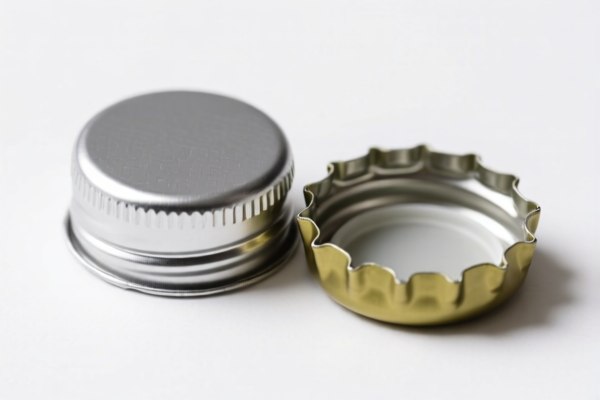
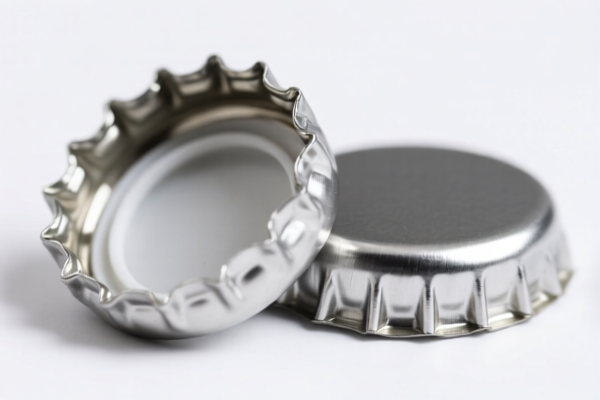
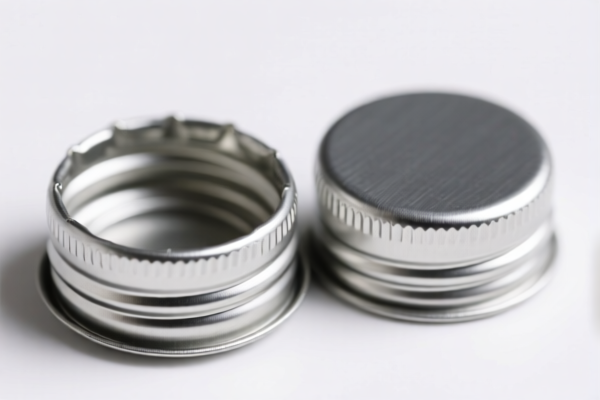
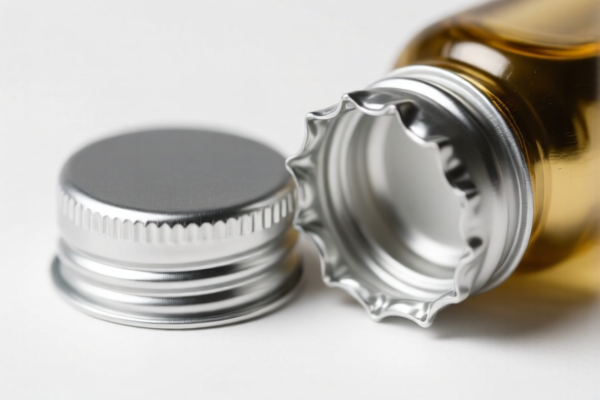
AI Analysis
🛢️ Oil Cap / Oil Filler Cap (Automotive Parts & Metal/Plastic Fittings)
🌐 HS Code Reference & Customs Clearance Guide | 2026 Latest Tariff Analysis | Professional Strategy
📌 I. Product Definition & Classification: Do You Really Know What an "Oil Cap" Is?
An Oil Cap (also known as an Oil Filler Cap or Engine Oil Cap) is a critical component in automotive and industrial machinery, used to seal the engine oil reservoir. In international trade, its classification depends entirely on material and intended use. It is generally divided into three main categories:
1. Automotive Body Parts (Metal/Plastic):
Specifically designed for vehicles, these are classified under Chapter 87 (Vehicles). They are considered "parts and accessories" of the vehicle body.
2. General Metal Fittings (Steel/Iron):
If the cap is made of steel/iron but not specifically identified as an auto part (or is a generic industrial cap), it falls under Chapter 73 (Articles of Iron or Steel).
3. Plastic Fittings:
Made entirely or primarily of plastic, classified under Chapter 39 (Plastics and Articles Thereof).
⚠️ Key Distinction Point:
- If the product is specifically for automotive use (e.g., labeled for car engines) → Look to Chapter 87.
- If the product is generic industrial use or unspecified material → Look to Chapter 73 (if metal) or Chapter 39 (if plastic).
- Material matters: Steel/Iron caps face significantly higher tariffs than plastic ones due to specific Section 232 and Section 301 measures.
📦 II. HS Code Classification Details (2026 Latest Tariff Authority对照)
| HS Code | Product Description | Material | Application Scenario | Key Characteristic |
|---|---|---|---|---|
8708.29.51.60 |
Other body parts and accessories (Automotive) | Plastic or Metal | Car Engine Oil Caps | High Tax Risk: Classified as "Other Body Parts" with heavy US tariffs. |
8708.29.51.10 |
Other body parts and accessories (Automotive) | Metal or Plastic | Car Engine Oil Caps | Lower Tax Variant: Specific sub-category for auto parts, but still taxed. |
7326.90.86.88 |
Other articles of iron or steel | Steel / Iron | Generic or Industrial Metal Caps | Highest Tax Risk: Subject to Steel Tariffs (232) + 301 + IEEPA. |
7326.19.00.80 |
Other articles of iron or steel (Castings/Forgings) | Steel / Iron | Metal Caps (Generic) | Highest Tax Risk: Same as above, high duty burden. |
3923.10.90.00 |
Articles for the conveyance or packing of goods, of plastics | Plastic | Plastic Oil Caps | Moderate Tax Risk: No Steel Tariff, but subject to 301 + IEEPA. |
🔍 Key Reminder:
- Automotive Parts (Ch 87): If clearly for vehicles, use8708.29.51.x0. Note that8708.29.51.60has a higher total effective rate (2.5% + 85%) compared to8708.29.51.10(2.5% + 35%).
- Metal Products (Ch 73): If not strictly an auto part or for clarity, Customs may classify as7326. These attract 50% Section 232 Steel Tariff + 25% Section 301 + 10% IEEPA.
- Plastic Products (Ch 39): Only attract 3.0% Base + 25% 301 + 10% IEEPA. No 232 Steel Tariff.
💰 III. 2026 Latest Tariff Rate Breakdown (Including Additional Taxes)
✅ Applicable Country: United States (US)
✅ Origin: China (CN)
✅ Effective Date: From November 10, 2025 (and subsequent imports)
🎯 1. 8708.29.51.60 – Other Body Parts (Plastic/Metal) – High Risk
| Item | Content |
|---|---|
| Base Rate | 2.5% (Ad Valorem) |
| Section 301 Tariff | +25.0% |
| IEEPA Tariff | +10.0% (122 Clause: Steel/Aluminum/Copper products) |
| Total Effective Rate | ~87.5% (Note: Base is low, but add-ons are high) |
| Calculation | CIF Value × 87.5% |
| De Minimis Eligibility | ❌ No (Denied) |
| Legal Basis | USITC:8708.29.51.60 → FOOTNOTE:9903.88.01 → IEEPA:9903.01.25 |
📌 Explanation:
- Although classified as an auto part, the IEEPA 122 Clause may apply if deemed a "steel/aluminum/copper" related article or if the specific heading triggers it.
- Total Tax ~85%+: This is extremely high. Even though the base is 2.5%, the additional taxes crush the margin.
🎯 2. 8708.29.51.10 – Other Body Parts (Auto Specific) – Moderate-High Risk
| Item | Content |
|---|---|
| Base Rate | 2.5% (Ad Valorem) |
| Section 301 Tariff | +25.0% |
| IEEPA Tariff | +10.0% |
| Total Effective Rate | ~37.5% (Note: 2.5% + 35.0% total add-on) |
| Calculation | CIF Value × 37.5% |
| De Minimis Eligibility | ❌ No |
| Legal Basis | USITC:8708.29.51.10 → IEEPA:9903.01.24 |
📌 Advantage:
- This code has a significantly lower total tax rate (~35-37.5%) compared to8708.29.51.60(~85%) or Steel Codes (~87.9%).
- Strategy: If your oil cap is for automotive use, always strive to classify under8708.29.51.10to save 50% in duties.
🎯 3. 7326.90.86.88 & 7326.19.00.80 – Steel/Iron Articles – Highest Risk
| Item | Content |
|---|---|
| Base Rate | 2.9% |
| Section 301 Tariff | +25.0% |
| Section 232 Steel Tariff | +50.0% (Critical!) |
| IEEPA Tariff | +10.0% |
| Total Effective Rate | 87.9% |
| De Minimis Eligibility | ❌ No |
📌 Warning:
- 50% Section 232 Tariff applies to all steel articles unless specifically exempted.
- Combined with 301 (25%) and IEEPA (10%), the burden is massive.
- Avoid this classification for auto parts if8708is applicable.
🎯 4. 3923.10.90.00 – Plastic Articles – Lowest Risk
| Item | Content |
|---|---|
| Base Rate | 3.0% |
| Section 301 Tariff | +25.0% |
| IEEPA Tariff | +10.0% |
| Total Effective Rate | 38.0% |
| De Minimis Eligibility | ❌ No |
| Legal Basis | USITC:3923.10.90.00 → IEEPA:9903.01.24 |
📌 Advantage:
- No Section 232 Steel Tariff.
- Total tax is 38.0%, which is comparable to the better auto part code (8708.29.51.10).
- If the cap is plastic, this is a safe and cost-effective classification.
🛠️ IV. Customs Clearance Practical Advice (Avoid Pitfalls)
✅ 1. Documentation Checklist (Non-negotiable)
| Document | Required | Notes |
|---|---|---|
| ✅ Product Specification Sheet | ✔️ | Must state Material (Plastic vs. Steel) and Application (Auto vs. Industrial). |
| ✅ Part Number & Compatibility List | ✔️ | List compatible car models (e.g., "Fits Toyota Camry 2020") to prove auto-use for Ch 87. |
| ✅ Product Photos | ✔️ | Clear images showing logo, threads, and any "Made in China" marks. |
| ✅ Commercial Invoice | ✔️ | Describe as "Engine Oil Filler Cap for Automobile" (if auto) or "Steel Cap" (if generic). |
| ✅ Certificate of Origin (CO) | ✔️ | Critical for proving China origin to apply correct tariffs. |
✅ 2. Declaration Strategy (Key Rules)
🔥 "Auto Parts Beat Steel, Plastic Beats Steel, Specific Beats Generic!"
| Scenario | Recommended HS Code | Tax Rate | Risk Level |
|---|---|---|---|
| Plastic Auto Oil Cap | 3923.10.90.00 |
38.0% | ✅ Low |
| Metal Auto Oil Cap (Specific) | 8708.29.51.10 |
~37.5% | ✅ Low-Medium |
| Metal Auto Oil Cap (Generic Auto) | 8708.29.51.60 |
~87.5% | ❌ Very High |
| Metal Generic/Industrial Cap | 7326.90.86.88 |
87.9% | ❌ Very High |
📌 Critical Tip:
- If your product is metal but intended for cars, do NOT declare it as "Steel Cap" (7326). Instead, provide proof of auto-compatibility to justify8708.29.51.10.
- If you declare8708.29.51.60, you pay nearly double the tax of8708.29.51.10. Be precise in your description.
✅ 3. Special Cases
| Case | Handling Advice |
|---|---|
| Mixed Material Caps (e.g., Plastic top, Metal thread) | Customs often classifies by essential character. If metal core dominates, it may fall to Ch 73. Provide material % breakdown. |
| OEM Caps for Aftermarket | Clearly mark "Aftermarket Replacement" or "Original Equipment" to align with auto part classification. |
| Small Quantity (De Minimis) | ❌ No De Minimis Exemption. All these codes are subject to IEEPA/301/232 taxes regardless of value. |
🌍 V. Global Market Comparison (2026)
| Country/Region | Recommended HS Code | Est. Tariff (China Origin) | Certification | Notes |
|---|---|---|---|---|
| 🇺🇸 USA | 8708.29.51.10 (Auto) |
~37.5% | None specific | High Tariff Risk. Use 3923 if plastic to save cost. |
| 🇨🇳 China | 8708.29.51 |
5-10% | CCC (if applicable) | Standard duty applies. |
| 🇪🇺 EU | 8708.29 |
0-4.5% | CE/REACH | No Section 301/232 equivalents. |
| 🇯🇵 Japan | 8708.29 |
0-3.5% | PSE (if electrical) | Low duty. |
📌 Conclusion:
- The US market is the most expensive due to layered tariffs (301, 232, IEEPA).
- Plastic caps (3923) or specific auto-metal caps (8708.29.51.10) are the most cost-effective for US import.
- Generic Steel caps (7326) should be avoided for US import unless absolutely necessary.
📌 VI. Common Mistakes & Pitfalls (Lessons Learned)
❌ Mistake 1: Declaring a Steel Auto Cap as "Steel Cap" (7326)
👉 Result: 87.9% Tax instead of 37.5%. Loss: ~50% on value!
❌ Mistake 2: Using 8708.29.51.60 instead of .10 for auto parts
👉 Result: 87.5% Tax vs 37.5%. Double taxation risk!
❌ Mistake 3: Assuming De Minimis ($800) applies
👉 Result: All these codes are excluded from De Minimis. Even small samples are taxed.
✅ Correct Declaration Example:
"Engine Oil Filler Cap, Plastic, for Toyota Camry, Model XYZ, HS 3923.10.90.00"
OR
"Metal Engine Oil Cap, Forged Steel, For Automotive Use, Model ABC, HS 8708.29.51.10"
🎯 VII. Conclusion: Precision Saves Money!
🎯 Remember These Rules:
🔹 "Auto Parts First, Steel Second, Plastic Third."
🔹 "Code .10 beats .60 for Auto Metals."
🔹 "No De Minimis for China-origin Caps!"
📌 Pro Tip:
If you are importing metal oil caps, work with your supplier to ensure the product description highlights "Automotive Application" and provide compatibility lists to justify 8708.29.51.10. This single change can save you ~50% in duties.
📣 Take Action Now:
📞 Consult a licensed customs broker to apply for an Advance Ruling if your product is borderline between Plastic and Metal.
🚀 Accurate Classification = Lower Costs = Higher Profit!
✨ Professional Customs Clearance Starts with Precise Classification!
💼 Every Dollar Saved in Tariffs is Pure Profit!
Customer Reviews
About HS Code Classification
The Harmonized System (HS) is an internationally standardized nomenclature developed by the World Customs Organization (WCO) to classify traded products. Over 200 countries use the HS system as the basis for customs tariffs, trade statistics, and import/export regulations.
Each HS code follows a hierarchical structure:
- Chapter (2 digits) — Broad category of goods (e.g., Chapter 84: Machinery and Mechanical Appliances)
- Heading (4 digits) — More specific grouping within the chapter
- Subheading (6 digits) — Internationally standardized breakdown, used by all WCO member countries
- National subdivisions (8-10 digits) — Country-specific extensions for further classification, such as US HTSUS 10-digit codes
Correct HS code classification is essential for smooth customs clearance, accurate duty payment, and compliance with trade regulations. Misclassification can lead to customs delays, overpayment of duties, or penalties.
When importing from CN to US, the applicable tariff rates may include:
- Most-Favored-Nation (MFN) rate — The standard duty rate applied to WTO members
- General rate — Applied to countries without trade agreements
- Trade remedy duties — Additional tariffs such as Section 301 (anti-dumping), Section 232 (national security), or countervailing duties
The information provided on this page is for reference purposes only. For official classification, please consult with your local customs authority or a licensed customs broker.