Oil Dispersant
CN → US| HS Code | Tariff Rate | Origin | Destination | Doc |
|---|---|---|---|---|
| 3402422050 | 39.0% | CN | US | Official Doc |
| 3815905000 | 40.0% | CN | US | Official Doc |
| 3815903000 | 35.0% | CN | US | Official Doc |
| 3824994190 | 39.6% | CN | US | Official Doc |
| 3824992900 | 41.5% | CN | US | Official Doc |
Product Images

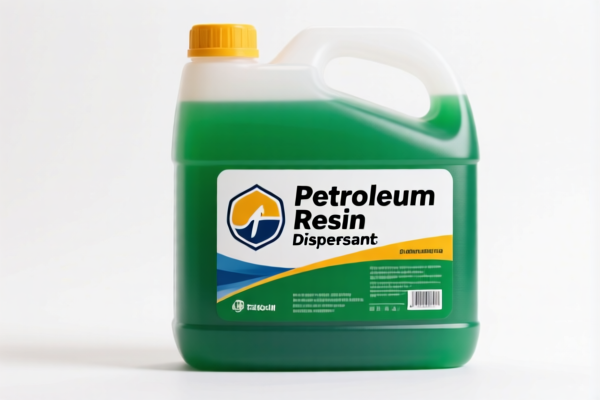
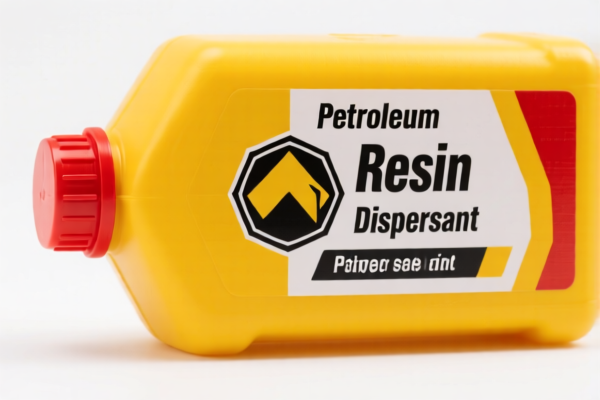
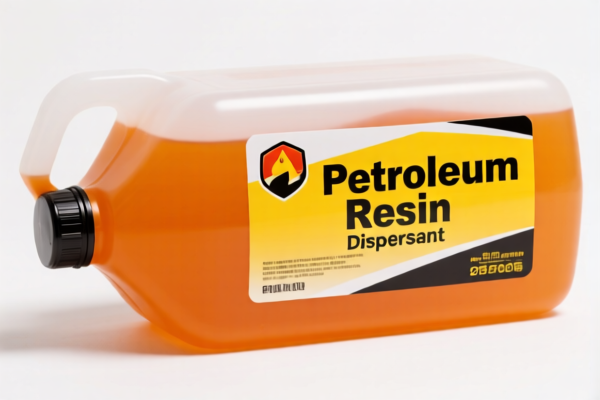
AI Analysis
🧪 Oil Dispersant (Chemical Agent for Industrial Use)
🌐 HS Code Reference & Customs Clearance Guide | 2024-2025 Tariff Full Analysis | Professional Strategy
📌 I. Product Definition & Classification: What Exactly is an "Oil Dispersant"?
An Oil Dispersant is a specialized chemical agent used to break down, disperse, or stabilize oil droplets in water or other media. In international trade, its classification depends heavily on its chemical composition and primary function. It generally falls into two categories: 1. Surfactant-based: Primarily composed of non-ionic organic surfactants (often derived from fatty acids like Oleic Acid). 2. Catalyst/Reaction Agent-based: Used to accelerate reactions or stabilize chemical mixtures as a general chemical aid.
⚠️ Key Distinction:
- If the product is primarily defined by its surface-active properties (emulsifying/dispersing oil), it leans towards Chapter 34 or Chapter 38 (Surfactants).
- If the product is defined as a general chemical preparation or catalyst/accelerator without specific surfactant classification, it falls under Chapter 38 (Other Chemical Products).
- Crucial Note: Due to US-China trade tensions, specific "122 Clause" tariffs and Section 301 tariffs apply differently based on the precise HS Code.
📦 II. HS Code Classification Details (Authoritative Reference)
Based on the provided data, the Oil Dispersant is classified under five potential HS Codes, each with distinct tax implications.
| HS Code | Product Description (Summary) | Applicable Scenario | Tax Rate (Total) |
|---|---|---|---|
| 3402.42.20.50 | Oleic acid-based, Non-ionic organic surfactant | Surfactant-focused dispersants | 39.0% |
| 3815.90.50.00 | Chemical aid: Reaction initiator/accelerator | General chemical preparation | 40.0% |
| 3815.90.30.00 | Chemical aid: Reaction accelerator/catalyst | Catalyst-focused preparation | 35.0% |
| 3824.99.41.90 | Other chemical preparations (Animal/Veg. Fatty Acid source) | Source-specific chemical mix | 39.6% |
| 3824.99.29.00 | Other chemical preparations (Organic Acid source) | General organic acid chemical | 41.5% |
🔍 Critical Insight:
- The lowest total tax rate is 35.0% (3815.90.30.00).
- The highest total tax rate is 41.5% (3824.99.29.00).
- All classifications attract significant Section 301 tariffs (25%) and 122 Clause tariffs (10%), making precise classification vital for cost control.
💰 III. 2024-2025 Detailed Tariff Rate Breakdown
✅ Applicable Country: United States (US)
✅ Origin: China (CN)
✅ Effective Period: Current Trade War Provisions (Section 301 & 122 Clauses)
🎯 1. 3402.42.20.50 —— Non-ionic Organic Surfactants
| Item | Details |
|---|---|
| Base Tariff | 4.0% |
| Section 301 Tariff | +25.0% |
| 122 Clause Tariff | +10.0% |
| Total Tax Rate | 39.0% |
| Tax Calculation | CIF Value × 39.0% |
| De Minimis Exemption | ❌ No (Section 301 goods are excluded) |
| Legal Basis | Chapter 34 (Surface-active agents) + Section 301 Footnotes |
📌 Explanation:
- This code applies if the product is strictly defined as a non-ionic surfactant.
- The 4.0% base rate is relatively low, but the 35% combined附加税 makes it expensive.
🎯 2. 3815.90.50.00 —— Chemical Aids (Reaction Initiators)
| Item | Details |
|---|---|
| Base Tariff | 5.0% |
| Section 301 Tariff | +25.0% |
| 122 Clause Tariff | +10.0% |
| Total Tax Rate | 40.0% |
| Tax Calculation | CIF Value × 40.0% |
| De Minimis Exemption | ❌ No |
| Legal Basis | Chapter 38 (Catalysts/Initiators) + Section 301 Footnotes |
📌 Note:
- Higher base tariff (5.0%) leads to the second-highest total rate.
- Use this only if the product’s primary function is explicitly as a reaction initiator.
🎯 3. 3815.90.30.00 —— Chemical Aids (Reaction Accelerators/Catalysts)
| Item | Details |
|---|---|
| Base Tariff | 0.0% |
| Section 301 Tariff | +25.0% |
| 122 Clause Tariff | +10.0% |
| Total Tax Rate | 35.0% |
| Tax Calculation | CIF Value × 35.0% |
| De Minimis Exemption | ❌ No |
| Legal Basis | Chapter 38 (Catalysts) + Section 301 Footnotes |
📌 Strategic Advantage:
- Lowest Total Rate!
- The 0.0% base tariff significantly reduces the taxable base for the附加 taxes.
- Recommendation: If the product can be technically justified as a reaction accelerator or catalyst, this is the most cost-effective classification.
🎯 4. 3824.99.41.90 —— Other Chemical Preparations (Fatty Acid Source)
| Item | Details |
|---|---|
| Base Tariff | 4.6% |
| Section 301 Tariff | +25.0% |
| 122 Clause Tariff | +10.0% |
| Total Tax Rate | 39.6% |
| Tax Calculation | CIF Value × 39.6% |
| De Minimis Exemption | ❌ No |
| Legal Basis | Chapter 38 (Other Chemical Products) + Section 301 Footnotes |
📌 Note:
- Slightly higher than the surfactant code due to a 4.6% base rate.
- Applicable if the product is a chemical mixture derived from animal or vegetable fatty acids but doesn’t fit the strict surfactant definition.
🎯 5. 3824.99.29.00 —— Other Chemical Preparations (Organic Acid)
| Item | Details |
|---|---|
| Base Tariff | 6.5% |
| Section 301 Tariff | +25.0% |
| 122 Clause Tariff | +10.0% |
| Total Tax Rate | 41.5% |
| Tax Calculation | CIF Value × 41.5% |
| De Minimis Exemption | ❌ No |
| Legal Basis | Chapter 38 (Other Chemical Products) + Section 301 Footnotes |
📌 Warning:
- Highest Total Rate.
- The 6.5% base rate significantly increases the final tax burden.
- Avoid this classification unless no other option fits technically.
🛠️ IV. Customs Clearance Practical Advice (Avoid Pitfalls)
✅ 1. Required Documentation Checklist
| Document | Mandatory? | Description |
|---|---|---|
| ✅ Product Specification Sheet | ✔️ | Must detail chemical composition, CAS numbers, and function (surfactant vs. catalyst). |
| ✅ Formula/Composition List | ✔️ | Percentage of oleic acid, surfactants, and other additives. Critical for correct HS classification. |
| ✅ Safety Data Sheet (SDS) | ✔️ | Must comply with GHS standards. Check if it’s classified as hazardous. |
| ✅ Commercial Invoice | ✔️ | Must accurately describe the product as "Oil Dispersant" and specify the HS Code. |
| ✅ Proof of Origin | ✔️ | Certificate of Origin (CO) for China. |
| ✅ Third-Party Test Report | ✔️ | If claiming "Reaction Accelerator" function, provide lab tests proving this mechanism. |
✅ 2. Declaration Tips (Key Mantra)
🔥 "Function Determines Code, Composition Determines Tax!"
| Scenario | Correct Declaration | Risk |
|---|---|---|
| Surfactant Function | Use 3402.42.20.50 |
If misdeclared as 3815, may face audit. |
| Catalyst/Accelerator Function | Use 3815.90.30.00 |
Best for cost saving. Must provide technical proof. |
| Generic Chemical Mix | Use 3824.99.41.90 or 3824.99.29.00 |
Higher tax rates. Avoid unless technically necessary. |
| Split Shipment | Do NOT split components | Declaring ingredients separately may trigger higher taxes and delays. |
✅ 3. Special Considerations
| Situation | Handling Advice |
|---|---|
| OEM Custom Formulation | Provide client contract + technical data sheet. Clearly state the primary function (e.g., "for accelerating reaction X"). |
| High Oleic Acid Content | If >50% oleic acid, consider 3402 or 3824.99.41.90. Ensure the description matches the dominant ingredient. |
| Hazardous Chemicals | If the dispersant is flammable or corrosive, additional DOT/UN markings and Hazmat declarations are required. |
| Pre-Ruling Request | Strongly Recommended: File an Advance Ruling with US Customs (CBP) to lock in the HS Code and avoid retrospective audits. |
🌍 V. Global Market Comparison (2024-2025)
| Country/Region | Recommended HS Code | Tariff (China Origin) | Certification | Notes |
|---|---|---|---|---|
| 🇺🇸 USA | 3815.90.30.00 |
35.0% | FDA/EPA (if applicable) | Best rate. Avoid 3824.99.29.00. |
| 🇨🇳 China | 3815.90.30.00 |
Varies (Import Duty) | CCC (if applicable) | Domestic sales not covered by these export tariffs. |
| 🇪🇺 EU | 3824.99.97 |
0-4% | REACH Registration | No Section 301 tariffs. Much cheaper than US. |
| 🇬🇧 UK | 3824.99.97 |
0-4% | UK REACH | Post-Brexit rules. Lower tariffs than US. |
| 🇯🇵 Japan | 3824.99.90 |
0-3% | JIS | Low tariffs. No major trade war penalties. |
📌 Conclusion:
- USA is the most expensive market due to Section 301 and 122 Clause tariffs.
- EU/UK/JP are significantly cheaper for chemical dispersants.
- If possible, consider diversifying supply chains to non-China origins for the US market to mitigate tariff risks.
📌 VI. Common Mistakes & Pitfalls (Blood-Soaked Lessons)
❌ Mistake 1: Declaring all oil dispersants as 3824.99.29.00
👉 Consequence: Paying 41.5% tax instead of 35.0%. Loss: 6.5% of CIF value!
❌ Mistake 2: Ignoring the "122 Clause"
👉 Consequence: Failing to include the 10% additional tariff leads to underpayment penalties and cargo detention.
❌ Mistake 3: Claiming "Surfactant" without technical data
👉 Consequence: Customs may reclassify to 3815.90.50.00 or 3824 codes, resulting in higher audits and delays.
❌ Mistake 4: Using "Oil Dispersant" as the only description
👉 Consequence: Ambiguity leads to customs hold. Must specify function (e.g., "Non-ionic surfactant for oil dispersion").
✅ Correct Practice:
"Oil Dispersant, Non-ionic Surfactant, Oleic Acid Derivative, CAS 112-80-1, for Industrial Emulsification, HS Code: 3815.90.30.00"
🎯 VII. Conclusion: Precise Classification Saves Money!
🎯 Remember the Mantra:
🔹 "3815.90.30.00 is the Golden Key – 35% Total Tax!"
🔹 "Avoid 3824.99.29.00 – 41.5% is Too High!"
🔹 "122 Clause is Real – Add 10% to Your Budget!"
📌 Pro Tip:
If your product can be technically justified as a reaction accelerator, always choose
3815.90.30.00.
File an Advance Ruling with CBP to secure this rate.
Consider supply chain diversification to Southeast Asia or India to bypass Section 301 tariffs entirely.
📣 Immediate Action:
📞 Contact your customs broker with the Technical Data Sheet.
🚀 Apply for CBP Advance Ruling.
💡 Optimize your HS Code – Your profit margin depends on it!
✨ Professional Clearance Starts with Precise Classification!
💼 Every percentage point of tax saved is pure profit!
Customer Reviews
About HS Code Classification
The Harmonized System (HS) is an internationally standardized nomenclature developed by the World Customs Organization (WCO) to classify traded products. Over 200 countries use the HS system as the basis for customs tariffs, trade statistics, and import/export regulations.
Each HS code follows a hierarchical structure:
- Chapter (2 digits) — Broad category of goods (e.g., Chapter 84: Machinery and Mechanical Appliances)
- Heading (4 digits) — More specific grouping within the chapter
- Subheading (6 digits) — Internationally standardized breakdown, used by all WCO member countries
- National subdivisions (8-10 digits) — Country-specific extensions for further classification, such as US HTSUS 10-digit codes
Correct HS code classification is essential for smooth customs clearance, accurate duty payment, and compliance with trade regulations. Misclassification can lead to customs delays, overpayment of duties, or penalties.
When importing from CN to US, the applicable tariff rates may include:
- Most-Favored-Nation (MFN) rate — The standard duty rate applied to WTO members
- General rate — Applied to countries without trade agreements
- Trade remedy duties — Additional tariffs such as Section 301 (anti-dumping), Section 232 (national security), or countervailing duties
The information provided on this page is for reference purposes only. For official classification, please consult with your local customs authority or a licensed customs broker.