Oil Level Sight Glass
CN → US| HS Code | Tariff Rate | Origin | Destination | Doc |
|---|---|---|---|---|
| 7002310000 | 35.0% | CN | US | Official Doc |
| 7002320000 | 41.0% | CN | US | Official Doc |
| 9025802000 | 37.9% | CN | US | Official Doc |
| 9025900600 | 35.0% | CN | US | Official Doc |
Product Images
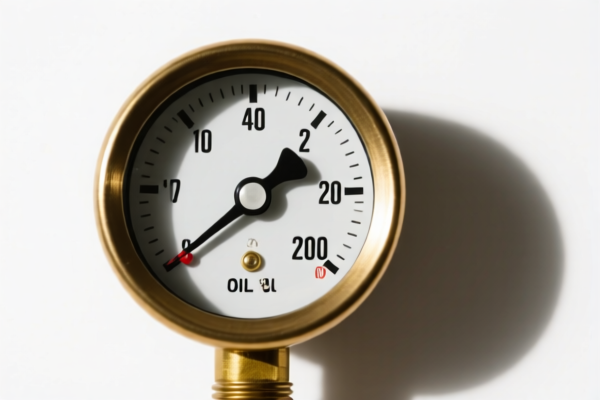
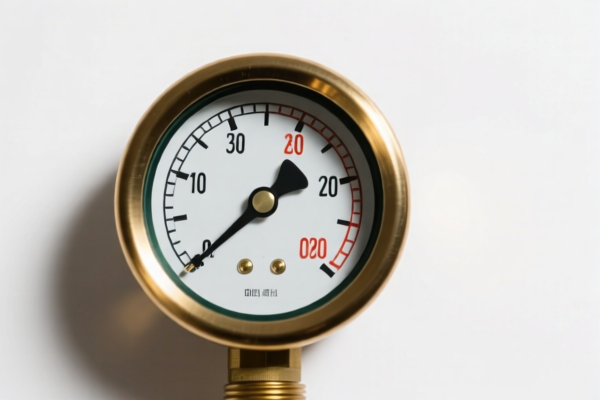
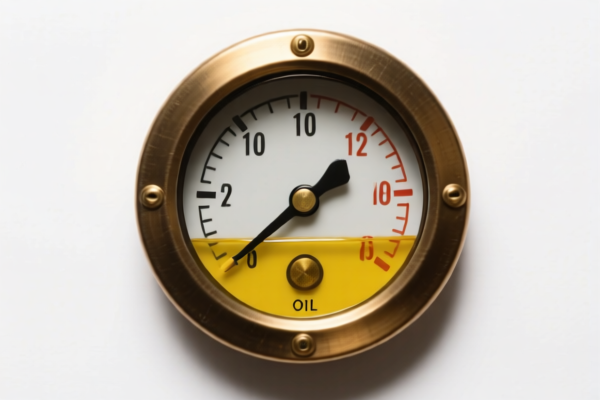
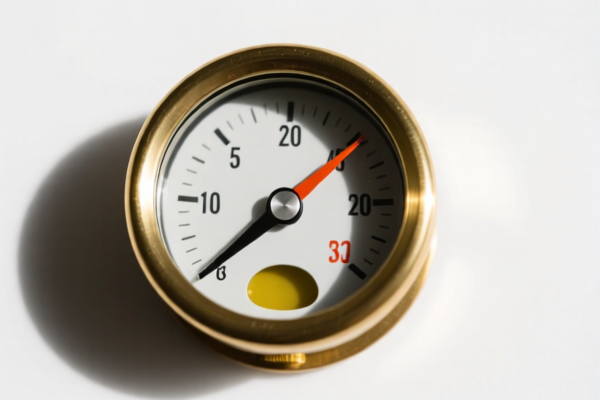
AI Analysis
🔍 Oil Level Sight Glass (Liquid Level Indicators)
🌐 HS Code Reference & Customs Clearance Guide | 2026 Latest Tariff Analysis | Professional Compliance Strategy
📌 I. Product Definition & Classification: Do You Really Understand "Sight Glass"?
An Oil Level Sight Glass is a critical visual inspection device used in machinery, engines, hydraulic systems, and industrial equipment to monitor the liquid level without opening the system. In international trade, classification depends strictly on the material composition, form (tube vs. plate/ball), and whether it is integrated with other measuring instruments.
The core distinction lies in: * Unworked Glass Components: If the item is simply a glass tube or rod made of specific glass types (e.g., fused quartz or low-expansion glass), it is classified under Chapter 70 (Glass and Glassware). * Finished Instrument Parts: If the sight glass is a component of a hydrometer or other floating instrument, or if it is sold as a standalone "instrument," it may fall under Chapter 90 (Optical, Photographic, Cinematographic, Measuring Instruments).
⚠️ Key Distinction Point:
- If the product is a bare glass tube/rod used for visual level indication (not yet assembled into a complex instrument housing with scales/sensors): → Classified under 7002 (Glass Tubes).
- If the product is a complete hydrometer (floating instrument with a thermometer/bulb) or a part thereof (e.g., a specialized gauge): → Classified under 9025 (Hydrometers and Similar Instruments).
📦 II. HS Code Classification Details (2026 Latest Tariff Authority对照)
Based on the provided data, there are four potential HS Codes. Below is the detailed breakdown of which product scenario fits which code.
| HS Code | Product Description | Applicable Scenario | Material/Structure |
|---|---|---|---|
7002.31.00.00 |
Tubes of fused quartz or other fused silica | High-temperature industrial furnaces, chemical processing, or high-purity applications where thermal resistance is critical. | Pure Fused Silica/Quartz Glass |
7002.32.00.00 |
Tubes of other glass having a linear coefficient of expansion ≤ 5 x 10⁻⁶/K (0°C to 300°C) | Precision machinery, optical systems, or standard industrial oil lines requiring thermal stability but not pure quartz. | Low-Expansion Borosilicate or Similar Glass |
9025.80.20.00 |
Hydrometers and similar floating instruments, non-recording | A complete floating device (often glass) used to measure density or specific gravity of oil/fuel, sometimes used loosely for level checks. | Complete Floating Instrument |
9025.90.06.00 |
Parts and accessories of hydrometers and similar instruments | A sight glass specifically designed and sold as a replacement part or accessory for a hydrometer or similar density-measuring device. | Component/Part Only |
🔍 Critical Warning:
- Do not confuse "Oil Level Sight Glass" with "Hydrometer."
- If you are shipping a glass tube to be mounted on a tank to see the oil level → Use 7002.
- If you are shipping a floating stick to measure the oil's density → Use 9025.
- If the sight glass is just a piece of glass tubing (unworked), it must be classified under Chapter 70, not Chapter 90.
💰 III. 2026 Latest Tariff Rate Details (Including Additional Taxes)
✅ Applicable Country: United States (US)
✅ Origin: China (CN)
✅ Effective Date: Current trade policies (Section 301 & IEEPA apply where noted)
🎯 1. 7002.31.00.00 —— Glass Tubes of Fused Quartz/Fused Silica
| Item | Content |
|---|---|
| Base Tariff | 0.0% |
| Additional Tariff (Section 301) | +25.0% |
| Total Tariff | 25.0% |
| Tax Calculation | CIF Value × 25% |
| De Minimis Exemption | ❌ Not Eligible (Due to 301 Tariffs) |
| Legal Basis | HTSUS 7002.31.00 + USITC Footnote for China-origin goods |
📌 Explanation:
- Fused quartz tubes are high-value industrial components.
- Although the base duty is 0%, the 25% additional tariff applies to Chinese-origin goods under Section 301.
- Cost Impact: High. Ensure your supplier provides the correct "Made in China" declaration.
🎯 2. 7002.32.00.00 —— Glass Tubes of Low-Expansion Glass
| Item | Content |
|---|---|
| Base Tariff | 0.0% |
| Additional Tariff (Section 301) | 0.0% |
| Total Tariff | 0.0% |
| Tax Calculation | CIF Value × 0% |
| De Minimis Exemption | ✅ Eligible (if under $800 and no other restrictions) |
| Legal Basis | HTSUS 7002.32.00 (Excluded from Section 301 list in this specific subheading) |
📌 Strategy Tip:
- If your "sight glass" is made of borosilicate glass (common for oil tanks) rather than pure quartz, try to prove it falls under 7002.32.
- Savings: You save 25% compared to fused quartz.
- Condition: The glass must have a linear coefficient of expansion ≤ 5 x 10⁻⁶/K. Standard Pyrex/Borosilicate usually qualifies.
🎯 3. 9025.80.20.00 —— Hydrometers (Floating Instruments)
| Item | Content |
|---|---|
| Base Tariff | 0.0% |
| Additional Tariff (Section 301) | 0.0% |
| Total Tariff | 0.0% |
| Tax Calculation | CIF Value × 0% |
| De Minimis Exemption | ✅ Eligible |
| Legal Basis | HTSUS 9025.80.20 |
📌 Explanation:
- If you are importing complete hydrometers (glass floats used for fuel testing), there is no additional 25% tariff.
- Warning: Do not misdeclare a simple glass tube as a "hydrometer" to save tax. Customs will reject this if the product lacks the calibrated float/bulb.
🎯 4. 9025.90.06.00 —— Parts of Hydrometers
| Item | Content |
|---|---|
| Base Tariff | 0.0% |
| Additional Tariff (Section 301) | +25.0% |
| Total Tariff | 25.0% |
| Tax Calculation | CIF Value × 25% |
| De Minimis Exemption | ❌ Not Eligible |
| Legal Basis | HTSUS 9025.90.06 + Section 301 |
📌 Warning:
- If you sell sight glasses as "parts" for hydrometers, they incur the 25% penalty tariff.
- This is rarely the correct classification for standalone oil level sight glasses unless they are proprietary parts for a specific density-measuring device.
🛠️ IV. Customs Clearance Practical Advice (Real-World Pitfall Avoidance)
✅ 1. Preparation Checklist (Non-Negotiable)
| Document | Must Provide | Description |
|---|---|---|
| ✅ Product Specification Sheet | ✔️ | Must specify Glass Type (Fused Quartz vs. Borosilicate/Low-Expansion). This is the single most important factor for choosing between 7002.31 and 7002.32. |
| ✅ Technical Drawing | ✔️ | Shows dimensions, thread types, and mounting structure. |
| ✅ Photos | ✔️ | Clear images of the product, including any scales/markings (if applicable). |
| ✅ Certificate of Analysis (CoA) | ✔️ | For fused quartz, prove purity (>99.9% SiO₂). For low-expansion, provide thermal expansion data. |
| ✅ Commercial Invoice | ✔️ | Clearly state: "Glass Tubes for Oil Level Indication, Unworked" (not "Hydrometer"). |
| ✅ Packing List | ✔️ | Detail quantity and weight. |
✅ 2. Declaration Tips (Key Mnemonic)
🔥 "Material Determines Code, Form Determines Duty!"
| Scenario | Correct HS Code | Risk |
|---|---|---|
| Fused Quartz Tube for high-temp oil lines | 7002.31.00.00 |
Pay 25%. Correct classification. |
| Borosilicate/Low-Exp Glass Tube for standard engines | 7002.32.00.00 |
Pay 0%. Best for cost-saving. |
| Complete Glass Float for fuel density testing | 9025.80.20.00 |
Pay 0%. Do not confuse with tubes. |
| Simple Glass Tube claimed as "Part of Hydrometer" | 9025.90.06.00 |
Risk of Penalty. If not specifically for a hydrometer, this is misclassification. |
✅ 3. Special Case Handling
| Situation | Handling Advice |
|---|---|
| Mixed Shipment (Quartz tubes + Borosilicate tubes) | Declare separately. Do not lump under the higher-tariff code. Provide separate line items with distinct HS Codes. |
| Sight Glass with Integrated Scale/Marking | If the marking is merely etched on the glass, it remains 7002. If it is a complex calibrated gauge with a pointer, it may move to Chapter 90 (higher scrutiny). |
| Origin Fraud | Ensure the "Made in China" label is accurate. Attempting to declare Vietnam-origin to avoid tariffs without physical shipment from Vietnam will lead to seizures. |
🌍 V. Global Market Comparison (2026 Latest)
| Country/Region | Recommended HS Code | Tariff (China Origin) | Notes |
|---|---|---|---|
| 🇺🇸 USA | 7002.32.00.00 |
0% | Best Option. Use low-expansion glass classification if specs allow. |
| 🇺🇸 USA | 7002.31.00.00 |
25% | High-cost option for quartz. |
| 🇨🇳 China | 7002.32.00.00 |
5.5% (Est.) | Standard import duty. No retaliatory tariffs inside China. |
| 🇪🇺 EU | 7002.32.00 |
4.0% | No Section 301 equivalent. Standard EU customs duty. |
| 🇯🇵 Japan | 7002.32 |
3.0% | FTA benefits may apply depending on specific glass type. |
📌 Conclusion:
- For US imports, optimizing the glass material specification to fit7002.32(Low-Expansion Glass) rather than7002.31(Fused Quartz) is the #1 way to save 25% in tariffs.
- Ensure your technical data sheet explicitly states the coefficient of expansion for low-expansion glass products.
📌 VI. Common Errors & Pitfalls (Blood Lessons)
❌ Error 1: Declaring a Borosilicate Glass Tube as Fused Quartz (7002.31)
👉 Result: You pay 25% unnecessarily. You should have paid 0% under 7002.32.
✅ Fix: Provide CoA showing expansion rate ≤ 5 x 10⁻⁶/K.
❌ Error 2: Declaring a Simple Glass Tube as a Hydrometer Part (9025.90)
👉 Result: 25% tariff. Customs may audit and demand back taxes + penalties if it’s not a genuine part.
✅ Fix: Declare as "Glass Tubes for Industrial Use" under Chapter 70.
❌ Error 3: Missing Material Specification on Invoice
👉 Result: Customs will assign the highest possible duty rate (often the quartz rate) or delay clearance for inspection.
✅ Fix: Always state "Low-Expansion Borosilicate Glass" or "Fused Silica" on the commercial invoice.
✅ Correct Declaration Example:
"Glass Tubes, Unworked, Low-Expansion Borosilicate (Expansion Coeff: 3.3 x 10^-6/K), for Oil Level Indication in Engines, Model XYZ, HS 7002.32.00.00"
🎯 VII. Conclusion: Professional Declaration Saves Money!
🎯 Remember the Golden Rule:
🔹 "Quartz = 25% Tax. Low-Expansion Glass = 0% Tax."
🔹 "Don't call a tube a hydrometer. Call it a glass tube."
📌 Pro Tip:
If you are importing large volumes, consider Advance Rulings from US Customs (CBP) to confirm that your specific glass product qualifies for the 0% rate under 7002.32. This provides legal certainty.
📣 Immediate Action:
📞 Audit your Product Specifications today.
📉 Can your glass be certified as "Low-Expansion" to qualify for7002.32?
🚀 If yes, update your invoices and save 25% on every shipment.
✨ Precision Classification, Maximum Savings.
💼 Your Supply Chain Efficiency Starts with the Right HS Code.
Customer Reviews
About HS Code Classification
The Harmonized System (HS) is an internationally standardized nomenclature developed by the World Customs Organization (WCO) to classify traded products. Over 200 countries use the HS system as the basis for customs tariffs, trade statistics, and import/export regulations.
Each HS code follows a hierarchical structure:
- Chapter (2 digits) — Broad category of goods (e.g., Chapter 84: Machinery and Mechanical Appliances)
- Heading (4 digits) — More specific grouping within the chapter
- Subheading (6 digits) — Internationally standardized breakdown, used by all WCO member countries
- National subdivisions (8-10 digits) — Country-specific extensions for further classification, such as US HTSUS 10-digit codes
Correct HS code classification is essential for smooth customs clearance, accurate duty payment, and compliance with trade regulations. Misclassification can lead to customs delays, overpayment of duties, or penalties.
When importing from CN to US, the applicable tariff rates may include:
- Most-Favored-Nation (MFN) rate — The standard duty rate applied to WTO members
- General rate — Applied to countries without trade agreements
- Trade remedy duties — Additional tariffs such as Section 301 (anti-dumping), Section 232 (national security), or countervailing duties
The information provided on this page is for reference purposes only. For official classification, please consult with your local customs authority or a licensed customs broker.