Oil Seal
CN → US| HS Code | Tariff Rate | Origin | Destination | Doc |
|---|---|---|---|---|
| 3926904590 | 13.5% | CN | US | Official Doc |
| 4017000000 | 37.7% | CN | US | Official Doc |
| 4016935020 | 37.5% | CN | US | Official Doc |
| 4016931020 | 37.5% | CN | US | Official Doc |
| 3926904510 | 38.5% | CN | US | Official Doc |
Product Images
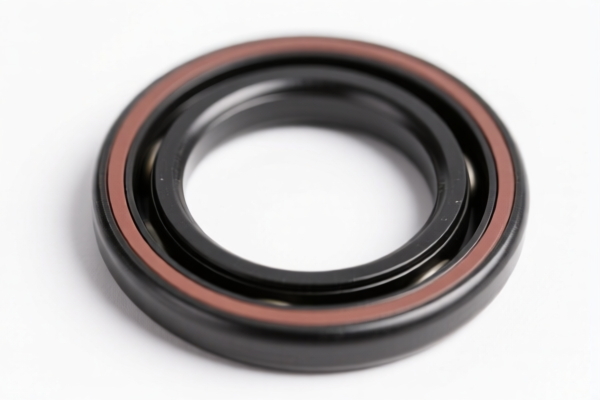
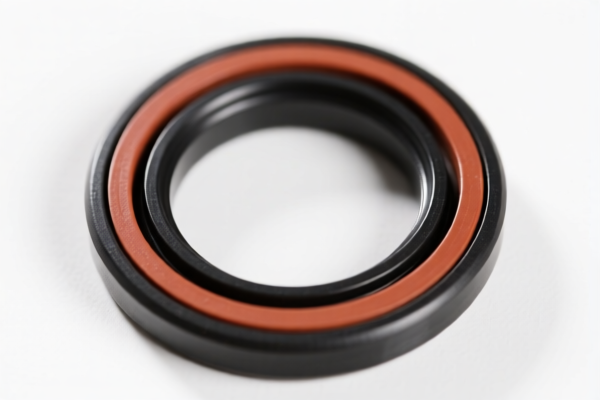
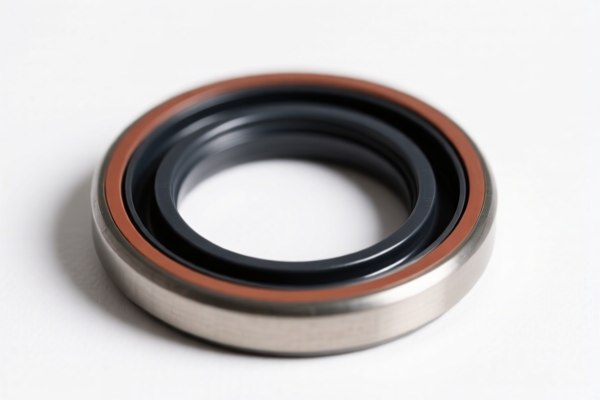
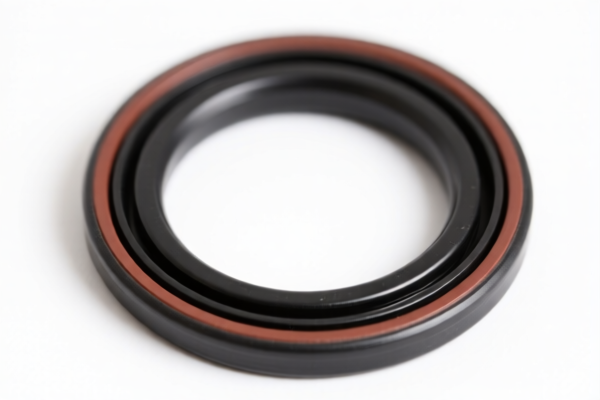
AI Analysis
🛢️ Oil Seal (Mechanical Seals)
🌐 HS Code Reference & Customs Clearance Guide | 2026 Latest Tariff Analysis | Professional Clearance Strategy
📌 I. Product Definition & Classification: What Exactly is an "Oil Seal"?
An Oil Seal (also known as a rotary shaft seal) is a critical mechanical component used to retain lubricants (oil, grease) and exclude contaminants (dust, water) in rotating machinery. In international trade, classification depends heavily on material composition and structural description, leading to divergent HS Code assignments and significantly different tax liabilities.
⚠️ Key Classification Distinction:
- If classified as a gasket/washer/seal made of synthetic rubber/plastic under general mechanical parts → 3926.90.45 series (Lower Tax).
- If classified strictly as hard rubber products or specific vulcanized rubber seals → 4016/4017 series (Higher Tax due to "Section 301" and "122" tariffs).
📦 II. HS Code Classification Details (2026 Latest Tariff Authority对照)
Based on the provided data, there are five potential HS Codes for Oil Seals. The choice depends on how the customs broker describes the material and form.
| HS Code | Product Description Summary | Material/Form Focus | Tax Implication |
|---|---|---|---|
3926.90.45.90 |
Gaskets, Washers, and Seals; typically made of synthetic rubber or plastic | Broad Category: Sealing components, often viewed as accessories or generic seals | ✅ Lowest Base Tax (3.5%) |
4017.00.00.00 |
Hard rubber articles inferred from material; rigid form | Hard Rubber: Inferred as rigid rubber制品 | 🔴 Highest Base + Add. Tax (3.5% Base + 35% Add.) |
4016.93.50.20 |
Sealing parts, vulcanized rubber articles, viewed as accessory form | Vulcanized Rubber: Specific use (sealing) + Material (rubber) | 🔴 High Add. Tax (2.5% Base + 25% Add.) |
4016.93.10.20 |
Core function: Oil seal; hook/parts description, no material conflict | Functional Seal: Emphasizes function over generic material | 🔴 High Add. Tax (2.5% Base + 25% Add.) |
3926.90.45.10 |
Rubber/plastic material, in seal category, hook viewed as配套/associated part | Mixed Material: Rubber/plastic seal + associated parts | 🟠 Moderate-High Add. Tax (3.5% Base + 25% Add.) |
🔍 Critical Observation:
- The 3926 series (3926.90.45.x0) offers a lower base tariff (3.5%) compared to the 4016/4017 series (2.5%-2.7%).
- However, the 4016/4017 series is subject to a 25% Additional Tariff (Section 301), while the 3926.90.45.90 is NOT subject to the 25% Additional Tariff (only 10% "122" if applicable, but data shows 0.0% additional for this specific code).
- Strategic Goal: Aim for3926.90.45.90if the product can be justified as a general "gasket/washer/seal" rather than a specific "vulcanized rubber part."
💰 III. 2026 Latest Tariff Rate Breakdown (Including Add-ons & Policy Add-ons)
✅ Applicable Country: United States (US)
✅ Country of Origin: China (CN)
✅ Effective Date: Post-November 10, 2025 (Current Regime)
🎯 1. 3926.90.45.90 —— Gaskets, Washers, and Seals (Synthetic Rubber/Plastic)
| Item | Content |
|---|---|
| Base Tariff | 3.5% (Ad Valorem) |
| USITC Additional Tariff (Section 301) | 0.0% (Not listed in "tax_detail" for this specific code) |
| "122" Clause Tariff | 10.0% |
| Total Effective Rate | 13.5% |
| Tax Calculation | CIF Value × 13.5% |
| De Minimis Eligibility | ❌ Not Eligible (High tariff items usually excluded from $800 exemption if declared as such, but check specific CBP rulings) |
| Legal Basis Path | HTSUS: 3926.90.45.90 → 122 Clause: 10% |
📌 Explanation:
- This is the most cost-effective classification for Oil Seals under current data.
- By classifying as a general "seal/washer" (3926) rather than a specific "rubber article" (4016), you avoid the 25% Section 301 tariff.
- Only the 10% "122" tariff applies.
- Total Tax: 13.5%.
🎯 2. 4016.93.50.20 & 4016.93.10.20 —— Vulcanized Rubber Seals
| Item | Content |
|---|---|
| Base Tariff | 2.5% (Ad Valorem) |
| USITC Additional Tariff (Section 301) | +25.0% |
| "122" Clause Tariff | +10.0% |
| Total Effective Rate | 37.5% |
| Tax Calculation | CIF Value × 37.5% |
| De Minimis Eligibility | ❌ Not Eligible |
| Legal Basis Path | HTSUS: 4016.93.xx.xx → USITC: 8778.01.01 (Footnote) → 122 Clause: 10% |
📌 Explanation:
- These codes classify the oil seal strictly as a vulcanized rubber article.
- Subject to 25% Section 301 + 10% "122" + 2.5% Base.
- Total Tax: 37.5%. This is nearly 3x higher than the 3926 classification.
🎯 3. 4017.00.00.00 —— Hard Rubber Articles
| Item | Content |
|---|---|
| Base Tariff | 2.7% (Ad Valorem) |
| USITC Additional Tariff (Section 301) | +25.0% |
| "122" Clause Tariff | +10.0% |
| Total Effective Rate | 37.7% |
| Tax Calculation | CIF Value × 37.7% |
| De Minimis Eligibility | ❌ Not Eligible |
| Legal Basis Path | HTSUS: 4017.00.00.00 → USITC Footnote → 122 Clause: 10% |
📌 Explanation:
- Used if the oil seal is inferred to be made of hard rubber.
- Total Tax: 37.7% (Highest base tax impact).
🎯 4. 3926.90.45.10 —— Rubber/Plastic Seal with Associated Parts
| Item | Content |
|---|---|
| Base Tariff | 3.5% (Ad Valorem) |
| USITC Additional Tariff (Section 301) | +25.0% |
| "122" Clause Tariff | +10.0% |
| Total Effective Rate | 38.5% |
| Tax Calculation | CIF Value × 38.5% |
| De Minimis Eligibility | ❌ Not Eligible |
| Legal Basis Path | HTSUS: 3926.90.45.10 → USITC Footnote → 122 Clause: 10% |
📌 Explanation:
- Even within the 3926 chapter, if the description includes "hook/associated parts" or specific material conflicts, it may trigger the 25% Additional Tariff.
- Total Tax: 38.5%.
- Note:3926.90.45.90is preferred over3926.90.45.10because it has 0.0% Additional Tariff in the provided data.
🛠️ IV. Customs Clearance Practical Advice (Battle-Tested Pitfall Guide)
✅ 1. Documentation Checklist (Non-Negotiable)
| Document | Required | Description |
|---|---|---|
| ✅ Product Specification Sheet | ✔️ | Must detail material composition (e.g., NBR, FKM, Silicone) and hardness (Shore A). |
| ✅ Technical Drawing | ✔️ | Show dimensions, lip design, and spring type (if any). |
| ✅ Commercial Invoice | ✔️ | Clearly state "Oil Seal" AND "Gasket/Washer/Seal" to support 3926 classification. |
| ✅ Material Test Report | ✔️ | Certify material as "Synthetic Rubber" or "Plastic" to align with 3926. |
| ✅ Country of Origin Certificate | ✔️ | Critical for calculating USITC and 122 duties. |
✅ 2. Classification Strategy (Key Mantra)
🔥 "Declare as General Seal, Not Rubber Part; 3926 is King, 4016 is King of Cost!"
| Scenario | Recommended HS Code | Reason |
|---|---|---|
| Standard Oil Seal (NBR/FKM) | 3926.90.45.90 |
Classified as "Gasket/Washer/Seal". Avoids 25% tariff. Lowest total tax (13.5%). |
| Hard Rubber Seal | 4017.00.00.00 |
If material is explicitly hard rubber. High tax (37.7%). |
| Seal with Metal Housing | 3926.90.45.90 |
If housing is minor, keep as seal. If major, may need split. |
| Seal with "Hook" or Complex Parts | Avoid 3926.90.45.10 if possible |
Data shows 10 has 25% add. tax. Stick to .90 if description allows. |
✅ 3. Special Handling
| Situation | Advice |
|---|---|
| De Minimis ($800) | ❌ Do not rely on de minimis. With 13.5%-38.5% tariffs, small shipments may still incur significant duties and brokerage fees. Verify if the specific 3926.90.45.90 code qualifies for exemption (usually not for Chinese origin with 122 tariff). |
| Origin Marking | Ensure "Made in China" is clearly marked on packaging to avoid fraud penalties. |
| Anti-Dumping | Check if any specific oil seal materials (e.g., specific fluoropolymers) have AD/CVD orders. Data does not show AD/CVD, but verify with CBP. |
🌍 V. Global Market Comparison (2026 Latest)
| Country/Region | Recommended HS Code | Estimated Total Tax (CN Origin) | Notes |
|---|---|---|---|
| 🇺🇸 USA | 3926.90.45.90 |
13.5% | Best case. Avoids 25% Section 301. |
| 🇨🇳 China | 4016.93.50.20 |
~2.5% - 7% | No additional tariffs for imports into China from most partners. |
| 🇪🇺 EU | 4016.93.50.20 |
0% - 4% | No Section 301 equivalent. Lower base duties. |
| 🇬🇧 UK | 4016.93.50.20 |
0% - 4% | Post-Brexit rules apply. |
📌 Conclusion:
- The US market is unique in its punitive tariffs on Chinese rubber/plastic goods.
- Strategic imperative: Classify oil seals under 3926.90.45.90 ("Gaskets, Washers, Seals") rather than 4016 ("Rubber Articles") to save ~24% in duties.
📌 VI. Common Mistakes & Pitfalls (Lessons Learned)
❌ Mistake 1: Declaring as "Rubber Part" or "Vulcanized Rubber Seal"
👉 Result: Triggers 25% Section 301 + 10% "122" = 37.5% Total Tax.
✅ Fix: Use description "Oil Seal, Gasket, or Washer" and align with 3926.
❌ Mistake 2: Ignoring the "122" Tariff
👉 Result: Underpayment of 10%.
✅ Fix: Always account for the 10% "122" clause for Chinese goods in 2026.
❌ Mistake 3: Using 3926.90.45.10 without justification
👉 Result: Unnecessary 25% add. tax (38.5% total) vs. 13.5% for .90.
✅ Fix: Ensure the product is a standard seal without complex "hook" or "part" descriptions that trigger higher sub-codes.
🎯 VII. Conclusion: Precision Classification Saves Millions!
🎯 Remember the Mantra:
🔹 "Oil Seal, Don't Feel Real, Classify as 3926, Save 24% Deal!"
🔹 "3926.90.45.90 is the Gold Standard for US Oil Seals in 2026!"
📌 Pro Tip:
If your oil seals are originating from Vietnam, Thailand, or Malaysia, you may still face 10% "122" tariffs (depending on final rules), but you avoid the 25% Section 301.
For China-origin goods, 3926.90.45.90 is the only viable low-tax option among the choices provided.
📣 Immediate Action:
📞 Consult your customs broker to confirm if "Oil Seal" can be legally described as "Gasket/Washer/Seal" under 3926.90.45.90.
🚀 Update your commercial invoices to reflect this description and ensure 13.5% tax application instead of 37.5%.
✨ Professional Clearance Starts with Precise Classification!
💼 Every percentage point saved is pure profit!
Customer Reviews
About HS Code Classification
The Harmonized System (HS) is an internationally standardized nomenclature developed by the World Customs Organization (WCO) to classify traded products. Over 200 countries use the HS system as the basis for customs tariffs, trade statistics, and import/export regulations.
Each HS code follows a hierarchical structure:
- Chapter (2 digits) — Broad category of goods (e.g., Chapter 84: Machinery and Mechanical Appliances)
- Heading (4 digits) — More specific grouping within the chapter
- Subheading (6 digits) — Internationally standardized breakdown, used by all WCO member countries
- National subdivisions (8-10 digits) — Country-specific extensions for further classification, such as US HTSUS 10-digit codes
Correct HS code classification is essential for smooth customs clearance, accurate duty payment, and compliance with trade regulations. Misclassification can lead to customs delays, overpayment of duties, or penalties.
When importing from CN to US, the applicable tariff rates may include:
- Most-Favored-Nation (MFN) rate — The standard duty rate applied to WTO members
- General rate — Applied to countries without trade agreements
- Trade remedy duties — Additional tariffs such as Section 301 (anti-dumping), Section 232 (national security), or countervailing duties
The information provided on this page is for reference purposes only. For official classification, please consult with your local customs authority or a licensed customs broker.