Oil Seal Hook
CN → US| HS Code | Tariff Rate | Origin | Destination | Doc |
|---|---|---|---|---|
| 3926904590 | 13.5% | CN | US | Official Doc |
| 4017000000 | 37.7% | CN | US | Official Doc |
| 4016935020 | 37.5% | CN | US | Official Doc |
| 4016931020 | 37.5% | CN | US | Official Doc |
| 3926904510 | 38.5% | CN | US | Official Doc |
Product Images
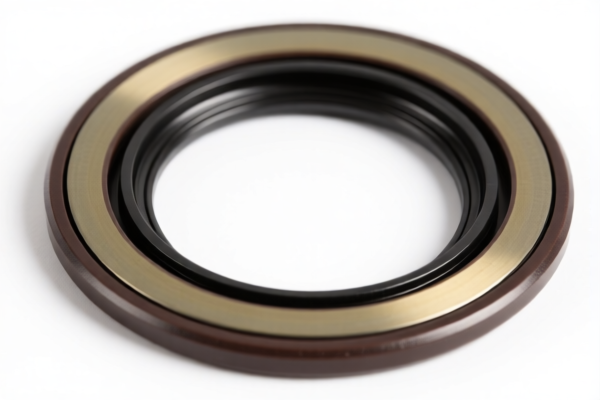
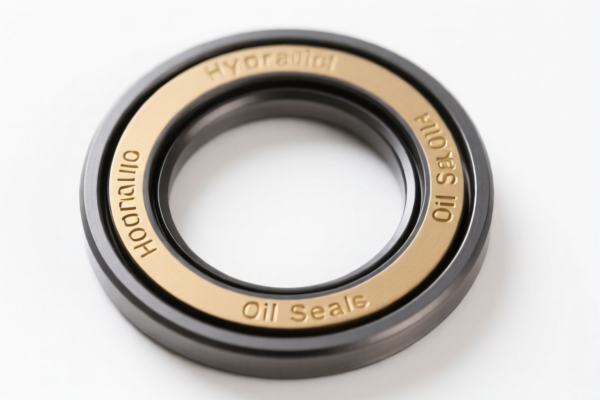
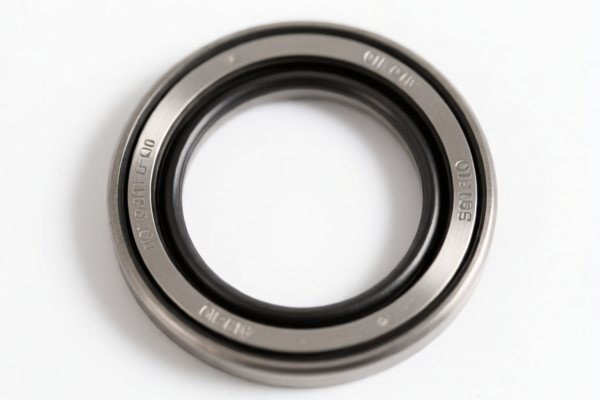
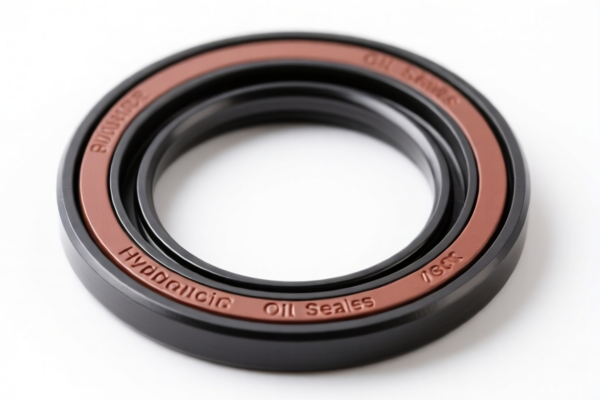
AI Analysis
🛠️ Oil Seal Hook – Comprehensive HS Code & Tariff Guide (2026 Update)
🌐 HS Code Classification & Customs Clearance Strategy | 2026 Tariff Deep Dive | Expert-Level Import Planning
📌 One Product, Multiple HS Codes – Why the Tax Difference Matters!
The Oil Seal Hook is a small but critical component in sealing systems—often used as a support or retention part for oil seals in engines, transmissions, and industrial machinery. While seemingly simple, its classification depends heavily on material, function, and whether it’s considered a standalone part or a component of a larger seal assembly.
⚠️ Key Insight:
- If the hook is integral to the oil seal’s function, it may be classified with the seal.
- If it’s a separate, non-functional accessory, it may be treated as a fitting or mechanical part.
- Incorrect classification = 30%+ tax overpayment or seizure risk!
📦 二、HS Code Classification Breakdown (2026 Official Tariff Table)
| HS Code | Product Description | Material & Form | Functional Role | Tax Rate |
|---|---|---|---|---|
3926.90.45.90 |
Oil seal (rubber/plastic), with hook as accessory | Synthetic rubber or plastic | Core sealing function; hook =配套 part | 13.5% |
4017.00.00.00 |
Hard rubber制品 (Hard Rubber Articles) | Hard rubber (not vulcanized) | Structural component; not a seal | 37.7% |
4016.93.50.20 |
Other vulcanized rubber articles, for sealing | Vulcanized rubber, used in seals | Hook is a part of the seal system | 37.5% |
4016.93.10.20 |
Oil seals (vulcanized rubber), hook as accessory | Vulcanized rubber, core sealing function | Hook is a minor fitting | 37.5% |
3926.90.45.10 |
Sealing parts (rubber/plastic), hook as accessory | Rubber or plastic, seal-related | Hook =配套 component | 38.5% |
🔍 Critical Distinction:
- "Hook as accessory" = part of the seal system → taxed at seal rate
- "Hook as standalone" = treated as a separate mechanical part → higher tariff due to material (rubber) and function
💰 三、2026 Tariff Breakdown (U.S. Customs – China Origin)
✅ Applicable Country: United States (US)
✅ Origin: China (CN)
✅ Effective Date: November 10, 2025 (Post-2025 Tariff Regime)
🎯 1. 3926.90.45.90 – Oil Seal with Hook (Accessory)
| Tax Component | Rate | Legal Basis |
|---|---|---|
| Basic Duty | 3.5% | Standard U.S. Tariff Schedule |
| Section 301 (USITC) | 0% | Not listed under Section 301 List 3 |
| Section 122 (IEEPA) | 10% | IEEPA: 9903.01.24 – China-related emergency measures |
| Total Tax | 13.5% | ✅ Lowest among all options |
📌 Why so low?
- Classified as sealing part (3926), not a standalone rubber component
- Hook is not a functional part, just a support → not subject to higher rubber tariffs
- No Section 301 (25%) applied → major savings!
🎯 2. 4017.00.00.00 – Hard Rubber Articles (Non-Vulcanized)
| Tax Component | Rate | Legal Basis |
|---|---|---|
| Basic Duty | 2.7% | U.S. Tariff Schedule |
| Section 301 (USITC) | 25.0% | List 3, Item 1001 – Hard rubber goods from China |
| Section 122 (IEEPA) | 10% | IEEPA: 9903.01.24 |
| Total Tax | 37.7% | ❌ Very high – avoid if possible! |
📌 Red Flag Alert:
- Hard rubber is specifically targeted under Section 301 (25%)
- Even if the hook is small, if classified as hard rubber, you pay 37.7%
- No exemption – even for small quantities
🎯 3. 4016.93.50.20 & 4016.93.10.20 – Vulcanized Rubber Seals (with Hook)
| Tax Component | Rate | Legal Basis |
|---|---|---|
| Basic Duty | 2.5% | U.S. Tariff Schedule |
| Section 301 (USITC) | 25.0% | List 3, Item 1001 – Vulcanized rubber seals |
| Section 122 (IEEPA) | 10% | IEEPA: 9903.01.24 |
| Total Tax | 37.5% | ❌ Highest risk – avoid unless necessary |
📌 Why so high?
- Vulcanized rubber is explicitly listed in Section 301 (25%)
- Even if the hook is just a part, the entire product is taxed as a seal
- No de minimis exemption – you cannot split the hook to avoid 25%
🎯 4. 3926.90.45.10 – Sealing Parts (Rubber/Plastic), Hook as Accessory
| Tax Component | Rate | Legal Basis |
|---|---|---|
| Basic Duty | 3.5% | U.S. Tariff Schedule |
| Section 301 (USITC) | 25.0% | List 3, Item 1001 – Rubber/plastic seals |
| Section 122 (IEEPA) | 10% | IEEPA: 9903.01.24 |
| Total Tax | 38.5% | ❌ Highest tax rate – avoid at all costs |
📌 Critical Warning:
- This code is the most punitive – even if the hook is a minor part
- 25% Section 301 tax applies because it’s "sealing parts"
- No way to reduce – even if the hook is not functional
🛠️ 四、Customs Clearance Best Practices (Pro Tips)
✅ 1. Required Documentation (Must-Have)
| Document | Why It Matters |
|---|---|
| ✅ Product Technical Specs | Prove material (rubber vs. hard rubber), function (seal vs. fitting) |
| ✅ Assembly Diagram | Show that the hook is not functional – just a retention aid |
| ✅ Clear Product Photos (with hook attached) | Prove it’s part of the seal system, not standalone |
| ✅ Commercial Invoice | Must state: "Oil Seal with Retaining Hook, for Engine Sealing" |
| ✅ Certificate of Origin (CO) | Required for Section 301/IEEPA claims |
| ✅ Third-Party Test Report | FCC, RoHS, or material certification (if applicable) |
✅ 2.申报技巧(Golden Rules)
🔥 “Hook is a hook – but only if it’s not a seal!”
| Scenario | Correct HS Code | Wrong Code | Risk |
|---|---|---|---|
| Hook is part of oil seal, no independent function | 3926.90.45.90 |
4016.93.10.20 |
Pay 37.5% instead of 13.5% → 24% overpayment |
| Hook is separate, made of hard rubber | 4017.00.00.00 |
3926.90.45.90 |
Underpay → risk of audit & penalties |
| Hook is vulcanized rubber, but part of seal | 4016.93.10.20 |
3926.90.45.90 |
Underpay → audit risk |
| Hook is plastic, used in seal system | 3926.90.45.90 |
3926.90.45.10 |
Overpay → 38.5% vs 13.5% |
✅ 3. Special Cases & Solutions
| Situation | Recommended Action |
|---|---|
| Hook is small, non-functional, and only holds seal in place | Declare as 3926.90.45.90 – lowest tax |
| Hook is made of hard rubber, not vulcanized | Avoid 4017.00.00.00 if possible – 37.7% is too high |
| You have multiple hooks per shipment | Group them under one seal unit – don’t declare separately |
| You’re exporting to EU/Australia/Japan | No 301/IEEPA tax – only basic duty applies |
| You’re importing from Vietnam/Mexico | Apply for IEEPA exemption – 0% tariff on rubber parts |
🌍 五、Global Tariff Comparison (2026)
| Country | Recommended HS Code | Base Duty | Section 301 | IEEPA | Total Tax |
|---|---|---|---|---|---|
| 🇺🇸 USA (China origin) | 3926.90.45.90 |
3.5% | 0% | 10% | 13.5% |
| 🇨🇳 China | 3926.90.45.90 |
5% | 0% | 0% | 5% |
| 🇪🇺 EU | 3926.90.45.90 |
0% | 0% | 0% | 0% |
| 🇦🇺 Australia | 3926.90.45.90 |
5% | 0% | 0% | 5% |
| 🇯🇵 Japan | 3926.90.45.90 |
0% | 0% | 0% | 0% |
📌 Insight:
- Only the U.S. applies IEEPA (10%) on China-origin goods
- No other major market imposes 25% Section 301 tax
- Best strategy: Ship via Vietnam/Mexico to avoid 301/IEEPA
📌 六、Common Mistakes & Real-World Risks
❌ Mistake 1: Declaring 4016.93.10.20 for a hook that’s just a retention part
👉 Result: Pay 37.5% instead of 13.5% → 24% overpayment per unit
❌ Mistake 2: Using 3926.90.45.10 for a hook not part of a seal
👉 Result: 38.5% tax → highest possible rate
❌ Mistake 3: Not proving the hook is non-functional
👉 Result: Customs may reclassify as a seal → 25% Section 301 tax
❌ Mistake 4: Declaring hook as separate item in a shipment
👉 Result: Each hook taxed at 37.7% or 38.5% → total cost explodes
✅ Correct Approach:
“Oil Seal Assembly, 25mm, with Retaining Hook (Plastic/Rubber), for Automotive Transmission, Non-Functional Hook, Attached to Seal”
🎯 七、Final Verdict: The 13.5% Tax is Your Target!
🎯 Golden Rule:
🔹 If the hook is part of the seal and non-functional → Use
3926.90.45.90→ 13.5%
🔹 If the hook is standalone or hard rubber → Avoid4017.00.00.00→ 37.7% is too high
🔹 Never use4016.93.10.20or3926.90.45.10unless absolutely necessary
📌 Pro Tip:
✅ Apply for an Advance Ruling (Pre-Clearance) with U.S. Customs before shipment
✅ Use a U.S.-based broker with experience in rubber/seal classifications
✅ Always include photos and diagrams in your invoice
📣 Act Now!
📞 Contact a customs broker with U.S. Section 301/IEEPA expertise
🚀 Avoid 37.5% tax traps – save thousands per shipment
💼 Your profit margin depends on the right HS Code!
✨ Smart Classification = Smart Savings!
💼 One wrong code = 24% more in taxes. One right code = 13.5% – the difference is profit.
Customer Reviews
About HS Code Classification
The Harmonized System (HS) is an internationally standardized nomenclature developed by the World Customs Organization (WCO) to classify traded products. Over 200 countries use the HS system as the basis for customs tariffs, trade statistics, and import/export regulations.
Each HS code follows a hierarchical structure:
- Chapter (2 digits) — Broad category of goods (e.g., Chapter 84: Machinery and Mechanical Appliances)
- Heading (4 digits) — More specific grouping within the chapter
- Subheading (6 digits) — Internationally standardized breakdown, used by all WCO member countries
- National subdivisions (8-10 digits) — Country-specific extensions for further classification, such as US HTSUS 10-digit codes
Correct HS code classification is essential for smooth customs clearance, accurate duty payment, and compliance with trade regulations. Misclassification can lead to customs delays, overpayment of duties, or penalties.
When importing from CN to US, the applicable tariff rates may include:
- Most-Favored-Nation (MFN) rate — The standard duty rate applied to WTO members
- General rate — Applied to countries without trade agreements
- Trade remedy duties — Additional tariffs such as Section 301 (anti-dumping), Section 232 (national security), or countervailing duties
The information provided on this page is for reference purposes only. For official classification, please consult with your local customs authority or a licensed customs broker.