Oil Separator
CN → US| HS Code | Tariff Rate | Origin | Destination | Doc |
|---|---|---|---|---|
| 8481301090 | 38.0% | CN | US | Official Doc |
| 8481200050 | 37.0% | CN | US | Official Doc |
| 8421290015 | 35.0% | CN | US | Official Doc |
| 8421290040 | 35.0% | CN | US | Official Doc |
Product Images
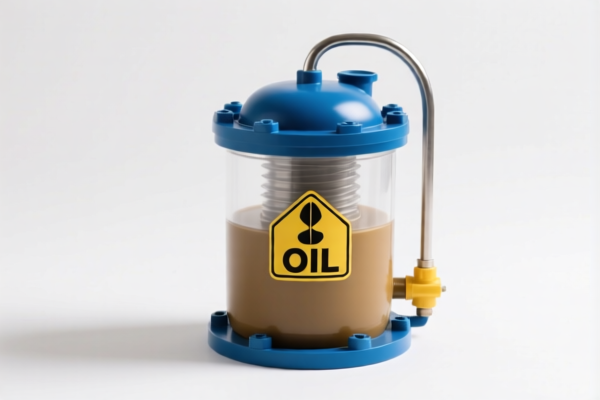
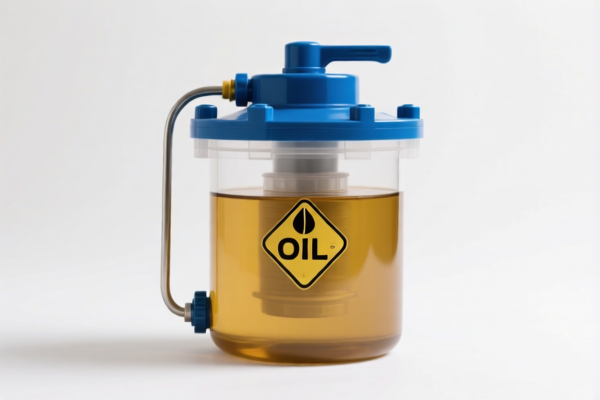
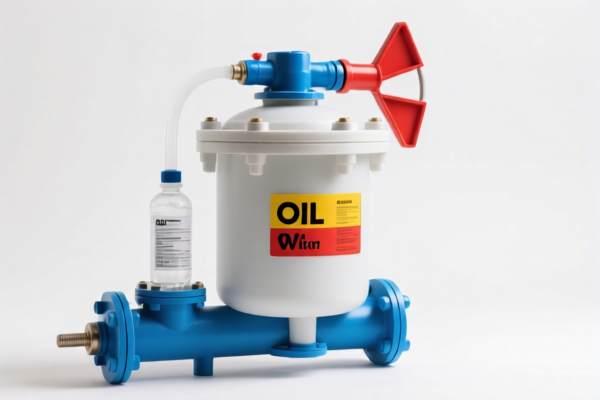
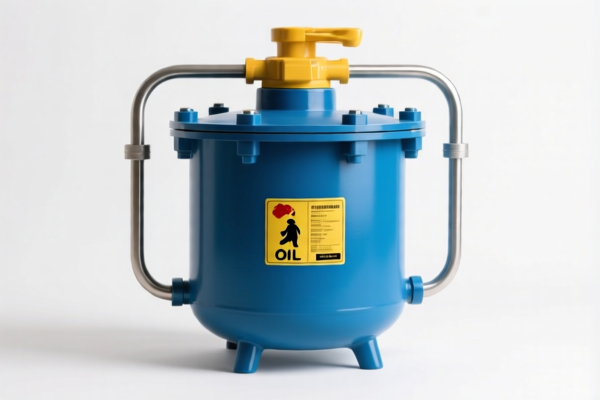
AI Analysis
🔧 Oil Separator (Hydraulic Fluid Oil-Water Separator)
🌐 HS Code Reference & Customs Clearance Guide | 2026 Latest Tariff Analysis | Professional Clearance Strategy
📌 Part 1: Product Definition & Classification: What exactly is an "Oil Separator"?
In the context of international trade, an "Oil Separator" (specifically identified here as a Hydraulic Fluid Oil-Water Separator) is a critical component for fluid purification systems. It functions to separate water and solid contaminants from hydraulic oils or lubricating fluids.
The classification depends heavily on Function vs. Structure: * Functional Classification (Filtering/Purifying): If the device is primarily seen as a filtration device for liquids (removing oil/water mixtures), it falls under Chapter 8421 (Centrifuges, Filtering/Purifying Machinery). * Structural/Component Classification (Valves/Hydraulic Components): If the device is viewed as part of a hydraulic control system or a mechanical valve assembly, it may fall under Chapter 8481 (Tap, Cock, Valve...).
⚠️ Key Distinction:
- If the primary purpose is "Separating/Purifying Liquid" → Look at 8421.29.00.
- If the primary purpose is "Hydraulic System Component/Valve" → Look at 8481.20.00 or 8481.30.10.
- If the material is unspecified, metal composition is generally assumed, avoiding conflicts with non-metallic exclusions.
📦 Part 2: HS Code Classification Details (2026 Latest Tariff Authority Comparison)
| HS Code | Product Description | Application Scenario | Primary Function |
|---|---|---|---|
8421.29.00.15 |
Other machinery and apparatus for filtering or purifying liquids (excluding centrifuges) | Oil-Water Separator for hydraulic systems; functional focus on "purifying oil". | ✅ Filtering/Purifying (De-oiling) |
8421.29.00.40 |
Other hydraulic fluid power filters and purifiers | Hydraulic fluid power systems; specific filters for hydraulic dynamics. | ✅ Hydraulic Fluid Purification |
8481.20.00.50 |
Hydraulic valves and other hydraulic valves | Hydraulic System Components; focuses on the "Hydraulic Valve/Assembly" aspect. | ✅ Hydraulic Control/Handling |
8481.30.10.90 |
Pressure-reducing valves and pressure-reducing stations | Mechanical Parts/Valves; general mechanical use, metallic parts assumption. | ✅ Mechanical Valve/Part |
🔍 Key Reminder:
- 8421 Codes: Best for devices explicitly named "Separator" or "Filter" where the fluid purification is the main selling point. - 8481 Codes: Best for components that are integrated valves within a hydraulic circuit, where the mechanical structure is emphasized. - Material Assumption: Since material is not specified, standard industry practice assumes metal/alloy construction, which is compatible with all these codes.
💰 Part 3: 2026 Latest Tariff Rate Breakdown (Including Surtaxes & Policy Add-ons)
✅ Applicable Country: United States (US)
✅ Country of Origin: China (CN)
✅ Effective Date: 2025 Nov 10 onwards (including subsequent imports)
🎯 1. 8421.29.00.15 & 8421.29.00.40 —— Oil/Water Separators & Hydraulic Fluid Filters
These codes benefit from a lower Base Duty but are still subject to significant surtaxes.
| Item | Content |
|---|---|
| Base Duty Rate | 0.0% (Ad valorem) |
| Section 301 Surcharge | +25.0% (Add-on Tariff) |
| Section 122 Tariff | +10.0% (Specific 122 Clause Tariff) |
| Total Tax Rate | 35.0% |
| Tax Calculation | CIF Value × 35% |
| De Minimis Eligibility | ❌ No (deny_de_minimis) |
| Legal Basis Path | Base: 0% → USITC: 25% → 122 Clause: 10% |
📌 Explanation:
- The 0% base duty makes these codes attractive compared to mechanical parts. - However, the 25% Section 301 tariff (trade war related) and 10% Section 122 tariff (national security-related) still apply. - Total 35% is a moderate-high burden, but lower than mechanical valve codes.
🎯 2. 8481.20.00.50 —— Hydraulic Valves / Hydraulic Components
| Item | Content |
|---|---|
| Base Duty Rate | 2.0% |
| Section 301 Surcharge | +25.0% |
| Section 122 Tariff | +10.0% |
| Total Tax Rate | 37.0% |
| Tax Calculation | CIF Value × 37% |
| De Minimis Eligibility | ❌ No |
| Legal Basis Path | Base: 2.0% → USITC: 25% → 122 Clause: 10% |
📌 Note:
- Classified as a Hydraulic Valve/Component. - The 2% base duty is slightly higher than the filter codes, but the surtaxes are identical. - Total 37%.
🎯 3. 8481.30.10.90 —— Pressure-Reducing Valves / Mechanical Parts
| Item | Content |
|---|---|
| Base Duty Rate | 3.0% |
| Section 301 Surcharge | +25.0% |
| Section 122 Tariff | +10.0% |
| Total Tax Rate | 38.0% |
| Tax Calculation | CIF Value × 38% |
| De Minimis Eligibility | ❌ No |
| Legal Basis Path | Base: 3.0% → USITC: 25% → 122 Clause: 10% |
📌 Note:
- Classified under general Mechanical Valves/Parts. - Has the highest base duty (3%) among the suggested codes. - Total 38%.
🛠️ Part 4: Customs Clearance Practical Advice (实战避坑指南)
✅ 1. Documentation Checklist (Must-Have)
| Document | Required? | Description |
|---|---|---|
| ✅ Product Specification Sheet | ✔️ | Must clearly state "Oil-Water Separator" or "Hydraulic Filter". |
| ✅ Technical Data Sheet | ✔️ | Include flow rate, pressure rating, separation efficiency. |
| ✅ Product Photos | ✔️ | Clear images of the unit, labels, and connection ports. |
| ✅ Commercial Invoice | ✔️ | Use precise terminology: "Oil-Water Separator for Hydraulic Systems" (preferred for 8421) or "Hydraulic Valve Assembly" (for 8481). |
| ✅ Packing List | ✔️ | Detail components to avoid "missing parts" flags. |
| ✅ Origin Certificate | ❓ | If not China-origin, may apply for exemptions (but US-China origin is common here). |
✅ 2. Declaration Strategy (Key Mantras)
🔥 "Function First: Filter vs. Valve!"
| Scenario | Recommended HS Code | Reasoning |
|---|---|---|
| Explicitly "Oil-Water Separator" | 8421.29.00.15 |
Best Choice: Focuses on the separation/purification function. Lowest base duty (0%). |
| Hydraulic System Filter Element | 8421.29.00.40 |
Focuses on hydraulic fluid purification. Low base duty (0%). |
| Integrated Hydraulic Valve Block | 8481.20.00.50 |
Use if it's a control valve rather than a standalone filter. |
| Generic Mechanical Part/Valve | 8481.30.10.90 |
Only use if no specific hydraulic/functional description applies. Highest risk of higher duty. |
📌 Critical Tip:
- Do NOT declare as "Part of Machine" (Generic) if it has a clear functional purpose. - Use "Filter" or "Separator" keywords in the description to justify 8421 classification, which saves 2-3% base duty.
✅ 3. Special Circumstances Handling
| Situation | Handling Advice |
|---|---|
| OEM Customized Separator | Provide client specs + design drawings. Emphasize purification function in documentation. |
| Packaged with Hydraulic Pump | If shipped as a complete unit, consider classifying the main function of the set. However, separable units are usually classified individually. |
| Material Ambiguity | If not specified, assume Metal. This avoids conflict with plastic/resin exclusions in some subheadings. |
🌍 Part 5: Global Market Comparison (2026 Latest)
| Country/Region | Recommended HS Code | Est. Duty (China Origin) | Certification | Remarks |
|---|---|---|---|---|
| 🇺🇸 USA | 8421.29.00.15 |
35% (0% Base + 25% + 10%) | N/A (No specific cert required for this HS) | Best option for separators. |
| 🇺🇸 USA | 8481.20.00.50 |
37% | N/A | Higher base duty. |
| 🇨🇳 China | 8421.29.00.15 |
5-8% (Est.) | CCC (if applicable) | No Section 301/122 tariffs. |
| 🇪🇺 EU | 8421.29.00 |
~1.5-4.5% | CE, RoHS | No major surtaxes. |
| 🇬🇧 UK | 8421.29.00 |
~3-5% | UKCA | Post-Brexit rules apply. |
📌 Conclusion:
- USA is the most challenging market due to 35%+ total tariffs. - 8421.29.00.15 is the optimal HS Code for clearance in the US due to its 0% base duty.
📌 Part 6: Common Mistakes & Pitfalls (Lessons Learned)
❌ Mistake 1: Declaring as "Mechanical Part" (8481.30) when it's clearly a Filter
👉 Consequence: 38% duty instead of 35%. Unnecessary cost increase.
❌ Mistake 2: Misdeclaring as "Valve" (8481.20) for a standalone Separator
👉 Consequence: 37% duty and potential Customs audit for functional misclassification.
❌ Mistake 3: Ignoring "Section 122 Tariff" in cost calculation
👉 Consequence: Underquoting by 10%, leading to budget overruns and profit loss.
❌ Mistake 4: Vague Description ("Oil Filter")
👉 Consequence: Customs may question the classification.
✅ Correct Practice:
"Hydraulic Oil-Water Separator, Metal Body, 10 Micron Filtration, Model XYZ, for Industrial Hydraulic Systems"
🎯 Part 7: Conclusion: Precise Classification Saves Money!
🎯 Remember the Mantra:
🔹 "Filter = 8421 = 0% Base = 35% Total"
🔹 "Valve = 8481 = 2-3% Base = 37-38% Total"
🔹 "Function First, Duty Second!"
📌 Pro Tip:
For Oil Separators, always try to justify the 8421 classification (Filtering/Purifying Machinery) over 8481 (Valves). The 3% difference in base duty is pure profit.
📣 Immediate Action:
📞 Confirm with your supplier: Is this a Filter/Separator or a Valve?
🚀 Use HS Code 8421.29.00.15 for the most cost-effective clearance in the US.
✨ Professional Clearance Starts with Accurate Classification!
💼 Every Percentage Point Counts!
Customer Reviews
About HS Code Classification
The Harmonized System (HS) is an internationally standardized nomenclature developed by the World Customs Organization (WCO) to classify traded products. Over 200 countries use the HS system as the basis for customs tariffs, trade statistics, and import/export regulations.
Each HS code follows a hierarchical structure:
- Chapter (2 digits) — Broad category of goods (e.g., Chapter 84: Machinery and Mechanical Appliances)
- Heading (4 digits) — More specific grouping within the chapter
- Subheading (6 digits) — Internationally standardized breakdown, used by all WCO member countries
- National subdivisions (8-10 digits) — Country-specific extensions for further classification, such as US HTSUS 10-digit codes
Correct HS code classification is essential for smooth customs clearance, accurate duty payment, and compliance with trade regulations. Misclassification can lead to customs delays, overpayment of duties, or penalties.
When importing from CN to US, the applicable tariff rates may include:
- Most-Favored-Nation (MFN) rate — The standard duty rate applied to WTO members
- General rate — Applied to countries without trade agreements
- Trade remedy duties — Additional tariffs such as Section 301 (anti-dumping), Section 232 (national security), or countervailing duties
The information provided on this page is for reference purposes only. For official classification, please consult with your local customs authority or a licensed customs broker.