Oil Sight Glass
CN → US| HS Code | Tariff Rate | Origin | Destination | Doc |
|---|---|---|---|---|
| 9025802000 | 37.9% | CN | US | Official Doc |
| 9025900600 | 35.0% | CN | US | Official Doc |
Product Images
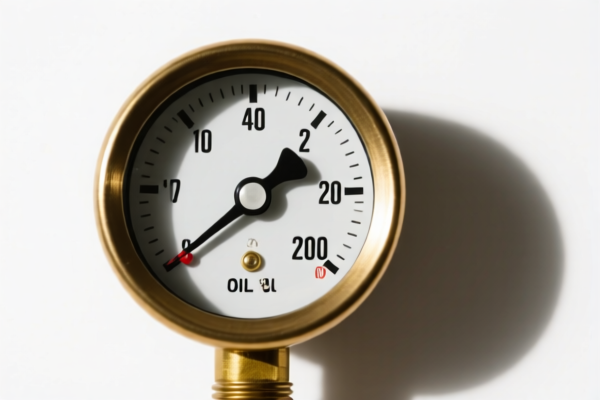
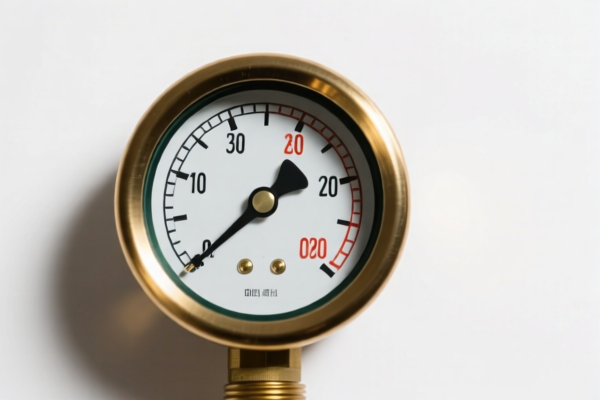
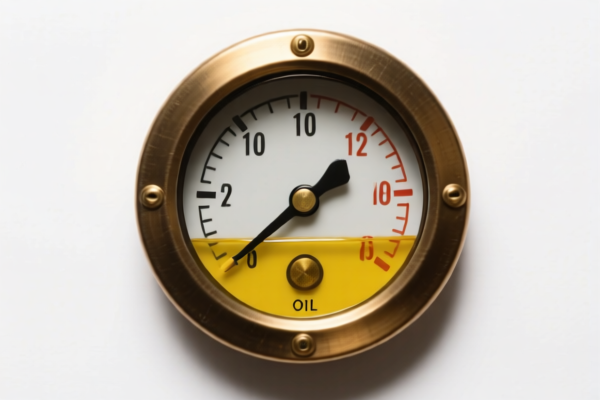

AI Analysis
👁️🗨️ Oil Sight Glass (Fluid Level Indicators)
🌐 HS Code Reference & Customs Clearance Guide | 2026 Latest Tariff Analysis | Professional-Level Clearance Strategy
📌 I. Product Definition & Classification: What Exactly is an "Oil Sight Glass"?
An Oil Sight Glass (also known as a fluid level indicator or window) is a device used to visually inspect the level of liquid (oil, water, coolant, etc.) inside a closed container or pipeline. In international trade, these are generally classified under Chapter 90: Optical, Photographic, Cinematographic, Measuring, Checking, Precision, Medical or Surgical Instruments and Apparatus.
Specifically, they fall under Heading 9025, which covers hydrometers, thermometers, pyrometers, barometers, hygrometers, psychrometers, and similar floating instruments. While an oil sight glass itself is a viewing component, it is often treated as a "similar instrument" for level indication or as a part/accessory if sold separately for specific measuring devices.
⚠️ Key Distinction:
- If the sight glass is integrated into a complete, self-contained measuring device (e.g., a combined thermometer/hydrometer unit) → It is part of the finished instrument.
- If the sight glass is a separate component (e.g., a glass tube or plate sold for installation on tanks, engines, or industrial equipment) → It is classified as a Part or Accessory.
📦 II. HS Code Classification Details (2026 Latest Tariff Authority Comparison)
Based on the provided data, there are two primary classifications for Oil Sight Glasses depending on whether they are standalone instruments or parts/accessories.
| HS Code | Product Description | Application Scenario | Classification Logic |
|---|---|---|---|
9025.80.20.00 |
Other instruments: Hydrometers and similar floating instruments, whether or not incorporating a thermometer, non-recording | Complete fluid level indicators, combined measuring units, or self-contained floating gauges | ✅ Complete Instrument Treated as a measuring instrument. |
9025.90.06.00 |
Parts and accessories | Standalone glass windows, sight tubes, or viewing plates intended for installation on tanks, engines, or other machinery | ✅ Part/Accessory Not a self-contained measuring device. |
🔍 Critical Note:
- Standalone Glass Tubes/Plates: If you are importing just the glass component (without the float or calibration mechanism), it is almost always classified as a Part/Accessory (9025.90.06.00).
- Complete Floating Gauges: If the product includes the float, housing, and calibration scale as a single functional unit, it may be classified as an Instrument (9025.80.20.00).
- Do Not Split: Do not separate the glass and the float if they are shipped as a complete, assembled unit.
💰 III. 2026 Latest Tariff Rate Details (Including Additional Taxes & Policy Surcharges)
✅ Applicable Country: United States (US)
✅ Country of Origin: China (CN)
✅ Effective Date: From November 10, 2025 (including subsequent imports)
🎯 1. 9025.80.20.00 — Hydrometers & Similar Floating Instruments (Complete)
| Item | Content |
|---|---|
| Base Tariff Rate | 0.0% (ad valorem) |
| USITC Additional Tariff | 0.0% |
| Total Tax Rate | 0.0% |
| Tax Calculation | CIF Value × 0% = $0 |
| De Minimis Eligibility | ✅ Yes (if value <$800) |
| Legal Authority Path | No additional 301 or IEEPA surcharges apply to this specific subheading in the provided data. |
📌 Explanation:
- This classification benefits from a 0% total tariff rate.
- No additional Section 301 tariffs or IEEPA surcharges are listed for this specific HS code in the provided data.
- Advantage: This is the most cost-effective classification for complete, self-contained floating instruments.
🎯 2. 9025.90.06.00 — Parts and Accessories
| Item | Content |
|---|---|
| Base Tariff Rate | 0.0% (ad valorem) |
| USITC Additional Tariff | +25.0% |
| Total Tax Rate | 25.0% |
| Tax Calculation | CIF Value × 25% |
| De Minimis Eligibility | ❌ No (deny_de_minimis due to additional tariffs) |
| Legal Authority Path | USITC:9025.90.06.00 → FOOTNOTE:9903.88.01 (Section 301) |
📌 Explanation:
- Although the Base Tariff is 0%, an additional 25% tariff is applied.
- This 25% is typically due to Section 301 actions against Chinese imports.
- Cost Impact: For every $1,000 of goods, you must pay $250 in tariffs.
- No De Minimis Exemption: Items under this code cannot use the $800 de minimis exemption if they are subject to these additional duties.
🛠️ IV. Customs Clearance Practical Advice (Real-World Pitfall Avoidance)
✅ 1. Preparation Checklist (Mandatory)
| Document | Must Provide | Description |
|---|---|---|
| ✅ Product Specifications | ✔️ | Detailed description: Material (Glass/Stainless Steel), Dimensions, Pressure Rating, Temp Range. |
| ✅ Photos (Clear Label) | ✔️ | Show the product both assembled and disassembled (if sold as parts). Highlight any brand/model numbers. |
| ✅ Statement of Function | ✔️ | Explicitly state: "Is this a complete measuring instrument or a spare part/component?" |
| ✅ Commercial Invoice | ✔️ | Must clearly describe the item as "Oil Sight Glass" or "Fluid Level Indicator," not just "Glass Part." |
| ✅ Packing List | ✔️ | Ensure quantity matches invoice. |
✅ 2. Declaration Strategy (Key Mnemonic)
🔥 "Complete Instrument = 0%, Parts = 25% Name Accurate, Tax Halved!"
| Situation | Correct Declaration | Wrong Approach |
|---|---|---|
| Complete Floating Gauge (Housing + Float + Glass) | 9025.80.20.00 |
Declare as "Glass Part" → Risk of reclassification or delay. |
| Standalone Glass Tube (No float/mechanism) | 9025.90.06.00 |
Declare as "Instrument" → Will be rejected/reclassified. |
| Sight Glass for Engine Oil | 9025.90.06.00 |
Declare as "Engine Part" → Wrong Chapter (87 or 84 vs 90). |
| Combined Thermometer + Sight Glass | 9025.80.20.00 |
Split them → Incorrect valuation and classification. |
✅ 3. Special Handling Cases
| Situation | Handling Advice |
|---|---|
| OEM Custom Sight Glasses | Provide customer drawings and specify "Made to Order." If shipped as parts, use 9025.90.06.00. |
| High-Pressure Sight Glasses | Ensure material specs (e.g., Borosilicate glass, Stainless Steel) are clearly stated to avoid safety hold-ups. |
| Integrated with Pipes | If sold with flanges/pipes, consider if it constitutes a "valve" or "pipe fitting." If it remains primarily for visual indication, stick to 9025. |
| Small B2C Sales | If the value is <$800 and classified as 9025.80.20.00, you may qualify for De Minimis (0% tax). If classified as 9025.90.06.00, you will pay 25%. |
🌍 V. Global Market Clearance Comparison (2026 Latest)
| Country/Region | Recommended HS Code | Tariff | Certification Requirements | Notes |
|---|---|---|---|---|
| 🇺🇸 USA | 9025.80.20.00 |
0% | None usually required | Best for complete instruments. |
| 🇺🇸 USA | 9025.90.06.00 |
25% | None usually required | High cost for parts. |
| 🇨🇳 China | 9025.80.20.00 |
~5-10% | CCC (if applicable) | Varies by exact type. |
| 🇪🇺 EU | 9025.80.20 |
0% | CE (if pressure equipment) | Under 10% margin for most. |
| 🇬🇧 UK | 9025.80.20 |
0% | UKCA | Post-Brexit rules. |
📌 Conclusion:
- USA has a significant tariff divergence: 0% for instruments vs 25% for parts.
- Optimization Strategy: If possible, design and ship complete, self-contained units (9025.80.20.00) rather than loose glass parts to save 25% in duties.
📌 VI. Common Errors & Pitfall Guide (Lessons Learned)
❌ Error 1: Declaring a complete floating gauge as a "Glass Part"
👉 Consequence: Unnecessary 25% tariff payment → Loss of 25% profit.
✅ Fix: Ensure the product description matches 9025.80.20.00 if it includes the float and housing.
❌ Error 2: Declaring a standalone glass tube as a "Measuring Instrument"
👉 Consequence: Customs may reject or reclassify to 9025.90.06.00 → 25% tariff + penalties.
✅ Fix: Be honest. If it's just glass, declare as 9025.90.06.00.
❌ Error 3: Not specifying "Non-Recording"
👉 Consequence: Confusion with recording instruments (which may have different rates).
✅ Fix: Explicitly state "Non-recording" in the invoice description.
🎯 VII. Conclusion: Professional Declaration Saves Money!
🎯 Remember the Mantra:
🔹 "Complete Unit = 0%, Parts = 25%. Name it Right, Tax Goes Right!"
🔹 "HS Code defines the cost. A small change in classification saves 25%!"
📌 Pro Tip:
If your business frequently imports oil sight glasses, consider applying for an Advance Ruling from US Customs and Border Protection (CBP) to confirm whether your specific product is an "instrument" or a "part." This provides legal certainty and prevents costly delays at the border.
📣 Immediate Action:
📞 Consult with a licensed customs broker.
📄 Provide clear photos and technical specs.
🚀 Ensure your Oil Sight Glasses clear customs smoothly and cost-effectively!
✨ Professional Clearance Starts with Accurate Classification!
💼 Every dollar in tariffs saved is pure profit!
Customer Reviews
About HS Code Classification
The Harmonized System (HS) is an internationally standardized nomenclature developed by the World Customs Organization (WCO) to classify traded products. Over 200 countries use the HS system as the basis for customs tariffs, trade statistics, and import/export regulations.
Each HS code follows a hierarchical structure:
- Chapter (2 digits) — Broad category of goods (e.g., Chapter 84: Machinery and Mechanical Appliances)
- Heading (4 digits) — More specific grouping within the chapter
- Subheading (6 digits) — Internationally standardized breakdown, used by all WCO member countries
- National subdivisions (8-10 digits) — Country-specific extensions for further classification, such as US HTSUS 10-digit codes
Correct HS code classification is essential for smooth customs clearance, accurate duty payment, and compliance with trade regulations. Misclassification can lead to customs delays, overpayment of duties, or penalties.
When importing from CN to US, the applicable tariff rates may include:
- Most-Favored-Nation (MFN) rate — The standard duty rate applied to WTO members
- General rate — Applied to countries without trade agreements
- Trade remedy duties — Additional tariffs such as Section 301 (anti-dumping), Section 232 (national security), or countervailing duties
The information provided on this page is for reference purposes only. For official classification, please consult with your local customs authority or a licensed customs broker.