Oil Valve Switch
CN → US| HS Code | Tariff Rate | Origin | Destination | Doc |
|---|---|---|---|---|
| 8481200010 | 37.0% | CN | US | Official Doc |
| 8708407580 | 37.5% | CN | US | Official Doc |
| 8708998180 | 12.5% | CN | US | Official Doc |
| 8481200030 | 37.0% | CN | US | Official Doc |
| 8708996890 | 87.5% | CN | US | Official Doc |
Product Images
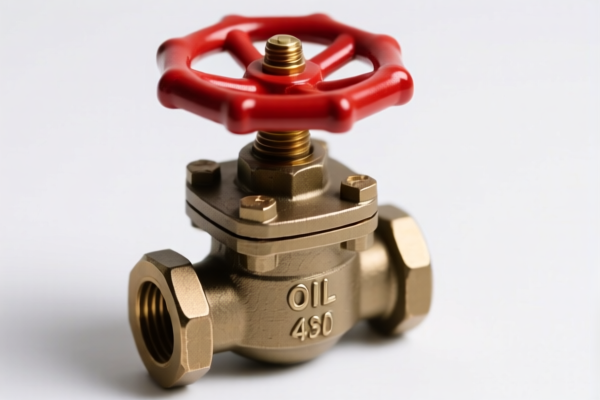
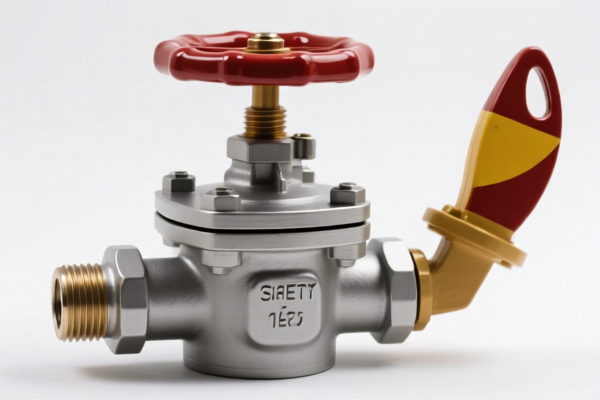
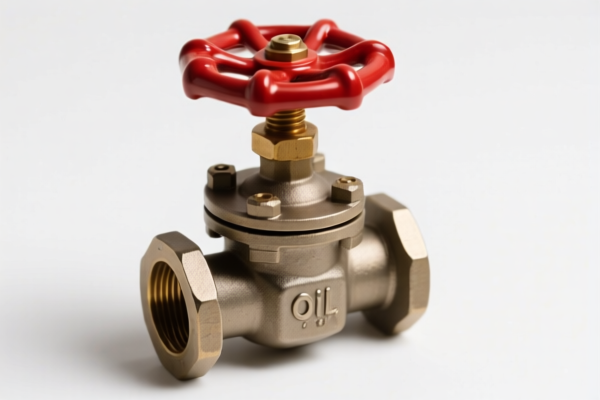
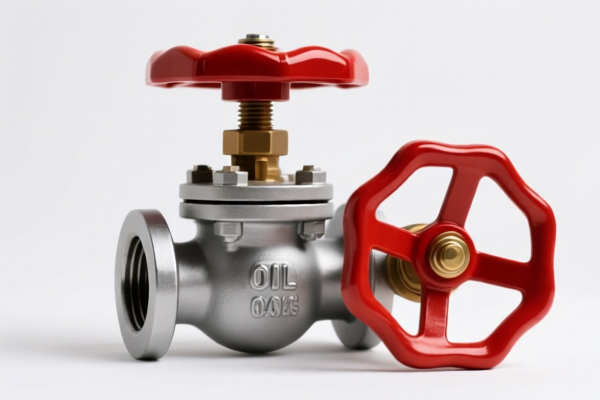
AI Analysis
🛠️ Oil Valve Switch (Automotive & Hydraulic Components)
🌐 HS Code Reference & Customs Clearance Guide | 2026 Latest Tariff Analysis | Strategic Classification for Auto Parts
📌 I. Product Definition: What is an "Oil Valve Switch"?
The term "Oil Valve Switch" is a composite description often found in cross-border e-commerce or industrial supply chains. It generally refers to a component that controls the flow of oil (hydraulic fluid, engine oil, transmission fluid) via a switching mechanism.
In international trade, this item falls into two distinct categories based on its application and function: 1. Hydraulic/Pneumatic Valves: If used in industrial machinery, hydraulics, or general fluid control systems (HS Chapter 84). 2. Automotive Parts: If used in vehicles, specifically for transmission, engine oil pressure control, or auxiliary systems (HS Chapter 87).
⚠️ Key Distinction Point:
- If the switch is part of a vehicle's powertrain or engine system (e.g., transmission solenoid, oil pressure switch), it is classified as an Auto Part.
- If it is a standalone valve for industrial hydraulic/pneumatic systems, it is classified as a Fluid Control Valve.
📦 II. HS Code Classification Details (2026 Latest Tariff Authority Comparison)
Based on the provided data, here are the four potential HS Codes and their logical classification paths:
| HS Code | Product Description | Application Scenario | Classification Logic |
|---|---|---|---|
8481.20.00.10 |
Valves for hydraulic or pneumatic transmission | Industrial hydraulics, machinery | Valve Type: "Valve" + "Oil Transmission". Inferred as directional/control valve. Default manual/directional logic. |
8708.40.75.80 |
Parts and accessories of motor vehicles (Transmission parts) | Automotive Transmission Systems | Auto Part: "Switch" as a transmission component. Material inferred as metal/plastic. Fits "Other" category for transmission parts. |
8708.99.81.80 |
Parts and accessories of motor vehicles (Other) | General Auto Engine/Auxiliary Systems | Auto Part: "Switch" belongs to auto parts. Oil valve switch inferred as engine system component. Matches "Other" category. |
8481.20.00.30 |
Valves for hydraulic or pneumatic transmission (Other) | Industrial Fluid Control | Valve Type: Hydraulic/pneumatic assembly. Function: Pressure/Flow control. Material inferred as metal/oil-resistant plastic. |
🔍 Critical Note:
- Automotive vs. Industrial: The biggest risk is misclassifying an Auto Part as an Industrial Valve or vice versa.
- Tariff Disparity: Auto Parts (8708) generally have lower or different tariff structures compared to Industrial Valves (8481), especially under Section 301 (122 Clause) and USITC duties.
- Material Ambiguity: Since the name "Oil Valve Switch" does not specify material, customs may infer "Metal" or "Engineering Plastic," which affects duty rates (e.g., Steel/Aluminum/Copper items may face 50% additional tariff).
💰 III. 2026 Latest Tariff Rate Breakdown (Including Additional Taxes & Policy Surcharges)
✅ Applicable Country: United States (US)
✅ Country of Origin: China (CN)
✅ Effective Date: Post-2025 policies (Section 301 + IEEPA)
🎯 1. 8481.20.00.10 & 8481.20.00.30 — Industrial Hydraulic/Pneumatic Valves
| Item | Content |
|---|---|
| Base Duty Rate | 2.0% |
| Section 301 Surcharge | +25.0% |
| IEEPA Surcharge (122 Clause) | +10.0% |
| Total Tariff Rate | 37.0% |
| Tax Calculation | CIF Value × 37.0% |
| De Minimis Exemption | ❌ Not Eligible (High tariff items typically excluded) |
| Legal Basis Path | USITC:8481.20.00.10/30 → Section301:Footnote9903.88.01 → IEEPA:9903.01.24 |
📌 Explanation:
- These codes fall under Chapter 84 (Machinery/Nuclear Reactors).
- Total 37% is a significant cost driver.
- Warning: If the valve is made of Steel, Aluminum, or Copper, be aware that some interpretations add an additional 50% for specific metal products under certain trade actions (though the provided data lists 37% base, always verify material-specific surcharges).
🎯 2. 8708.40.75.80 — Auto Transmission Parts
| Item | Content |
|---|---|
| Base Duty Rate | 2.5% |
| Section 301 Surcharge | +25.0% |
| IEEPA Surcharge (122 Clause) | +10.0% |
| Total Tariff Rate | 37.5% |
| Tax Calculation | CIF Value × 37.5% |
| De Minimis Exemption | ❌ Not Eligible |
| Legal Basis Path | USITC:8708.40.75.80 → Section301 → IEEPA |
📌 Explanation:
- Classified as Transmission Parts.
- Slightly higher base duty (2.5%) compared to general parts, resulting in 37.5% total.
- Common for solenoid valves in automatic transmissions.
🎯 3. 8708.99.81.80 — Other Auto Parts (Best Case Scenario)
| Item | Content |
|---|---|
| Base Duty Rate | 2.5% |
| Section 301 Surcharge | +0.0% (Exempted or Lower Bracket) |
| IEEPA Surcharge (122 Clause) | +10.0% |
| Total Tariff Rate | 12.5% |
| Tax Calculation | CIF Value × 12.5% |
| De Minimis Exemption | ❌ Not Eligible (Generally) |
| Legal Basis Path | USITC:8708.99.81.80 → IEEPA:9901.25/9903.01.24 |
📌 Explanation:
- CRITICAL DISTINCTION: This code has 0% Section 301 surcharge in the provided data, leading to a much lower total rate of 12.5%.
- This suggests the item is classified as a generic "Other Part" rather than a specific "Transmission" or "Industrial Valve" part.
- Optimization Goal: If the product is indeed an auto part, fighting for this classification can save 25% in taxes.
🎯 4. 8708.99.68.90 — Other Auto Parts (Metallic/Cautious Scenario)
| Item | Content |
|---|---|
| Base Duty Rate | 2.5% |
| Section 301 Surcharge | +25.0% |
| IEEPA Surcharge (122 Clause) | +10.0% |
| Metal/Alloy Surcharge | +50.0% (If Steel, Aluminum, Copper) |
| Total Tariff Rate | 87.5% (or higher if metals apply) |
| Tax Calculation | CIF Value × 87.5% |
| De Minimis Exemption | ❌ Not Eligible |
| Legal Basis Path | USITC:8708.99.68.90 → Section301 → IEEPA → Metal-Specific Footnotes |
📌 Explanation:
- This is the highest risk classification.
- If the "Oil Valve Switch" is made of Steel, Aluminum, or Copper, an additional 50% tariff may apply on top of the standard 37.5%.
- Total 87.5% is prohibitive. Material declaration is vital here.
🛠️ IV. Customs Clearance Practical Advice (Battle-Tested Pitfall Avoidance)
✅ 1. Documentation Checklist (Non-Negotiable)
| Document | Required? | Description |
|---|---|---|
| ✅ Product Specification Sheet | ✔️ | Must clearly state: Function (Valve/Switch), Medium (Oil/Hydraulic), Application (Auto/Industrial). |
| ✅ Material Composition Certificate | ✔️ | Crucial: Specify if it contains Steel, Aluminum, or Plastic. This determines the 50% metal surcharge. |
| ✅ Installation Diagram/Manual | ✔️ | Proves if it's an auto part (e.g., fits in engine bay) or industrial component. |
| ✅ Commercial Invoice | ✔️ | Description: "Automotive Oil Pressure Switch" vs. "Hydraulic Control Valve". Precision matters. |
| ✅ HS Code Pre-Ruling Request | ✔️ | Highly recommended for high-value shipments to lock in the 12.5% vs 37.5% classification. |
✅ 2. Declaration Strategy (Key Mantra)
🔥 "Identity First, Material Second, Tariff Third!"
| Scenario | Correct Declaration | Wrong Practice |
|---|---|---|
| Auto Part (General) | 8708.99.81.80 - "Oil Valve Switch, for Automotive Engine, Plastic/Metal Alloy" |
Declaring as "Valve" → 8481 → 37%+ |
| Auto Part (Transmission) | 8708.40.75.80 - "Transmission Solenoid Valve" |
Vague name "Switch" → Risk of audit |
| Industrial Valve | 8481.20.00.10 - "Hydraulic Direction Control Valve" |
Calling it "Auto Part" → Rejection |
| Metallic Auto Part | 8708.99.68.90 + Declare Material |
Hiding material → 87.5% Surprise Tax |
💡 Pro Tip:
- If the item is plastic-bodied, fight for8708.99.81.80(12.5%) or8481(37%).
- If the item is metal, be prepared for the 50% metal surcharge under8708.99.68.90if classified as a generic auto part.
- Avoid the term "Switch" if it's a mechanical valve; use "Valve" to trigger Chapter 84, or use "Auto Part" to trigger Chapter 87, but ensure consistency.
✅ 3. Special Case Handling
| Situation | Handling Advice |
|---|---|
| OEM Automotive Part | Provide the OEM Part Number and Vehicle Fitment List. This strongly supports 8708 classification. |
| Hydraulic Valve for Machinery | Provide Circuit Diagrams and Pressure Ratings. Supports 8481 classification. |
| Mixed Shipment | Do not mix Auto Parts and Industrial Valves in one HS Code declaration. Split the invoice. |
| Material Uncertainty | If the supplier cannot confirm material, assume Steel/Aluminum and budget for the 50% surcharge to avoid penalties. |
🌍 V. Global Market Comparison (2026 Latest)
| Country/Region | Recommended HS Code | Tariff (China Origin) | Certification | Notes |
|---|---|---|---|---|
| 🇺🇸 USA | 8708.99.81.80 |
12.5% (Low) / 37.5% (High) | None specific | Critical: 301 + IEEPA taxes apply. Metal items face +50%. |
| 🇨🇳 China | 8481.20.00.10 |
2.0% - 2.5% | CCC (if applicable) | Lower import duty, but check export restrictions. |
| 🇪🇺 EU | 8481.20.00.10 |
1.7% - 2.7% | CE, RoHS | No Section 301. Generally lower duties. |
| 🇲🇽 Mexico | 8708.99.90 |
0% - 5% (USMCA) | NOM | Potential benefit if originating in USMCA region. |
📌 Conclusion for US Market:
- The 12.5% rate under8708.99.81.80is the most favorable if the product is an automotive part.
- The 37.0-37.5% rate is standard for industrial valves and transmission-specific auto parts.
- The 87.5% rate is a danger zone for metal auto parts. Material declaration is the key lever.
📌 VI. Common Mistakes & Pitfalls (Blood Tears Lesson)
❌ Mistake 1: Calling it a "Switch" when it's a "Valve"
👉 Consequence: Customs may reclassify to 8481 (Industrial) or 8708 (Auto), causing duty miscalculation.
👉 Fix: Use precise technical terms: "Hydraulic Valve" or "Solenoid Valve."
❌ Mistake 2: Ignoring Material Composition
👉 Consequence: If declared as "Other" but made of Steel, you face the 50% Metal Surcharge → Total 87.5%.
👉 Fix: Always specify "Plastic," "Steel," or "Alloy" in the declaration.
❌ Mistake 3: Mixing Auto and Industrial Applications
👉 Consequence: Audit risk, detention, or penalty for misclassification.
👉 Fix: Clear product photos and application documents are mandatory.
❌ Mistake 4: Assuming "De Minimis" (Section 321) Applies
👉 Consequence: High tariff items (37%+) are often excluded from $800 de minimis exemption for Chinese goods.
👉 Fix: Budget for full duty payment.
✅ Correct Approach:
"Automotive Oil Pressure Switch, Plastic Housing, for Engine Management System, Model XYZ, US Origin (if applicable)"
🎯 VII. Conclusion: Professional Declaration, Cost Control, Efficiency!
🎯 Remember the Mantra:
🔹 "Auto Part = 12.5% or 37.5% | Industrial Valve = 37% | Metal Part = 87.5%!"
🔹 "Material Declaration Saves 50%!"
🔹 "HS Code Choice is Profit Control!"
📌 Tips:
- If you are an OEM supplier, provide the Fitment List to secure the 12.5% auto part rate.
- If you are an Industrial Supplier, ensure the Hydraulic Specs are clear to secure the 37% rate.
- Avoid the 87.5% trap by clarifying material or finding a non-metallic alternative classification.
📣 Immediate Action:
📞 Contact a Licensed Customs Broker + Provide Product Photos & Material Specs + Apply for HS Code Pre-Ruling.
🚀 Let your Oil Valve Switch pass smoothly, save 25-75% in taxes, and maximize profit!
✨ Professional Customs Clearance Starts with Accurate Classification!
💼 Every dollar of tax saved is pure profit!
Customer Reviews
About HS Code Classification
The Harmonized System (HS) is an internationally standardized nomenclature developed by the World Customs Organization (WCO) to classify traded products. Over 200 countries use the HS system as the basis for customs tariffs, trade statistics, and import/export regulations.
Each HS code follows a hierarchical structure:
- Chapter (2 digits) — Broad category of goods (e.g., Chapter 84: Machinery and Mechanical Appliances)
- Heading (4 digits) — More specific grouping within the chapter
- Subheading (6 digits) — Internationally standardized breakdown, used by all WCO member countries
- National subdivisions (8-10 digits) — Country-specific extensions for further classification, such as US HTSUS 10-digit codes
Correct HS code classification is essential for smooth customs clearance, accurate duty payment, and compliance with trade regulations. Misclassification can lead to customs delays, overpayment of duties, or penalties.
When importing from CN to US, the applicable tariff rates may include:
- Most-Favored-Nation (MFN) rate — The standard duty rate applied to WTO members
- General rate — Applied to countries without trade agreements
- Trade remedy duties — Additional tariffs such as Section 301 (anti-dumping), Section 232 (national security), or countervailing duties
The information provided on this page is for reference purposes only. For official classification, please consult with your local customs authority or a licensed customs broker.