Oil impregnated Filter Paper
CN → US| HS Code | Tariff Rate | Origin | Destination | Doc |
|---|---|---|---|---|
| 4823209000 | 35.0% | CN | US | Official Doc |
| 8421990180 | 35.0% | CN | US | Official Doc |
| 4823201000 | 35.0% | CN | US | Official Doc |
| 8421290065 | 35.0% | CN | US | Official Doc |
Product Images
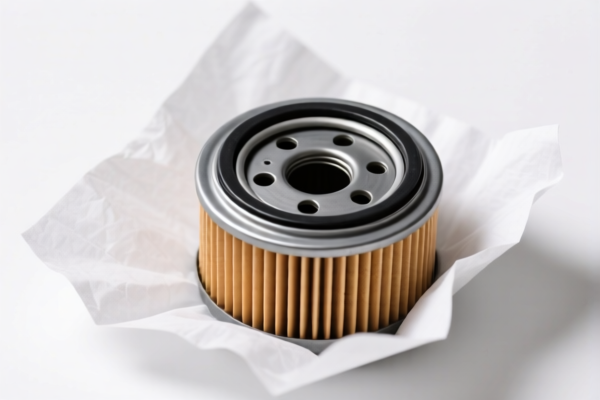

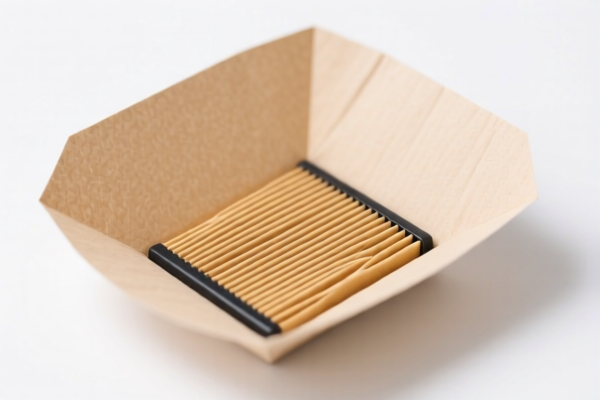
AI Analysis
🧪 Oil Impregnated Filter Paper (油漆滤纸 / 油性过滤介质)
🌐 HS Code Reference & Customs Clearance Guide | 2026 Latest Tariff Analysis | Specialized Clearance Strategy
📌 I. Product Definition & Classification: What Exactly is "Oil Impregnated Filter Paper"?
Oil Impregnated Filter Paper (often referred to as Paint Filter Paper or Oil Filter Media) is a specialized consumable used in industrial and automotive applications to filter liquids such as oil, paint, solvents, and other viscous fluids. Unlike dry filter paper, this material is treated or impregnated with oils or resins to enhance its durability, grease resistance, and filtration efficiency when handling oily substances.
In international trade, it is primarily classified based on its material composition (Paper/Cardboard) and its specific use (Filtration).
⚠️ Key Distinction:
- If the product is strictly paper-based used for filtration → It falls under Chapter 48 (Paper and Paperboard).
- If the product is a mechanical device or machine part (e.g., a housing for a filter) → It would fall under Chapter 84.
- Crucial Point: Since "Oil Impregnated Filter Paper" is a consumable medium, not a mechanical appliance, it is overwhelmingly likely to be classified under HS Code 4823.20 (Filter paper and paperboard) rather than 8421 (Machinery). However, some classifiers may attempt to place it under 8421.99 (Parts of filtration machinery) if misinterpreted as a "part" rather than the "medium."
📦 II. HS Code Classification Details (2026 Latest Tariff Authority Comparison)
| HS Code | Product Description | Application Scenario | Material Nature | Tax Rate |
|---|---|---|---|---|
4823.20.90.00 |
Other filter paper and paperboard, not cut to size or shape, or in rolls | General industrial oil/paint filtration; raw filter paper sheets | ✅ Paper/Cardboard | 35.0% |
8421.99.01.80 |
Other parts of filtering or purifying machinery (Non-water specific) | Misclassification: If declared as a "part" of a filter machine rather than the filter medium itself | ❌ Not Paper (Misinterpretation) | 35.0% |
4823.20.10.00 |
Filter paper and paperboard, cut to size/shape, for paint/oil filters | Correct Match: Paint filter paper, specific size for automotive/industrial paint filters | ✅ Paper/Cardboard | 35.0% |
8421.29.00.65 |
Other liquid filtering/purifying machinery parts | Misclassification: Focusing on "Liquid Filtering" rather than the material | ❌ Not Paper (Misinterpretation) | 35.0% |
🔍 Critical Analysis:
-4823.20.10.00is the most accurate description for "Paint Filter Paper" or "Oil Impregnated Filter Paper" if it is pre-cut for specific filter housings.
-4823.20.90.00is appropriate for bulk rolls or sheets of oil-resistant filter paper.
- Codes8421.99.01.80and8421.29.00.65are often seen in erroneous classifications. While the function is filtration, the object is paper, not machinery. However, due to the "Oil Impregnated" nature, some systems might incorrectly flag it as a mechanical part. But note: The tax rate in the provided data is identical (35%).
💰 III. 2026 Latest Tariff Rate Breakdown (Including Surcharges & Policy Add-ons)
✅ Applicable Country: United States (US)
✅ Country of Origin: China (CN)
✅ Effective Date: From November 10, 2025 (for subsequent imports)
🎯 1. All Listed HS Codes (4823.20.90.00, 8421.99.01.80, 4823.20.10.00, 8421.29.00.65)
Since all four HS codes in the provided data share the exact same tax structure, the calculation is uniform across these classifications.
| Item | Content |
|---|---|
| Base Tariff | 0.0% (Ad Valorem) |
| Section 301 Tariff (USITC) | +25.0% |
| IEEPA Tariff (Section 122/China-specific) | +10.0% |
| Total Tax Rate | 35.0% |
| Tax Calculation | CIF Value × 35% |
| De Minimis Exemption Eligibility | ❌ No (Denied for China-origin goods under current trade policies) |
| Legal Basis Path | USITC:4823.20.90.00 → FOOTNOTE:301 → IEEPA:China → Total:35% |
📌 Explanation:
- The 0% base rate reflects the standard MFN (Most Favored Nation) duty for paper products or machinery parts.
- The 25% Section 301 Tariff is applied to almost all Chinese-made goods, including paper products and machinery components.
- The 10% IEEPA Tariff is an additional surcharge specifically targeting Chinese imports under emergency economic powers.
- Total Impact: A 35% tariff significantly impacts the landed cost. For every $10,000 of goods, you must pay $3,500 in duties alone.
🛠️ IV. Customs Clearance Operational Advice (Practical Pitfall Avoidance Guide)
✅ 1. Documentation Checklist (Essential Items)
| Document | Required | Explanation |
|---|---|---|
| ✅ Product Specification Sheet | ✔️ | Must specify "Oil Impregnated" or "Paint Filter," material composition (Cellulose/Paper), and pore size. |
| ✅ Material Safety Data Sheet (MSDS) | ✔️ | To prove the nature of the "impregnation" (e.g., silicone oil, phenolic resin) and ensure it's not hazardous. |
| ✅ Commercial Invoice | ✔️ | Clearly state: "Filter Paper for Oil/Paint, Paper Material, HS Code 4823.20." Avoid vague terms like "Filter Part." |
| ✅ Packing List | ✔️ | Detail weight and volume. Ensure no mechanical filters (plastic/metal) are mixed in unless separately declared. |
| ✅ Certificate of Origin (CO) | ✔️ | Essential for verifying China origin, which triggers the 35% tax. |
| ✅ Photos of Product & Labeling | ✔️ | Show the paper texture, oil impregnation (if visible), and packaging details. |
✅ 2. Declaration Strategy (Key Mnemonics)
🔥 "Paper is Paper, Don't Call it Machine! Specify Use, Avoid Misclassification!"
| Scenario | Correct Declaration | Incorrect Declaration | Consequence |
|---|---|---|---|
| Rolls of Oil-Resistant Paper | 4823.20.90.00 |
8421.99.01.80 |
No tax difference here, but accurate classification avoids audits. |
| Pre-cut Paint Filter Shapes | 4823.20.10.00 |
8421.29.00.65 |
Same tax rate, but 4823 is technically more accurate for paper goods. |
| Mixed Shipment (Paper + Plastic Housing) | Separate Lines: Paper (4823) + Housing (8421) |
Mixed Line Item | Risk of penalty, delays, or incorrect duty assessment. |
| Vague Description "Filter" | "Oil Impregnated Filter Paper" | "Filter" or "Filter Part" | High risk of customs reclassification and delays. |
✅ 3. Special Cases Handling
| Situation | Handling Advice |
|---|---|
| Non-Oil Impregnated (Dry) Paper | Still 4823.20. Tax rate is the same, but documentation should clarify it is "Dry" to avoid confusion with chemical impregnations. |
| Import from Non-China Origin | If manufactured in Vietnam/Malaysia, IEEPA 10% may not apply. Check for Free Trade Agreements (FTAs) to reduce tax to 25% or 0%. |
| Sample Shipments | Even samples are subject to the 35% tariff if over $800 de minimis value, but samples under $800 may qualify for de minimis if not restricted. However, China-origin goods are often excluded from de minimis relief under current rules. |
| Chemical Treatment | If the "impregnation" involves hazardous chemicals, additional EPA/REACH compliance documents may be required. |
🌍 V. Global Market Comparison (2026 Latest)
| Country/Region | Recommended HS Code | Tariff (China Origin) | Certification Requirements | Notes |
|---|---|---|---|---|
| 🇺🇸 USA | 4823.20.10.00 / 4823.20.90.00 |
35% | None specific, but MSDS required | High tariff due to Section 301 + IEEPA. |
| 🇨🇳 China | 4823.20.90.00 |
5-10% (Import Duty) | CCC (if applicable) | Lower import duty, but export tax may apply. |
| 🇪🇺 EU | 4823.20 |
0-6.5% (Variable) | REACH (Chemical compliance) | No Section 301 equivalent; lower overall cost. |
| 🇬🇧 UK | 4823.20 |
0-6.5% | UKCA Mark (if applicable) | Post-Brexit rules similar to EU. |
| 🇯🇵 Japan | 4823.20 |
3-6% | None specific | Competitive tariff structure. |
📌 Conclusion:
- The USA is the most expensive market for Oil Impregnated Filter Paper from China due to the 35% combined tariff.
- EU, UK, and Japan offer significantly lower tariff burdens (0-6.5%), making them more cost-effective for Chinese exports.
- Strategy: If targeting the US, consider supply chain diversification or precise HS code classification to avoid additional penalties.
📌 VI. Common Errors & Pitfall Guide (Lessons Learned)
❌ Error 1: Declaring "Oil Filter Paper" as "Part of a Filter Machine" (8421) without justification.
👉 Consequence: While tax is the same (35%), it triggers a more intense customs audit on the nature of the goods (paper vs. machinery). If found misclassified, penalties apply.
❌ Error 2: Omitting "Oil Impregnated" in the description.
👉 Consequence: Customs may classify it as "Dry Filter Paper" (4823.20.90.00) or question the chemical safety. If impregnation is hazardous, failure to disclose leads to seizure.
❌ Error 3: Assuming De Minimis ($800) applies to China-origin shipments.
👉 Consequence: Incorrect. China-origin goods are largely excluded from de minimis relief under current US trade policy. All shipments, regardless of value, are subject to the 35% tariff and full customs entry.
❌ Error 4: Mixing "Filter Paper" with "Plastic Filter Housings" in one HS Code.
👉 Consequence: Incorrect classification. Paper should be 4823, Housings 8421. Mixing them can lead to duty evasion findings.
✅ Correct Practice:
"Oil-Impregnated Filter Paper, Cellulose Base, Pre-cut for Paint Filter Systems, Model XYZ, MSDS Attached."
🎯 VII. Conclusion: Professional Classification Saves Money and Time!
🎯 Remember the Key Points:
🔹 "It's Paper, Not a Machine!" → Use
4823.20.
🔹 "China Origin = 35% Tax" → Plan your cash flow for the Section 301 + IEEPA surcharge.
🔹 "De Minimis is Not Your Friend (for China)" → Prepare full entry documentation for all shipments.
🔹 "Be Specific!" → Describe "Oil Impregnated" and "Paper Material" clearly to avoid delays.
📌 Pro Tip:
If your filter paper is impregnated with special resins, provide a Material Declaration to ensure it is not classified under Chapter 39 (Plastics) by mistake, which could have different tax implications or regulatory requirements.
📣 Immediate Action:
📞 Consult a licensed customs broker for Advance Ruling if your product has unique chemical impregnations.
🚀 Accurate HS Code = Predictable Costs = Smooth Clearance!
✨ Professional Clearance Starts with Precise Classification!
💼 Every Percent of Duty Counts – Optimize Your Strategy Today!
Customer Reviews
About HS Code Classification
The Harmonized System (HS) is an internationally standardized nomenclature developed by the World Customs Organization (WCO) to classify traded products. Over 200 countries use the HS system as the basis for customs tariffs, trade statistics, and import/export regulations.
Each HS code follows a hierarchical structure:
- Chapter (2 digits) — Broad category of goods (e.g., Chapter 84: Machinery and Mechanical Appliances)
- Heading (4 digits) — More specific grouping within the chapter
- Subheading (6 digits) — Internationally standardized breakdown, used by all WCO member countries
- National subdivisions (8-10 digits) — Country-specific extensions for further classification, such as US HTSUS 10-digit codes
Correct HS code classification is essential for smooth customs clearance, accurate duty payment, and compliance with trade regulations. Misclassification can lead to customs delays, overpayment of duties, or penalties.
When importing from CN to US, the applicable tariff rates may include:
- Most-Favored-Nation (MFN) rate — The standard duty rate applied to WTO members
- General rate — Applied to countries without trade agreements
- Trade remedy duties — Additional tariffs such as Section 301 (anti-dumping), Section 232 (national security), or countervailing duties
The information provided on this page is for reference purposes only. For official classification, please consult with your local customs authority or a licensed customs broker.