Optical Lenses for Spectacles
CN → US| HS Code | Tariff Rate | Origin | Destination | Doc |
|---|---|---|---|---|
| 9001400000 | 19.5% | CN | US | Official Doc |
| 7015100000 | 17.5% | CN | US | Official Doc |
| 7020006000 | 40.0% | CN | US | Official Doc |
| 7020004000 | 41.6% | CN | US | Official Doc |
| 9001906000 | 35.0% | CN | US | Official Doc |
Product Images
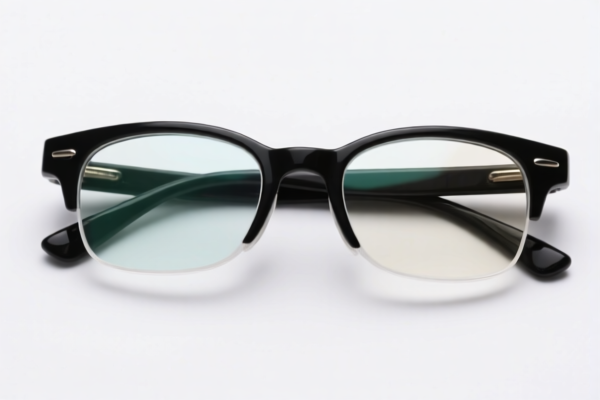
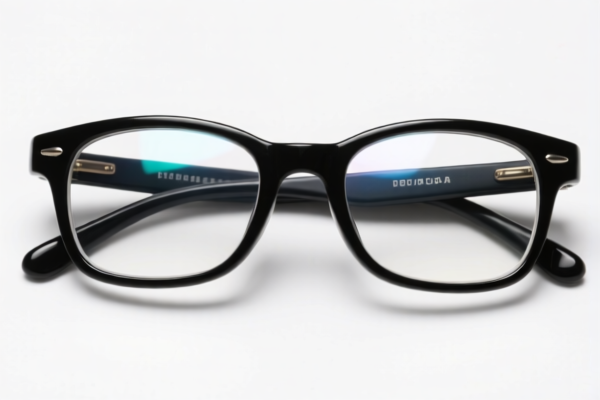
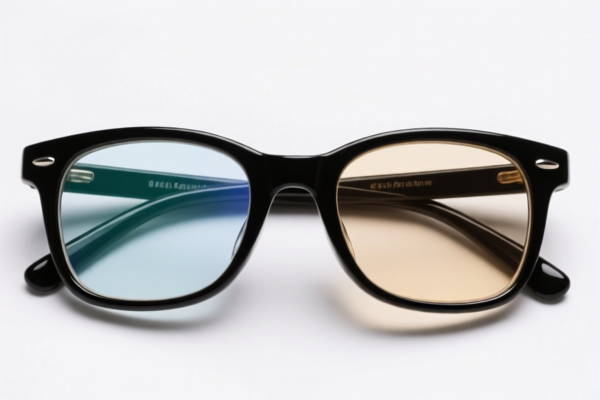

AI Analysis
👓 Optical Lenses for Spectacles (Glass-Based)
🌐 HS Code Reference & Customs Clearance Guide | 2026 Latest Tariff Analysis | Strategic Compliance Strategy
📌 I. Product Definition & Classification: What Exactly Are "Optical Lenses"?
Optical lenses for spectacles are precision-crafted optical components designed to correct vision defects. In international trade, the classification heavily depends on the material and finished state of the lens. Specifically, when the primary material is optical glass, the classification diverges significantly based on whether they are "finished eyewear lenses" or general glass articles.
1. Precision Optical Components (Chapter 90):
Lenses that are specifically manufactured for vision correction (eyeglasses), often involving complex curvature and coating, fall under Chapter 90 (Optical, photographic, cinematographic, measuring, checking, precision, medical or surgical instruments).
2. Glass Articles (Chapter 70):
If the lens is viewed primarily as a shaped glass object without the specific "optical instrument" context, it may fall under Chapter 70 (Glass and glassware).
⚠️ Key Distinction Point:
- If the lens is explicitly identified as "for spectacles" and made of glass, it typically points to 9001.40 (Eyeglass lenses) or 7015.10 (Glass eyeglass lenses).
- If the description is vague (e.g., just "glass lens"), customs may default to general glass articles (7020), leading to higher tariffs.
📦 II. HS Code Classification Details (2026 Latest Tariff Authority Comparison)
| HS Code | Product Description | Applicability Scenario | Material Match |
|---|---|---|---|
9001.40.00.00 |
Lenses, contacts, etc., of any material; Eyeglass lenses of any material | Best Match: Specifically for spectacles; Material (Optical Glass) fits "any material" & "glass" description. | ✅ Optical Glass |
7015.10.00.00 |
Curved, ground, ground polished, machined but not edged, spectacles, goggles, etc. | Strong Match: "Glass material" matches "Optical glass"; "For spectacles" matches "for glasses". | ✅ Glass |
7020.00.60.00 |
Other glass articles | Loose Match: Extracted material is "glass"; lens is a glass article. No material conflict, but lacks specific "optical/spectacle" intent. | ✅ Glass |
7020.00.40.00 |
Other glass articles (Vacuum flask flasks, etc.) | Weak Match: Material is glass; "optical lens" is a specific form. Fits "Other" bucket logic but not ideal for spectacles. | ✅ Glass |
9001.90.60.00 |
Other optical elements and components (Reflectors, etc.) | Alternative Match: Lens as an "optical element"; Material inferred as optical glass. High consistency in use/form. | ✅ Optical Glass |
🔍 Important Reminder:
-9001.40.00.00is the most accurate for spectacle lenses because it explicitly covers "lenses for glasses."
-7015.10.00.00is a strong alternative if the lens is curved/glass but not yet edged/finished for frames.
-7020codes are generic and should be avoided for spectacle lenses as they often carry higher tariffs due to lack of specific classification.
💰 III. 2026 Latest Tariff Rate Breakdown (Including Surcharges & Policy Add-ons)
✅ Applicable Country: United States (US)
✅ Country of Origin: China (CN)
✅ Effective Date: November 10, 2025 onwards
🎯 1. 9001.40.00.00 —— Eyeglass Lenses (Any Material)
| Item | Content |
|---|---|
| Base Tariff | 2.0% (ad valorem) |
| Section 301 Surcharge | +7.5% |
| IEEPA Surcharge (122 Clause) | +10% (Targeting Chinese Products) |
| Total Tax Rate | 19.5% |
| Tax Calculation | CIF Value × 19.5% |
| De Minimis Exemption? | ❌ Not Applicable (deny_de_minimis) |
| Legal Path | IEEPA:9903.01.25 → USITC:9001.40.00.00 → FOOTNOTE:301 |
📌 Explanation:
- This is the most favorable option for spectacle lenses.
- The base rate is low (2%), and surcharges are moderate.
- Total cost impact: 19.5%, which is manageable for optical goods.
🎯 2. 7015.10.00.00 —— Glass Eyeglass Lenses
| Item | Content |
|---|---|
| Base Tariff | 0.0% (ad valorem) |
| Section 301 Surcharge | +7.5% |
| IEEPA Surcharge (122 Clause) | +10% |
| Total Tax Rate | 17.5% |
| Tax Calculation | CIF Value × 17.5% |
| De Minimis Exemption? | ❌ Not Applicable |
| Legal Path | IEEPA:9903.01.24 → USITC:7015.10.00.00 → FOOTNOTE:301 |
📌 Note:
- Lowest Total Tariff (17.5%) among all options.
- Ideal if the lenses are glass and curved/glass but not yet edged.
- Warning: Must clearly declare "Glass" and "For Spectacles" to avoid misclassification.
🎯 3. 7020.00.60.00 —— Other Glass Articles
| Item | Content |
|---|---|
| Base Tariff | 5.0% |
| Section 301 Surcharge | +25.0% |
| IEEPA Surcharge (122 Clause) | +10% |
| Total Tax Rate | 40.0% |
| Tax Calculation | CIF Value × 40.0% |
| De Minimis Exemption? | ❌ Not Applicable |
| Legal Path | IEEPA:9901.25 → USITC:7020.00.60.00 → FOOTNOTE:301 |
📌 Warning:
- High Tariff (40%)!
- This code is for general glass articles. Using it for spectacle lenses is risky and expensive.
- Avoid unless no other classification fits.
🎯 4. 7020.00.40.00 —— Other Glass Articles (Vacuum Flask Flasks, etc.)
| Item | Content |
|---|---|
| Base Tariff | 6.6% |
| Section 301 Surcharge | +25.0% |
| IEEPA Surcharge (122 Clause) | +10% |
| Total Tax Rate | 41.6% |
| Tax Calculation | CIF Value × 41.6% |
| De Minimis Exemption? | ❌ Not Applicable |
| Legal Path | IEEPA:9903.01.24 → USITC:7020.00.40.00 → FOOTNOTE:301 |
📌 Warning:
- Highest Tariff (41.6%).
- This code is specifically for items like vacuum flask flasks.
- Strongly Advised Against for optical lenses. Misclassification risk is high.
🎯 5. 9001.90.60.00 —— Other Optical Elements
| Item | Content |
|---|---|
| Base Tariff | 0.0% |
| Section 301 Surcharge | +25.0% |
| IEEPA Surcharge (122 Clause) | +10% |
| Total Tax Rate | 35.0% |
| Tax Calculation | CIF Value × 35.0% |
| De Minimis Exemption? | ❌ Not Applicable |
| Legal Path | IEEPA:9901.25 → USITC:9001.90.60.00 → FOOTNOTE:301 |
📌 Note:
- Middle-ground option.
- Base tariff is 0%, but high surcharges make it 35%.
- Use only if the lens is considered an "optical component" but not strictly "eyeglass lenses."
🛠️ IV. Customs Clearance Practical Advice (Battle-Tested Pitfall Avoidance Guide)
✅ 1. Documentation Checklist (Essential)
| Document | Required | Notes |
|---|---|---|
| ✅ Product Specification Sheet | ✔️ | Must state: Material (Optical Glass), Shape (Curved/Spherical), Use (Spectacles). |
| ✅ Product Photos (Labeled) | ✔️ | Show lens curvature, coatings, and any marking ("CR-39" or "Glass"). |
| ✅ Commercial Invoice | ✔️ | Clearly state "Optical Lenses for Spectacles, Glass Material." |
| ✅ Packing List | ✔️ | Ensure no mixing with general glassware (e.g., windows, bottles). |
| ✅ Certificate of Origin (CO) | ✔️ | Required for origin verification. |
✅ 2. Declaration Strategy (Key Mantras)
🔥 "Be Specific: Glass + Spectacles = Lower Risk & Lower Tax!"
| Scenario | Correct Declaration | Incorrect Declaration |
|---|---|---|
| Glass Lenses for Glasses | Optical Lenses for Spectacles, Glass, Curved |
"Glass Lens" or "Glass Piece" |
| Plastic Lenses | Optical Lenses for Spectacles, Plastic (CR-39/Polycarbonate) |
"Glass Lens" |
| Lenses in Frames | Complete Spectacles (Different HS Code) |
"Lenses Only" |
✅ 3. Special Handling
| Situation | Recommendation |
|---|---|
| Mixed Materials | If lenses are plastic, do not use glass-specific codes (7015). Use 9001.40 but specify plastic. |
| Unfinished vs. Finished | If uncut/unedged, 7015.10 is possible. If edged for frames, 9001.40 is safer. |
| Customs Audit Risk | Provide a manufacturer's declaration confirming the material is optical glass and the use is for vision correction. |
🌍 V. Global Market Clearance Comparison (2026 Latest)
| Country/Region | Recommended HS Code | Tariff (China Origin) | Certification Required | Notes |
|---|---|---|---|---|
| 🇺🇸 USA | 9001.40.00.00 |
19.5% | FCC (if electronic) / None | High risk of misclassification to 7020 (40%+). |
| 🇪🇺 EU | 9001.40.00.00 |
0% - 3% | CE Marking | No major surcharges. |
| 🇨🇳 China | 9001.40.00.00 |
5% - 10% | CCC (if applicable) | Lower import duties. |
| 🇬🇧 UK | 9001.40.00.00 |
0% - 4.5% | UKCA Marking | Post-Brexit rules apply. |
| 🇯🇵 Japan | 9001.40.00.00 |
5% - 10% | PSE (if electronic) | No major surcharges. |
📌 Conclusion:
- USA is the only major market with significant surcharges (122 Clause & 301).
- Accurate classification is critical to avoid paying 40%+ instead of 17.5% - 19.5%.
- Glass lenses have a slight tariff advantage (7015.10at 17.5%) but require precise "glass" declaration.
📌 VI. Common Errors & Pitfalls (Blood-Soaked Lessons)
❌ Error 1: Declaring "Glass Lens" without specifying "for Spectacles"
👉 Consequence: Customs may classify under 7020 (General Glass Articles) → 40-41.6% Tax!
❌ Error 2: Using 9001.40 for non-glass lenses without clarification
👉 Consequence: If material is plastic, 9001.40 is still correct, but if material is wrong, it leads to fraud accusations.
❌ Error 3: Ignoring the "122 Clause" (IEEPA 10%)
👉 Consequence: Unexpected 10% additional tax on top of 301 tariffs. Must budget for this!
❌ Error 4: Mixing Glass and Plastic Lenses in one shipment without clear separation
👉 Consequence: Customs may apply the higher tax rate to the entire shipment.
✅ Correct Practice:
"Optical Glass Lenses for Spectacles, Curved, Unedged, Model XYZ, Material: Optical Glass, Country of Origin: China"
🎯 VII. Conclusion: Precision Classification Saves Money!
🎯 Remember the Mantra:
🔹 "Spectacles + Glass = 17.5% - 19.5% Tax. Generic Glass = 40% Tax."
🔹 "122 Clause Adds 10% Always. Plan Your Budget!"
🔹 "Be Specific: 'For Spectacles' is Your Best Friend!"
📌 Pro Tip:
If your lenses are originating from Vietnam, Mexico, or Thailand, you may exempt the IEEPA 10% surcharge.
Recommend Advance Ruling from CBP if unsure between 9001.40 and 7015.10.
📣 Immediate Action:
📞 Contact a licensed customs broker + Provide product specs + Apply for Pre-Ruling
🚀 Let your lenses clear customs smoothly, legally, and profitably!
✨ Professional Clearance Starts with Accurate Classification!
💼 Every Percent Saved is Profit Earned!
Customer Reviews
About HS Code Classification
The Harmonized System (HS) is an internationally standardized nomenclature developed by the World Customs Organization (WCO) to classify traded products. Over 200 countries use the HS system as the basis for customs tariffs, trade statistics, and import/export regulations.
Each HS code follows a hierarchical structure:
- Chapter (2 digits) — Broad category of goods (e.g., Chapter 84: Machinery and Mechanical Appliances)
- Heading (4 digits) — More specific grouping within the chapter
- Subheading (6 digits) — Internationally standardized breakdown, used by all WCO member countries
- National subdivisions (8-10 digits) — Country-specific extensions for further classification, such as US HTSUS 10-digit codes
Correct HS code classification is essential for smooth customs clearance, accurate duty payment, and compliance with trade regulations. Misclassification can lead to customs delays, overpayment of duties, or penalties.
When importing from CN to US, the applicable tariff rates may include:
- Most-Favored-Nation (MFN) rate — The standard duty rate applied to WTO members
- General rate — Applied to countries without trade agreements
- Trade remedy duties — Additional tariffs such as Section 301 (anti-dumping), Section 232 (national security), or countervailing duties
The information provided on this page is for reference purposes only. For official classification, please consult with your local customs authority or a licensed customs broker.