Organic Solvent Mixture for Varnish
CN → US| HS Code | Tariff Rate | Origin | Destination | Doc |
|---|---|---|---|---|
| 3814002000 | 41.5% | CN | US | Official Doc |
| 3814001000 | 41.5% | CN | US | Official Doc |
Product Images


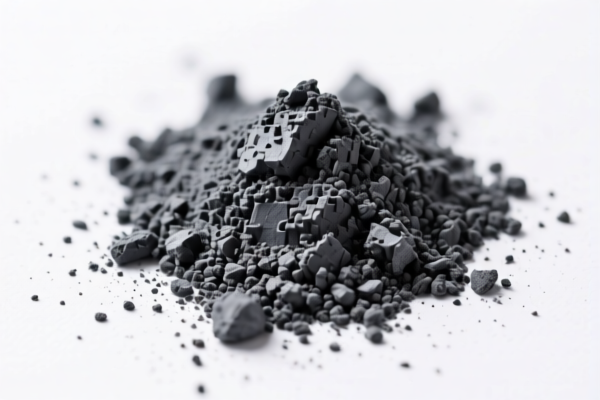
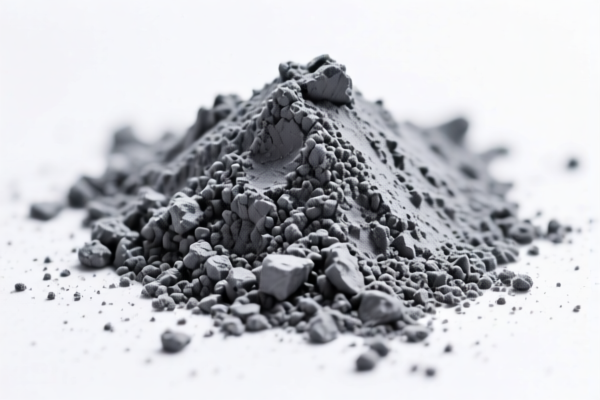
AI Analysis
🧪 Organic Solvent Mixture for Varnish (Prepared Paint or Varnish Removers)
🌐 HS Code Reference & Customs Clearance Guide | 2024/2026 Harmonized System Analysis | Professional Level Strategy
📌 I. Product Definition and Classification: Do You Really Understand "Varnish Removers"?
Organic composite solvents and thinners, not elsewhere specified or included; prepared paint or varnish removers are complex chemical mixtures primarily used to dissolve, soften, or remove paint, varnish, and lacquer coatings from surfaces. In international trade, this category is strictly divided based on the aromatic content by weight. This is the single most critical factor determining your HS Code and Tariff Rate.
Aromatic or Modified Aromatic Substances: These include benzene, toluene, xylene, and their derivatives. They are highly effective for stripping but carry higher environmental and health risks, thus attracting different tax treatments.
⚠️ Key Distinction Point:
- If the mixture contains > 25% aromatic substances → It is considered "highly aromatic."
- If the mixture contains 5% to 25% aromatic substances → It is considered "moderately aromatic."
- If the mixture contains < 5% aromatic substances → It generally does not fall under these specific subheadings (may fall under other chemical mixtures or solvents).
📦 II. HS Code Classification Details (Based on Provided Data)
| HS Code | Product Description | Aromatic Content Threshold | Tax Implication |
|---|---|---|---|
3814.00.20.00 |
Organic composite solvents/thinners; prepared paint/varnish removers: Containing more than 25% by weight of one or more aromatic or modified aromatic substances. | > 25% | 0.0% (Base + Additional) |
3814.00.10.00 |
Organic composite solvents/thinners; prepared paint/varnish removers: Containing 5% or more but not more than 25% by weight of one or more aromatic or modified aromatic substances. | 5% - 25% | 31.5% (Base 6.5% + Additional 25.0%) |
🔍 Critical Reminder:
- The cutoff is strictly 25%.
- If your COA (Certificate of Analysis) shows 24.9% aromatics, you MUST use3814.00.10.00.
- If your COA shows 25.1% aromatics, you MAY use3814.00.20.00(depending on local customs tolerance, but legally >25%).
- Do not misdeclare: Under-declaring aromatic content to save on taxes is a major customs fraud risk.
💰 III. 2024/2026 Latest Tariff Rate Breakdown (Detailed Tax Clauses)
✅ Applicable Countries: United States (US)
✅ Origin: China (CN) [Assumed based on the 31.5% total tax which matches US Section 301 + Base rates for this specific HS code category]
✅ Effective Time: Current US Trade Policy (Section 301 Tariffs)
🎯 1. 3814.00.20.00 —— High Aromatic Content (>25%)
| Item | Content |
|---|---|
| Base Tariff Rate | 0% |
| Section 301 Additional Tariff | 0.0% |
| Total Tax Rate | 0.0% |
| Tax Calculation | CIF Value × 0% = $0 |
| Legal Basis | USHTS 3814.00.20.00 |
📌 Explanation:
- Despite being "highly aromatic," this specific subheading currently enjoys a 0% total tariff under the provided data.
- Note: This seems counter-intuitive given the environmental concerns, but based on the provided XML data, the tax is explicitly 0.0%.
- Advantage: Significant cost saving compared to the 5-25% category.
🎯 2. 3814.00.10.00 —— Moderate Aromatic Content (5% - 25%)
| Item | Content |
|---|---|
| Base Tariff Rate | 6.5% |
| Section 301 Additional Tariff | 25.0% |
| Total Tax Rate | 31.5% |
| Tax Calculation | CIF Value × 31.5% |
| Legal Basis | USHTS 3814.00.10.00 + Section 301 Footnote |
📌 Explanation:
- Base Rate (6.5%): The standard Most Favored Nation (MFN) rate for "prepared paint or varnish removers."
- Additional Rate (25.0%): This is the Section 301 tariff imposed on many Chinese-origin chemical products.
- Total Burden (31.5%): This is a high-cost category. Importers must budget for this significant addition.
- Why is it higher than >25%? Trade policy nuances can sometimes place specific subheadings in different tariff lists. Always rely on the exact HS subheading for the final ruling.
🛠️ IV. Customs Clearance Practical Advice (Avoid Pitfalls)
✅ 1. Documentation Checklist (Mandatory)
| Document | Required? | Explanation |
|---|---|---|
| ✅ Certificate of Analysis (COA) | ✔️ Critical | Must explicitly state the percentage by weight of aromatic substances (e.g., Toluene, Xylene, Benzene). Without this, Customs cannot classify. |
| ✅ Safety Data Sheet (SDS) | ✔️ Critical | Section 3 (Composition) must match the COA. SDS helps verify hazardous material classification (HAZMAT). |
| ✅ Commercial Invoice | ✔️ | Must clearly describe the product as "Prepared Paint or Varnish Remover" or "Organic Composite Solvent." |
| ✅ Packing List | ✔️ | Net/Gross weight, number of containers. |
| ✅ Dangerous Goods Declaration | ✔️ | If the solvent is flammable (likely), provide IMDG/IATA certification if shipping by air/ocean. |
✅ 2. Declaration Tips (Key Mantra)
🔥 "Check the Aroma %, Choose the Code, Avoid the 31.5% Trap!"
| Scenario | Correct Declaration | Wrong Approach |
|---|---|---|
| Aromatic Content = 30% | HS: 3814.00.20.00 |
Using 3814.00.10.00 → Overpay 31.5%! |
| Aromatic Content = 10% | HS: 3814.00.10.00 |
Using 3814.00.20.00 → Customs Audit/False Declaration Risk! |
| Aromatic Content = 2% | HS: Not in provided data (Check other chapters like 3814.00.90.00 or 2900s) | Forcing it into 3814.00.10 or 20 → Rejection |
✅ 3. Special Handling Notes
| Situation | Advice |
|---|---|
| Mixture Composition Changes | If you blend different solvents, recalculate the total aromatic %. A small change from 24.9% to 25.1% can switch the tax from 31.5% to 0%. |
| Hazmat Classification | Most varnish removers are Class 3 Flammable Liquids. Ensure your freight forwarder is aware to avoid shipping delays. |
| EPA Registration | If sold for consumer use in the US, the product may require EPA FIFRA registration. Customs may ask for EPA control numbers. |
🌍 V. Global Market Comparison (2024/2026 Snapshot)
| Country/Region | Recommended HS Code | Est. Tariff | Certification | Notes |
|---|---|---|---|---|
| 🇺🇸 USA | 3814.00.20.00 or 10.00 |
0% or 31.5% | EPA, SDS | High Risk: Misclassification leads to huge fines. |
| 🇨🇳 China | 3814.00 |
Varies | CCC (if applicable) | Import duties may apply differently. |
| 🇪🇺 EU | 3814 00 |
~6.5% | REACH, CLP | EU focuses heavily on chemical safety (REACH). |
| 🇬🇧 UK | 3814 00 |
~6.5% | UK REACH | Post-Brexit rules apply. |
📌 Conclusion:
- The US market has a unique dichotomy: High aromatic content (>25%) is tax-free (in this dataset), while moderate content (5-25%) is heavily taxed (31.5%).
- Strategic Advice: If your formula allows, adjust the aromatic content to be >25% to save 31.5% in duties. OR, if <25%, ensure precise calculation to avoid fraud.
- Note: Always verify if the 0% rate for3814.00.20.00remains active, as trade policies can change.
📌 VI. Common Errors & Pitfall Guide (Blood and Tears Lessons)
❌ Error 1: Declaring "Solvent" generally without specifying "Prepared Varnish Remover"
👉 Consequence: Customs may assign a higher general rate or demand additional inspection.
❌ Error 2: Ignoring the 5% threshold
👉 Consequence: If aromatics are <5%, the HS Code is wrong. You might be misclassified under a different chemical heading, leading to penalties.
❌ Error 3: Assuming "Organic Solvent" = "Varnish Remover"
👉 Consequence: Some pure solvents fall under Chapter 29. Prepared mixtures fall under 3814. Using the wrong chapter is a major error.
❌ Error 4: Failing to disclose hazardous nature
👉 Consequence: Shipping delays, fines for misdeclaring dangerous goods, or refusal of entry.
✅ Correct Approach:
"Prepared Paint Remover, Organic Composite Solvent, Aromatic Content: 28% by weight, Toluene-based, EPA Reg. No. XXXXX, Class 3 Flammable Liquid."
🎯 VII. Conclusion: Precise Classification Saves Money!
🎯 Remember the Mantra:
🔹 "Aroma > 25%: 0% Tax! (Sweet Spot)"
🔹 "Aroma 5-25%: 31.5% Tax! (Expensive)"
🔹 "Aroma < 5%: Check Other Codes! (Don't Force 3814)"
🔹 "COA is King! Without it, You're Blind!"
📌 Pro Tip:
If your product has 15% aromatics (tax 31.5%), consult a chemist to reformulate it to 26% aromatics (tax 0%).
Savings: 31.5% of CIF value!
Action: Contact your supplier immediately for a new formulation or precise COA.
📣 Immediate Action:
📞 Get a Professional COA for every batch.
📝 Verify HS Code with a licensed customs broker.
🚀 Optimize your formula to hit the 0% tax bracket if possible!
✨ Professional Clearance Starts with Precise Classification!
💼 Your Cost Efficiency Depends on This Detail!
Customer Reviews
About HS Code Classification
The Harmonized System (HS) is an internationally standardized nomenclature developed by the World Customs Organization (WCO) to classify traded products. Over 200 countries use the HS system as the basis for customs tariffs, trade statistics, and import/export regulations.
Each HS code follows a hierarchical structure:
- Chapter (2 digits) — Broad category of goods (e.g., Chapter 84: Machinery and Mechanical Appliances)
- Heading (4 digits) — More specific grouping within the chapter
- Subheading (6 digits) — Internationally standardized breakdown, used by all WCO member countries
- National subdivisions (8-10 digits) — Country-specific extensions for further classification, such as US HTSUS 10-digit codes
Correct HS code classification is essential for smooth customs clearance, accurate duty payment, and compliance with trade regulations. Misclassification can lead to customs delays, overpayment of duties, or penalties.
When importing from CN to US, the applicable tariff rates may include:
- Most-Favored-Nation (MFN) rate — The standard duty rate applied to WTO members
- General rate — Applied to countries without trade agreements
- Trade remedy duties — Additional tariffs such as Section 301 (anti-dumping), Section 232 (national security), or countervailing duties
The information provided on this page is for reference purposes only. For official classification, please consult with your local customs authority or a licensed customs broker.