Organic Solvent for Electronic Cleaning
CN → US| HS Code | Tariff Rate | Origin | Destination | Doc |
|---|---|---|---|---|
| 3824995500 | 38.7% | CN | US | Official Doc |
| 3824999330 | 40.0% | CN | US | Official Doc |
| 3402905030 | 38.7% | CN | US | Official Doc |
| 3814005090 | 41.0% | CN | US | Official Doc |
Product Images
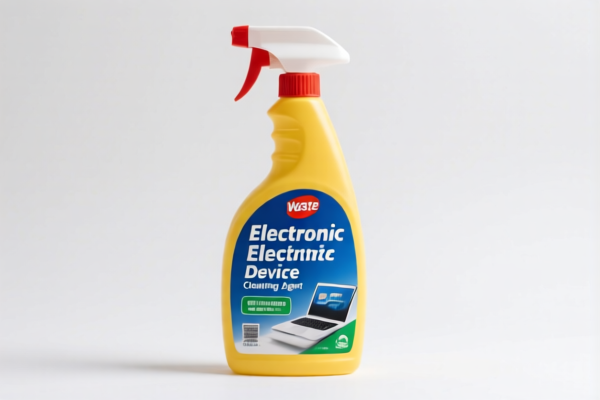
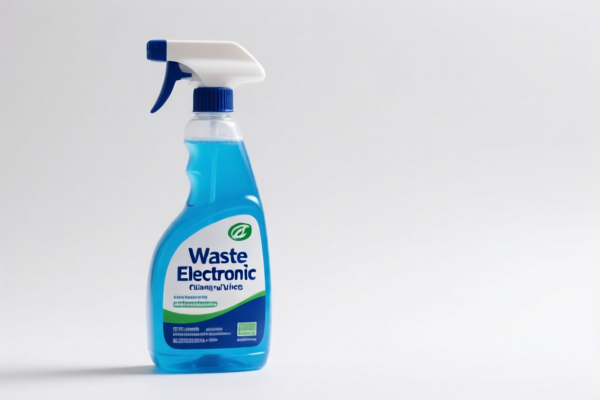
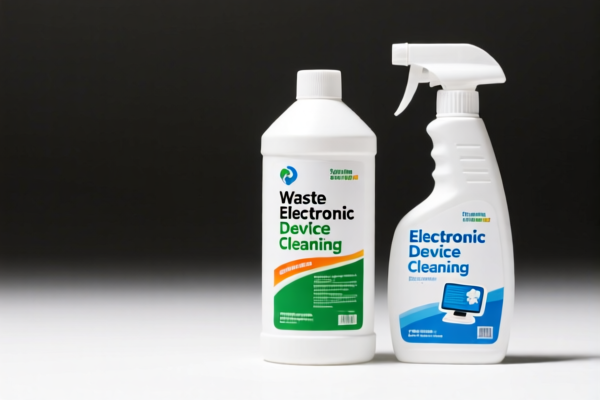
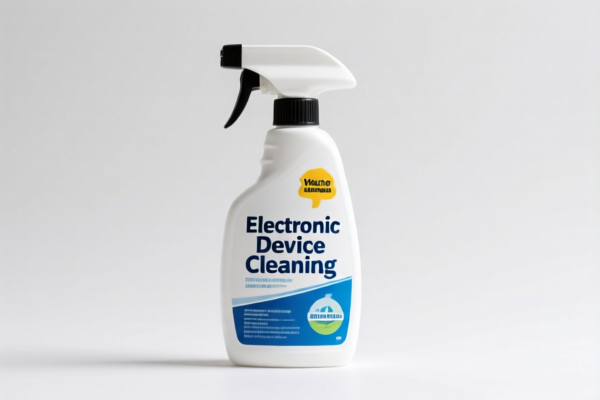
AI Analysis
🧪 Organic Solvent for Electronic Cleaning
🌐 HS Code Reference & Customs Clearance Guide | 2026 Latest Tariff Analysis | Professional Entry Strategy
📌 I. Product Definition and Classification: Do You Really Understand "Electronic Cleaning Solvents"?
Organic solvents for electronic cleaning are specialized chemical mixtures used to remove flux, oils, dust, and contaminants from printed circuit boards (PCBs), electronic components, and precision instruments. In international trade, these products are strictly regulated due to their chemical composition (often halogenated hydrocarbons or alcohol mixtures) and potential environmental/hazardous impacts.
The classification hinges on chemical structure (halogenated vs. non-halogenated), function (cleaning vs. solvent alone), and state (waste vs. new product). Misclassification can lead to severe penalties, as these goods are often subject to additional tariffs (Section 301/122) and strict environmental controls.
⚠️ Key Distinction Points:
- Halogenated Hydrocarbon Mixtures: Typically归类 under Chapter 38 (Miscellaneous Chemical Products), specifically "Other Halogenated Hydrocarbons".
- Alcohol-Based Cleaners: May fall under Chapter 38 (Miscellaneous) or Chapter 34 (Soap/Organic Surface-Active Agents) depending on the primary function and composition.
- Waste Solvents: If "used" or "spent," they may be classified differently than "new" solvents, but in this dataset, all entries refer to cleaning agents/solvents with specific tax treatments.
📦 II. HS Code Classification Details (2026 Latest Tariff Authority Reference)
| HS Code | Product Description | Matching Basis | Applicable Scenario |
|---|---|---|---|
3824.99.55.00 |
Waste Electronic Cleaning Solvent | Classified as a mixture of chemical solvents, specifically falling under the category of "Other Halogenated Hydrocarbon Mixtures". | Used for cleaning electronic components where halogenated compounds are the primary active ingredient. |
3824.99.93.30 |
Waste Electronic Cleaning Solvent | Classified as a mixture of non-cyclic, mono-hydroxy, unsubstituted alcohols, falling under "Other Articles" in Chapter 38. | Solvent blends primarily based on simple alcohols (e.g., ethanol, isopropanol) without halogen content. |
3402.90.50.30 |
Organic Solvent Cleaner | Matched by cleaning preparation usage and organic solvent chemical composition. | Commercial cleaning formulations where the cleaning function is dominant, classified as organic surface-active agents or preparations. |
3814.00.50.90 |
Electronic Component Cleaner | Matched by organic compound solvent and diluent composition, used for cleaning, with no specific excluded components. | Multi-component cleaning agents for electronics, often containing mixtures of ethers, esters, or other organics. |
🔍 Important Reminder:
- Halogenated vs. Non-Halogenated:3824.99.55.00is for halogenated mixtures (often higher environmental scrutiny), while3824.99.93.30is for alcohol-based mixtures.
- Function vs. Composition:3402.90.50.30emphasizes the "cleaning agent" aspect, while3814.00.50.90emphasizes "solvent/diluent" for industrial cleaning.
- "Waste" Labeling: Note that the first two entries explicitly mention "Waste" in their summary, which may imply specific handling or duty treatments, though the tariff structure here applies to the import of these chemical mixtures.
💰 III. 2026 Latest Tariff Rate Breakdown (Including Surcharges & Policy Add-ons)
✅ Applicable Country: United States (US)
✅ Country of Origin: China (CN)
✅ Effective Date: November 10, 2025 (and subsequent imports)
🎯 1. 3824.99.55.00 —— Halogenated Hydrocarbon Mixtures (Electronic Cleaning)
| Item | Content |
|---|---|
| Base Tariff Rate | 3.7% (ad valorem) |
| Section 301 Surcharge | +25.0% |
| Section 122 Tariff | +10.0% |
| Total Effective Rate | 38.7% |
| Tax Calculation | CIF Value × 38.7% |
| De Minimis Eligibility | ❌ Not Eligible (High-risk chemical category) |
| Legal Basis Path | HTSUS:3824.99.55.00 → USITC:Section301 → Trade Act:122 |
📌 Explanation:
- Base 3.7%: Standard MFN rate for miscellaneous chemical products.
- Section 301 (25%): Applies to most Chinese-origin chemicals and industrial supplies.
- Section 122 (10%): Additional duty for specific categories, often applied to industrial inputs.
- Total 38.7%: This is a significant cost factor. Importers must budget accordingly.
🎯 2. 3824.99.93.30 —— Alcohol-Based Mixtures (Electronic Cleaning)
| Item | Content |
|---|---|
| Base Tariff Rate | 5.0% (ad valorem) |
| Section 301 Surcharge | +25.0% |
| Section 122 Tariff | +10.0% |
| Total Effective Rate | 40.0% |
| Tax Calculation | CIF Value × 40.0% |
| De Minimis Eligibility | ❌ Not Eligible |
| Legal Basis Path | HTSUS:3824.99.93.30 → USITC:Section301 → Trade Act:122 |
📌 Note:
- Despite being alcohol-based, it still attracts the same 35% surcharges (25% + 10%) as halogenated solvents.
- The base rate is slightly higher (5% vs 3.7%), resulting in a higher total rate (40.0%).
- Alcohol solvents are often viewed as more volatile; ensure proper hazardous material documentation.
🎯 3. 3402.90.50.30 —— Organic Solvent Cleaner (Preparation)
| Item | Content |
|---|---|
| Base Tariff Rate | 3.7% (ad valorem) |
| Section 301 Surcharge | +25.0% |
| Section 122 Tariff | +10.0% |
| Total Effective Rate | 38.7% |
| Tax Calculation | CIF Value × 38.7% |
| De Minimis Eligibility | ❌ Not Eligible |
| Legal Basis Path | HTSUS:3402.90.50.30 → USITC:Section301 → Trade Act:122 |
📌 Explanation:
- Classified under Chapter 34 (Surface Active Agents) but treated similarly to other Chinese-origin industrial chemicals for tariff purposes.
- Key Difference: The description emphasizes "cleaning preparation," which may require SDS (Safety Data Sheet) to prove it is not a pure solvent.
🎯 4. 3814.00.50.90 —— Electronic Component Cleaner (Solvent/Diluent)
| Item | Content |
|---|---|
| Base Tariff Rate | 6.0% (ad valorem) |
| Section 301 Surcharge | +25.0% |
| Section 122 Tariff | +10.0% |
| Total Effective Rate | 41.0% |
| Tax Calculation | CIF Value × 41.0% |
| De Minimis Eligibility | ❌ Not Eligible |
| Legal Basis Path | HTSUS:3814.00.50.90 → USITC:Section301 → Trade Act:122 |
📌 Note:
- This HS Code has the highest total rate (41.0%) due to a higher base rate (6.0%).
- It covers "organic compound solvent and diluent" for cleaning, implying a broader mix of organic chemicals.
- Ensure the product description explicitly states "for electronic cleaning" to justify this classification and avoid misclassification penalties.
🛠️ IV. Customs Clearance Practical Advice (Field Pitfall Avoidance Guide)
✅ 1. Preparation Checklist (All Documents Required)
| Document | Mandatory | Description |
|---|---|---|
| ✅ Safety Data Sheet (SDS) | ✔️ | Critical. Must detail chemical composition, flash point, and hazard class. Required for all HS codes above. |
| ✅ Product Specification Sheet | ✔️ | Include exact chemical breakdown, concentration of active ingredients, and intended use (electronic cleaning). |
| ✅ Commercial Invoice | ✔️ | Must clearly state "Organic Solvent for Electronic Cleaning" and not just "Solvent" to aid classification. |
| ✅ Packing List | ✔️ | Specify net/gross weight and packaging type (drums, totes, etc.) for hazardous material handling. |
| ✅ Import License/Permit | ⚠️ | Check if local/state regulations require permits for halogenated or volatile organic compounds (VOCs). |
| ✅ Manufacturer's Declaration | ✔️ | Confirm no prohibited substances (e.g., CFCs, HCFCs) are present if claiming green status. |
✅ 2. Declaration Tactics (Key Mnemonic)
🔥 "Chemical Identity First, Function Second, SDS Always Attached!"
| Scenario | Correct Declaration Strategy | Incorrect Action |
|---|---|---|
| Halogenated Solvent | Declare under 3824.99.55.00, highlight "Halogenated Hydrocarbon Mixture" in specs. |
Declare as general solvent → High penalty risk. |
| Alcohol-Based | Declare under 3824.99.93.30, emphasize "Non-cyclic Alcohol Mixture". |
Declare as 3824.99.55.00 → Incorrect chemical classification. |
| Cleaning Preparation | Declare under 3402.90.50.30, stress "Preparation for Cleaning Use". |
Declare as pure solvent → Potential duty disputes. |
| Multi-Component Cleaner | Declare under 3814.00.50.90, list all organic diluents. |
Omit components → Incomplete declaration, customs hold. |
✅ 3. Special Handling Notes
| Situation | Handling Advice |
|---|---|
| Hazardous Material (HazMat) | All listed solvents may be classified as HazMat. Ensure proper UN packaging and labeling (e.g., UN 1993, UN 1263). |
| VOC Regulations | Check EPA and state-level VOC limits. Some solvents may be restricted in certain US states regardless of federal tariff. |
| Section 122 Impact | The 10% Section 122 tariff is additional and applies regardless of trade wars. Budget for this 10% overhead. |
| Waste vs. New | Although the data includes "Waste" in some summaries, ensure the product is imported as a commercial cleaning agent, not as illegal waste dumping, to avoid CBP rejection under environmental laws. |
🌍 V. Global Market Comparison (2026 Latest)
| Country/Region | Recommended HS Code | Tariff Rate (China Origin) | Certification/Compliance | Notes |
|---|---|---|---|---|
| 🇺🇸 USA | 3824.99.55.00 etc. |
38.7% - 41.0% (incl. 301+122) | SDS, HazMat, TSCA | High Tariff. Strict environmental enforcement. |
| 🇨🇳 China | 3824.99.55.00 etc. |
5% - 6% (Import) | REACH-like standards, MSDS | Lower tariff, but strict import licensing for chemicals. |
| 🇪🇺 EU | 3824.99 / 3402 |
6.5% (Standard) | REACH, CLP, SDS | No Section 301/122. Heavy focus on REACH registration. |
| 🇦🇺 Australia | 3824.99 / 3402 |
5% | GHS, NICNAS | Moderate tariff. Check AICIS for chemical import compliance. |
📌 Conclusion:
- The USA is the most expensive market due to the combination of base tariffs, Section 301 (25%), and Section 122 (10%).
- Total cost can reach 41% of the CIF value.
- EU and Australia are more favorable regarding tariffs but have stringent chemical registration requirements (REACH/GHS).
📌 VI. Common Mistakes & Pitfall Avoidance (Lessons Learned)
❌ Mistake 1: Declaring "Solvent" without specifying "Electronic Cleaning" or chemical type
👉 Consequence: Customs may misclassify, leading to audits, back-taxes, or seizure.
❌ Mistake 2: Ignoring Section 122 Tariff
👉 Consequence: Underestimating landed cost by 10%. This is an automatic duty for many chemical imports from China.
❌ Mistake 3: Missing or Incomplete SDS
👉 Consequence: Shipment held at port. HazMat clearance requires immediate, accurate SDS.
❌ Mistake 4: Confusing "Waste" with "New Product"
👉 Consequence: Even if labeled "Waste Solvent" in the data summary, if you are importing new cleaning agents, ensure the documentation reflects new, usable product to comply with trade laws. Mislabeling new goods as waste can trigger environmental violations.
✅ Correct Practice:
"Organic Solvent Cleaner, Electronic Grade, Halogenated Mixture (HCFC-xxx/Ethanol blend), For PCB Cleaning, SDS Attached, UN1993 Package, HS 3824.99.55.00"
🎯 VII. Conclusion: Precise Classification Saves Money and Time!
🎯 Remember Mnemonic:
🔹 "Halogen vs. Alcohol? Check Composition!"
🔹 "387 to 410? That's the US Duty!"
🔹 "SDS is Non-Negotiable!"
🔹 "Don't Forget Section 122!"
📌 Pro Tip:
- Consider supply chain diversification if the 38.7%-41.0% tariff erodes margins.
- Apply for Advance Rulings from CBP if the chemical composition is complex or novel.
- Always verify VOC compliance in destination states (e.g., California, Texas) to avoid local fines.
📣 Immediate Action:
📞 Consult with a licensed customs broker + Provide full SDS + Submit for Advance Ruling
🚀 Ensure smooth clearance, control costs, and expand efficiently!
✨ Professional Classification Starts with Precision!
💼 Every Percent in Duty is a Loss in Profit!
Customer Reviews
About HS Code Classification
The Harmonized System (HS) is an internationally standardized nomenclature developed by the World Customs Organization (WCO) to classify traded products. Over 200 countries use the HS system as the basis for customs tariffs, trade statistics, and import/export regulations.
Each HS code follows a hierarchical structure:
- Chapter (2 digits) — Broad category of goods (e.g., Chapter 84: Machinery and Mechanical Appliances)
- Heading (4 digits) — More specific grouping within the chapter
- Subheading (6 digits) — Internationally standardized breakdown, used by all WCO member countries
- National subdivisions (8-10 digits) — Country-specific extensions for further classification, such as US HTSUS 10-digit codes
Correct HS code classification is essential for smooth customs clearance, accurate duty payment, and compliance with trade regulations. Misclassification can lead to customs delays, overpayment of duties, or penalties.
When importing from CN to US, the applicable tariff rates may include:
- Most-Favored-Nation (MFN) rate — The standard duty rate applied to WTO members
- General rate — Applied to countries without trade agreements
- Trade remedy duties — Additional tariffs such as Section 301 (anti-dumping), Section 232 (national security), or countervailing duties
The information provided on this page is for reference purposes only. For official classification, please consult with your local customs authority or a licensed customs broker.