Organic Solvent for Printing Ink
CN → US| HS Code | Tariff Rate | Origin | Destination | Doc |
|---|---|---|---|---|
| 3814001000 | 41.5% | CN | US | Official Doc |
| 3825410000 | 35.0% | CN | US | Official Doc |
| 3814002000 | 41.5% | CN | US | Official Doc |
| 3825490000 | 35.0% | CN | US | Official Doc |
| 3215119060 | 36.8% | CN | US | Official Doc |
Product Images
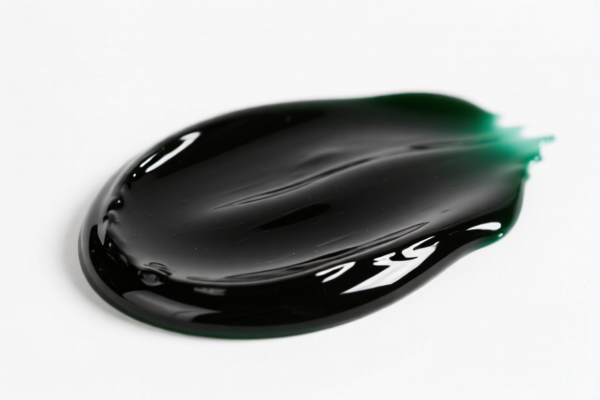
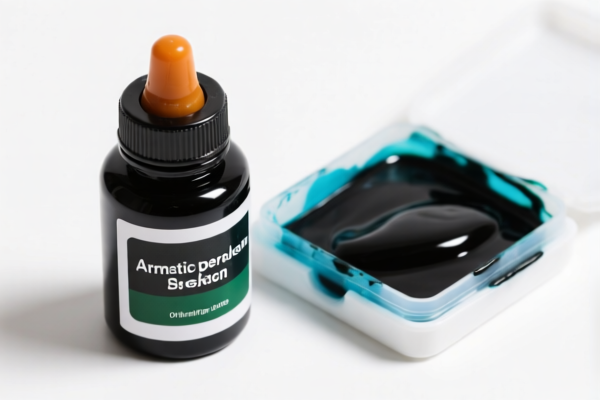
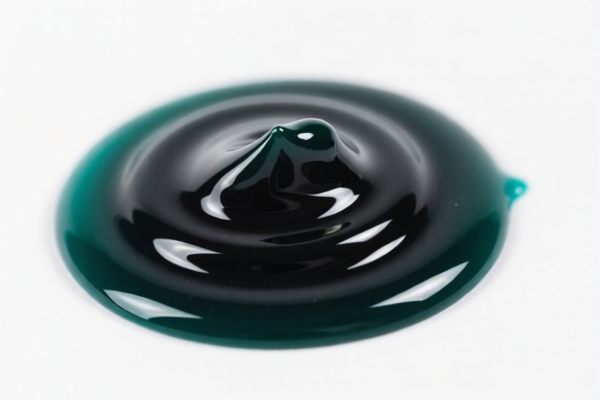
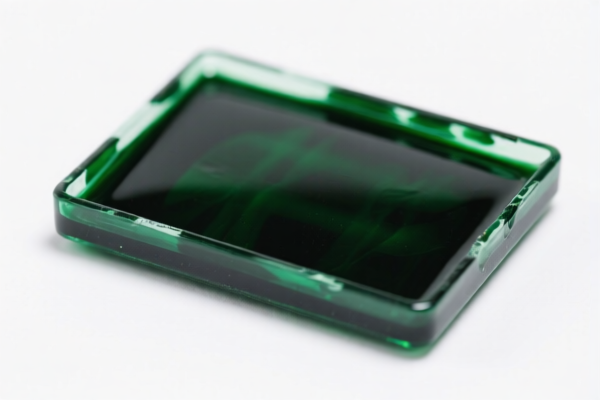
AI Analysis
🖨️ Organic Solvent for Printing Ink (Mixed Waste/Usage Context)
🌐 HS Code Reference & Customs Clearance Guide | 2026 Latest Tariff Analysis | Professional Clearance Strategy
📌 I. Product Definition & Classification: What is "Organic Solvent for Printing Ink"?
In the context of international trade, "Organic Solvent for Printing Ink" is a critical chemical consumable. However, its classification depends heavily on its state (fresh vs. waste) and chemical nature (halogenated vs. non-halogenated).
Based on the provided data, this product falls into two primary categories:
1. Active Solvents/Diluents: Used to dissolve or thin printing inks (Category: 3814).
2. Waste Solvents/Residues: Discarded solvents containing ink residues, classified as chemical waste (Category: 3825 or potentially 3215 if mixed with ink waste).
⚠️ Key Distinction:
- Fresh Solvent: Used as a cleaning agent or thinner →归入 3814.00.10.00 or 3814.00.20.00.
- Waste Solvent: Contains ink residue, used as a waste product →归入 3825.41.00.00 or 3825.49.00.00.
- Mixed Ink Waste: If primarily ink waste with solvent residue → May fall under 3215.11.90.60.
📦 II. HS Code Classification Details (2026 Latest Tariff Authority Comparison)
| HS Code | Product Description | Application Scenario | Material/State | Total Tax Rate |
|---|---|---|---|---|
3814.00.10.00 |
Organic Composite Solvents & Diluents | Fresh solvent for thinning printing ink | Active Chemical | 41.5% |
3814.00.20.00 |
Organic Composite Solvents & Diluents (Other) | Similar to above, different specific subtype | Active Chemical | 41.5% |
3825.41.00.00 |
Halogenated Waste Organic Solvents | Waste solvent with ink residue (Halogenated) | Chemical Waste | 35.0% |
3825.49.00.00 |
Other Waste Organic Solvents | Waste solvent with ink residue (Non-Halogenated) | Chemical Waste | 35.0% |
3215.11.90.60 |
Printing Inks & Related Products (Other) | Ink waste/solvent mix primarily classified as ink residue | Ink Waste | 36.8% |
🔍 Important Note:
- 3814 Codes: Apply to usable solvents. High tax due to base tariff + surcharges.
- 3825 Codes: Apply to waste solvents. Lower base tariff (0%) but still subject to surcharges.
- 3215 Code: Rarely used for pure solvents; applies if the product is deemed primarily "ink waste" rather than "solvent waste."
💰 III. 2026 Latest Tariff Rate Breakdown (Including Surcharges & Policy Add-ons)
✅ Applicable Country: United States (US)
✅ Origin: China (CN)
✅ Effective Date: November 10, 2025 onwards
🎯 1. 3814.00.10.00 & 3814.00.20.00 —— Organic Composite Solvents & Diluents (Fresh Solvents)
| Item | Details |
|---|---|
| Base Tariff | 6.5% (ad valorem) |
| Section 301 Surcharge | +25.0% (Added Tariff) |
| 122 Clause Tariff | +10.0% (Specific Policy Add-on) |
| Total Tax Rate | 41.5% |
| Tax Calculation | CIF Value × 41.5% |
| De Minimis Eligibility | ❌ Not Eligible (High tax prevents small shipment exemption) |
| Legal Basis | Base Tariff (6.5%) + Section 301 (25%) + 122 Clause (10%) |
📌 Explanation:
- 6.5% Base: Standard MFN rate for organic solvents.
- 25% Section 301: Standard trade war surcharge on Chinese chemical products.
- 10% 122 Clause: Additional duty under specific executive orders.
- Total 41.5%: Significant cost impact. Requires careful cost estimation.
🎯 2. 3825.41.00.00 & 3825.49.00.00 —— Waste Organic Solvents (Halogenated/Non-Halogenated)
| Item | Details |
|---|---|
| Base Tariff | 0.0% |
| Section 301 Surcharge | +25.0% (Added Tariff) |
| 122 Clause Tariff | +10.0% (Specific Policy Add-on) |
| Total Tax Rate | 35.0% |
| Tax Calculation | CIF Value × 35.0% |
| De Minimis Eligibility | ❌ Not Eligible |
| Legal Basis | Base Tariff (0%) + Section 301 (25%) + 122 Clause (10%) |
📌 Explanation:
- 0% Base: Waste products often have lower base tariffs.
- 25% + 10% Surcharges: Still heavily taxed due to trade policies.
- Total 35.0%: Lower than fresh solvents (41.5%), but still substantial.
- Key: Must clearly declare as "Waste" to qualify for this category. Misdeclaration as "Solvent" leads to 41.5%.
🎯 3. 3215.11.90.60 —— Printing Inks & Related Products (Ink Waste)
| Item | Details |
|---|---|
| Base Tariff | 1.8% |
| Section 301 Surcharge | +25.0% (Added Tariff) |
| 122 Clause Tariff | +10.0% (Specific Policy Add-on) |
| Total Tax Rate | 36.8% |
| Tax Calculation | CIF Value × 36.8% |
| De Minimis Eligibility | ❌ Not Eligible |
| Legal Basis | Base Tariff (1.8%) + Section 301 (25%) + 122 Clause (10%) |
📌 Explanation:
- 1.8% Base: Lower base tariff for ink-related products.
- Total 36.8%: Middle ground between solvents and waste solvents.
- Usage: Only if the product is primarily ink waste with solvent residues.
🛠️ IV. Customs Clearance Practical Advice (Pitfall Avoidance Guide)
✅ 1. Document Checklist (Essential)
| Document | Required | Notes |
|---|---|---|
| ✅ Product Specification Sheet | ✔️ | Must clearly state: Fresh vs. Waste, Halogenated/Non-Halogenated, Chemical Composition. |
| ✅ MSDS (Material Safety Data Sheet) | ✔️ | Crucial for chemical clearance. Must match HS Code classification. |
| ✅ Commercial Invoice | ✔️ | Must specify "Organic Solvent" or "Waste Solvent" accurately. |
| ✅ Packing List | ✔️ | Detail net/gross weight, container type (e.g., IBC, Drum). |
| ✅ Certificate of Origin (CO) | ✔️ | If applicable, though surcharges apply regardless of origin within China. |
| ✅ Third-Party Test Report | ✔️ | To prove halogenated/non-halogenated status if required by customs. |
✅ 2. Declaration Tips (Key Mnemonics)
🔥 "Fresh Solvent = 3814 (41.5%), Waste Solvent = 3825 (35%), Ink Waste = 3215 (36.8%)"
| Scenario | Correct Declaration | Wrong Practice |
|---|---|---|
| Fresh Solvent | HS: 3814.00.10.00 / 3814.00.20.00 |
Declare as "Waste" → Risk of penalty + higher base tax if incorrect |
| Waste Solvent (Halogenated) | HS: 3825.41.00.00 |
Declare as "Fresh" → 41.5% Tax instead of 35.0% |
| Waste Solvent (Non-Halogenated) | HS: 3825.49.00.00 |
Declare as "Fresh" → 41.5% Tax instead of 35.0% |
| Ink Waste with Solvent | HS: 3215.11.90.60 |
Declare as "Solvent" → 41.5% Tax instead of 36.8% |
✅ 3. Special Cases Handling
| Case | Handling Advice |
|---|---|
| Halogenated vs. Non-Halogenated | Must provide chemical analysis report to distinguish between 3825.41.00.00 and 3825.49.00.00. |
| Mixed Waste (Ink + Solvent) | If ink is dominant, consider 3215.11.90.60. If solvent is dominant, consider 3825. |
| Small Shipments | No De Minimis Exemption. All shipments are subject to full tax. |
| Environmental Compliance | Ensure waste solvents meet EPA regulations for import. |
🌍 V. Global Market Comparison (2026 Latest)
| Country/Region | Recommended HS Code | Tariff | Notes |
|---|---|---|---|
| 🇺🇸 United States | 3814.00.10.00 / 3825.41.00.00 |
35% - 41.5% | High surcharges due to Section 301 & 122 Clause. |
| 🇨🇳 China | 3814.00.10.00 / 3825.41.00.00 |
6.5% - 0% | No additional surcharges. Lower cost for exporters. |
| 🇪🇺 European Union | 3814.00.10.00 / 3825.41.00.00 |
Variable | Check REACH compliance. No Section 301 equivalent. |
| 🇯🇵 Japan | 3814.00.10.00 / 3825.41.00.00 |
Variable | Check Fertilizer Control Law if applicable. |
📌 Conclusion:
- US Market: High tariffs (35-41.5%) significantly impact profitability.
- China Market: Lower tariffs (6.5% base, 0% for waste).
- Strategy: Optimize supply chain to minimize US duty exposure. Consider Advance Ruling for clarity.
📌 VI. Common Errors & Pitfall Avoidance (Lessons Learned)
❌ Error 1: Declaring Waste Solvent as Fresh Solvent
👉 Consequence: 41.5% Tax instead of 35.0% → Overpayment + Potential Fraud Charge
❌ Error 2: Failing to distinguish Halogenated vs. Non-Halogenated
👉 Consequence: Customs may select the wrong code, leading to delays, penalties, or re-export.
❌ Error 3: Not providing MSDS
👉 Consequence: Customs may hold shipment for safety review → Delays + Storage Fees.
❌ Error 4: Assuming De Minimis Exemption
👉 Consequence: Shipments < $800 still taxed at 35-41.5% → Unexpected Costs.
✅ Correct Practice:
"Clearly declare state (Fresh/Waste), chemical nature (Halogenated/Non-Halogenated), and provide MSDS + Test Reports."
🎯 VII. Conclusion: Professional Declaration, Cost Efficiency, Risk Mitigation
🎯 Remember Mnemonic:
🔹 "Fresh = 41.5%, Waste = 35%, Ink Waste = 36.8%."
🔹 "HS Code determines tax, tax difference is 6.5%, wrong declaration costs thousands."
📌 Tip:
If your product is waste solvent, ensure it is clearly labeled as "Waste" and MSDS reflects this.
Consider Advance Ruling from US Customs to lock in classification and avoid disputes.
📣 Immediate Action:
📞 Consult with a licensed customs broker.
📄 Provide MSDS, Chemical Analysis, and Product Photos.
🚀 Ensure accurate HS Code to minimize duties and ensure smooth clearance!
✨ Professional clearance starts with precise classification!
💼 Every cent of your cost deserves accurate calculation!
Customer Reviews
About HS Code Classification
The Harmonized System (HS) is an internationally standardized nomenclature developed by the World Customs Organization (WCO) to classify traded products. Over 200 countries use the HS system as the basis for customs tariffs, trade statistics, and import/export regulations.
Each HS code follows a hierarchical structure:
- Chapter (2 digits) — Broad category of goods (e.g., Chapter 84: Machinery and Mechanical Appliances)
- Heading (4 digits) — More specific grouping within the chapter
- Subheading (6 digits) — Internationally standardized breakdown, used by all WCO member countries
- National subdivisions (8-10 digits) — Country-specific extensions for further classification, such as US HTSUS 10-digit codes
Correct HS code classification is essential for smooth customs clearance, accurate duty payment, and compliance with trade regulations. Misclassification can lead to customs delays, overpayment of duties, or penalties.
When importing from CN to US, the applicable tariff rates may include:
- Most-Favored-Nation (MFN) rate — The standard duty rate applied to WTO members
- General rate — Applied to countries without trade agreements
- Trade remedy duties — Additional tariffs such as Section 301 (anti-dumping), Section 232 (national security), or countervailing duties
The information provided on this page is for reference purposes only. For official classification, please consult with your local customs authority or a licensed customs broker.