Origami Knife
CN → US| HS Code | Tariff Rate | Origin | Destination | Doc |
|---|---|---|---|---|
| 4802571085 | 35.0% | CN | US | Official Doc |
| 4911914040 | 17.5% | CN | US | Official Doc |
| 4911998000 | 17.5% | CN | US | Official Doc |
| 4823908680 | 35.0% | CN | US | Official Doc |
| 4802572000 | 35.0% | CN | US | Official Doc |
Product Images
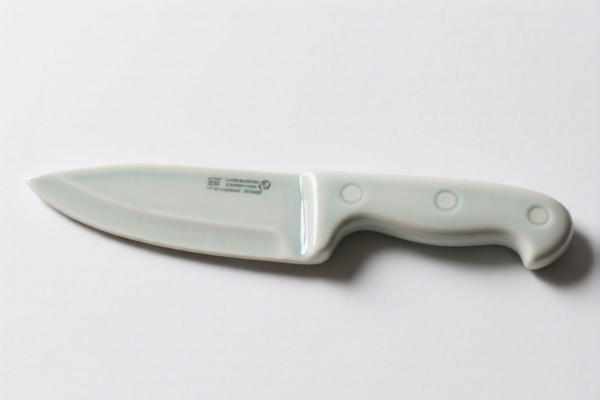
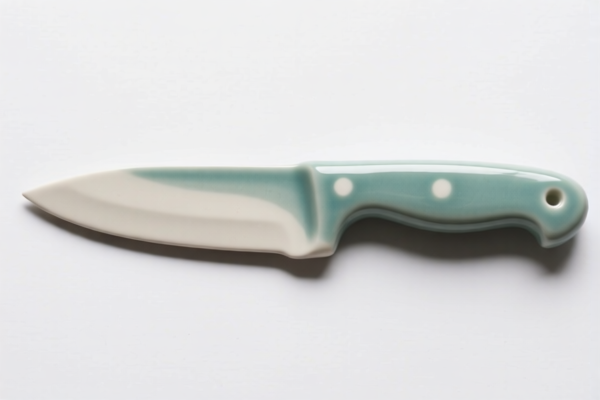
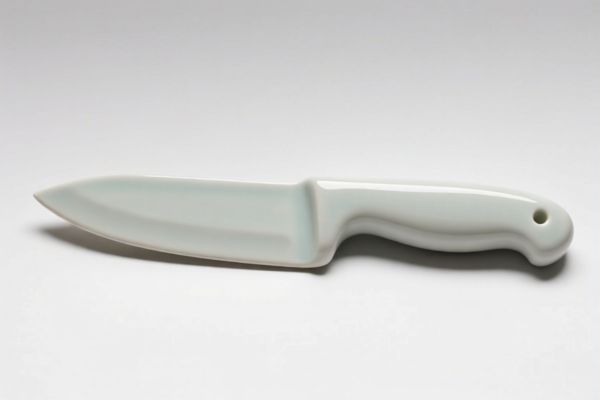
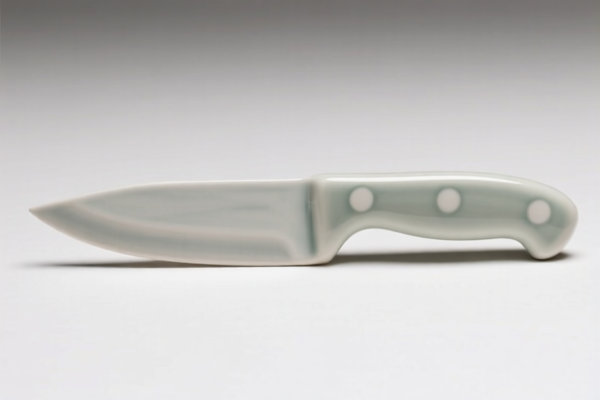
AI Analysis
🔪 Origami Knife (Paper Folding Tools)
🌐 HS Code Reference & Customs Clearance Guide | 2026 Latest Tariff Analysis | Professional Strategy
📌 I. Product Definition & Classification: What is an "Origami Knife"?
An "Origami Knife" is not a metal cutting tool. In the context of international trade and the provided data, it refers to paper folding tools or pre-cut/paper-based craft items used in paper crafts. Depending on its physical form (raw paper vs. printed design) and material composition, it falls under different HS Code categories.
⚠️ Critical Distinction:
- If the item is raw, uncoated paper cut into shapes for folding → It is classified as Paper/Board.
- If the item is printed paper (with instructions, graphics, or designs) → It is classified as Printed Matter.
- Do not classify as a "Knife" (Chapter 82) unless it has a metal blade. The provided data strictly pertains to paper-based items.
📦 II. HS Code Classification Details (2026 Latest Tariff Concordance)
| HS Code | Product Description | Application Scenario | Material/Form |
|---|---|---|---|
4802.57.10.85 |
Uncoated paper & paperboard, suitable for writing/drawing | Raw folded paper sheets, unprinted, for manual folding | ✅ Paper (Uncoated) |
4802.57.20.00 |
Drawing/Graph paper, suitable for graphics/handicrafts | Colored origami paper, textured paper for artistic folding | ✅ Paper (Specific Use) |
4823.90.86.80 |
Cut paper/paperboard, shaped or sized | Pre-cut origami shapes, die-cut paper forms | ✅ Paper (Cut/Shaped) |
4911.91.40.40 |
Other printed matter, including pictures/designs | Printed origami instructions, patterned paper with designs | ✅ Printed Matter |
4911.99.80.00 |
Other printed matter (paper-based) | General paper crafts with printing, not specified elsewhere | ✅ Printed Matter |
🔍 Key Reminder:
- Raw/Blank Paper: Falls under Chapter 48 (Paper). High tariff impact due to "Section 301" + "122 Section" tariffs.
- Printed Paper: Falls under Chapter 49 (Printed Matter). Lower base tariff but still subject to significant additional duties.
- Do not misclassify as metal tools (HS 82.11/82.15) – this is a common error leading to severe penalties.
💰 III. 2026 Latest Tariff Rate Breakdown (Including Additional Duties & Policy Surcharges)
✅ Applicable Country: United States (US)
✅ Origin: China (CN)
✅ Effective Date: Ongoing (includes post-November 2025 imports)
🎯 1. 4802.57.10.85 – Uncoated Paper (Raw Folding Paper)
| Item | Content |
|---|---|
| Base Tariff | 0.0% |
| Section 301 Surcharge | +25.0% (USITC) |
| Section 122 Surcharge | +10.0% (IEEPA/China-specific) |
| Total Rate | 35.0% |
| Tax Calculation | CIF Value × 35% |
| De Minimis Exemption | ❌ Not Eligible (High tariff item) |
| Legal Basis Path | IEEPA:122-Section → USITC:301-Section → HS:4802.57.10.85 |
📌 Explanation:
- 0% Base: Standard MFN rate for certain uncoated papers.
- +25% Section 301: Retaliatory tariff on Chinese goods.
- +10% Section 122: Additional surcharge targeting specific Chinese categories.
- Total 35%: Significantly increases landed cost. No de minimis exemption applies.
🎯 2. 4802.57.20.00 – Drawing/Graph Paper (Artistic Origami Paper)
| Item | Content |
|---|---|
| Base Tariff | 0.0% |
| Section 301 Surcharge | +25.0% |
| Section 122 Surcharge | +10.0% |
| Total Rate | 35.0% |
| Tax Calculation | CIF Value × 35% |
| De Minimis Exemption | ❌ Not Eligible |
| Legal Basis Path | IEEPA:122-Section → USITC:301-Section → HS:4802.57.20.00 |
📌 Note:
- Same tariff structure as raw paper.
- Applies to colored, textured, or patterned paper without commercial printing of instructions/designs.
🎯 3. 4823.90.86.80 – Cut/Shaped Paper Products
| Item | Content |
|---|---|
| Base Tariff | 0.0% |
| Section 301 Surcharge | +25.0% |
| Section 122 Surcharge | +10.0% |
| Total Rate | 35.0% |
| Tax Calculation | CIF Value × 35% |
| De Minimis Exemption | ❌ Not Eligible |
| Legal Basis Path | IEEPA:122-Section → USITC:301-Section → HS:4823.90.86.80 |
📌 Note:
- Applies if the origami sheets are pre-cut into specific shapes (e.g., squares, triangles) rather than full sheets.
- Still classified under Paper (Ch 48), so high tariffs apply.
🎯 4. 4911.91.40.40 – Printed Pictures/Designs
| Item | Content |
|---|---|
| Base Tariff | 0.0% |
| Section 301 Surcharge | +7.5% |
| Section 122 Surcharge | +10.0% |
| Total Rate | 17.5% |
| Tax Calculation | CIF Value × 17.5% |
| De Minimis Exemption | ❌ Not Eligible |
| Legal Basis Path | IEEPA:122-Section → USITC:301-Section → HS:4911.91.40.40 |
📌 Explanation:
- Base 0%: For certain printed matter.
- +7.5% Section 301: Lower surcharge than Chapter 48 items.
- +10% Section 122: Standard surcharge.
- Total 17.5%: More favorable than raw paper. If your origami knife has printed designs/instructions, choose this code if possible.
🎯 5. 4911.99.80.00 – Other Printed Paper Items
| Item | Content |
|---|---|
| Base Tariff | 0.0% |
| Section 301 Surcharge | +7.5% |
| Section 122 Surcharge | +10.0% |
| Total Rate | 17.5% |
| Tax Calculation | CIF Value × 17.5% |
| De Minimis Exemption | ❌ Not Eligible |
| Legal Basis Path | IEEPA:122-Section → USITC:301-Section → HS:4911.99.80.00 |
📌 Note:
- Catch-all for printed paper items not covered in4911.91.
- Same tariff as4911.91.40.40. Ideal for general printed craft papers.
🛠️ IV. Customs Clearance Practical Advice (Avoid Pitfalls)
✅ 1. Documentation Checklist (Mandatory)
| Document | Required | Notes |
|---|---|---|
| ✅ Product Specification Sheet | ✔️ | Must clarify: Material=Paper, Use=Craft/Folding, No Metal Parts. |
| ✅ Photos (Clear) | ✔️ | Show entire item. Highlight any printed designs. Prove no metal blade. |
| ✅ Commercial Invoice | ✔️ | Description: "Paper Origami Craft Sheet" or "Printed Paper Folding Kit". Avoid "Knife". |
| ✅ Packing List | ✔️ | List items by weight/piece. Separate raw paper from printed kits if possible. |
| ✅ Certificate of Origin (CO) | ✔️ | Mandatory for China origin to apply correct surcharges. |
✅ 2. Declaration Tips (Golden Rules)
🔥 “Paper is not Metal, Print is Cheaper, Descriptions Must Be Clear!”
| Situation | Correct Declaration | Incorrect Action |
|---|---|---|
| Raw, blank folding paper | 4802.57.10.85 or 4802.57.20.00 |
Call it "Craft Knife" → Misclassification |
| Pre-cut paper shapes | 4823.90.86.80 |
Call it "Scissors" → Wrong Chapter |
| Paper with printed instructions/designs | 4911.91.40.40 or 4911.99.80.00 |
Call it "Book" → Might change HS code, verify |
| Kit with paper + wooden tool | Split Declaration | Bundle together → High risk of audit |
📌 Critical Warning:
- Never use the word "Knife" in the English description unless it is a metal tool. Use:
- "Paper Folding Sheet"
- "Origami Craft Paper"
- "Paper Craft Kit (Paper Only)"
- If the item includes a plastic or wooden bone folder (for creasing), declare it separately if possible, or ensure the main value is paper.
✅ 3. Special Scenarios
| Scenario | Handling Advice |
|---|---|
| Original "Origami Knife" is a bone folder | If it’s plastic/wood, it’s Chapter 39 or 44, not paper. Verify material. If primarily paper packaging, declare as such. |
| Importing under De Minimis (Section 321) | ❌ Not Eligible. All provided HS codes have >8% tariffs. De minimis (under $800) does not exempt duties. |
| Mixed Packaging (Paper + Metal Tool) | ⚠️ High Risk. If a metal blade is present, it may be classified under Chapter 82 (Metal Tools), with different tariffs. Separate shipments if possible. |
🌍 V. Global Market Comparison (2026)
| Country/Region | Recommended HS Code | Tariff Rate | Notes |
|---|---|---|---|
| 🇺🇸 USA | 4911.99.80.00 |
17.5% | Lower than paper (35%). Prefer printed classification. |
| 🇨🇳 China | 4911.99.80.00 |
6-13% | Import duties vary. No Section 301/122. |
| 🇪🇺 EU | 4911.99.80.00 |
6% | No Section 301. Lower barriers. |
| 🇬🇧 UK | 4911.99.80.00 |
6% | Post-Brexit rules apply. |
📌 Conclusion:
- The USA is the most expensive market due to Section 301 and Section 122 tariffs.
- Printed paper (4911.9x) is cheaper than raw paper (48xx). Optimize product design to include printed elements if possible.
- De minimis does NOT apply. All shipments are subject to duty.
📌 VI. Common Mistakes & Pitfalls (Lessons Learned)
❌ Mistake 1: Using "Knife" in the product title
👉 Consequence: Customs flags it as a weapon or metal tool → Inspection delay, potential seizure.
👉 Solution: Use "Paper Craft," "Folding Sheet," "Origami Kit."
❌ Mistake 2: Classifying printed paper as raw paper (48xx)
👉 Consequence: Paying 35% instead of 17.5% → 15.5% extra tax.
👉 Solution: Ensure the paper has visible printing/graphics to qualify for Chapter 49.
❌ Mistake 3: Assuming De Minimis applies
👉 Consequence: Surprise bill upon arrival.
👉 Solution: Plan for 17.5%-35% duty in your cost calculation.
❌ Mistake 4: Mixing metal tools with paper in one box
👉 Consequence: Entire shipment may be classified as metal tool or complex goods → High audit risk.
👉 Solution: Ship paper crafts and metal tools separately.
🎯 VII. Conclusion: Professional Declaration for Cost Savings
🎯 Remember the Golden Rule:
🔹 "Paper is King, Print is King, No Metal, No Problem!"
🔹 "Chapter 49 saves 17.5%, Chapter 48 costs 35%."
🔹 "Avoid the word 'Knife' in English descriptions!"
📌 Pro Tip:
If you can, design your origami products with pre-printed patterns/instructions. This allows you to use HS Code 4911.99.80.00, reducing your US tariff from 35% to 17.5%. Always provide clear photos to prove the item is paper-based.
📣 Immediate Action:
📞 Confirm material: 100% Paper?
🖼️ Include printing/designs?
📝 Use "Origami Paper Craft" as description.
🚀 Save 17.5% in tariffs by choosing the right HS Code!
✨ Precision in Classification, Precision in Profit!
💼 Every Percent Counts in International Trade!
Customer Reviews
About HS Code Classification
The Harmonized System (HS) is an internationally standardized nomenclature developed by the World Customs Organization (WCO) to classify traded products. Over 200 countries use the HS system as the basis for customs tariffs, trade statistics, and import/export regulations.
Each HS code follows a hierarchical structure:
- Chapter (2 digits) — Broad category of goods (e.g., Chapter 84: Machinery and Mechanical Appliances)
- Heading (4 digits) — More specific grouping within the chapter
- Subheading (6 digits) — Internationally standardized breakdown, used by all WCO member countries
- National subdivisions (8-10 digits) — Country-specific extensions for further classification, such as US HTSUS 10-digit codes
Correct HS code classification is essential for smooth customs clearance, accurate duty payment, and compliance with trade regulations. Misclassification can lead to customs delays, overpayment of duties, or penalties.
When importing from CN to US, the applicable tariff rates may include:
- Most-Favored-Nation (MFN) rate — The standard duty rate applied to WTO members
- General rate — Applied to countries without trade agreements
- Trade remedy duties — Additional tariffs such as Section 301 (anti-dumping), Section 232 (national security), or countervailing duties
The information provided on this page is for reference purposes only. For official classification, please consult with your local customs authority or a licensed customs broker.