Origami Set
CN → US| HS Code | Tariff Rate | Origin | Destination | Doc |
|---|---|---|---|---|
| 4802571085 | 35.0% | CN | US | Official Doc |
| 4911914040 | 17.5% | CN | US | Official Doc |
| 4911998000 | 17.5% | CN | US | Official Doc |
| 4823908680 | 35.0% | CN | US | Official Doc |
| 4802572000 | 35.0% | CN | US | Official Doc |
Product Images

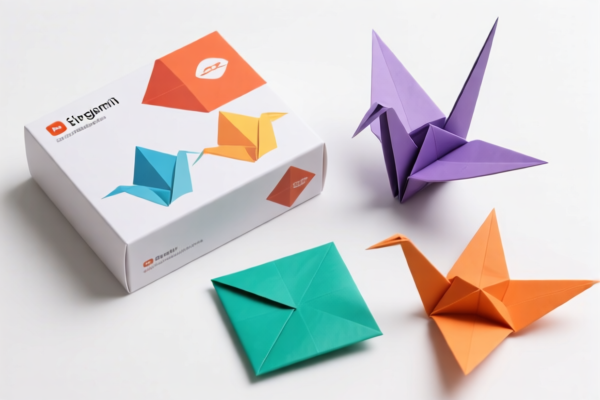
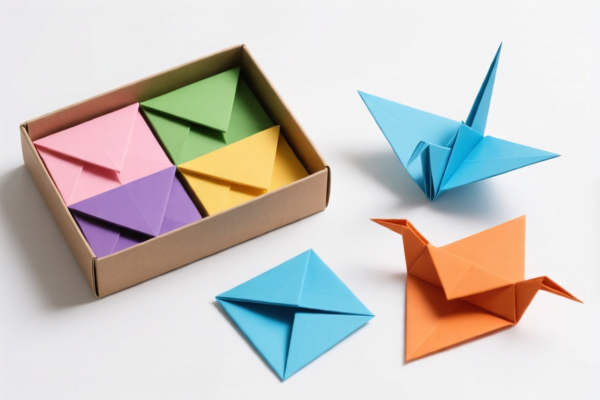
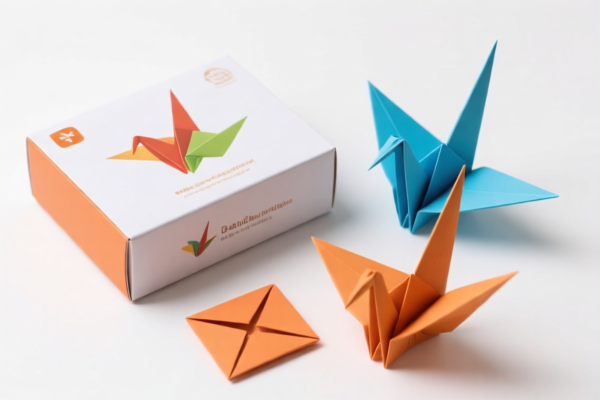
AI Analysis
🎨 Origami Set (Paper Folding Kit)
🌐 HS Code Reference & Customs Clearance Guide | 2026 Latest Tariff Analysis | Professional Entry Strategy
📌 I. Product Definition & Classification: What Exactly Is an "Origami Set"?
An Origami Set typically consists of specialized paper sheets (often pre-cut or pre-creased) designed for folding, sometimes accompanied by instructional booklets or basic tools. In international trade, classification depends heavily on whether the primary value lies in the raw paper material or the printed instructional/design value.
⚠️ Key Distinction Point:
- If viewed primarily as plain or lightly printed paper for general use → Classified under Chapter 48 (Paper/Paperboard).
- If viewed primarily as a printed graphic item/booklet containing designs → Classified under Chapter 49 (Printed Books/Newspapers).
📦 II. HS Code Classification Details (2026 Latest Tariff Authority Mapping)
| HS Code | Product Description | Applicable Scenario | Primary Classification Logic |
|---|---|---|---|
4802.57.10.85 |
Paper, uncoated, for writing/graphic use | Plain origami paper, unprinted squares | Paper Material: Uncoated paper for graphics/writing |
4911.91.40.40 |
Other printed matter, pictures/designs | Origami with printed patterns/instructions | Printed Graphic: Paper treated as printed design material |
4911.99.80.00 |
Other printed matter (miscellaneous) | Complex origami kits with mixed printed elements | Miscellaneous Printed Matter: Fallback for other printed paper goods |
4823.90.86.80 |
Cut paper/board, shapes/sizes | Pre-cut, shaped origami pieces | Paper Article: Paper cut into specific shapes/sizes |
4802.57.20.00 |
Drawing/painting paper | High-quality, heavy-weight origami paper | Paper Material: Similar to drawing paper, for graphic use |
🔍 Critical Reminder:
- If the product is heavily printed (e.g., detailed illustrations, color patterns) and the paper quality is secondary,4911series is often preferred. - If the product is plain or lightly stamped and the paper quality (texture, weight) is key,4802or4823series applies. - Pre-cut shapes (4823.90.86.80) attract high tariffs, so verify if the paper is truly "cut" or just "foldable."
💰 III. 2026 Latest Tariff Rate Breakdown (Including Add-ons & Policy Levies)
✅ Applicable Country: United States (US)
✅ Country of Origin: China (CN)
✅ Effective Date: Ongoing (Section 301 & IEEPA)
🎯 1. 4802.57.10.85 & 4802.57.20.00 —— Uncoated Paper (Graphic/Write)
| Item | Detail |
|---|---|
| Base Duty | 0.0% |
| Section 301 Add-on | +25.0% |
| IEEPA Add-on (122 Clause) | +10.0% |
| Total Duty Rate | 35.0% |
| Tax Calculation | CIF Value × 35% |
| De Minimis Eligibility | ❌ No (Not eligible for $800 exemption) |
| Legal Basis Path | Section 301: Footnote 9903.88.01 → IEEPA: 122 Clause |
📌 Explanation:
- These codes fall under "Paper of a kind used for writing, printing or other graphic purposes." - The 25% Section 301 tariff is applied to most Chinese-origin paper products. - The 10% IEEPA tariff is additional for certain Chinese goods under the 122 Clause. - Total Burden: 35% is significant for low-margin paper goods.
🎯 2. 4823.90.86.80 —— Cut Paper Products (Shapes/Sizes)
| Item | Detail |
|---|---|
| Base Duty | 0.0% |
| Section 301 Add-on | +25.0% |
| IEEPA Add-on (122 Clause) | +10.0% |
| Total Duty Rate | 35.0% |
| Tax Calculation | CIF Value × 35% |
| De Minimis Eligibility | ❌ No |
| Legal Basis Path | Section 301: Footnote 9903.88.01 → IEEPA: 122 Clause |
📌 Explanation:
- This code covers "Other papers, paperboards, cellulose wadding and webs of cellulose fibres, cut to size or shape." - If your origami sets are pre-cut into triangles, squares, or complex shapes, this code may apply. - Warning: Pre-cut items are often scrutinized more heavily for origin and processing.
🎯 3. 4911.91.40.40 & 4911.99.80.00 —— Other Printed Matter
| Item | Detail |
|---|---|
| Base Duty | 0.0% |
| Section 301 Add-on | +7.5% |
| IEEPA Add-on (122 Clause) | +10.0% |
| Total Duty Rate | 17.5% |
| Tax Calculation | CIF Value × 17.5% |
| De Minimis Eligibility | ❌ No |
| Legal Basis Path | Section 301: Footnote 9903.88.01 → IEEPA: 122 Clause |
📌 Explanation:
- These codes cover "Other printed matter" and "Pictures, designs and photographs." - If the origami set includes instruction booklets or the paper is heavily printed with designs, it may be classified here. - Advantage: The Section 301 tariff is lower (7.5% vs. 25%), resulting in a total of 17.5%, which is half the cost of the pure paper classifications. - Strategy: If possible, structure the product to emphasize its printed/graphic nature (e.g., include clear instructions, artistic designs) to qualify for this lower tariff band.
🛠️ IV. Customs Clearance Practical Advice (Pitfall Avoidance Guide)
✅ 1. Documentation Checklist (Non-negotiable)
| Document | Required? | Notes |
|---|---|---|
| ✅ Product Specification Sheet | ✔️ | Must detail paper type (coated/uncoated), weight (gsm), color, and whether it is pre-cut. |
| ✅ Photos of Product & Packaging | ✔️ | Show if the paper is blank, printed, or pre-cut. |
| ✅ Commercial Invoice | ✔️ | Describe item as "Origami Paper Set" or "Printed Paper Folding Kit," NOT just "Paper." |
| ✅ Packing List | ✔️ | List quantities clearly. |
| ✅ Certificate of Origin (CO) | ✔️ | Essential for proving Chinese origin (triggers tariffs). |
| ✅ Instruction Booklet Sample | ✔️ | If including instructions, submit a copy to support 4911 classification. |
✅ 2. Declaration Tips (Key Mantra)
🔥 "Emphasize Print, Avoid Cut, Justify Base!"
| Scenario | Correct Declaration | Wrong Practice |
|---|---|---|
| Plain, pre-cut squares | 4823.90.86.80 (35%) |
Call it "printed" → Misclassification risk |
| Printed patterns, not pre-cut | 4911.91.40.40 (17.5%) |
Call it "plain paper" → Higher duty |
| Kit with booklet + paper | 4911.91.40.40 (17.5%) |
Split into "book" (0%) and "paper" (35%) → Audit risk |
| Heavy-weight drawing paper | 4802.57.20.00 (35%) |
Call it "cardboard" → Wrong chapter |
📌 Strategy:
- If your product is printed (even lightly), argue for Chapter 49 to save 17.5% in duties. - If it is plain, you must pay 35%. There is no easy way to reduce this unless you change the origin (e.g., paper produced in Vietnam/Mexico).
✅ 3. Special Case Handling
| Situation | Handling Advice |
|---|---|
| Pre-cut Origami | Ensure the cutting process is clearly documented. If it’s just "scored" lines, it might still be 4802. If fully separated, it’s 4823. |
| Included Instructions | If the set includes a booklet with folds diagrams, the entire set may be classified as 4911 (printed matter). This is the best-case scenario for duty savings. |
| OEM/Custom Prints | Provide print proofs to Customs to prove the product is primarily a "graphic article." |
| Mixed Content (Sticks + Paper) | If the kit includes non-paper items (e.g., glue, sticks), ensure the essential character is paper. If paper dominates, classify under HS 48/49. |
🌍 V. Global Market Comparison (2026 Latest)
| Country/Region | Recommended HS Code | Duty Rate (China Origin) | Notes |
|---|---|---|---|
| 🇺🇸 United States | 4911.91.40.40 |
17.5% (Best Case) 35.0% (Plain Paper) |
IEEPA 10% + Section 301 (7.5% or 25%) |
| 🇨🇳 China (Import) | 4802 / 4911 |
0% - 6% | No Section 301 tariffs |
| 🇪🇺 European Union | 4901 / 4823 |
0% - 6.5% | Standard MFN rates apply |
| 🇨🇦 Canada | 4911 / 4802 |
0% - 5% | CUSMA may apply for NA origin |
| 🇬🇧 United Kingdom | 4911 / 4802 |
0% - 6% | Post-Brexit rates similar to EU |
📌 Conclusion:
- The US market is the most expensive due to layered tariffs (Section 301 + IEEPA). - Classification Strategy is critical: Printed Design (17.5%) vs. Plain Paper (35%) is a 17.5% difference. - Consider diversifying sourcing (e.g., paper from Vietnam) if US tariffs are unsustainable.
📌 VI. Common Errors & Pitfalls (Lessons Learned)
❌ Error 1: Declaring "Origami Paper" as 4802 when it has clear printed patterns.
👉 Consequence: You pay 35% instead of 17.5%. Overpaid duty by 17.5%.
❌ Error 2: Splitting a kit with a booklet into "Book" (0% duty) and "Paper" (35% duty).
👉 Consequence: Customs may reject the split, reclassify as one article (4911, 17.5%), and impose penalties for misdeclaration.
❌ Error 3: Ignoring the IEEPA 10% add-on.
👉 Consequence: Even if Section 301 is 7.5%, forgetting IEEPA leads to a 10% surprise cost. Total must include both.
❌ Error 4: Using "Paper" as the generic name.
👉 Consequence: Lack of detail leads to Customs requesting more info, delaying clearance.
✅ Correct Practice:
"Origami Paper Set, Pre-printed Designs, Includes Instruction Booklet, 100 Sheets, Non-cut, Model XYZ"
🎯 VII. Conclusion: Professional Declaration, Cost Optimization!
🎯 Remember the Mantra:
🔹 "Printed is Cheaper: 17.5% vs. 35%.
Plain Paper: 35% Total.
Pre-cut: 35% Total.
Kit with Booklet: Fight for 4911!"
📌 Pro Tip:
- If you are importing large volumes, consult a customs broker to apply for an Advance Ruling to fix the HS Code before shipment.
- Consider product bundling: Include a small instruction booklet to justify Chapter 49 classification, saving $17,500 per $100,000 CIF value.
📣 Immediate Action:
📞 Engage a US Customs Broker + Provide Product Photos + Confirm "Printed vs. Plain" Status
🚀 Optimize your Origami Set classification for maximum duty savings!
✨ Professional Customs Clearance Starts with Accurate Classification!
💼 Your Margin Matters – Every Percent Counts!
Customer Reviews
About HS Code Classification
The Harmonized System (HS) is an internationally standardized nomenclature developed by the World Customs Organization (WCO) to classify traded products. Over 200 countries use the HS system as the basis for customs tariffs, trade statistics, and import/export regulations.
Each HS code follows a hierarchical structure:
- Chapter (2 digits) — Broad category of goods (e.g., Chapter 84: Machinery and Mechanical Appliances)
- Heading (4 digits) — More specific grouping within the chapter
- Subheading (6 digits) — Internationally standardized breakdown, used by all WCO member countries
- National subdivisions (8-10 digits) — Country-specific extensions for further classification, such as US HTSUS 10-digit codes
Correct HS code classification is essential for smooth customs clearance, accurate duty payment, and compliance with trade regulations. Misclassification can lead to customs delays, overpayment of duties, or penalties.
When importing from CN to US, the applicable tariff rates may include:
- Most-Favored-Nation (MFN) rate — The standard duty rate applied to WTO members
- General rate — Applied to countries without trade agreements
- Trade remedy duties — Additional tariffs such as Section 301 (anti-dumping), Section 232 (national security), or countervailing duties
The information provided on this page is for reference purposes only. For official classification, please consult with your local customs authority or a licensed customs broker.