Other Acid and Alkali Resistant Sulfurized Rubber Gaskets
CN → US| HS Code | Tariff Rate | Origin | Destination | Doc |
|---|---|---|---|---|
| 8487900080 | 88.9% | CN | US | Official Doc |
| 4016935010 | 37.5% | CN | US | Official Doc |
| 4016935020 | 37.5% | CN | US | Official Doc |
Product Images
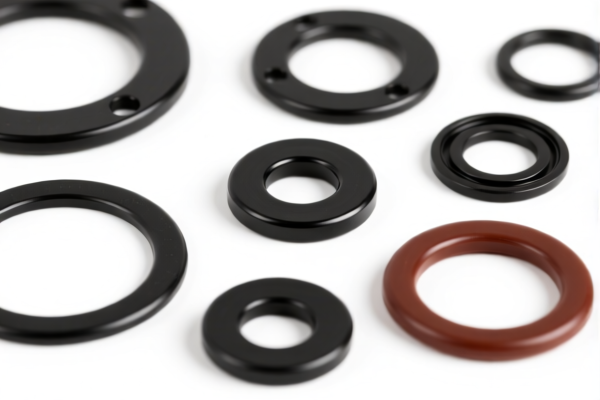
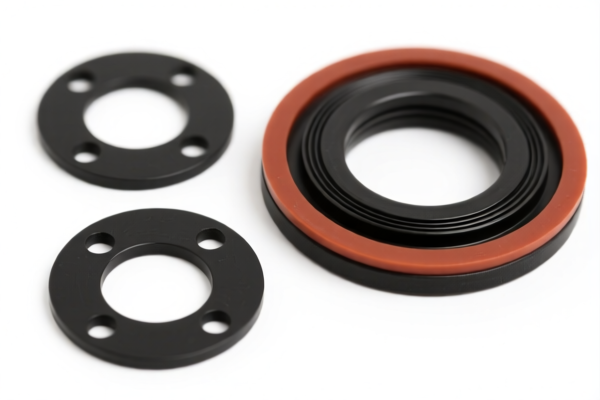
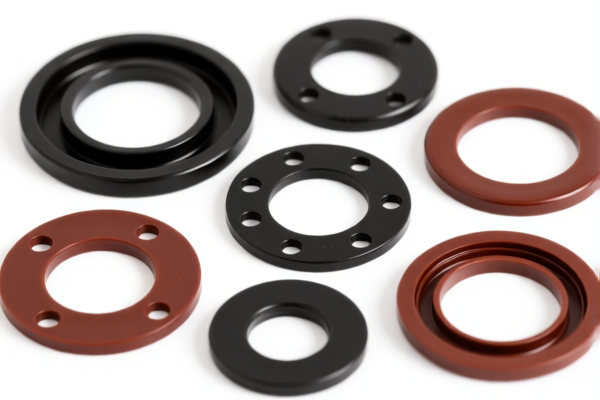
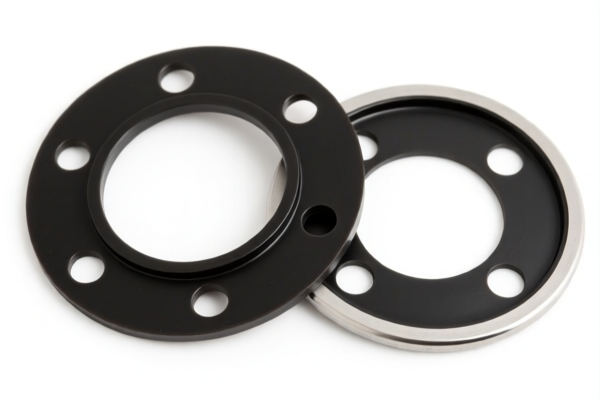
AI Analysis
🔩 Other Acid and Alkali Resistant Sulfurized Rubber Gaskets (Vulcanized Rubber Seals)
🌐 HS Code Reference & Customs Clearance Guide | 2026 Latest Tariff Analysis | Professional Compliance Strategy
📌 I. Product Definition & Classification: What Are "Sulfurized Rubber Gaskets"?
"Other Acid and Alkali Resistant Sulfurized Rubber Gaskets" refer to sealing components made from vulcanized rubber (excluding hard rubber/ebonite) that have been treated or formulated to resist corrosive acids and alkals. In international trade, these are primarily categorized under Chapter 40 (Rubber and Articles Thereof), specifically as other articles because they are not hard rubber.
The classification hinges on two main factors: 1. Material State: Vulcanized rubber (soft, flexible), not hard rubber. 2. Function: Used as gaskets, washers, or seals. 3. Specific Form: The distinction between standard O-Rings and other seal shapes (e.g., flat gaskets, lip seals) is critical for HS Code selection.
⚠️ Key Distinction Point:
- If the seal is specifically an O-Ring (toroidal shape with a circular cross-section) →归入 4016.93.50.10
- If the seal is not an O-Ring (e.g., flat gaskets, custom-shaped washers, other non-O-ring seals) → 归入 4016.93.50.50
📦 II. HS Code Classification Details (2026 Latest Tariff Authoritative Comparison)
| HS Code | Product Description | Application Scenario | Shape/Form |
|---|---|---|---|
4016.93.50.10 |
Other O-Rings (Vulcanized Rubber, Other than Hard Rubber) | Hydraulic systems, pneumatic fittings, standard industrial sealing joints | 🟢 O-Ring Only (Toroidal/Circular) |
4016.93.50.50 |
Other Gaskets, Washers and Other Seals (Vulcanized Rubber, Other than Hard Rubber) | Flat gaskets, custom-shaped seals, non-standard washers, chemical-resistant seals | 🔵 Non-O-Ring (Flat, Custom, Lip, etc.) |
🔍 Important Reminder:
- Both codes fall under the same parent category: "Gaskets, washers and other seals" (HS 4016.93.50).
- The difference lies solely in the shape: O-Rings vs. All Other Seals.
- Material Note: "Acid and Alkali Resistant" does not change the HS Code structure but may affect customs inspection for chemical compliance (e.g., RoHS, REACH).
💰 III. 2026 Latest Tariff Rate Breakdown (Including Additional Duties & Policy Surcharges)
✅ Applicable Country: United States (US)
✅ Origin: China (CN) (Assuming origin based on typical high-tariff context; verify actual origin)
✅ Effective Time: Current (2024–2026)
🎯 1. 4016.93.50.10 — Other O-Rings
| Item | Content |
|---|---|
| Base Tariff Rate | 2.5% (General MFN Rate) |
| Additional Tariff (Section 301) | +25.0% |
| Total Tax Rate | 27.5% |
| Tax Calculation | CIF Value × 27.5% |
| De Minimis Exemption | ❌ Not Applicable for Section 301 goods (denied) |
| Legal Basis | HTSUS 4016.93.50.10 + Section 301 Footnote |
📌 Explanation:
- The 2.5% is the standard U.S. Most Favored Nation (MFN) duty for rubber articles.
- The +25% is the Section 301 Additional Duty imposed on Chinese goods.
- Total: 27.5%. This is a high-duty category for rubber parts from China.
🎯 2. 4016.93.50.50 — Other Gaskets, Washers, and Seals (Non-O-Ring)
| Item | Content |
|---|---|
| Base Tariff Rate | 2.5% (General MFN Rate) |
| Additional Tariff (Section 301) | +25.0% |
| Total Tax Rate | 27.5% |
| Tax Calculation | CIF Value × 27.5% |
| De Minimis Exemption | ❌ Not Applicable for Section 301 goods (denied) |
| Legal Basis | HTSUS 4016.93.50.50 + Section 301 Footnote |
📌 Note:
- Same tariff structure as O-Rings.
- Whether it’s a flat gasket or a custom seal, if it’s not an O-Ring, it falls under...50.
- Total: 27.5%. No differential duty based on shape, only on the 301 policy.
🛠️ IV. Customs Clearance Practical Advice (Real-World Pitfall Guide)
✅ 1. Required Documentation Checklist (All Must-Be-Provided)
| Document | Must Provide | Notes |
|---|---|---|
| ✅ Product Specification Sheet | ✔️ | Must state: Material (Vulcanized Rubber), Resistance (Acid/Alkali), Shape (O-Ring/Flat), Dimensions |
| ✅ Product Photos | ✔️ | Clear images showing cross-section (to distinguish O-Ring vs. Flat) and labeling |
| ✅ Commercial Invoice | ✔️ | Must describe as "Vulcanized Rubber Gaskets" or "O-Rings", NOT generic "Rubber Parts" |
| ✅ Packing List | ✔️ | Separate O-Rings and Non-O-Ring gaskets if mixed in one shipment |
| ✅ Certificate of Origin (CO) | ✔️ | Essential for verifying China origin and applying Section 301 |
| ✅ Material Safety Data Sheet (MSDS) | ✔️ | To confirm acid/alkali resistance claims and chemical composition |
✅ 2. Declaration Tips (Key Mnemonic)
🔥 “Shape Decodes Code, 301 Adds Twenty-Five!”
| Scenario | Correct Declaration | Wrong Practice |
|---|---|---|
| O-Rings | 4016.93.50.10 + "O-Ring" |
Declare as "Gasket" → Risk of re-classification |
| Flat Gaskets | 4016.93.50.50 + "Flat Gasket" |
Declare as "O-Ring" → Misdeclaration penalty |
| Mixed Shipment | Split lines: O-Ring vs. Other | Lump sum as "Rubber Seals" → High risk of audit |
| Non-China Origin | Provide CO to claim MFN (2.5% only) | Assume 27.5% applies globally |
✅ 3. Special Cases Handling
| Situation | Handling Advice |
|---|---|
| O-Ring + Flat Gasket in Same Box | Split Declaration: List O-Rings under .10 and Flat Gaskets under .50. Do NOT merge. |
| Custom-Shaped Seals (e.g., Lip Seals) | Likely fall under 4016.93.50.50 (Other Seals). Provide engineering drawings to prove non-O-Ring shape. |
| Hard Rubber (Ebonite) Seals | NOT under these codes. Hard rubber falls under different HS codes (e.g., 4016.10). Ensure material is "Vulcanized Soft Rubber". |
| Acid-Resistant Claim | Customs may require proof. Provide MSDS and test reports to avoid delays. |
🌍 V. Global Market Comparison (2026 Latest)
| Country/Region | Recommended HS Code | Tariff (China Origin) | Certification Requirements | Notes |
|---|---|---|---|---|
| 🇺🇸 USA | 4016.93.50.10 / .50 |
27.5% (2.5% Base + 25% Sec 301) | No specific certs for general use | High Duty: Plan for 27.5% cost |
| 🇪🇺 EU | 4016.93 (General) | Varies (often 0-4%) | REACH, RoHS | No Section 301 equivalent. Much lower cost. |
| 🇨🇳 China | 4016.93.50.10/50 | 0-3% (Import Duty) | CCC (if applicable) | Low import duty for rubber parts |
| 🇯🇵 Japan | 4016.93 | 3-5% | PSE (if electrical) | Moderate duty |
| 🇲🇽 Mexico | 4016.93 | Varies (USMCA) | NOM | Check USMCA eligibility for duty-free if originating in NAFTA |
📌 Conclusion:
- USA is the only major market imposing high additional duties (25%) on Chinese rubber gaskets.
- For US-bound goods, the 27.5% total duty is unavoidable unless the product is non-Chinese origin.
- Consider third-country manufacturing (e.g., Vietnam, Thailand) if cost sensitivity is high.
📌 VI. Common Mistakes & Pitfall Guide (Blood & Tears Lessons)
❌ Mistake 1: Mixing O-Rings and Flat Gaskets under one HS Code
👉 Consequence: Customs may reclassify as the higher-risk item or audit entire shipment.
✅ Fix: Always split lines by shape.
❌ Mistake 2: Declaring "Acid-Resistant Rubber" without specifying "Vulcanized"
👉 Consequence: Customs may suspect hard rubber or plastic, leading to delays.
✅ Fix: Clearly state "Vulcanized Rubber" in description.
❌ Mistake 3: Ignoring Section 301 for China-origin goods
👉 Consequence: Underpayment of 25% → Penalties + Back Taxes + Interest.
✅ Fix: Always apply 27.5% for China-origin rubber seals.
❌ Mistake 4: Using "Gasket" as the only description
👉 Consequence: Ambiguity. Customs may classify as "Other" (higher rate) or hold for inspection.
✅ Fix: Use precise terms: "O-Ring" or "Flat Gasket".
🎯 VII. Conclusion: Precise Classification Saves Money!
🎯 Remember the Mantra:
🔹 "O-Ring = .10, Other Seal = .50"
🔹 "China Origin = 27.5%, Non-China = 2.5%"
🔹 "Shape Matters, Split Lines, Avoid Penalties!"
📌 Pro Tip:
If your product is acid/alkali resistant, ensure your MSDS and Test Reports are ready. Customs may inspect for chemical compliance, even if duties are the main concern.
For US imports, consider duty drawback or bonded warehousing if storing temporarily before re-export.
📣 Immediate Action:
📞 Verify Shape: Is it an O-Ring or Flat?
📄 Check Origin: Is it China-made?
💰 Calculate Cost: CIF × 27.5% for US bound.
🚀 Clear Customs Smoothly: Accurate HS Code = Faster Clearance!
✨ Professional Customs Clearance Starts with Precise Classification!
💼 Every Percent of Duty Counts — Don’t Let Misclassification Cost You Profit!
Customer Reviews
About HS Code Classification
The Harmonized System (HS) is an internationally standardized nomenclature developed by the World Customs Organization (WCO) to classify traded products. Over 200 countries use the HS system as the basis for customs tariffs, trade statistics, and import/export regulations.
Each HS code follows a hierarchical structure:
- Chapter (2 digits) — Broad category of goods (e.g., Chapter 84: Machinery and Mechanical Appliances)
- Heading (4 digits) — More specific grouping within the chapter
- Subheading (6 digits) — Internationally standardized breakdown, used by all WCO member countries
- National subdivisions (8-10 digits) — Country-specific extensions for further classification, such as US HTSUS 10-digit codes
Correct HS code classification is essential for smooth customs clearance, accurate duty payment, and compliance with trade regulations. Misclassification can lead to customs delays, overpayment of duties, or penalties.
When importing from CN to US, the applicable tariff rates may include:
- Most-Favored-Nation (MFN) rate — The standard duty rate applied to WTO members
- General rate — Applied to countries without trade agreements
- Trade remedy duties — Additional tariffs such as Section 301 (anti-dumping), Section 232 (national security), or countervailing duties
The information provided on this page is for reference purposes only. For official classification, please consult with your local customs authority or a licensed customs broker.