Other Acrylic Polymer Plastic Plates
CN → US| HS Code | Tariff Rate | Origin | Destination | Doc |
|---|---|---|---|---|
| 3906902000 | 41.3% | CN | US | Official Doc |
| 3906905000 | 39.2% | CN | US | Official Doc |
| 3920598000 | 41.5% | CN | US | Official Doc |
| 3920515090 | 41.5% | CN | US | Official Doc |
| 3921190090 | 41.5% | CN | US | Official Doc |
| 3921905050 | 39.8% | CN | US | Official Doc |
Product Images

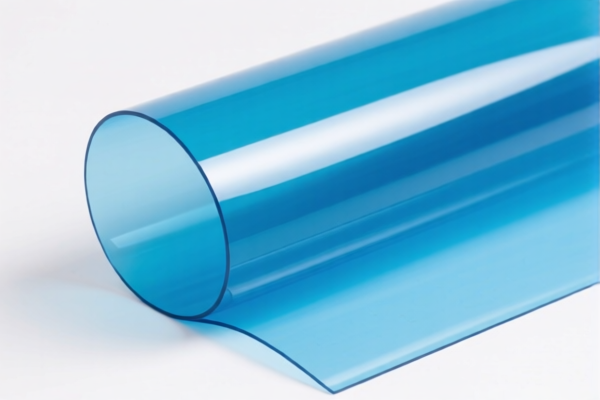

AI Analysis
🧪 Other Acrylic Polymer Plastic Plates (Non-Cellular & Non-Reinforced)
🌐 HS Code Reference & Customs Clearance Guide | 2024/2025 Latest Tariff Rules | Professional Strategy
📌 I. Product Definition & Classification: Do You Know "Acrylic Plates"?
Acrylic Polymer Plastic Plates refer to solid, transparent or translucent rigid sheets made primarily of polymethyl methacrylate (PMMA) or other acrylic copolymers. These are commonly used in: - Architectural glazing (windows, skylights) - Automotive lighting and interior trim - Display cases and signage - Medical equipment windows - Aerospace and industrial panels
⚠️ Critical Classification Rule:
- Non-cellular (solid, not foamed)
- Not reinforced/laminated/supported with other materials
- Of acrylic polymers only (no other plastic blend)
→ Must be classified under Chapter 39, specifically HS Code 3920.51.50.90 or 3920.59.80.00.
📦 II. HS Code Classification Details (2024/2025 Tariff Table)
| HS Code | Product Description | Application Scenario | Cellular? | Reinforced? |
|---|---|---|---|---|
3920.51.50.90 |
Other plates, sheets, film, foil and strip of plastics, noncellular and not reinforced... Of poly(methyl methacrylate): Other Other | Clear acrylic sheets, medical windows, display panels | ✅ No | ✅ No |
3920.59.80.00 |
Other plates, sheets, film, foil and strip of plastics, noncellular and not reinforced... Of acrylic polymers: Other: Other: Other | Other acrylic-based rigid sheets (not PMMA-specific) | ✅ No | ✅ No |
3906.90.20.00 |
Acrylic polymers in primary forms: Other: Other: Plastics | Raw acrylic resin pellets, not yet shaped into plates | N/A | N/A |
3906.90.50.00 |
Acrylic polymers in primary forms: Other: Other: Other | Other acrylic resins for molding | N/A | N/A |
3921.19.00.90 |
Other plates, sheets, film, foil and strip, of plastics: Cellular: Of other plastics Other | Foamed acrylic or other cellular plastics | ✅ Yes | N/A |
3921.90.50.50 |
Other plates, sheets, film, foil and strip, of plastics: Other: Other: Other Other | Multi-layered, reinforced, or laminated acrylic panels | N/A | ✅ Yes |
🔍 Key Insight:
- If the product is solid acrylic sheet (PMMA), it must go to 3920.51.50.90.
- If it's another type of acrylic polymer (e.g., polyacrylate), use 3920.59.80.00.
- Do NOT classify as "polymer in primary form" (3906...) unless it's in raw resin/pellet form.
- Cellular or reinforced variants fall under 3921 series — higher risk of additional duties.
💰 III. 2024/2025 Tariff Breakdown (Including Base + Additional Duties)
✅ Applicable Country: United States (US)
✅ Origin: China (CN)
✅ Effective Date: From November 10, 2024 (subject to change)
🎯 1. 3920.51.50.90 — Solid Acrylic PMMA Sheets
| Item | Details |
|---|---|
| Base Tariff | 0.0% (ad valorem) |
| Additional Duty (Section 301) | 25.0% |
| Total Tariff Rate | 25.0% |
| Tax Calculation Basis | CIF Value × 25% |
| De Minimis Exemption | ❌ Not Allowed (deny_de_minimis) |
| Legal Reference Path | USITC:3920.51.50.90 → Footnote:9903.88.01 → IEEPA:9903.01.25 |
📌 Explanation:
- 25% Section 301 tariff applies due to "Chinese-made acrylic polymers".
- No base duty, but the 25% add-on makes it high-cost for importers.
- No de minimis exemption — even small-value shipments are subject to full tariff.
🎯 2. 3920.59.80.00 — Other Acrylic Polymer Plates
| Item | Details |
|---|---|
| Base Tariff | 0.0% |
| Additional Duty (Section 301) | 25.0% |
| Total Tariff Rate | 25.0% |
| Tax Calculation Basis | CIF Value × 25% |
| De Minimis Exemption | ❌ Not Allowed |
| Legal Reference Path | USITC:3920.59.80.00 → Footnote:9903.88.01 |
📌 Note: Same tariff treatment as PMMA sheets — no difference in duty rate.
⚠️ 3. 3906.90.50.00 — Other Acrylic Resins (Not Plates)
| Item | Details |
|---|---|
| Base Tariff | 4.2% |
| Additional Duty (Section 301) | 25.0% |
| Total Tariff Rate | 29.2% |
| Tax Calculation Basis | CIF × 29.2% |
| De Minimis Exemption | ❌ Not Allowed |
| Legal Reference | USITC:3906.90.50.00 → IEEPA:9903.01.25 |
📌 Warning:
- If you import raw acrylic resin instead of plates, you get 29.2% tariff — higher than plates!
- Misclassifying plates as resin = unnecessary cost increase.
❌ 4. 3921.19.00.90 — Cellular Acrylic Plates
| Item | Details |
|---|---|
| Base Tariff | 0.0% |
| Additional Duty | 0.0% |
| Total Tariff Rate | 0.0% |
| De Minimis Exemption | ✅ Allowed |
| Legal Reference | USITC:3921.19.00.90 |
📌 Opportunity:
- Foamed acrylic panels (e.g., Corian, Plexiglas Foam) are tariff-free — ideal for cost-sensitive projects.
- Must ensure product is truly cellular (air bubbles/foam structure).
⚠️ 5. 3921.90.50.50 — Reinforced/Laminated Acrylic Panels
| Item | Details |
|---|---|
| Base Tariff | 4.8% |
| Additional Duty | 25.0% |
| Total Tariff Rate | 29.8% |
| De Minimis Exemption | ❌ Not Allowed |
| Legal Reference | USITC:3921.90.50.50 → IEEPA:9903.01.25 |
📌 Risk Alert:
- Any multi-layered, fiber-reinforced, or laminated acrylic panel falls here — 29.8% duty.
- Even thin fiberglass backing can trigger this classification.
🛠️ IV. Customs Clearance Practical Tips (Avoid Pitfalls)
✅ 1. Documentation Checklist
| Document | Required | Purpose |
|---|---|---|
| ✅ Product Specification Sheet | ✔️ | Must state "non-cellular", "non-reinforced", "PMMA/acrylic polymer" |
| ✅ Technical Diagram / Cross-Section | ✔️ | To prove no foaming or reinforcement |
| ✅ Photos (with Labels) | ✔️ | Clear image of surface texture, edges, transparency |
| ✅ Certificate of Origin (CO) | ✔️ | To claim possible exemptions (e.g., if origin not China) |
| ✅ Commercial Invoice | ✔️ | Must describe as "Acrylic Sheet", not "Resin" or "Foam" |
| ✅ Packaging List | ✔️ | Confirm no mixed goods (e.g., frames, backing) in same shipment |
✅ 2. Declaration Tips (Golden Rules)
🔥 “Solid = 3920.51/59, Foam = 3921.19, Reinforced = 3921.90”
| Scenario | Correct HS Code | Wrong Code | Risk |
|---|---|---|---|
| Clear PMMA sheet (no foam, no fiber) | 3920.51.50.90 |
3906.90.50.00 |
+29.2% duty |
| Acrylic foam panel | 3921.19.00.90 |
3920.59.80.00 |
Miss 0% benefit |
| Acrylic with fiberglass backing | 3921.90.50.50 |
3920.51.50.90 |
+29.8% vs 25% |
| Raw acrylic resin pellets | 3906.90.50.00 |
3920.51.50.90 |
29.2% vs 25% |
✅ 3. Special Cases & Mitigation Strategies
| Situation | Strategy |
|---|---|
| OEM Acrylic Panels | Provide client order + design specs to prove customization (may help avoid misclassification) |
| Acrylic + Metal Frame | Declare as separate items — frame may fall under metal class (lower duty) |
| Acrylic Used in Medical Devices | If part of larger device, consider Chapter 90 classification (check exemption) |
| Origin Not China | If from Vietnam, Mexico, Thailand → Section 301 exemption possible → 0% duty |
| Small Shipment (< $800) | If non-China origin, can use de minimis (no duty). If China origin, no exemption |
🌍 V. Global Market Comparison (2024/2025)
| Country | Recommended HS Code | Tariff | Certification | Notes |
|---|---|---|---|---|
| 🇺🇸 USA | 3920.51.50.90 / 3920.59.80.00 |
25% (China) | FDA/UL (if medical) | High duty for Chinese goods |
| 🇨🇳 China | 3920.51.50.90 |
5% | CCC | No Section 301 |
| 🇪🇺 EU | 3920.51.50.90 |
0% (if CE) | CE + RoHS | No additional duty |
| 🇦🇺 Australia | 3920.51.50.90 |
5% | RCM | No Section 301 |
| 🇯🇵 Japan | 3920.51.50.90 |
0% | PSE | No additional duty |
📌 Conclusion:
- USA is the only market with high Section 301 duty on Chinese acrylic plates (25%).
- Foamed acrylic (3921.19.00.90) is tariff-free in US — strategic alternative!
- Non-China origin = zero Section 301 duty in all markets.
📌 VI. Common Mistakes & How to Avoid Them (Lessons Learned)
❌ Mistake 1: Declaring PMMA sheets as acrylic resin (3906.90.50.00)
👉 Result: 29.2% duty instead of 25% → Extra cost on every shipment!
❌ Mistake 2: Classifying foamed acrylic as solid sheet (3920.51.50.90)
👉 Result: 25% duty instead of 0% → Lost profit margin!
❌ Mistake 3: Mixing acrylic panels with metal frames in one declaration
👉 Result: All items taxed at 25% instead of separating (frame may be 0–5%)
❌ Mistake 4: Not providing technical diagrams
👉 Result: Customs delays, re-classification, or penalties
✅ Correct Approach:
“Acrylic PMMA Sheet, 5mm thickness, non-cellular, non-reinforced, clear, Model XYZ, FCC & RoHS Compliant”
🎯 VII. Final Strategy: Smart Shipping, Lower Duty, Faster Clearance
🎯 Remember the Rules:
🔹 “Solid Acrylic = 25%, Foam = 0%, Reinforced = 29.8%, Resin = 29.2%”
🔹 “Non-China = No Section 301 → 0% duty!”
🔹 “De Minimis = Only for non-China, <$800”
📌 Pro Tip:
If your acrylic plates are manufactured in Vietnam, Mexico, Thailand, or Malaysia, apply for USITC ruling → Section 301 exemption → 0% duty!
📣 Call to Action:
📞 Contact a licensed customs broker + Submit product photos + specs + Request HS Code Advance Ruling
🚀 Optimize your acrylic plate imports today — save 25% on every shipment!
✨ Precise Classification = Savings, Speed, and Success!
💼 Every dollar counts — get it right the first time!
Customer Reviews
About HS Code Classification
The Harmonized System (HS) is an internationally standardized nomenclature developed by the World Customs Organization (WCO) to classify traded products. Over 200 countries use the HS system as the basis for customs tariffs, trade statistics, and import/export regulations.
Each HS code follows a hierarchical structure:
- Chapter (2 digits) — Broad category of goods (e.g., Chapter 84: Machinery and Mechanical Appliances)
- Heading (4 digits) — More specific grouping within the chapter
- Subheading (6 digits) — Internationally standardized breakdown, used by all WCO member countries
- National subdivisions (8-10 digits) — Country-specific extensions for further classification, such as US HTSUS 10-digit codes
Correct HS code classification is essential for smooth customs clearance, accurate duty payment, and compliance with trade regulations. Misclassification can lead to customs delays, overpayment of duties, or penalties.
When importing from CN to US, the applicable tariff rates may include:
- Most-Favored-Nation (MFN) rate — The standard duty rate applied to WTO members
- General rate — Applied to countries without trade agreements
- Trade remedy duties — Additional tariffs such as Section 301 (anti-dumping), Section 232 (national security), or countervailing duties
The information provided on this page is for reference purposes only. For official classification, please consult with your local customs authority or a licensed customs broker.