Other Aluminum Products
CN → US| HS Code | Tariff Rate | Origin | Destination | Doc |
|---|---|---|---|---|
| 7616995190 | 87.5% | CN | US | Official Doc |
| 7616995175 | 37.5% | CN | US | Official Doc |
Product Images
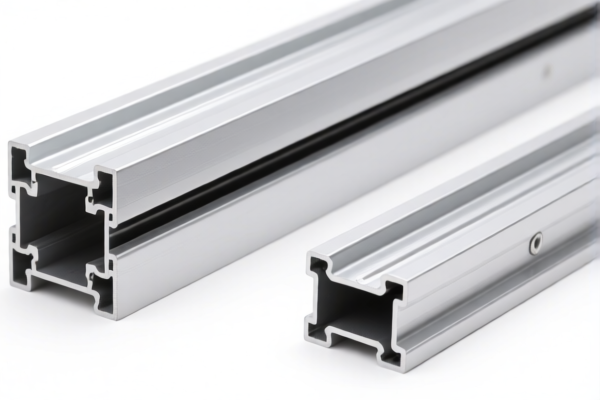
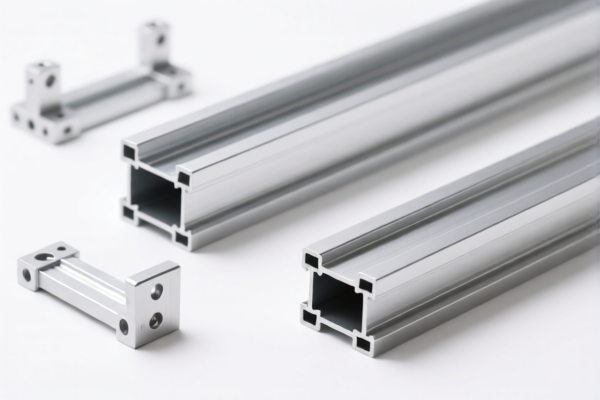
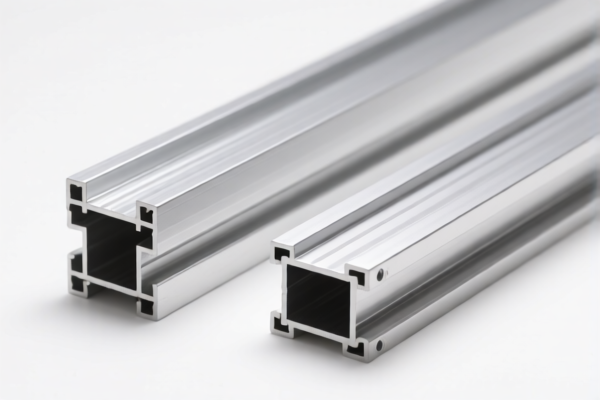
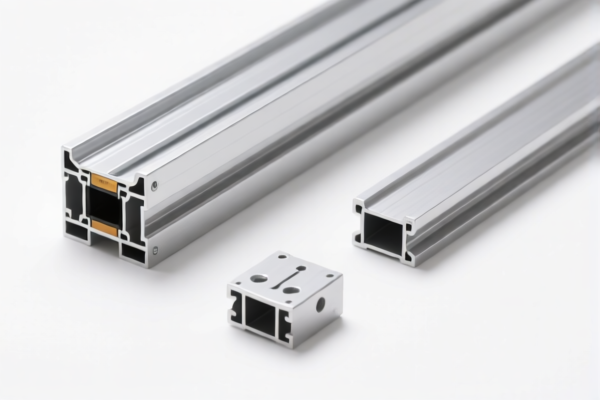
AI Analysis
🏗️ Other Aluminum Products (Non-Structural, Non-Wire)
🌐 HS Code Reference & Clearance Guide | 2026 Latest Tariff Analysis | Professional Customs Strategy
📌 Part 1: Product Definition & Classification: Do You Know "Other Aluminum Products"?
In international trade, "Other Aluminum Products" refers to aluminum items that do not fit into standard structural categories (like beams, bars, or profiles) and are not manufactured from aluminum wire. This is a "catch-all" category for miscellaneous aluminum goods.
The classification hinges on two critical distinctions: 1. Form Factor: Is it a shaped article (e.g., castings, fittings) or an article made from wire? 2. Material Specifics: Is it pure aluminum or an alloy? (Note: The provided data focuses on general "Other" categorizations).
⚠️ Key Distinction Points:
- Articles of Wire (HS 7616.99.51.75): If the product is constructed primarily from aluminum wire (e.g., woven mesh, fences, filters, or woven fabrics made of aluminum wire), it falls here.
- Other Articles (HS 7616.99.51.90): If the product is NOT made from wire (e.g., castings, stamped parts, hardware, fittings, or complex assemblies), it falls here. This is a higher-risk, higher-tariff category.
📦 Part 2: HS Code Classification Details (2026 Latest Tariff Authority)
| HS Code | Product Description | Applicable Scenario | Material Form |
|---|---|---|---|
7616.99.51.90 |
Other articles of aluminum: Other: Other: Other | Non-wire aluminum items: Castings, fittings, hardware, stamped parts, structural components not classified elsewhere. | ❌ Not Wire |
7616.99.51.75 |
Other articles of aluminum: Other: Other: Other: Articles of wire | Wire-based aluminum items: Woven mesh, fences, filters, screens, or any article constructed from aluminum wire. | ✅ Wire-Based |
🔍 Critical Reminder:
-7616.99.51.90is the "Other/Other/Other" bucket. It captures complex or miscellaneous aluminum parts that aren't wires and don't fit other specific sub-headings.
-7616.99.51.75is strictly for Articles of Wire. If you ship aluminum fencing, mesh, or wire-woven products, use this code.
- Misclassification Risk: Declaring a wire-based product as "Other" (...90) or vice versa can lead to severe penalties due to tariff differences.
💰 Part 3: 2026 Latest Tariff Rate Breakdown (Including Surtaxes)
✅ Applicable Country: United States (US)
✅ Origin: China (CN)
✅ Effective Date: Current trade policies (Steel, Aluminum, Copper surcharges apply)
🎯 1. 7616.99.51.90 —— Other Aluminum Articles (Non-Wire)
| Item | Detail |
|---|---|
| Base Tariff | 2.5% |
| Section 301 Surtax | 25.0% |
| Steel/Aluminum/Copper Surtax | 50.0% ⚠️ Critical Addition |
| Total Tariff Rate | 77.5% |
| Tax Calculation | CIF Value × 77.5% |
| De Minimis Exemption? | ❌ NO (deny_de_minimis) |
| Legal Basis Path | Section 301: 25% + Aluminum Surtax: 50% + Base: 2.5% |
📌 Explanation:
- This category faces the highest possible tariff burden for aluminum imports.
- The 50% surtax is specifically applied to steel and aluminum products under recent trade measures.
- Combined with the standard 25% Section 301 tariff and 2.5% base rate, the total tax burden is 77.5%.
- This makes importing non-wire aluminum articles from China extremely costly.
🎯 2. 7616.99.51.75 —— Articles of Aluminum Wire
| Item | Detail |
|---|---|
| Base Tariff | 2.5% |
| Section 301 Surtax | 25.0% |
| Steel/Aluminum/Copper Surtax | 0% (Note: Data indicates only Base + 25% apply here in this specific context) |
| Total Tariff Rate | 27.5% |
| Tax Calculation | CIF Value × 27.5% |
| De Minimis Exemption? | ❌ NO (deny_de_minimis) |
| Legal Basis Path | Section 301: 25% + Base: 2.5% |
📌 Explanation:
- Despite being aluminum, wire-based articles are classified differently under the provided data, resulting in a significantly lower total rate.
- The 50% aluminum surtax does not appear to be applied to this specific sub-heading in the provided dataset (likely due to specific exclusion or different policy grouping for "articles of wire" vs. general aluminum articles).
- Total tax is 27.5%, which is 50 percentage points lower than the "Other" category.
🛠️ Part 4: Customs Clearance Practical Advice (Battle-Tested Pitfall Avoidance)
✅ 1. Required Documentation Checklist
| Document | Mandatory? | Purpose |
|---|---|---|
| ✅ Product Specification Sheet | ✔️ | Must clearly state: Material (Aluminum Alloy/Pure), Form (Wire vs. Cast/Stamped), and End Use. |
| ✅ Technical Drawings/Cross-Sections | ✔️ | Crucial to prove whether the item is made from wire (woven, twisted) or solid/cast forms. |
| ✅ Product Photos (Clear & Detailed) | ✔️ | Show close-ups of the material structure. Is it a mesh? A solid block? A fitting? |
| ✅ Commercial Invoice | ✔️ | Accurate description: "Aluminum Wire Mesh" vs. "Aluminum Casting Part". Do not use generic "Aluminum Parts". |
| ✅ Packing List | ✔️ | Ensure weight and quantity match. |
| ✅ Certificate of Origin (CO) | ✔️ | Required for country of origin verification (China). |
✅ 2. Declaration Strategy (Key Mnemonics)
🔥 “Wire vs. Solid, Tariff Differs 50%!”
- If it’s woven, mesh, or wire-formed → Use7616.99.51.75(27.5% Tax).
- If it’s cast, stamped, extruded, or solid → Use7616.99.51.90(77.5% Tax).
| Scenario | Correct HS Code | Incorrect HS Code | Consequence of Error |
|---|---|---|---|
| Aluminum Fence/Mesh | 7616.99.51.75 |
7616.99.51.90 |
Underpayment: Back taxes + penalties (50% surtax gap). |
| Aluminum Fitting/Casting | 7616.99.51.90 |
7616.99.51.75 |
Overpayment: Unnecessary 50% surtax paid. |
| Mixed Shipment (Wire + Cast) | Split Declaration | Single HS Code | Customs Hold: Mixed classification leads to audit and delay. |
✅ 3. Special Cases & Handling
| Scenario | Advice |
|---|---|
| Aluminum Screen Mesh | Clearly declare as "Articles of Wire". Provide sample proof of weave. |
| Aluminum Hardware (Bolts/Nuts) | Typically "Other Articles" (...90). Unless made from wire coiled and cut, they usually fall under ...90. |
| Aluminum Castings | Always 7616.99.51.90. Subject to 77.5% tariff. Consider supply chain diversification if volume is high. |
| Composite Materials | If aluminum is combined with plastic/rubber, classification may change. Consult a customs broker for composite rules. |
🌍 Part 5: Global Market Comparison (2026 Context)
| Country/Region | Recommended HS Code (Wire) | Recommended HS Code (Other) | Total Tariff (China Origin) | Notes |
|---|---|---|---|---|
| 🇺🇸 USA | 7616.99.51.75 |
7616.99.51.90 |
27.5% (Wire) / 77.5% (Other) | Highest risk market. Steel/Aluminum surcharges are aggressive. |
| 🇨🇳 China | Varies | Varies | Lower (MFN Rates) | Importing into China has different tax structures. |
| 🇪🇺 EU | 7616.99 (Various) | 7616.99 (Various) | ~1-5% + VAT | No Section 301 or Aluminum Surtax equivalent. |
| 🇬🇧 UK | Varies | Varies | ~0-5% + VAT | Post-Brexit tariffs apply; generally lower than US. |
📌 Conclusion:
- The US market is exceptionally costly for aluminum imports from China, especially for "Other" articles.
- The 50% surtax on7616.99.51.90is a major barrier.
- Wire-based articles enjoy a significant tariff advantage (27.5% vs. 77.5%).
📌 Part 6: Common Mistakes & Pitfalls (Lessons Learned)
❌ Mistake 1: Declaring an Aluminum Cast Bracket as "Articles of Wire" to save taxes.
👉 Consequence: Customs inspection reveals solid casting → Severe penalty + back taxes + potential fraud charges.
❌ Mistake 2: Using generic term "Aluminum Parts" on Invoice.
👉 Consequence: Customs cannot determine wire vs. non-wire → Delay, additional documentation requests, and potential misclassification.
❌ Mistake 3: Ignoring the 50% Aluminum Surtax for non-wire items.
👉 Consequence: Budgeting for 27.5% when actual cost is 77.5% → Profit margin collapse.
✅ Correct Approach:
"Aluminum Wire Mesh, 1mm Gauge, Woven, for Fencing" →
7616.99.51.75
"Aluminum Die-Cast Housing, Model XYZ, for Electronics" →7616.99.51.90
🎯 Part 7: Conclusion: Precision in Classification Saves Millions
🎯 Remember the Key Takeaway:
🔹 "Wire is 27.5%, Other is 77.5%. The 50% Surtax is the Killer."
🔹 "Always prove the material form: Wire vs. Solid."📌 Pro Tip:
If you are importing large volumes of non-wire aluminum articles (...90), consider:
1. Supply Chain Restructuring: Sourcing from non-China countries to avoid surcharges.
2. Product Redesign: If feasible, designing components to be assembled from wire forms (if functionally possible) to qualify for the lower tariff.
3. Advance Ruling: Apply for a US CBP Advance Ruling to confirm HS code classification before shipment.
📣 Immediate Action:
📞 Consult a Customs Broker for pre-shipment classification.
📄 Prepare Technical Drawings to prove "Wire" vs. "Non-Wire" status.
💰 Calculate Landed Cost using 77.5% for non-wire and 27.5% for wire.
✨ Professional Clearance Starts with Accurate Classification!
💼 Your Bottom Line Depends on These 50 Percentage Points!
Customer Reviews
About HS Code Classification
The Harmonized System (HS) is an internationally standardized nomenclature developed by the World Customs Organization (WCO) to classify traded products. Over 200 countries use the HS system as the basis for customs tariffs, trade statistics, and import/export regulations.
Each HS code follows a hierarchical structure:
- Chapter (2 digits) — Broad category of goods (e.g., Chapter 84: Machinery and Mechanical Appliances)
- Heading (4 digits) — More specific grouping within the chapter
- Subheading (6 digits) — Internationally standardized breakdown, used by all WCO member countries
- National subdivisions (8-10 digits) — Country-specific extensions for further classification, such as US HTSUS 10-digit codes
Correct HS code classification is essential for smooth customs clearance, accurate duty payment, and compliance with trade regulations. Misclassification can lead to customs delays, overpayment of duties, or penalties.
When importing from CN to US, the applicable tariff rates may include:
- Most-Favored-Nation (MFN) rate — The standard duty rate applied to WTO members
- General rate — Applied to countries without trade agreements
- Trade remedy duties — Additional tariffs such as Section 301 (anti-dumping), Section 232 (national security), or countervailing duties
The information provided on this page is for reference purposes only. For official classification, please consult with your local customs authority or a licensed customs broker.