Other Animal Fine Hair Garments (Excluding Jackets)
CN → US| HS Code | Tariff Rate | Origin | Destination | Doc |
|---|---|---|---|---|
| 6114900560 | 29.5% | CN | US | Official Doc |
| 6114900570 | 29.5% | CN | US | Official Doc |
| 6211393051 | 29.5% | CN | US | Official Doc |
| 6211496061 | 29.5% | CN | US | Official Doc |
| 6211496061 | 29.5% | CN | US | Official Doc |
Product Images
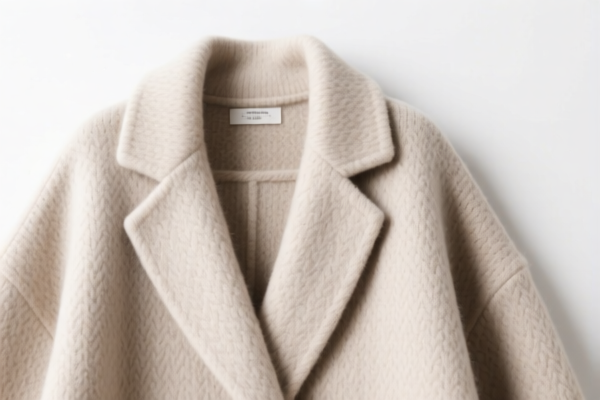
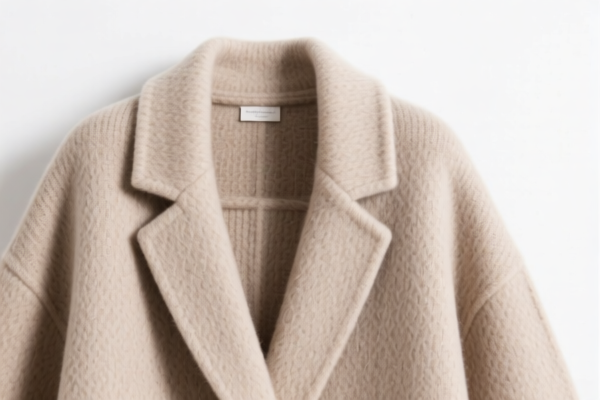

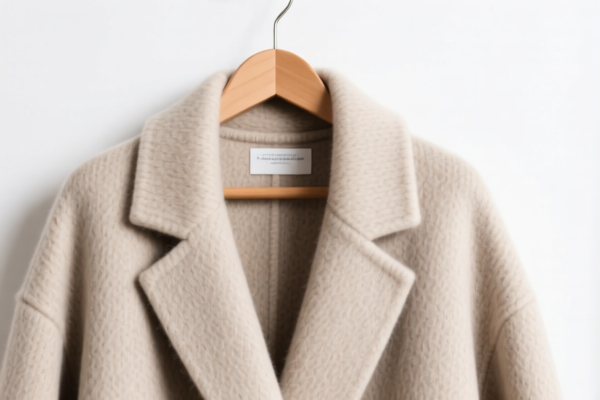
AI Analysis
🧶 Other Animal Fine Hair Garments (Excluding Jackets)
🌐 HS Code Reference & Clearance Guide | 2026 Latest Tariff Analysis | Professional Customs Strategy
📌 I. Product Definition & Classification: What Exactly Are "Other Fine Animal Hair Garments"?
"Other Animal Fine Hair Garments (Excluding Jackets)" refers to apparel items made from fine animal hair (such as cashmere, camel hair, alpaca, vicuña, etc.) that are not classified as jackets or coats. In international trade, these items typically include:
- Knitted or Crocheted Items: Sweaters, cardigans, pullovers, scarves, hats, gloves, and other knitted accessories.
- Woven Items: Dresses, blouses, skirts, trousers, and other woven garments (excluding outerwear/jackets).
⚠️ Key Distinction:
- "Fine Animal Hair" includes fibers from cashmere goats, camels, alpacas, vicuñas, and other fine-haired animals.
- "Excluding Jackets" means items that do not have the structural characteristics of outerwear (e.g., heavy lining, zippers for outdoor use, etc.).
- If the item is a jacket/coat, it may fall under different HS codes (e.g., 6101/6102 for knitted, 6201/6202 for woven).
📦 II. HS Code Classification Details (2026 Latest Tariff Authority Comparison)
Based on the provided data, the following HS codes apply to "Other Animal Fine Hair Garments (Excluding Jackets)":
| HS Code | Product Description | Summary of Match |
|---|---|---|
6114.90.05.60 |
Other knitted or crocheted garments, of fine animal hair, not elsewhere specified | Matches "Fine Animal Hair material with other clothing uses" |
6114.90.05.70 |
Other knitted or crocheted garments, of fine animal hair, not elsewhere specified | Matches "Fine Animal Hair material with other non-top clothing uses" |
6211.39.30.51 |
Other woven garments, of fine animal hair, not elsewhere specified | Matches "Fine Animal Hair material with other clothing uses" |
6211.49.60.61 |
Other woven garments, of fine animal hair, not elsewhere specified | Matches "Fine Animal Hair material with other women’s or girls’ clothing uses" |
6114.90.05.70 |
Other knitted or crocheted garments, of fine animal hair, not elsewhere specified | Matches "Fine Animal Hair material with other clothing uses" |
🔍 Important Note:
-6114.xxxxrefers to knitted or crocheted garments.
-6211.xxxxrefers to woven garments.
- The suffix.05.60,.05.70,.39.30.51,.49.60.61indicates specific subcategories within "Fine Animal Hair" for "Other" uses.
💰 III. 2026 Latest Tariff Rate Breakdown (Including Additional Taxes & Policy Surcharges)
✅ Applicable Country: United States (US)
✅ Country of Origin: China (CN)
✅ Effective Date: From November 10, 2025 (including subsequent imports)
🎯 1. All Listed HS Codes (6114.90.05.60, 6114.90.05.70, 6211.39.30.51, 6211.49.60.61)
| Item | Content |
|---|---|
| Base Tariff Rate | 12.0% (Ad Valorem) |
| Section 301 Additional Tariff | 7.5% (List 3/4, depending on specific subheading) |
| Section 122 Tariff | 10.0% (Under Section 122 of the Trade Facilitation and Trade Enforcement Act) |
| Total Tariff Rate | 29.5% |
| Tax Calculation | CIF Value × 29.5% |
| De Minimis Eligibility | ❌ Not Eligible (Cannot use de minimis exemption) |
| Legal Basis Path | Base: USITC HTSUS → Section 301: IEEPA 9903.01.25 → Section 122: 19 CFR Part 122 |
📌 Explanation:
- Base Tariff (12%): Standard MFN (Most Favored Nation) rate for fine animal hair garments.
- Section 301 Tariff (7.5%): Imposed under U.S. Trade Law Section 301 against Chinese goods.
- Section 122 Tariff (10%): Imposed under Section 122 of the Trade Facilitation and Trade Enforcement Act, targeting imports that threaten domestic industries.
- Total (29.5%): This is a high tariff rate, significantly increasing import costs.
🛠️ IV. Practical Customs Clearance Advice (Battle-Tested Pitfall Avoidance Guide)
✅ 1. Required Documentation Checklist (All Mandatory)
| Document | Mandatory? | Description |
|---|---|---|
| ✅ Product Specification Sheet | ✔️ | Must include material composition (e.g., "100% Cashmere"), weight, dimensions, and intended use. |
| ✅ Product Photos (Including Labels) | ✔️ | Clear images of the garment, care label, and material content tag. |
| ✅ Commercial Invoice | ✔️ | Must clearly state "Garments of Fine Animal Hair" and specify "Excluding Jackets." |
| ✅ Packing List | ✔️ | Detail contents per carton, including quantities and weights. |
| ✅ Certificate of Origin (CO) | ✔️ | If not from China, may qualify for preferential rates. |
| ✅ Third-Party Test Report | ✔️ | Fiber composition analysis (e.g., microscopic identification of cashmere/camel hair). |
✅ 2. Declaration Tips (Key Mnemonic)
🔥 "Material is Key, Use is Clear, Jackets Are Out, Knit/Woven Must Differ!"
| Scenario | Correct Declaration | Incorrect Practice |
|---|---|---|
| Knitted Sweater (Cashmere) | 6114.90.05.60 or 6114.90.05.70 |
Misdeclare as woven → Wrong HS Code |
| Woven Dress (Alpaca) | 6211.49.60.61 |
Misdeclare as knitted → Wrong HS Code |
| Jacket/Coat (Fine Hair) | Not in this list (Use 6101/6201 series) | Declare as "other garment" → Penalty & Retention |
| Blend with Non-Fine Hair | Declare mix % | Declare as 100% fine hair → Fraud Risk |
✅ 3. Special Cases Handling
| Scenario | Handling Advice |
|---|---|
| Mixed Material Garments | If >50% fine animal hair, classify under fine hair codes. If <50%, classify by dominant fiber. |
| Accessories (Scarves, Hats) | If knitted, use 6114.90.05.60/70. If woven, use 6211.xxxx. |
| Sample vs. Commercial | Both are subject to the same tariff if for commercial purposes. Mark "Sample" only if non-commercial. |
| OEM/Private Label | Provide buyer’s design sheet to prove "other clothing uses" vs. standard jackets. |
🌍 V. Global Market Clearance Comparison (2026 Latest)
| Country/Region | Recommended HS Code | Tariff Rate | Certification | Remarks |
|---|---|---|---|---|
| 🇺🇸 United States | 6114.90.05.60, 6114.90.05.70, 6211.39.30.51, 6211.49.60.61 |
29.5% (China Origin) | None Specific | High tariff due to Section 301 & 122 |
| 🇨🇳 China | Same as US | 5–10% | None | Lower import duty for domestic trade |
| 🇪🇺 European Union | 6114/6211 (similar) | 0–12% (depending on origin) | CE/REACH (if applicable) | No Section 301 equivalent |
| 🇯🇵 Japan | 6114/6211 (similar) | 0–10% | PSE (if electronic, not applicable here) | FTA benefits if from ASEAN |
📌 Conclusion:
- The U.S. imposes the highest tariffs on Chinese-origin fine animal hair garments.
- Cost Planning is Critical: A $100 garment incurs $29.50 in tariffs, significantly impacting profit margins.
- Supply Chain Diversification: Consider sourcing from countries with FTA benefits (e.g., Vietnam, Bangladesh) if possible.
📌 VI. Common Errors & Pitfall Guide (Lessons Learned)
❌ Error 1: Misclassifying Jackets/Coats as "Other Garments"
👉 Consequence: Wrong HS Code → Penalty, Retention, or Retrospective Tariff Application.
✅ Fix: Ensure the garment is not a jacket (no heavy lining, no outdoor-specific features).
❌ Error 2: Declaring Blended Fabrics as 100% Fine Animal Hair
👉 Consequence: Customs inspection reveals different material → Fine & Retention.
✅ Fix: Provide fiber composition test report; declare exact percentages.
❌ Error 3: Ignoring Section 122 Tariff
👉 Consequence: Underpayment of duties → Back taxes & Interest.
✅ Fix: Always include Section 122 (10%) in cost calculations for Chinese-origin goods.
❌ Error 4: Using Vague Descriptions like "Clothing"
👉 Consequence: Customs ambiguity → Delays in clearance.
✅ Fix: Use precise terms: "Cashmere Knitted Pullover," "Alpaca Woven Skirt."
🎯 VII. Conclusion: Professional Declaration, Time-Saving, Cost-Efficient!
🎯 Remember the Mnemonic:
🔹 "Knit/Woven Distinction is Vital, Fine Hair is High Tariff, Jackets Are Out, Section 122 Adds 10%!"
🔹 "29.5% Total, Plan Ahead, Avoid Penalties!"
📌 Pro Tip:
- If your garments are originating from Vietnam, Bangladesh, or India, you may qualify for lower or zero tariffs under various FTAs (e.g., ASEAN, GSP).
- Consider applying for an Advance Ruling (Ruling Request) with U.S. CBP to confirm the correct HS Code and tariff treatment before shipping.
📣 Immediate Action:
📞 Contact a professional customs broker + Provide product specs + Request HS Code Advance Ruling
🚀 Ensure your fine animal hair garments clear customs smoothly, efficiently, and profitably!
✨ Professional Customs Clearance Starts with Precise Classification!
💼 Every cent of your cost deserves precise calculation!
Customer Reviews
About HS Code Classification
The Harmonized System (HS) is an internationally standardized nomenclature developed by the World Customs Organization (WCO) to classify traded products. Over 200 countries use the HS system as the basis for customs tariffs, trade statistics, and import/export regulations.
Each HS code follows a hierarchical structure:
- Chapter (2 digits) — Broad category of goods (e.g., Chapter 84: Machinery and Mechanical Appliances)
- Heading (4 digits) — More specific grouping within the chapter
- Subheading (6 digits) — Internationally standardized breakdown, used by all WCO member countries
- National subdivisions (8-10 digits) — Country-specific extensions for further classification, such as US HTSUS 10-digit codes
Correct HS code classification is essential for smooth customs clearance, accurate duty payment, and compliance with trade regulations. Misclassification can lead to customs delays, overpayment of duties, or penalties.
When importing from CN to US, the applicable tariff rates may include:
- Most-Favored-Nation (MFN) rate — The standard duty rate applied to WTO members
- General rate — Applied to countries without trade agreements
- Trade remedy duties — Additional tariffs such as Section 301 (anti-dumping), Section 232 (national security), or countervailing duties
The information provided on this page is for reference purposes only. For official classification, please consult with your local customs authority or a licensed customs broker.