Other Baby and Toddler Clothing and Accessories
CN → US| HS Code | Tariff Rate | Origin | Destination | Doc |
|---|---|---|---|---|
| 6111905070 | 32.4% | CN | US | Official Doc |
| 6111909000 | 23.1% | CN | US | Official Doc |
| 6209903040 | 32.4% | CN | US | Official Doc |
| 6209909000 | 20.3% | CN | US | Official Doc |
Product Images
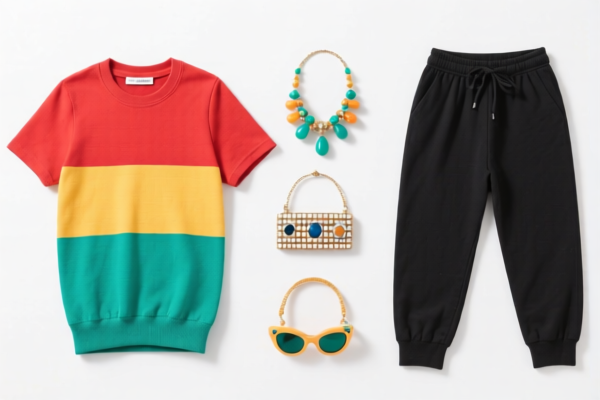
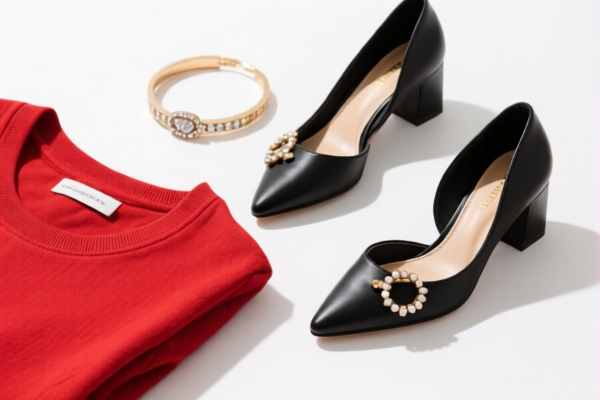
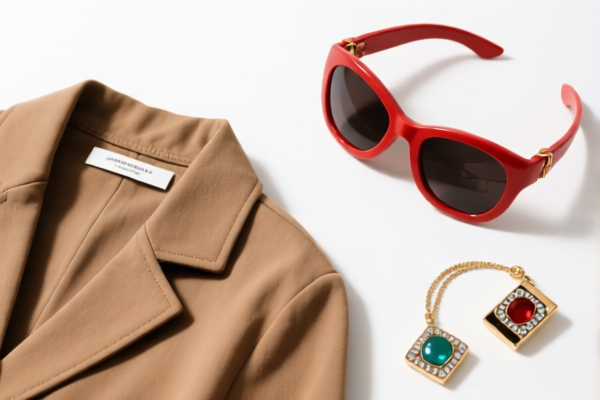
AI Analysis
👶 Other Baby and Toddler Clothing and Accessories
🌐 HS Code Reference & Customs Clearance Guide | 2026 Latest Tariff Analysis | Professional Clearance Strategy
📌 I. Product Definition & Classification: What Exactly is "Baby & Toddler Apparel"?
"Other Baby and Toddler Clothing and Accessories" refers to garments and accessory items designed for infants (typically under 2 years) and toddlers. In international trade, classification heavily depends on the material composition and knitting vs. weaving structure. Misclassification can lead to significant duty discrepancies, especially under current US trade policies.
⚠️ Key Distinction Points:
- Knitted vs. Woven: Chapter 61 covers knitted/crocheted items; Chapter 62 covers woven items.
- Material Type: "Other" generally implies non-cotton, non-silk, non-wool, or mixed synthetic materials (e.g., polyester, acrylic, blends).
- Accessory Inclusion: Includes bibs, booties, mittens, hats, and diaper covers if classified together with the main garment.
📦 II. HS Code Classification Details (2026 Latest Tariff Authority Comparison)
| HS Code | Product Description | Application Scenario | Material Basis | Total Tax Rate |
|---|---|---|---|---|
6111.90.50.70 |
Baby garments, accessories, inferred as textile material based on residual category | Knitted/Crocheted baby items, "Other" textiles not specifically listed elsewhere | Inferred Textile (Non-specified) | 32.4% |
6111.90.90.00 |
Other infant garments and accessories, classified as other textile materials | Knitted/Crocheted items made of miscellaneous textile fibers (e.g., synthetic blends not in specific subheads) | Other Textile | 23.1% |
6209.90.30.40 |
Baby garments and accessories, other categories, no material conflict | Woven baby items, generic "other" classification without specific material restrictions | Woven (General) | 32.4% |
6209.90.90.00 |
Infant and toddler garments and accessories, other residual categories | Woven items falling into catch-all categories, low base duty | Woven (Residual/Catch-all) | 20.3% |
🔍 Key Reminder:
- Knitted (Ch. 61) vs. Woven (Ch. 62): Check the manufacturing process. Knitted items (loops) go to Ch. 61; Woven items (interlaced threads) go to Ch. 62.
- "Other" Means: If the item doesn’t fit into specific subheads for Cotton (6111.10/6209.10) or Silk/Wool, it falls under "Other" (90.xxxxx).
- Tax Impact: The difference between6111.90.50.70(32.4%) and6111.90.90.00(23.1%) is nearly 10%, highlighting the importance of precise material description.
💰 III. 2026 Latest Tariff Rate Breakdown (Including Additional Taxes, Policy Surcharges)
✅ Applicable Country: United States (US)
✅ Origin: China (CN)
✅ Effective Date: November 10, 2025 (and subsequent imports)
🎯 1. 6111.90.50.70 — Baby Garments (Inferred Textile Material)
| Item | Content |
|---|---|
| Base Tariff | 14.9% (Ad Valorem) |
| Section 301 Tariff | +7.5% (Additional Duties) |
| Section 122 Tariff | +10% (Additional Duties) |
| Total Tariff Rate | 32.4% |
| Tax Calculation | CIF Value × 32.4% |
| De Minimis Eligibility | ❌ No (deny_de_minimis) |
| Legal Basis Path | HTSUS:6111.90.50.70 → Section 301: 7.5% → Section 122: 10% |
📌 Explanation:
- Base Tariff (14.9%): Standard US MFN rate for "Other" knitted baby garments not specified elsewhere.
- Section 301 (7.5%): Imposed on certain Chinese-origin goods under Trade Promotion Authority.
- Section 122 (10%): Additional duty under Section 122 of the Trade Act of 1974 (often applied to safeguard or emergency measures).
- Total 32.4%: High cost structure requiring careful margin analysis.
🎯 2. 6111.90.90.00 — Other Infant Garments (Other Textile Materials)
| Item | Content |
|---|---|
| Base Tariff | 5.6% (Ad Valorem) |
| Section 301 Tariff | +7.5% (Additional Duties) |
| Section 122 Tariff | +10% (Additional Duties) |
| Total Tariff Rate | 23.1% |
| Tax Calculation | CIF Value × 23.1% |
| De Minimis Eligibility | ❌ No (deny_de_minimis) |
| Legal Basis Path | HTSUS:6111.90.90.00 → Section 301: 7.5% → Section 122: 10% |
📌 Note:
- Lower Base Rate: The base duty is significantly lower (5.6% vs. 14.9%) due to the "Other" classification logic for less specific textile types.
- Same Add-ons: Section 301 and Section 122 tariffs remain constant at 7.5% and 10% respectively, as they apply based on origin and product type broadly.
- Savings Opportunity: Correct classification here can save 9.3% compared to6111.90.50.70.
🎯 3. 6209.90.30.40 — Baby Garments (Woven, No Material Conflict)
| Item | Content |
|---|---|
| Base Tariff | 14.9% (Ad Valorem) |
| Section 301 Tariff | +7.5% (Additional Duties) |
| Section 122 Tariff | +10% (Additional Duties) |
| Total Tariff Rate | 32.4% |
| Tax Calculation | CIF Value × 32.4% |
| De Minimis Eligibility | ❌ No (deny_de_minimis) |
| Legal Basis Path | HTSUS:6209.90.30.40 → Section 301: 7.5% → Section 122: 10% |
📌 Note:
- Mirrors6111.90.50.70in total rate due to higher base duty.
- Applicable to woven items (e.g., raincoats, jackets) where material is not restricted.
🎯 4. 6209.90.90.00 — Infant/Toddler Garments (Woven, Other Residual)
| Item | Content |
|---|---|
| Base Tariff | 2.8% (Ad Valorem) |
| Section 301 Tariff | +7.5% (Additional Duties) |
| Section 122 Tariff | +10% (Additional Duties) |
| Total Tariff Rate | 20.3% |
| Tax Calculation | CIF Value × 20.3% |
| De Minimis Eligibility | ❌ No (deny_de_minimis) |
| Legal Basis Path | HTSUS:6209.90.90.00 → Section 301: 7.5% → Section 122: 10% |
📌 Note:
- Lowest Total Rate: At 20.3%, this is the most cost-effective classification for woven items.
- Critical for Savings: If your item is woven and falls under "Other," ensure it is correctly classified here to avoid overpaying by ~12%.
🛠️ IV. Customs Clearance Practical Advice (Battle-Tested Pitfall Guide)
✅ 1. Required Documentation Checklist (None Missing)
| Document | Mandatory | Description |
|---|---|---|
| ✅ Product Spec Sheet | ✔️ | Must include material composition (e.g., "100% Polyester Knit"), dimensions, age range. |
| ✅ Material Composition Proof | ✔️ | Mill test certificate or supplier declaration to justify "Other" vs. specific material. |
| ✅ Product Photos | ✔️ | Clear images of tags, labels, and overall appearance to distinguish Knit vs. Woven. |
| ✅ Commercial Invoice | ✔️ | Must clearly state "Baby Clothing" and HS Code. Avoid vague terms like "Garment." |
| ✅ Packing List | ✔️ | Detail item counts, weights, and packaging to ensure consistency with invoice. |
| ✅ Country of Origin Certificate | ✔️ | Essential for applying correct Section 301/122 duties. |
✅ 2. Declaration Tips (Key Mantra)
🔥 “Knit or Woven? Check the Label! 'Other' Means Specific, Not Vague!”
| Scenario | Correct Declaration | Incorrect Practice |
|---|---|---|
| Knitted Cotton Onesie | 6111.20.xxxx (Specific) |
Misclassified as 6111.90.xxxx → Higher Tax |
| Knitted Synthetic Jacket | 6111.90.90.00 (If applicable) |
Misclassified as 6111.90.50.70 → Overpay 9.3% |
| Woven Polyester Bib | 6209.90.90.00 |
Misclassified as 6209.90.30.40 → Overpay 12.1% |
| Baby Hat (Knitted) | 6111.90.xxxx |
Misclassified as "Accessory" under different chapter → Penalty |
📌 Critical Warning:
- "Accessory" Trap: Many buyers try to classify baby hats/bibs under different HS codes to lower duty. However, if shipped as a set or commonly classified with baby apparel, they are often pulled into the same Chapter 61/62 heading.
- Material Specificity: Do not use "Textile" alone. Specify "Polyester," "Acrylic," etc., to help customs determine if it fits "Other" categories.
✅ 3. Special Situations Handling
| Situation | Handling Advice |
|---|---|
| Mixed Materials | Use the principal material rule. If >50% synthetic, classify as synthetic "Other." |
| Sets (Outfit + Bib + Hat) | Declare as one unit under the principal item’s HS Code. Do not split unless packaged separately. |
| OEM/Private Label | Provide design authorization letters to prove origin and avoid misclassification claims. |
| Seasonal Items | Ensure no temporary duty waivers apply (rare for baby clothing, but check annual updates). |
🌍 V. Global Market Clearance Comparison (2026 Latest)
| Country/Region | Recommended HS Code | Tariff (China Origin) | Certification | Notes |
|---|---|---|---|---|
| 🇺🇸 USA | 6111.90.90.00 / 6209.90.90.00 |
23.1% / 20.3% | CPSIA + ASTM F963 | Highest complexity due to Section 301/122. |
| 🇨🇳 China | 6111.90.90.00 / 6209.90.90.00 |
5-10% | CCC (if applicable) | No Section 301/122. |
| 🇪🇺 EU | 6111.90 / 6209.90 |
0-12% | CE (if toy-related) + REACH | No punitive add-ons. |
| 🇬🇧 UK | 6111.90 / 6209.90 |
0-12% | UKCA + REACH | Post-Brexit rules apply. |
📌 Conclusion:
- US Market is the Hardest: Due to the 301/122 surcharges, total duties exceed 20%.
- Duty Savings Potential: Correct classification can save up to 12% (e.g.,6209.90.90.00vs.6209.90.30.40).
- Other Markets: EU/UK have lower base duties and no punitive add-ons, making them more cost-effective.
📌 VI. Common Mistakes & Pitfall Guide (Lessons Learned)
❌ Mistake 1: Classifying all baby clothes under one "Baby Apparel" code without checking Knit vs. Woven.
👉 Consequence: Wrong chapter (61 vs. 62) → Customs Hold + Penalty.
❌ Mistake 2: Using vague material descriptions like "Other Fabric" without specifying synthetic vs. natural.
👉 Consequence: Customs may assign the highest possible base duty (e.g., 14.9% instead of 2.8%).
❌ Mistake 3: Assuming "Accessories" get lower duty rates.
👉 Consequence: Baby bibs/hats are often grouped with main garments → Over-declaration Risk.
❌ Mistake 4: Ignoring Section 122 Tariffs.
👉 Consequence: Unexpected 10% surcharge at port → Cash Flow Crisis.
✅ Correct Approach:
“Baby Knitted Onesie, 100% Polyester, Size 0-3M, HS: 6111.90.90.00, Origin: China”
🎯 VII. Conclusion: Precise Classification Saves Money!
🎯 Remember the Mantra:
🔹 “Knit is 61, Woven is 62. 'Other' is not 'Vague.'”
🔹 “Check Base Rate: 5.6% vs. 14.9%? Save 9% instantly!”
🔹 “Don’t forget Section 301 (7.5%) + 122 (10%) = 17.5% Extra!”
📌 Pro Tip:
- If your product is not from China (e.g., Vietnam, Bangladesh), you may avoid Section 301/122 tariffs, reducing total duty to just the base rate (e.g., 5.6% or 2.8%).
- Apply for Advance Rulings from US Customs (CBP) to lock in favorable classification before shipment.
📣 Take Action Now:
📞 Contact a certified customs broker + Provide material specs + Apply for CBP Advance Ruling
🚀 Ensure your baby apparel clears smoothly, saves taxes, and reaches shelves fast!
✨ Professional Clearance Starts with Accurate Classification!
💼 Every Percent Saved is Pure Profit!
Customer Reviews
About HS Code Classification
The Harmonized System (HS) is an internationally standardized nomenclature developed by the World Customs Organization (WCO) to classify traded products. Over 200 countries use the HS system as the basis for customs tariffs, trade statistics, and import/export regulations.
Each HS code follows a hierarchical structure:
- Chapter (2 digits) — Broad category of goods (e.g., Chapter 84: Machinery and Mechanical Appliances)
- Heading (4 digits) — More specific grouping within the chapter
- Subheading (6 digits) — Internationally standardized breakdown, used by all WCO member countries
- National subdivisions (8-10 digits) — Country-specific extensions for further classification, such as US HTSUS 10-digit codes
Correct HS code classification is essential for smooth customs clearance, accurate duty payment, and compliance with trade regulations. Misclassification can lead to customs delays, overpayment of duties, or penalties.
When importing from CN to US, the applicable tariff rates may include:
- Most-Favored-Nation (MFN) rate — The standard duty rate applied to WTO members
- General rate — Applied to countries without trade agreements
- Trade remedy duties — Additional tariffs such as Section 301 (anti-dumping), Section 232 (national security), or countervailing duties
The information provided on this page is for reference purposes only. For official classification, please consult with your local customs authority or a licensed customs broker.