Other Briefcases with Outer Surface of Plastics or Textile Materials
CN → US| HS Code | Tariff Rate | Origin | Destination | Doc |
|---|---|---|---|---|
| 6305330080 | 25.9% | CN | US | Official Doc |
| 6305390000 | 25.9% | CN | US | Official Doc |
| 4202923120 | 52.6% | CN | US | Official Doc |
Product Images
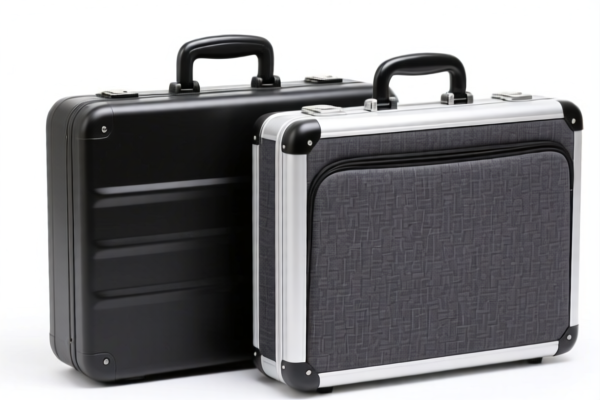
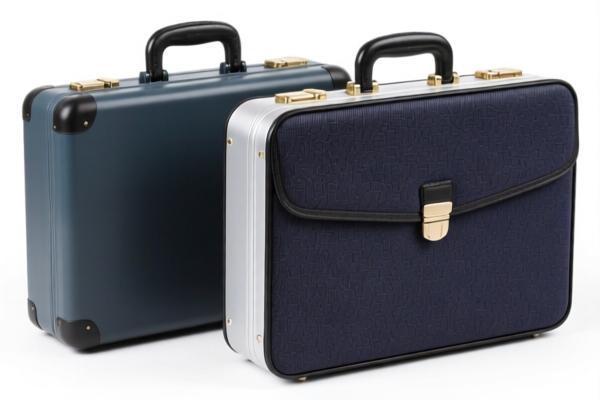
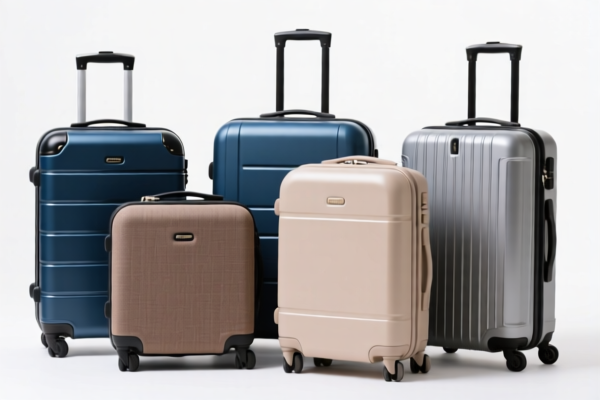
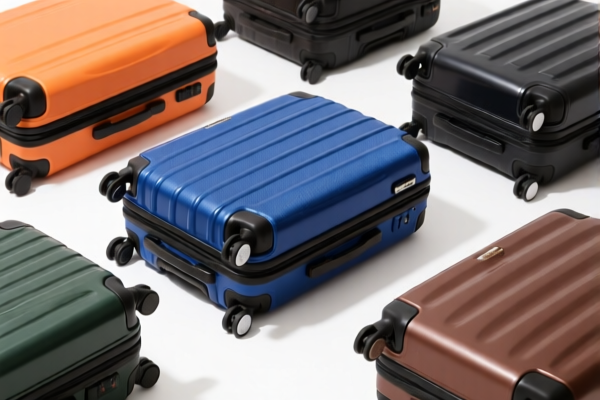
AI Analysis
🧳 Other Briefcases with Outer Surface of Plastics or Textile Materials
🌐 HS Code Reference & Clearance Guide | 2026 Tariff Breakdown | Strategic Logistics Strategy
📌 I. Product Definition & Classification: What Exactly Is "Other Briefcases"?
"Other Briefcases with Outer Surface of Plastics or Textile Materials" refer to portable carrying cases designed for documents, laptops, or personal items, featuring an outer surface made from plastics (e.g., synthetic leather, PVC, polyurethane) or textile materials (e.g., nylon, polyester, canvas).
These are not traditional leather briefcases but modern, durable alternatives used in business, travel, and education. The term "Other" typically excludes those classified under specific leather or metal cases.
⚠️ Key Classification Triggers:
- Outer Material: Must be plastic or textile (not leather, metal, or wood).
- Structure: Must have a main compartment with handles/straps.
- Exclusions: If the item is purely a "backpack" (no formal briefcase shape), it may fall under different subheadings (e.g., 4202.92 vs. 6305 series).
- Packaging Purpose: If used primarily for packing goods (e.g., cargo bags, reusable shipping sacks), it may fall under Chapter 63 (Textile articles) rather than Chapter 42 (Leather goods).
📦 II. HS Code Classification Details (2026 Tariff Authority对照)
Based on the provided data, here are the applicable HS Codes for "Other Briefcases with Outer Surface of Plastics or Textile Materials," along with their tax implications:
| HS Code | Product Description | Classification Logic | Total Tax Rate |
|---|---|---|---|
| 6305.33.00.80 | Plastic or Textile Outer Surface Bags for Packaging | Fits "packaging goods" purpose; made of textile/plastic; often used as cargo/transport bags rather than personal briefcases. | 25.9% |
| 6305.39.00.00 | Plastic or Textile Outer Surface Bags (General) | Covers broader plastic/textile packaging bags; used for goods, not necessarily formal briefcases. | 25.9% |
| 4202.92.31.20 | Other Briefcases, Pockets, Outer Surface of Plastics/Textiles | Correct fit for "Briefcases" (personal/business use); made of plastic or textile sheeting. | 52.6% |
🔍 Critical Distinction:
- 6305 Series: Applies if the item is primarily a packaging bag/sack (e.g., reusable shipping sack, bulk cargo bag).
- 4202 Series: Applies if the item is a briefcase/personal bag (e.g., laptop bag, document case, travel pouch).
- Risk: Misclassifying a personal briefcase (4202) as a packaging bag (6305) can lead to underpayment of duties (25.9% vs. 52.6%) and customs penalties.
💰 III. 2026 Tariff Rate Analysis (Including Surcharges & Policy Add-ons)
✅ Applicable Country: United States (US)
✅ Origin: China (CN)
✅ Effective Date: 2025+ (including subsequent imports)
🎯 1. 6305.33.00.80 & 6305.39.00.00 — Packaging Bags (Plastic/Textile)
| Item | Content |
|---|---|
| Base Duty Rate | 8.4% (ad valorem) |
| Section 301 / "Add-on" Tariff | +7.5% (Special "Add-on" tariff for textile/plastic packaging) |
| "Section 122" Tariff | +10% (Additional surcharge for certain Chinese goods) |
| Total Tax Rate | 25.9% |
| Tax Calculation | CIF Value × 25.9% |
| De Minimis Exemption? | ❌ No (deny_de_minimis) |
| Legal Basis | Section 301 + Section 122 + Base Duty |
📌 Explanation:
- Base Duty (8.4%): Standard tariff for textile/plastic bags.
- Add-on Tariff (7.5%): Part of Section 301 duties for specific Chinese textile goods.
- Section 122 (10%): Additional surcharge on certain Chinese products (often for strategic goods or to counter subsidies).
- Total: 25.9% — Moderate-high tax, but significantly lower than the briefcase category.
🎯 2. 4202.92.31.20 — Other Briefcases (Plastic/Textile Surface)
| Item | Content |
|---|---|
| Base Duty Rate | 17.6% (ad valorem) |
| Section 301 / "Add-on" Tariff | +25.0% (Heavy "Add-on" tariff for Chinese leather/textile bags) |
| "Section 122" Tariff | +10% |
| Total Tax Rate | 52.6% |
| Tax Calculation | CIF Value × 52.6% |
| De Minimis Exemption? | ❌ No (deny_de_minimis) |
| Legal Basis | Section 301 + Section 122 + Base Duty |
📌 Explanation:
- Base Duty (17.6%): Standard duty for "Other" leather/textile bags (higher than packaging bags).
- Add-on Tariff (25.0%): Very high Section 301 surcharge for Chinese-made briefcases/bags (often targets consumer goods).
- Section 122 (10%): Additional surcharge.
- Total: 52.6% — Extremely high tax rate! This category is heavily targeted for Chinese-origin briefcases.🔥 Critical Warning:
- If your "briefcase" is actually a packaging sack, declaring it under6305saves 26.7% in taxes (25.9% vs. 52.6%).
- If your item is a personal briefcase, you cannot use6305— customs will classify it as4202and charge 52.6%.
🛠️ IV. Clearance Practical Advice (Avoid Pitfalls)
✅ 1. Required Documentation Checklist
| Document | Mandatory | Explanation |
|---|---|---|
| Product Specifications | ✔️ | Outer material (plastic/textile), dimensions, weight, compartment count |
| Product Photos | ✔️ | Show outer surface, handles, zippers, branding |
| Usage Declaration | ✔️ | Must state: "For packaging goods" (if 6305) OR "For personal/business use" (if 4202) |
| Material Certificate | ✔️ | Confirm outer surface is plastic or textile (not leather/metal) |
| Commercial Invoice | ✔️ | Clearly state HS Code and "Other Briefcases" description |
| Packing List | ✔️ | Show number of units, gross/net weight |
| Origin Certificate | ✔️ | If non-China origin, may qualify for lower rates |
✅ 2. Declaration Strategy (Golden Rules)
🔥 "Define Purpose First, Then Declare!"
| Scenario | Correct Declaration | Wrong Declaration |
|---|---|---|
| Personal Briefcase (laptop/document) | 4202.92.31.20 |
6305.33.00.80 → 52.6% vs 25.9% (Overpayment penalty) |
| Packaging Bag (shipping sack, cargo bag) | 6305.33.00.80 / 6305.39.00.00 |
4202.92.31.20 → 25.9% vs 52.6% (Underpayment penalty) |
| Mixed Use (briefcase + packaging) | Declare as primary use (usually briefcase) | Split declaration → Complex audit |
| OEM Custom Briefcase | Provide design specs + client order | Generic "bag" → Classification uncertainty |
✅ 3. Special Scenarios & Solutions
| Scenario | Handling Suggestion |
|---|---|
| "Briefcase" with Textile Lining | Still 4202 if outer surface is plastic/textile; lining doesn't change classification |
| "Backpack" vs. "Briefcase" | Backpacks (no rigid structure) may be 6305; Briefcases (structured) are 4202 |
| Leather Outer Surface | Not applicable — this category excludes leather (see 4202.19/4202.21) |
| Metal Frame Briefcase | Not applicable — must be plastic/textile outer surface |
| Reusable Shopping Bag | Use 6305 if for packaging; 4202 if for personal carry |
🌍 V. Global Market Comparison (2026 Tariff Snapshot)
| Country/Region | Recommended HS Code | Tariff (China) | Certifications | Notes |
|---|---|---|---|---|
| 🇺🇸 USA | 4202.92.31.20 |
52.6% | FCC (if electronic), RoHS | Highest duty; avoid if possible |
| 🇺🇸 USA | 6305.33.00.80 |
25.9% | — | Lower duty only if packaging bag |
| 🇨🇳 China | 4202.92.31.20 |
12% | CCC | No Section 301/122 |
| 🇪🇺 EU | 4202.92.31.20 |
6% (if <€10) | CE, RoHS | Lower duty; no Section 301 |
| 🇯🇵 Japan | 4202.92.31.20 |
8% | PSE | No Section 301 |
| 🇦🇺 Australia | 4202.92.31.20 |
5% | RCM | No Section 301 |
📌 Conclusion:
- USA is the only market with Section 301/122 surcharges (52.6% for briefcases).
- Packaging bags (6305) are cheaper to import (25.9%) — but only if they are truly for packaging, not personal use.
- For other markets, duties are much lower (5%–12%).
- Recommendation: Consider third-country manufacturing (Vietnam, Mexico) to avoid Section 301/122 surcharges.
📌 VI. Common Mistakes & Pitfalls (Lessons Learned)
❌ Mistake 1: Declaring a personal briefcase as a packaging bag (6305) to avoid 52.6% tax
👉 Result: Customs audit → 52.6% + penalties + back taxes → Total >100% tax!
❌ Mistake 2: Declaring a packaging sack as a briefcase (4202)
👉 Result: Overpaying 26.7% tax unnecessarily → Lost profit margin!
❌ Mistake 3: Not specifying "Outer Surface Material" in declaration
👉 Result: Customs cannot classify → Delayed shipment + inspection fee
❌ Mistake 4: Using "Bag" as a generic term without HS Code context
👉 Result: Classification uncertainty → Customs detention
✅ Correct Approach:
"Other Briefcase, Outer Surface: 100% Nylon Textile, Lining: Polyester, 15-inch Laptop Compartment, Model XYZ, No Leather/Metal, For Personal Business Use"
🎯 VII. Final Thoughts: Precision Classification Saves Money!
🎯 Golden Rules:
🔹 "Briefcase = 4202 (52.6%) | Packaging Bag = 6305 (25.9%)"
🔹 "Purpose Defines Classification, Not Just Appearance!"
🔹 "USA Tariff Shock: 52.6% vs 25.9% — Choose Wisely!"
🔹 "De Minimis? NO — Always Pay Full Duty!"
📌 Pro Tip:
If your briefcases are made in Vietnam, Mexico, or Thailand, you may avoid Section 301/122 surcharges → Tariff drops to ~17.6% (Base Duty Only).
Action: Get pre-classification ruling from CBP before shipping!
📣 Call to Action:
📞 Contact a licensed customs broker + Provide Product Specs + Request Pre-Ruling
🚀 Optimize your Briefcase Clearance, Save 26.7% in Taxes, Boost Your Profit Margin!
✨ Professional Clearance Starts with Accurate Classification!
💼 Every dollar of cost must be calculated precisely!
Customer Reviews
About HS Code Classification
The Harmonized System (HS) is an internationally standardized nomenclature developed by the World Customs Organization (WCO) to classify traded products. Over 200 countries use the HS system as the basis for customs tariffs, trade statistics, and import/export regulations.
Each HS code follows a hierarchical structure:
- Chapter (2 digits) — Broad category of goods (e.g., Chapter 84: Machinery and Mechanical Appliances)
- Heading (4 digits) — More specific grouping within the chapter
- Subheading (6 digits) — Internationally standardized breakdown, used by all WCO member countries
- National subdivisions (8-10 digits) — Country-specific extensions for further classification, such as US HTSUS 10-digit codes
Correct HS code classification is essential for smooth customs clearance, accurate duty payment, and compliance with trade regulations. Misclassification can lead to customs delays, overpayment of duties, or penalties.
When importing from CN to US, the applicable tariff rates may include:
- Most-Favored-Nation (MFN) rate — The standard duty rate applied to WTO members
- General rate — Applied to countries without trade agreements
- Trade remedy duties — Additional tariffs such as Section 301 (anti-dumping), Section 232 (national security), or countervailing duties
The information provided on this page is for reference purposes only. For official classification, please consult with your local customs authority or a licensed customs broker.