Other Coniferous Logs (Unbarked)
CN → US| HS Code | Tariff Rate | Origin | Destination | Doc |
|---|---|---|---|---|
| 4403260165 | 35.0% | CN | US | Official Doc |
| 4403220165 | 35.0% | CN | US | Official Doc |
| 4403230135 | 35.0% | CN | US | Official Doc |
| 4403210130 | 35.0% | CN | US | Official Doc |
| 4403210165 | 35.0% | CN | US | Official Doc |
Product Images
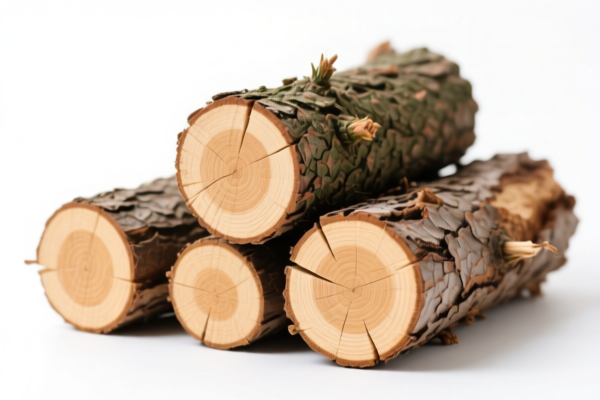
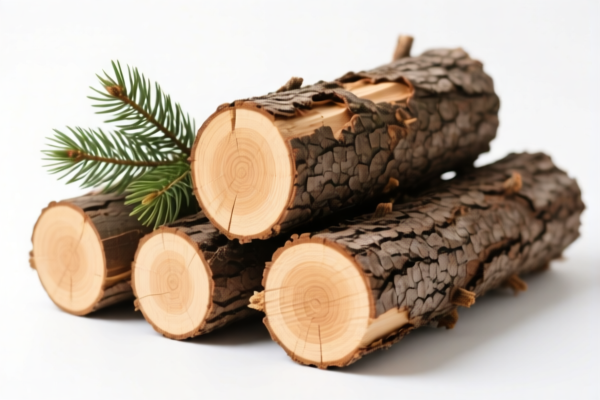
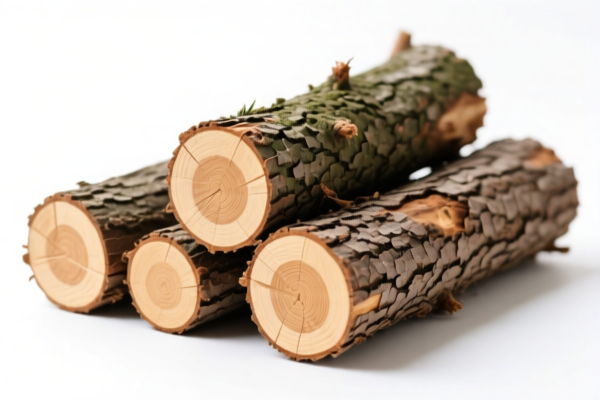
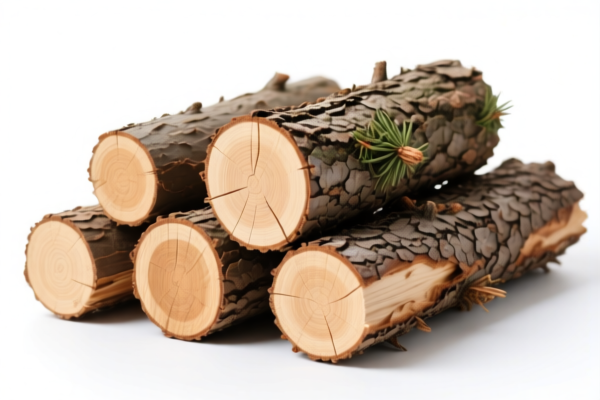
AI Analysis
🌲 Coniferous Logs (Unbarked/Unprocessed)
🌐 HS Code Reference & Customs Clearance Guide | 2026 Latest Tariff Analysis | Professional Clearance Strategy
📌 I. Product Definition & Classification: What Exactly Are "Other Coniferous Logs"?
Coniferous logs are the primary raw material for the wood products industry, including plywood, lumber, pulp, and particleboard. In international trade, these products are strictly regulated due to phytosanitary concerns and trade tariffs. The term "Other Coniferous Logs" typically refers to wood from coniferous trees (such as Pine, Spruce, Fir, Larch, etc.) that has not been specified as "Softwood Lumber" or "Pulpwood" and falls under the general category of unprocessed timber.
Key Distinctions: * Logs vs. Lumber: Logs are whole tree trunks or large sections, typically not sawn to size. Lumber is sawn timber. * Barked vs. Unbarked: Some HS codes specify "debarked" (bark removed), while others cover logs where the bark is either still present or removal status is not the primary classifier. The provided data indicates a broad coverage of "Unprocessed" and "Other" categories. * Processing Level: "Unprocessed" implies the wood has not been chemically treated, impregnated, or significantly worked beyond basic cutting.
⚠️ Critical Compliance Point:
- Coniferous logs are subject to strict Phytosanitary Certificates to prevent the spread of pests (e.g., Bark Beetles, Nematodes).
- Tariff Structure: The following HS codes are subject to high additional tariffs due to current trade policies (Section 301/122).
📦 II. HS Code Classification Details (2026 Latest Tariff Authority Cross-Reference)
Based on the provided data, here is the detailed breakdown for Coniferous Logs (Unprocessed/Other). Note that all listed items carry a 35.0% Total Tax Rate.
| HS Code | Product Description (Summary) | Key Attributes | Matching Keywords in Data |
|---|---|---|---|
| 4403.26.01.65 | Other Coniferous Logs (Unprocessed) | Coniferous wood; Unprocessed; Other category (not specific to diameter/length sub-categories) | 针叶木、未加工、其他类别 |
| 4403.22.01.65 | Other Coniferous Logs (Unprocessed) | Coniferous wood; Logs; Other category | 针叶木、原木、其他类别 |
| 4403.23.01.35 | Unprocessed Coniferous Logs (Debarked) | Coniferous wood; Unprocessed; Debarked (Bark removed) | 针叶木原木、粗制木材(无论是否剥皮) |
| 4403.21.01.30 | Unprocessed Coniferous Logs (Debarked) | Coniferous wood; Unprocessed; Debarked; Other (not primary sawn) | 针叶木原木、粗锯或粗方木材、其他 |
| 4403.21.01.65 | Other coniferous logs (Unstripped bark) | Coniferous wood; Logs; Unstripped bark (Bark present or status unspecified) | 其他针叶木原木、非特定用途 |
🔍 Key Clarification:
- The suffix.165or.135or.130indicates specific sub-classifications for duty purposes.
- "Unprocessed" is the overarching theme. Even if debarked (4403.21/23), they remain "Unprocessed" under Chapter 44, but the presence/absence of bark distinguishes the sub-code.
- Do not confuse with "Softwood Lumber" (HS 4407): These are Logs, not sawn timber.
💰 III. 2026 Latest Tariff Rate Breakdown (Detailed Tax Clauses)
✅ Applicable Country: United States (US)
✅ Origin: China (CN) (Inferred from "122" and "35%" total tax structure typical of China-US trade context)
✅ Effective Date: Current enforcement period (Check latest updates for any expiration/renewal)
🎯 Universal Tax Structure for All Listed HS Codes
(Applies to: 4403.26.01.65, 4403.22.01.65, 4403.23.01.35, 4403.21.01.30, 4403.21.01.65)
| Tax Component | Rate | Description |
|---|---|---|
| Base Tariff | 0.0% | Standard MFN (Most Favored Nation) rate for unprocessed coniferous logs. |
| Additional Tariff (Section 301) | +25.0% | Imposed under US Trade Act Section 301 against China-origin goods. |
| Section 122 Tariff | +10.0% | Imposed under Section 122 (Bicentennial National Park) or similar emergency/protective clauses, specifically targeting imports from China. |
| Total Effective Tax Rate | 35.0% | Sum of Base (0%) + Section 301 (25%) + Section 122 (10%). |
| Tax Calculation Basis | Ad Valorem | Calculated on the CIF Value (Cost, Insurance, Freight) at the time of entry. |
| De Minimis Exemption | ❌ Not Eligible | These goods are denied de minimis (Section 321). All shipments, regardless of value, must be formally entered and taxed. |
📌 Legal Basis Path:
USITC:4403.2x.01.xx→SECTION_301:9903.88.01→SECTION_122:9903.01.25(or equivalent specific footnote).
Note: The "122" tariff is a significant cost driver and is non-negotiable for Chinese-origin logs.💡 Interpretation:
- "Base Tariff 0%" might mislead importers into thinking it's duty-free. It is NOT duty-free.
- "35%" is the real cost. For every $10,000 CIF value, you pay $3,500 in duties alone.
- No VAT/GST is mentioned in the US context, but state-level taxes may apply later.
🛠️ IV. Customs Clearance Practical Advice (Avoid Pitfalls)
✅ 1. Mandatory Documentation Checklist
| Document | Required? | Purpose |
|---|---|---|
| Phytosanitary Certificate | ✅ YES | Issued by the country of origin's plant protection agency. Must confirm freedom from pests (e.g., Pine Wilt Disease, Bark Beetles). |
| Fumigation Certificate | ✅ YES | Proof of heat treatment (HT) or methyl bromide fumigation, as required by ISPM 15 standards. |
| Commercial Invoice | ✅ YES | Must clearly state "Coniferous Logs," HS Code, Country of Origin, and CIF Value. |
| Bill of Lading (B/L) | ✅ YES | Standard shipping document. |
| Packing List | ✅ YES | Detail weight, volume, and number of logs. |
| Lumber/Log Declaration | ✅ YES | Explicit declaration of species (if possible), processing status (unprocessed/barked/debarked). |
| Customs Bond | ✅ YES | Continuous or single-entry bond required for formal entry. |
⚠️ Critical Warning:
- If the Phytosanitary Certificate is missing or invalid, the shipment will be refused entry or re-exported at the importer's expense.
- Misdeclaring "Processed Wood" (to avoid tariffs) when it is "Unprocessed" is fraud and carries severe penalties.
✅ 2. Declaration Tips (Golden Rules)
🔥 "Be Precise, Be Honest, Be Phyto-Safe!"
| Scenario | Correct Declaration | Incorrect Declaration | Consequence |
|---|---|---|---|
| Logs with Bark | 4403.21.01.65 or 4403.26.01.65 (if "other") |
"Softwood Lumber" | ❌ Wrong HS Code → High Duty + Penalties |
| Debarked Logs | 4403.21.01.30 or 4403.23.01.35 |
"Unprocessed Logs" (if debarked is specific) | ⚠️ Potential misclassification, though tax rate is same |
| Mixed Species | Declare as "Coniferous Logs (Species: Pine/Fir)" | "Wood Logs" | ❌ Vague description → Customs holds shipment |
| Treated Wood | Declare as "Heat Treated (HT)" | "Unprocessed" | ❌ False declaration → Fraud investigation |
✅ 3. Special Circumstances
| Situation | Handling Advice |
|---|---|
| Non-Chinese Origin | If logs originate from Canada, Russia, or EU, the 35% tariff may not apply. Check FTAs or trade agreements. However, Section 301 may still apply to certain categories. Verify origin certificates carefully. |
| Partial Processing | If logs are cut into "bolts" (shorter lengths), they may still fall under 4403 if not sawn. Do not confuse with 4407 (Sawn Wood). |
| Value Adjustment | Ensure the CIF value includes all costs to the US port. Under-invoicing to reduce tax is illegal and easily detected. |
| State Regulations | Some US states (e.g., California, Oregon) have stricter phytosanitary rules than federal CBP. Check state-level DEP (Department of Environmental Protection) requirements. |
🌍 V. Global Market Comparison (2026)
| Country/Region | Recommended HS Code | Tariff Rate (China Origin) | Phytosanitary Requirements | Notes |
|---|---|---|---|---|
| 🇺🇸 USA | 4403.21/22/23/26.xx.xx |
35% (Base 0% + 301 25% + 122 10%) | Strict (ISPM 15, Fumigation) | High duty, strict phytosanitary |
| 🇨🇳 China | 4403.21/22/23/26 |
Varies (often 5-10%) | Moderate | Major importer of raw logs |
| 🇪🇺 EU | 4403.21/22/23/26 |
0% (Most Favored Nation) | Very Strict (ISPM 15, EUTR) | Zero duty, but high compliance cost |
| 🇬🇧 UK | 4403.21/22/23/26 |
0% | Strict (UK EUTR) | Post-Brexit rules apply |
| 🇯🇵 Japan | 4403.21/22/23/26 |
0-5% | Strict | Low duty, high quality standards |
📌 Conclusion:
- USA is the most expensive market for Chinese-origin coniferous logs due to the 35% cumulative tariff.
- EU/UK/JP offer 0% duty but have strict environmental and phytosanitary regulations (EUTR, etc.).
- China is a major importer, so export to China may have lower tariffs but requires different documentation.
📌 VI. Common Mistakes & Pitfalls (Lessons Learned)
❌ Mistake 1: Declaring "Softwood Lumber" (4407) instead of "Logs" (4403) to avoid scrutiny.
👉 Consequence: HS Code mismatch → Seizure, fines, and potential criminal investigation. Logs are round/rough; lumber is sawn.
❌ Mistake 2: Ignoring the Phytosanitary Certificate.
👉 Consequence: Shipment refused entry at US port. Demurrage costs accumulate daily.
❌ Mistake 3: Assuming "Base Tariff 0%" means "Duty-Free".
👉 Consequence: Unexpected $3,500 duty per $10,000 value. Budgeting failure.
❌ Mistake 4: Mixing "Debarked" and "Unbarked" without clarification.
👉 Consequence: Customs may question the HS code accuracy, causing delays. Use the correct sub-code (.165 vs .135).
✅ Best Practice:
"Coniferous Logs, Unprocessed, Species: [e.g., Picea abies], Debarked/Unbarked, Heat Treated (HT), HS Code: 4403.26.01.65, Origin: China"
🎯 VII. Conclusion: Smart Clearance, Cost Control, Compliance
🎯 Remember the Key Points:
🔹 "Logs vs. Lumber: 4403 vs. 4407. Don't mix them!"
🔹 "35% is the real rate: 0% Base + 25% Sec 301 + 10% Sec 122."
🔹 "Phytosanitary Certificate is your ticket to entry. No cert, no entry."
🔹 "De Minimis does NOT apply. Every shipment is taxed."
📌 Pro Tip:
If you are importing into the US, consider Supplier Diversification to countries not subject to Section 301/122 (e.g., Canada, Russia, EU) to save 35% in duties.
If you must import from China, ensure perfect documentation to avoid delays and demurrage, which can exceed the duty cost.
📣 Immediate Action:
📞 Consult a licensed customs broker before shipment.
📄 Verify Phytosanitary Certificate with the origin country's plant protection agency.
📊 Calculate Landed Cost including the 35% duty.
✨ Professional Clearance Starts with Accurate Classification!
💼 Every Dollar Saved is a Dollar Earned!
Customer Reviews
About HS Code Classification
The Harmonized System (HS) is an internationally standardized nomenclature developed by the World Customs Organization (WCO) to classify traded products. Over 200 countries use the HS system as the basis for customs tariffs, trade statistics, and import/export regulations.
Each HS code follows a hierarchical structure:
- Chapter (2 digits) — Broad category of goods (e.g., Chapter 84: Machinery and Mechanical Appliances)
- Heading (4 digits) — More specific grouping within the chapter
- Subheading (6 digits) — Internationally standardized breakdown, used by all WCO member countries
- National subdivisions (8-10 digits) — Country-specific extensions for further classification, such as US HTSUS 10-digit codes
Correct HS code classification is essential for smooth customs clearance, accurate duty payment, and compliance with trade regulations. Misclassification can lead to customs delays, overpayment of duties, or penalties.
When importing from CN to US, the applicable tariff rates may include:
- Most-Favored-Nation (MFN) rate — The standard duty rate applied to WTO members
- General rate — Applied to countries without trade agreements
- Trade remedy duties — Additional tariffs such as Section 301 (anti-dumping), Section 232 (national security), or countervailing duties
The information provided on this page is for reference purposes only. For official classification, please consult with your local customs authority or a licensed customs broker.