Other Coniferous Logs Unprocessed
CN → US| HS Code | Tariff Rate | Origin | Destination | Doc |
|---|---|---|---|---|
| 4403260108 | 35.0% | CN | US | Official Doc |
| 4403260165 | 35.0% | CN | US | Official Doc |
| 4403240104 | 35.0% | CN | US | Official Doc |
| 4403260108 | 35.0% | CN | US | Official Doc |
| 4407190055 | 35.0% | CN | US | Official Doc |
Product Images
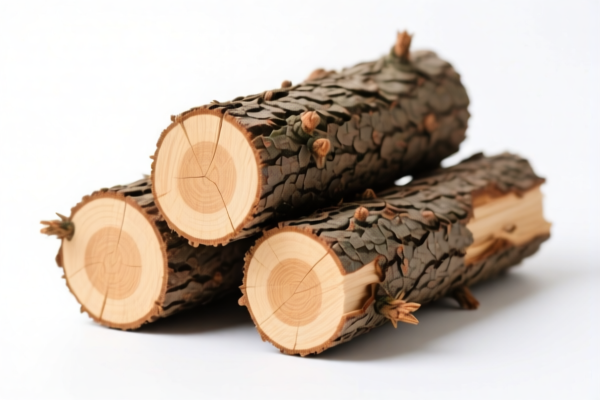
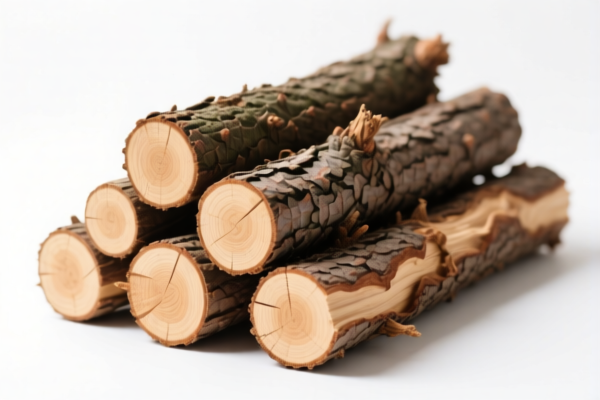
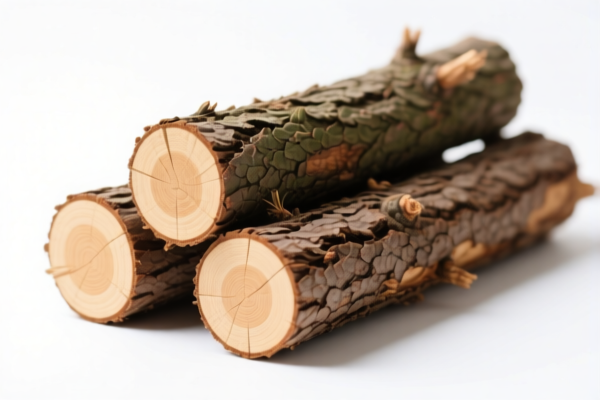
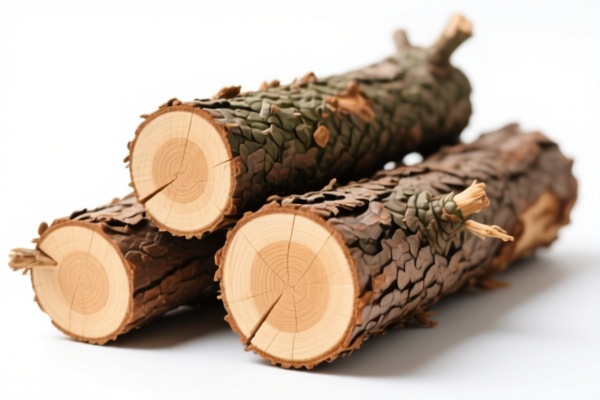
AI Analysis
🌲 Unprocessed Coniferous Logs (Other)
🌐 HS Code Reference & Customs Clearance Guide | 2026 Latest Tariff Analysis | Professional Entry Strategy
📌 I. Product Definition & Classification: Do You Really Know "Coniferous Logs"?
Coniferous Logs, commonly referred to as pine, spruce, fir, or hemlock logs, are the raw material for the global timber, paper, and construction industries. In international trade, "Unprocessed" implies the wood is in its natural state or minimally processed (e.g., debarked, but not sawn into planks).
Key Distinctions: * Logs (Round Wood): Cylindrical, usually peeled or debarked, length >1 meter, diameter >7 cm. Used for veneer, plywood, or pulp. * Sawn Timber: Cut into rectangular shapes (planks/lumber). Note: If the logs are sawn, they fall under Chapter 4407, NOT 4403. * "Other": In the context of the provided data, this refers to specific subsets of coniferous logs that may have specific restrictions (like the "122 Clause" or specific origin penalties) despite being standard raw materials.
⚠️ Critical Classification Point:
- If the wood is round, un-sawn, and un-sliced →归入 Chapter 4403 (Wood in the rough).
- If the wood is sawn or chipped →归入 Chapter 4407 (Wood continuously sliced/sawn).
- Misclassification Risk: Declaring logs as "sawn timber" or vice versa can lead to massive tax discrepancies and customs seizures.
📦 II. HS Code Classification Details (Based on Provided Data)
The following HS Codes are derived directly from the provided <DATA>. All listed codes attract a Total Tax Rate of 35.0%.
| HS Code | Product Description | Key Characteristics | Source Summary |
|---|---|---|---|
| 4403.26.01.08 | Other unprocessed coniferous logs | Material: Coniferous; Form: Logs; Category: Other | Specifically notes "Other" category; typically used for pulp production if rough. |
| 4403.26.01.65 | Other unprocessed coniferous logs | Material: Coniferous; Form: Logs; No specific variety conflict | Matches generic unprocessed coniferous logs without specific species restrictions. |
| 4403.24.01.04 | Bulk unprocessed coniferous timber | Material: Coniferous; Form: Rough/Bulk; Category: Reasonable Match | Often refers to rough-cut or bulk logs that don't fit strict "log" definitions but are still unprocessed wood. |
| 4403.26.01.08 | Bulk unprocessed coniferous timber | Material: Coniferous; Form: Logs/Un-sawn; Use: Pulp Production | Highlights industrial use (pulp) but remains under "Logs/Un-sawn" classification. |
| 4407.19.00.55 | Other unprocessed coniferous wood | Material: Coniferous; Form: Untreated; Use: Shipbuilding | Note: Despite the name "unprocessed," this code falls under Chapter 4407 (Sawn/Wood), suggesting it may be rough-sawn or specific for shipbuilding use. |
🔍 Important Observation:
- Codes4403.26.01.08and4403.26.01.65are nearly identical in description but differ in the last two digits (08 vs 65), likely indicating specific sub-classifications or reporting quotas.
- Code4407.19.00.55is an outlier in terms of chapter (4407 vs 4403), implying a different physical state (possibly rough-sawn) despite the "unprocessed" label in the summary.
💰 III. 2026 Latest Tariff Rate Breakdown (Including Surcharge & Policy Add-ons)
✅ Applicable Country: United States (US)
✅ Origin: China (CN)
✅ Total Tax Rate: 35.0%
✅ Effective Date: Current (Includes 122 Clause)
🎯 1. Standard Coniferous Logs (Codes: 4403.26.01.08, 4403.26.01.65, 4403.24.01.04)
| Item | Content |
|---|---|
| Base Tariff | 0.0% (ad valorem) |
| Section 301 Surcharge | +25.0% (USITC Footnote for Chinese Origin) |
| Section 122 Tariff | +10.0% (Specific policy add-on for certain timber products) |
| Total Tax Rate | 35.0% |
| Tax Calculation | CIF Value × 35% |
| De Minimis Exemption | ❌ Not Applicable |
| Legal Basis Path | USITC:4403.26.01.08 → SECTION301:25% → SECTION122:10% |
📌 Explanation:
- Base Rate 0%: Standard MFN rate for raw logs is often 0%.
- Section 301 (25%): The major trade war tariff on Chinese goods.
- Section 122 (10%): A specific additional duty applied to certain wood products to protect domestic industries or due to environmental/trade concerns.
- Total 35%: This is a significant barrier to entry. Importers must factor this into landed cost calculations.
🎯 2. Shipbuilding/Specific Use Wood (Code: 4407.19.00.55)
| Item | Content |
|---|---|
| Base Tariff | 0.0% |
| Section 301 Surcharge | +25.0% |
| Section 122 Tariff | +10.0% |
| Total Tax Rate | 35.0% |
| Tax Calculation | CIF Value × 35% |
| De Minimis Exemption | ❌ Not Applicable |
📌 Note:
- Even though this item is for "shipbuilding," it is not exempt from the 35% total duty under the provided data.
- Ensure the "shipbuilding" claim is substantiated with end-use documentation if applicable, though the tariff rate remains fixed at 35% in this dataset.
🛠️ IV. Customs Clearance Practical Advice (Battle-Tested Pitfall Guide)
✅ 1. Required Documentation Checklist (Non-Negotiable)
| Document | Mandatory? | Purpose |
|---|---|---|
| ✅ Commercial Invoice | ✔️ | Must clearly state "Coniferous Logs," HS Code, and CIF Value. |
| ✅ Packing List | ✔️ | Detail the number of logs, diameter ranges, and weight. |
| ✅ Phytosanitary Certificate | ✔️ | CRITICAL. Must be issued by the exporting country's NPPO (National Plant Protection Organization). Proves no pests/diseases. |
| ✅ Fumigation Certificate | ✔️ | If required by destination country regulations. |
| ✅ Bill of Lading (B/L) | ✔️ | Proof of shipment. |
| ✅ Country of Origin Certificate | ✔️ | To confirm Chinese origin and apply correct surcharges. |
| ✅ End-Use Declaration | ✔️ | For 4407.19.00.55 (shipbuilding), provide proof of end-use to justify classification if audited. |
✅ 2. Classification & Declaration Tips
🔥 "Logs vs. Lumber: One Cut Changes Everything!"
| Scenario | Correct HS Code | Risk if Misclassified |
|---|---|---|
| Round, un-sawn logs | 4403.26.01.08 / .65 |
If declared as sawn (4407), may face different quotas or inspection. |
| Rough-sawn timber (shipbuilding) | 4407.19.00.55 |
If declared as logs (4403), customs may reject due to physical mismatch. |
| Pulpwood (small diameter) | 4403.26.01.08 |
Ensure diameter/length fits "log" definition (>1m, >7cm). |
| Treated Wood | Not listed in data | If chemically treated, may fall under 4403.10 or 4403.90 with different rates. |
📌 Key Advice:
- Physical Inspection: Customs may inspect logs to verify they are indeed "unprocessed" (no saw cuts).
- Pest Control: Incomplete phytosanitary docs = Immediate Rejection or Destruction.
- Section 122 Compliance: Ensure the exporter is aware of the 10% surcharge to avoid contract disputes.
✅ 3. Special Scenarios
| Scenario | Handling Advice |
|---|---|
| Mixed Shipment (Logs + Sawn Wood) | Declare separately. Logs under 4403, Sawn under 4407. Do not mix. |
| Origin Fraud (e.g., Transshipped from Vietnam) | High Risk. US Customs tracks wood origin meticulously. False origin claims lead to severe penalties. |
| Shipbuilding End-Use | Keep records proving the wood was used for shipbuilding. May help with audits for 4407.19.00.55. |
| Pulpwood Imports | High volume, low margin. Ensure efficient clearance to avoid demurrage charges. |
🌍 V. Global Market Comparison (2026 Snapshot)
| Country/Region | Recommended HS Code | Total Tax Rate (China Origin) | Key Requirement | Notes |
|---|---|---|---|---|
| 🇺🇸 USA | 4403.26.01.08 / .65 |
35.0% (0% + 25% + 10%) | Phytosanitary Cert | High barrier due to 301 & 122 clauses. |
| 🇨🇳 China | 4403.26.01.08 |
Varies (Import Duty + VAT) | Phytosanitary Cert | China is a major exporter, not just importer. |
| 🇪🇺 EU | 4403.26 (EUDR) |
0% (Mostly) | EUDR Compliance | New: Must prove no deforestation. |
| 🇨🇦 Canada | 4403.26 |
0% | Phytosanitary Cert | Close supply chain partner. |
📌 Conclusion:
- The US market is the most tariff-intensive for Chinese coniferous logs due to the 35% total rate.
- EU market has a different risk profile: EUDR (EU Deforestation Regulation) compliance is now more critical than tariffs.
- Logistics Cost: Logs are bulky. Freight costs can significantly impact landed cost. Optimize container loading.
📌 VI. Common Errors & Pitfall Guide (Lessons Learned)
❌ Error 1: Declaring sawn timber as logs
👉 Consequence: Customs rejects the declaration; goods held for inspection; delays.
❌ Error 2: Missing or invalid Phytosanitary Certificate
👉 Consequence: Cargo destruction or return at exporter's expense.
❌ Error 3: Ignoring the 10% Section 122 Tariff
👉 Consequence: Underpayment of duties → Audit, fines, and interest.
❌ Error 4: Incorrect Diameter/Length Measurement
👉 Consequence: Misclassification as "Pulpwood" vs. "Logs" → Different HS sub-codes.
✅ Correct Practice:
"Coniferous Logs, Unprocessed, Pinus Sylvestris, Length 2-4m, Diameter 15-30cm, Phytosanitary Certified, Origin: China, HS Code: 4403.26.01.08"
🎯 VII. Conclusion: Professional Classification, Cost Control, Smooth Clearance!
🎯 Remember the Mantra:
🔹 "Logs vs. Sawn: Check the Cut!"
🔹 "35% Tax on China Logs: Plan Your Budget!"
🔹 "Phytosanitary Cert is King: No Cert, No Entry!"
📌 Pro Tip:
If you are importing to the US, consider supply chain diversification (e.g., sourcing from Russia, Canada, or Southeast Asia) to mitigate the 35% tariff burden, if feasible.
For the EU, prioritize EUDR compliance documentation immediately.
📣 Immediate Action:
📞 Contact a licensed customs broker.
📄 Prepare Phytosanitary Certificates before shipment.
📉 Calculate Landed Cost with 35% Tax included.
🚀 Ensure smooth clearance with accurate HS codes!
✨ Professional Clearance Starts with Precise Classification!
💼 Every Dollar Saved in Taxes is Profit Earned!
Customer Reviews
About HS Code Classification
The Harmonized System (HS) is an internationally standardized nomenclature developed by the World Customs Organization (WCO) to classify traded products. Over 200 countries use the HS system as the basis for customs tariffs, trade statistics, and import/export regulations.
Each HS code follows a hierarchical structure:
- Chapter (2 digits) — Broad category of goods (e.g., Chapter 84: Machinery and Mechanical Appliances)
- Heading (4 digits) — More specific grouping within the chapter
- Subheading (6 digits) — Internationally standardized breakdown, used by all WCO member countries
- National subdivisions (8-10 digits) — Country-specific extensions for further classification, such as US HTSUS 10-digit codes
Correct HS code classification is essential for smooth customs clearance, accurate duty payment, and compliance with trade regulations. Misclassification can lead to customs delays, overpayment of duties, or penalties.
When importing from CN to US, the applicable tariff rates may include:
- Most-Favored-Nation (MFN) rate — The standard duty rate applied to WTO members
- General rate — Applied to countries without trade agreements
- Trade remedy duties — Additional tariffs such as Section 301 (anti-dumping), Section 232 (national security), or countervailing duties
The information provided on this page is for reference purposes only. For official classification, please consult with your local customs authority or a licensed customs broker.