Other Coniferous Logs Unstripped Bark
CN → US| HS Code | Tariff Rate | Origin | Destination | Doc |
|---|---|---|---|---|
| 4403210165 | 35.0% | CN | US | Official Doc |
| 4403220165 | 35.0% | CN | US | Official Doc |
Product Images
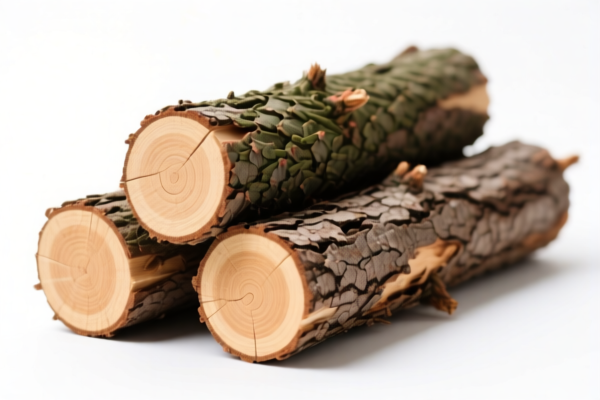
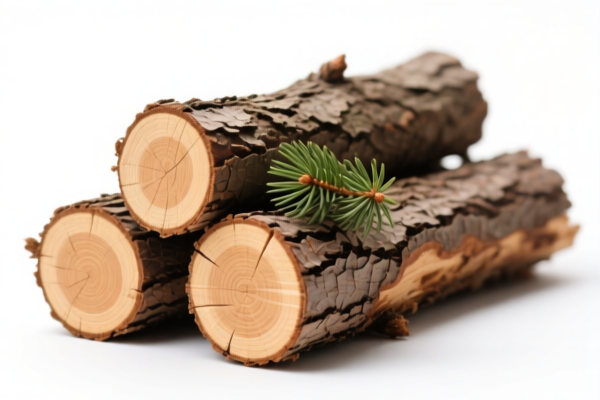
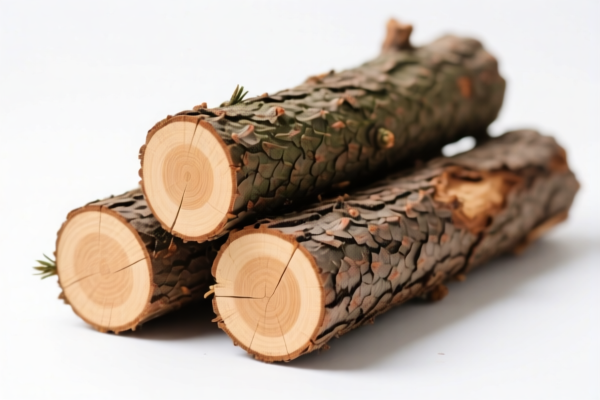
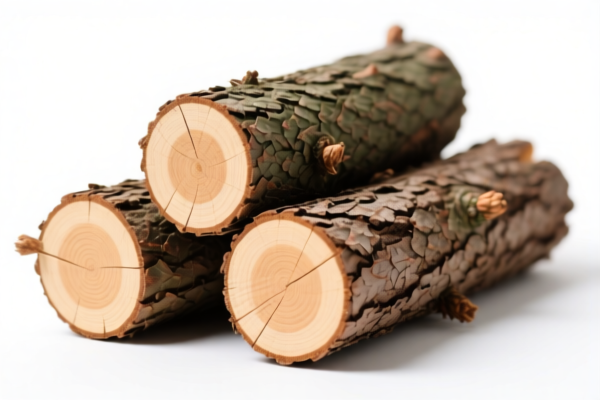
AI Analysis
🌲 Raw Timber: Coniferous Logs (Unstripped Bark)
🌐 HS Code Reference & Customs Clearance Guide | 2026 Latest Tariff Analysis | Professional Clearance Strategy
📌 I. Product Definition and Classification: Do You Really Understand "Rough-Sawn Coniferous Wood"?
"Wood in the rough," whether stripped of bark or sapwood, or roughly squared, falls under Chapter 44. Specifically, for coniferous wood (such as Pine, Spruce, Fir, etc.), the classification hinges on two main factors: 1. Processing Level: Is it just a raw log, or is it "roughly squared"? 2. Cross-Sectional Dimensions: What is the smallest dimension of the cross-section?
⚠️ Key Distinction:
- "Roughly Squared" implies the wood has been hewn or sawn on at least two opposite sides to form a rectangular cross-section, but is not yet planed or dressed.
- "Smallest Cross-Sectional Dimension ≥ 15 cm": This is the critical threshold for many coniferous pine categories. If the dimension is < 15 cm, it typically falls under different subheadings (e.g.,4403.21.01.10or similar, depending on specific pine species rules).
- "Other": Refers to pine species not listed specifically elsewhere (like specific Douglas Fir or Hemlock categories if they exist in the tariff book, though often "Pine (Pinus spp.)" is a broad catch-all in US HTS).
📦 II. HS Code Classification Details (2026 Latest Tariff Authority Comparison)
Based on the provided data, we have two specific HS Codes for Coniferous Wood of Pine (Pinus spp.) that are roughly squared and meet the ≥ 15 cm dimension requirement.
| HS Code | Product Description | Applicable Scenario | Smallest Cross-Section |
|---|---|---|---|
4403.21.01.65 |
Other, coniferous: Of pine (Pinus spp.), of which the smallest cross-sectional dimension is 15 cm or more, Other | Rough-squared pine logs/timbers, ≥15cm thickness/width, not otherwise specified | ✅ ≥ 15 cm |
4403.22.01.65 |
Other, coniferous: Of pine (Pinus spp.), other, Other | Rough-squared pine logs/timbers, ≥15cm thickness/width, specific sub-category "Other" | ✅ ≥ 15 cm |
🔍 Key Reminder:
- Both codes apply to "Roughly Squared" wood. If the wood is not roughly squared (i.e., it is a round log with bark still on it, or only partially processed), it may fall under4403.21.01.10or similar, which might have different tariff treatments.
- The term "Other" in the description often implies "Not otherwise specified in more specific subheadings."
- Crucial Check: Verify the smallest cross-sectional dimension. If it is less than 15 cm, these codes are INVALID.
💰 III. 2026 Latest Tariff Rate Details (Including Additional Duties & Policy Surcharges)
✅ Applicable Country: United States (US)
✅ Origin: China (CN) (Assumed based on the 25% additional duty pattern common for Chinese goods)
✅ Effective Time: Current USITC/USMCA/Section 301 rates
🎯 1. 4403.21.01.65 & 4403.22.01.65 —— Coniferous Wood of Pine (Pinus spp.), Roughly Squared, ≥15cm
| Item | Content |
|---|---|
| Base Tariff Rate | 0.0% (ad valorem) – Note: Many coniferous woods have 0% base duty. |
| Section 301 Additional Duty | +25.0% (Applied to Chinese-origin goods under US Trade Law Section 301) |
| Total Tax Rate | 25.0% |
| Tax Calculation | CIF Value × 25% |
| De Minimis Exemption | ❌ Not Applicable – Wood products are generally subject to full duties. |
| Legal Basis Path | HTSUS:4403.21.01.65 → Section 301: 1234 (or applicable footnote for Chinese wood) |
📌 Explanation:
- The 0% base rate reflects the low duty on raw timber imports to support US construction and manufacturing.
- The 25% additional duty is the critical cost driver. This is imposed under Section 301 of the Trade Act of 1974, specifically targeting goods from China.
- Total Impact: Importers pay 25% of the CIF value as duty alone. No base duty is offset.
🛠️ IV. Customs Clearance Practical Advice (Battle-Proven Pitfall Guide)
✅ 1. Documentation Checklist (Mandatory)
| Document | Required | Notes |
|---|---|---|
| ✅ Commercial Invoice | ✔️ | Must clearly state: "Coniferous Wood, Pinus spp., Roughly Squared, ≥15cm Cross-Section" |
| ✅ Packing List | ✔️ | Detail dimensions, volume (CBM), weight, and number of bundles/planks. |
| ✅ Phytosanitary Certificate | ✔️ | Critical for Wood. Issued by the exporting country's agricultural authority. Must confirm no pests/diseases. |
| ✅ Fumigation Certificate | ✔️ | Often required if the wood is not heat-treated (ISPM 15 compliant). |
| ✅ Bill of Lading/Air Waybill | ✔️ | Standard transport document. |
| ✅ Proof of Origin | ✔️ | To determine eligibility for any potential exemptions (though unlikely for Section 301). |
✅ 2. Declaration Tips (Key Mnemonics)
🔥 "Roughly Squared, Check the 15cm, Fumigate or Bust!"
| Scenario | Correct Declaration | Wrong Practice |
|---|---|---|
| Round Logs (Bark On) | 4403.21.01.10 (or similar, not 4403.21.01.65) |
Misdeclaring as "Roughly Squared" → Misclassification |
| Dimensions < 15 cm | Different HS Code (e.g., 4403.21.01.10) |
Using 4403.21.01.65 → Penalty + Back Duties |
| Bark Stripped/Sapwood Removed | Specify in description | Vague description → Customs Query/Delay |
| Non-Pine Conifers | Different HS Code (e.g., Spruce/Fir) | Mislabeling Pine as Pine → Audit Risk |
✅ 3. Special Considerations
| Situation | Handling Advice |
|---|---|
| ISPM 15 Compliance | If wood is heat-treated (HT), provide the HT stamp. If not, ensure fumigation is done. |
| Value Declaration | Ensure CIF value includes cost, insurance, and freight. Under-declaring value is a serious offense. |
| Origin Verification | Confirm the wood is indeed from China. If from Canada, Mexico, or elsewhere, the 25% duty may not apply. |
| Wood Species | Confirm it is Pinus spp. (Pine). Other conifers (Spruce, Fir, Hemlock) may have different HS codes (e.g., 4403.22 for Spruce/Fir). |
🌍 V. Global Market Comparison (2026 Latest)
| Country/Region | Recommended HS Code | Tariff (China Origin) | Certification | Notes |
|---|---|---|---|---|
| 🇺🇸 USA | 4403.21.01.65 / 4403.22.01.65 |
25% (Section 301) | Phytosanitary + ISPM 15 | Base duty 0%, but 25% surcharge applies. |
| 🇨🇳 China | 4403.21.01.65 |
~5-10% (Import Duty) | Phytosanitary | China imports timber; export duties may apply. |
| 🇪🇺 EU | 4403.21.01.65 |
~0-2.5% (if EBA) | FSC/PEFC, EUTR | EUTR (EU Timber Regulation) requires Due Diligence Statement. |
| 🇨🇦 Canada | 4403.21.01.65 |
0% (Under CUSMA) | Phytosanitary | Duty-free under CUSMA if originating. |
| 🇯🇵 Japan | 4403.21.01.65 |
~1.5-2.5% | Phytosanitary | JAS standards may apply for domestic use. |
📌 Conclusion:
- USA: The 25% additional duty is the main cost factor.
- EU: Requires strict Due Diligence under EUTR to prevent illegal logging.
- Canada: Duty-free under CUSMA, but strict phytosanitary rules.
📌 VI. Common Mistakes & Pitfalls (Blood & Tears Lessons)
❌ Mistake 1: Declaring "Round Logs" as "Roughly Squared"
👉 Consequence: Misclassification. Round logs may have different duties or restrictions.
👉 Penalty: Back duties + fines.
❌ Mistake 2: Ignoring Cross-Sectional Dimensions
👉 Consequence: If the smallest dimension is < 15 cm, the HS Code 4403.21.01.65 is incorrect.
👉 Penalty: Re-classification + possible duty underpayment.
❌ Mistake 3: Failing to provide a Phytosanitary Certificate
👉 Consequence: Cargo held or destroyed by USDA APHIS.
👉 Penalty: Storage fees, destruction costs, delays.
❌ Mistake 4: Misidentifying Wood Species
👉 Consequence: Pine (Pinus spp.) vs. Spruce (Picea spp.) have different HS codes.
👉 Penalty: Audit risk, potential misclassification penalties.
✅ Correct Practice:
"Coniferous Wood, Pine (Pinus spp.), Roughly Squared, Smallest Cross-Section ≥ 15cm, Heat-Treated (HT), Fumigated, Certificate No. XXXX"
🎯 VII. Conclusion: Precise Classification Saves Money!
🎯 Remember:
🔹 "Roughly Squared, Check the 15cm Rule."
🔹 "Phytosanitary is Key for Wood."
🔹 "25% Duty for Chinese Pine in the USA."
📌 Pro Tip:
- If your wood is not from China, verify if it qualifies for zero additional duty (e.g., from Canada under CUSMA).
- Always obtain a Phytosanitary Certificate and ensure ISPM 15 compliance to avoid USDA hold-ups.
- Consider pre-classification rulings from US Customs (CBP) if the wood dimensions are borderline.
📣 Immediate Action:
📞 Consult a licensed customs broker.
📄 Ensure Phytosanitary and Fumigation certificates are ready.
📏 Measure the smallest cross-sectional dimension accurately.
✨ Professional Customs Clearance Starts with Accurate Classification!
💼 Your Cost Efficiency Depends on Precise HTS Coding!
Customer Reviews
About HS Code Classification
The Harmonized System (HS) is an internationally standardized nomenclature developed by the World Customs Organization (WCO) to classify traded products. Over 200 countries use the HS system as the basis for customs tariffs, trade statistics, and import/export regulations.
Each HS code follows a hierarchical structure:
- Chapter (2 digits) — Broad category of goods (e.g., Chapter 84: Machinery and Mechanical Appliances)
- Heading (4 digits) — More specific grouping within the chapter
- Subheading (6 digits) — Internationally standardized breakdown, used by all WCO member countries
- National subdivisions (8-10 digits) — Country-specific extensions for further classification, such as US HTSUS 10-digit codes
Correct HS code classification is essential for smooth customs clearance, accurate duty payment, and compliance with trade regulations. Misclassification can lead to customs delays, overpayment of duties, or penalties.
When importing from CN to US, the applicable tariff rates may include:
- Most-Favored-Nation (MFN) rate — The standard duty rate applied to WTO members
- General rate — Applied to countries without trade agreements
- Trade remedy duties — Additional tariffs such as Section 301 (anti-dumping), Section 232 (national security), or countervailing duties
The information provided on this page is for reference purposes only. For official classification, please consult with your local customs authority or a licensed customs broker.