Other Coniferous Logs for Furniture
CN → US| HS Code | Tariff Rate | Origin | Destination | Doc |
|---|---|---|---|---|
| 4403260164 | 35.0% | CN | US | Official Doc |
| 4403220165 | 35.0% | CN | US | Official Doc |
| 4407190092 | 35.0% | CN | US | Official Doc |
| 4407190093 | 35.0% | CN | US | Official Doc |
| 4401110000 | 35.0% | CN | US | Official Doc |
Product Images
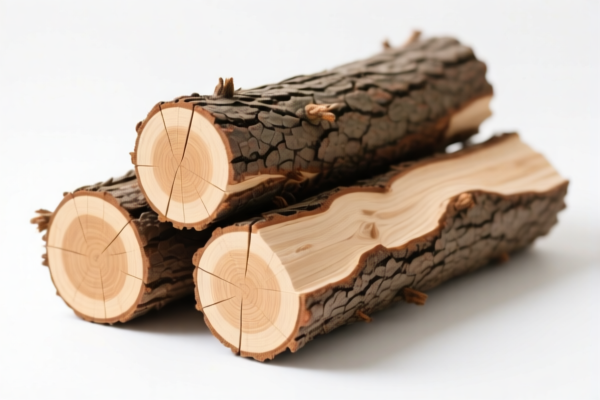
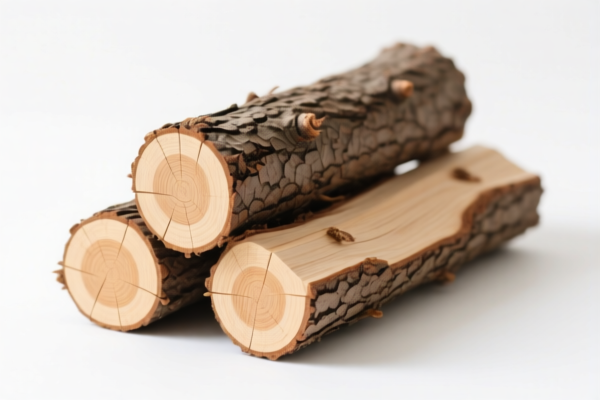
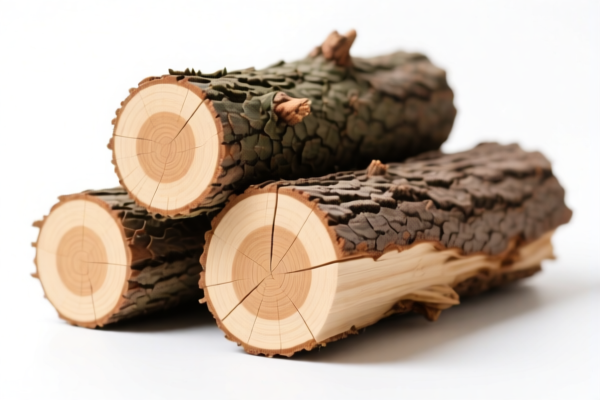

AI Analysis
🌲 Other Coniferous Logs for Furniture (Wood for Joinery/Furniture)
🌐 HS Code Reference & Customs Clearance Guide | 2026 Tariff Analysis | US-China Trade War Impact
📌 I. Product Definition: What Are "Other Coniferous Logs for Furniture"?
In international trade, Coniferous Logs (Softwood) are raw timber from pine, spruce, fir, larch, etc. When destined for furniture manufacturing, they are typically: - Unprocessed or Roughly Sawn: Raw logs or baulks, not yet planed or finished into planks. - Raw Material: Intended for further processing (sawing, drying, joining) into furniture components.
⚠️ Critical Distinction:
- If processed into finished furniture, it falls under Chapter 94 (Furniture), NOT Chapter 44 (Wood).
- If processed into planks/sawn timber, it may fall under 4407 (Sawn Wood), but 4403 (Logs/Timbers) is for raw/unprocessed forms.
- Purpose: Explicitly stated as "for furniture," but HS classification depends on physical state (log vs. sawn) more than end-use.
📦 II. HS Code Classification Matrix (2026 Latest Tariff Schedule)
Below are the 5 HS Codes derived from <DATA>, all sharing the same total tax rate (35%) due to identical trade policy impacts.
| HS Code | Product Description | Key Characteristics | Physical State | End-Use |
|---|---|---|---|---|
4403.26.01.64 |
Other coniferous logs, furniture grade | Pine/Spruce/Fir logs | Raw Logs | Furniture |
4403.22.01.65 |
Other coniferous logs (other conifers) | Non-specific conifer logs | Raw Logs | Furniture |
4407.19.00.92 |
Other sawn wood of coniferous species | Sawn/plained wood | Sawn Timber | Furniture |
4407.19.00.93 |
Other sawn wood of coniferous species | Sawn/plained wood | Sawn Timber | Furniture |
4401.11.00.00 |
Fuel wood, logs, chopped, etc. | Low-grade/conifer logs | Raw Logs | Furniture (Note: Misclassification risk) |
🔍 Critical Analysis:
- Codes4403.26.01.64&4403.22.01.65: Correct for raw logs.4403= "Wood in the rough."
- Codes4407.19.00.92&4407.19.00.93: Correct for sawn timber (processed logs).4407= "Sawn or chipped wood."
- Code4401.11.00.00: Typically for fuel wood. Using this for furniture logs is high-risk for misdeclaration. It shares the same tax rate in<DATA>due to policy overlap, but customs may penalize incorrect use.
💰 III. 2026 Tariff Rate Breakdown (US-China Trade Context)
✅ Applicable Country: United States (US)
✅ Origin: China (CN)
✅ Effective Date: Nov 10, 2025 (Current Policy)
✅ Total Tax Rate: 35.0% (Flat for all listed HS Codes in<DATA>)
🎯 1. Tariff Structure Detail
| Component | Rate | Legal Basis | Description |
|---|---|---|---|
| Basic Duty | 0.0% | HTSUS General | Most wood logs enter the US duty-free under normal MFN terms. |
| Section 301 Duty | +25.0% | USITC Footnote 9903.88.01 | "Added Duty" on Chinese wood products (Chapter 44). |
| IEEPA 122 Clause | +10.0% | IEEPA 9903.01.24/25 | "Section 122" or specific executive order tariff on Chinese goods. |
| Total Effective Rate | 35.0% | Sum of 0% + 25% + 10% |
📌 Tax Calculation Example:
- CIF Value: $10,000
- Basic Duty: $0
- 301 Duty: $10,000 × 25% = $2,500
- IEEPA 122 Duty: $10,000 × 10% = $1,000
- Total Tax Payable: $3,500 (35%)⚠️ Key Note:
- No De Minimis Exemption: Wood products from China do not qualify for $800 de minimis exemption (Section 321).
- All 5 HS Codes in<DATA>are subject to the same 35% total rate. The distinction lies in customs scrutiny, not tax amount.
🛠️ IV. Customs Clearance Practical Advice
✅ 1. Essential Documentation Checklist
| Document | Required? | Purpose |
|---|---|---|
| Commercial Invoice | ✔️ | Must clearly state: "Coniferous Logs for Furniture Manufacturing." |
| Packing List | ✔️ | Detail wood species, dimensions, volume (CBM), and weight. |
| Phytosanitary Certificate | ✔️ | Mandatory from origin country’s NPPO to prove pest-free. |
| Fumigation Certificate | ✔️ | ISPM 15 compliant (if wood is packaged or raw). |
| Bill of Lading/Air Waybill | ✔️ | Transport document. |
| Certificate of Origin | ✔️ | To confirm Chinese origin (triggers 301/IEEPA duties). |
| Product Description | ✔️ | Specific: "Pinus sylvestris logs, diameter 20-40cm, length 3m." |
✅ 2. Declaration Best Practices
| Scenario | Recommended HS Code | Risk Level | Reason |
|---|---|---|---|
| Raw, unprocessed logs | 4403.26.01.64 or 4403.22.01.65 |
✅ Low | Correctly describes physical state. |
| Sawn/plained timber | 4407.19.00.92 or 4407.19.00.93 |
✅ Low | Correctly describes processed state. |
| Logs declared as fuel | 4401.11.00.00 |
🔴 High | Misclassification. Customs may inspect for intent. |
| Finished furniture | None of these | 🔴 Critical | Must use Chapter 94 codes (e.g., 9403). |
🔥 Golden Rule:
"Match the HS Code to the PHYSICAL STATE, not just the end-use."
- Logs →4403
- Sawn Wood →4407
- Furniture →9403
✅ 3. Pitfalls to Avoid
| Mistake | Consequence | Solution |
|---|---|---|
Using 4401.11 for furniture logs |
Customs rejection, fines, delay | Use 4403 for raw logs. |
| Missing Phytosanitary Cert | Cargo rejected/returned at port | Obtain cert before shipment. |
| Incorrect Species Declaration | Duty miscalculation, penalties | Declare exact species (e.g., Spruce, Pine). |
| Splitting Shipment to Avoid De Minimis | Seizure, legal action | All shipments from China are subject to 35% duty. |
🌍 V. Global Market Comparison (2026)
| Destination | HS Code | Base Duty | Additional Tariffs | Total Effective | Notes |
|---|---|---|---|---|---|
| 🇺🇸 USA | 4403.26.01.64 |
0% | 25% (301) + 10% (IEEPA) | 35% | High barrier for Chinese wood. |
| 🇨🇳 China | 4403.26.01.64 |
5-10% | None | ~5-10% | Imports coniferous logs for processing. |
| 🇪🇺 EU | 4403.26.01.64 |
0-2% | None | ~0-2% | No major tariffs on Chinese wood logs. |
| 🇬🇧 UK | 4403.26.01.64 |
0-2% | None | ~0-2% | Post-Brexit, no US-style tariffs. |
| 🇯🇵 Japan | 4403.26.01.64 |
0-1% | None | ~0-1% | Low tariffs, strict phytosanitary rules. |
📌 Conclusion:
- US Market: 35% tariff makes Chinese coniferous logs for furniture cost-prohibitive unless value-added processing occurs outside China.
- EU/UK/JP: Favorable rates, but phytosanitary compliance is critical.
📌 VI. Common Errors & Expert Tips
❌ Error 1: Declaring sawn timber as logs (4403)
👉 Result: Misclassification. Customs may reclassify to 4407 and adjust duties.
✅ Fix: Clearly state "Sawn Timber" if processed.
❌ Error 2: Using fuel wood code (4401) for furniture logs
👉 Result: Suspicion of tax evasion. High risk of inspection.
✅ Fix: Use 4403 for raw wood, 4407 for sawn wood.
❌ Error 3: Ignoring Phytosanitary Certificate
👉 Result: Cargo held or destroyed at US port.
✅ Fix: Ensure ISPM 15 compliance and valid cert.
🎯 VII. Final Recommendation
🚀 Strategy for US Imports:
1. Verify Physical State: Logs (4403) vs. Sawn (4407).
2. Budget 35% Total Duty: No exemptions for Chinese origin.
3. Document Rigorously: Invoice, Packing List, Phytosanitary Cert, Fumigation Cert.
4. Consider Alternatives: Source from non-China countries (e.g., Russia, Canada, EU) for lower tariffs.
5. Pre-Arrival Inspection: Engage a customs broker for binding ruling if uncertain.💡 Pro Tip:
If possible, process wood in a third country (e.g., Vietnam, Mexico) to obtain a non-Chinese Certificate of Origin, potentially avoiding 301/IEEPA duties.
📣 Act Now:
📞 Contact a Licensed Customs Broker to verify HS Code for your specific wood species and form.
📄 Prepare Phytosanitary Certificates before shipping.
💼 Optimize Supply Chain to mitigate 35% tariff impact.
✨ Precision in Classification = Savings in Customs!
💼 Every log counts. Get it right the first time.
Customer Reviews
About HS Code Classification
The Harmonized System (HS) is an internationally standardized nomenclature developed by the World Customs Organization (WCO) to classify traded products. Over 200 countries use the HS system as the basis for customs tariffs, trade statistics, and import/export regulations.
Each HS code follows a hierarchical structure:
- Chapter (2 digits) — Broad category of goods (e.g., Chapter 84: Machinery and Mechanical Appliances)
- Heading (4 digits) — More specific grouping within the chapter
- Subheading (6 digits) — Internationally standardized breakdown, used by all WCO member countries
- National subdivisions (8-10 digits) — Country-specific extensions for further classification, such as US HTSUS 10-digit codes
Correct HS code classification is essential for smooth customs clearance, accurate duty payment, and compliance with trade regulations. Misclassification can lead to customs delays, overpayment of duties, or penalties.
When importing from CN to US, the applicable tariff rates may include:
- Most-Favored-Nation (MFN) rate — The standard duty rate applied to WTO members
- General rate — Applied to countries without trade agreements
- Trade remedy duties — Additional tariffs such as Section 301 (anti-dumping), Section 232 (national security), or countervailing duties
The information provided on this page is for reference purposes only. For official classification, please consult with your local customs authority or a licensed customs broker.