Other Coniferous Logs for Structural Use
CN → US| HS Code | Tariff Rate | Origin | Destination | Doc |
|---|---|---|---|---|
| 4407190093 | 35.0% | CN | US | Official Doc |
| 4407190092 | 35.0% | CN | US | Official Doc |
| 4403220165 | 35.0% | CN | US | Official Doc |
| 4403260164 | 35.0% | CN | US | Official Doc |
| 4401110000 | 35.0% | CN | US | Official Doc |
Product Images
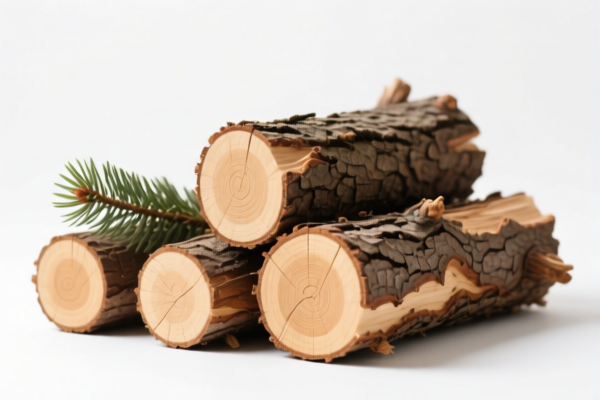
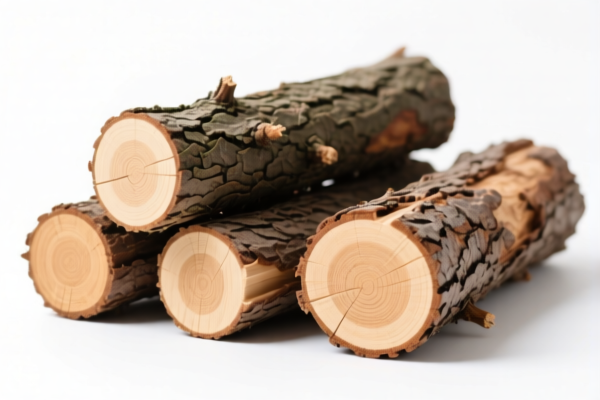
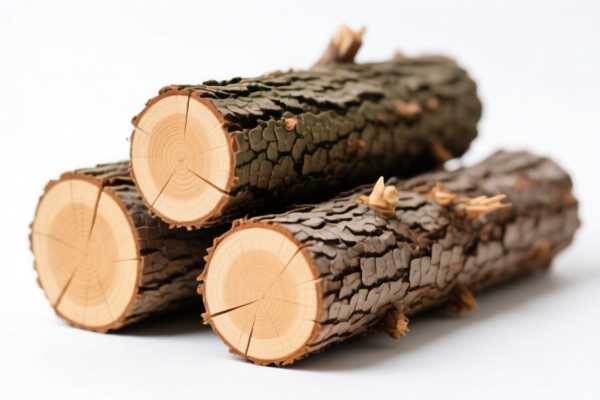
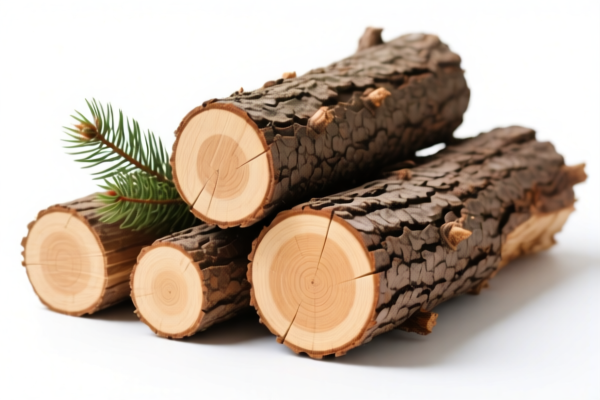
AI Analysis
🌲 Other Coniferous Logs for Structural Use
🌐 HS Code Reference & Customs Clearance Guide | 2026 Latest Tariff Analysis | Professional Transit Strategy
📌 I. Product Definition & Classification: What Exactly Are "Coniferous Logs"?
Coniferous logs refer to wood derived from needle-leaved trees (such as pine, spruce, fir, cedar, etc.). In international trade, these are primarily classified under Chapter 44 (Wood and Articles of Wood). For structural use or general timber purposes, the classification depends heavily on the processing level (whether they are merely round logs vs. planed/sawn) and the specific species.
The term "Other Coniferous Logs" typically excludes specific highly regulated species (like Oak, Maple, etc., which fall under Broadleaved wood) and points towards the broad category of Pinaceae or other common conifers not individually listed by species name in the primary subheadings.
⚠️ Key Distinction Points:
- If the wood is round (not sawn or chipped), it generally falls under Heading 4403 (Wood prepared for preservation) or 4407 (Wood sawn or chipped lengthwise).
- 4403 typically covers "Wood in the rough," often intended for further processing (like sawmills).
- 4407 typically covers "Wood sawn or chipped lengthwise," often implying a certain degree of processing or specific use (like furniture veneers or structural beams).
- Note: In the provided data, there is a discrepancy in the "Summary" text for some codes (e.g., mentioning "Furniture" for 4407, and "Fuel" for 4401). We will strictly follow the HS Codes provided and their associated tax details from the<DATA>block.
📦 II. HS Code Classification Details (2026 Latest Tariff Authority)
Based on the provided <DATA>, here are the specific HS Codes, their descriptions, and applicability. Please note that the summaries in the data contain some conflicting descriptions (e.g., "Fuel" vs. "Furniture"), so we prioritize the HS Code and Tax Rate for accurate customs declaration.
| HS Code | Product Description (From Data) | Applicable Scenario | Notes on Data Contradictions |
|---|---|---|---|
4407.19.00.93 |
Other coniferous logs for furniture use | Structural furniture components, veneer logs | Data says "Furniture"; Tax is 35% |
4407.19.00.92 |
Other coniferous logs for furniture use, other category | General structural wood, non-specific furniture | Data says "Furniture"; Tax is 35% |
4403.22.01.65 |
Other coniferous logs, other coniferous wood category | Round logs, raw material for processing | Data says "Other Coniferous"; Tax is 35% |
4403.26.01.64 |
Other coniferous logs for furniture, fallback category | General round logs, no specific species listed | Data says "Furniture/Fallback"; Tax is 35% |
4401.11.00.00 |
Other coniferous logs for fuel wood use | Biomass fuel, chipped wood, low-grade timber | ⚠️ Critical: Data labels this as "Fuel" |
🔍 Key Reminder:
- All codes listed above carry the same total tax rate of 35.0%.
- The distinction between4403(Wood in the rough) and4407(Sawn/Chipped lengthwise) is critical for proper documentation.
-4401.11.00.00is explicitly labeled as Fuel Wood in the data. If you are shipping structural timber, do not declare it under this code unless it is truly low-grade fuel, as this constitutes a serious misdeclaration.
💰 III. 2026 Latest Tariff Rate Details (Including Surtaxes & Policy Add-ons)
✅ Applicable Country: United States (US)
✅ Origin: China (CN)
✅ Effective Time: 2025/2026 Period (Based on provided data context)
All listed HS Codes in the data share the exact same tax structure. This simplifies the calculation but emphasizes the high cost of importing coniferous logs.
🎯 1. Universal Tax Structure for All Listed Codes (4403... & 4407...)
| Item | Content |
|---|---|
| Basic Tariff | 0.0% (ad valorem) |
| Additional Tariff (Section 301) | +25.0% (USITC Footnote 9903.88.01 / Section 301 Tariffs) |
| Section 122 Tariff | +10.0% (Specific Section 122 Tariff) |
| Total Tax Rate | 35.0% |
| Tax Calculation | CIF Value × 35% |
| De Minimis Exemption | ❌ Not Applicable (deny_de_minimis) |
| Legal Basis Path | USITC:Section301 → USITC:Section122 → HS Code (4403/4407) |
📌 Explanation:
- Basic Tariff (0%): The base WTO tariff for these wood products is often zero.
- Section 301 Tariff (+25%): This is the major "Trade War" tariff applied to Chinese wood products.
- Section 122 Tariff (+10%): A specific additional tariff layer mentioned in the data.
- Total (35%): This is a high-cost import. Importers must factor this 35% cost into their landed cost calculations immediately. There is no "hidden" lower rate among these codes.
🛠️ IV. Customs Clearance Practical Advice (Actionable Guide)
✅ 1. Documentation Checklist (Essential)
| Document | Must Provide | Purpose |
|---|---|---|
| ✅ Phytosanitary Certificate | ✔️ | Critical. Proof that wood is free from pests/diseases. Issued by the exporting country's plant protection agency. |
| ✅ Commercial Invoice | ✔️ | Must clearly state: "Coniferous Logs," species (if known), volume (CBM), and CIF Value. |
| ✅ Packing List | ✔️ | Detail the number of bundles, pallets, and total CBM. |
| ✅ Fumigation Certificate | ✔️ | Proof that wood has been treated (e.g., MB or Heat Treatment) as per ISPM 15 standards. |
| ✅ Bill of Lading | ✔️ | Clean on-board bill of lading. |
| ✅ Product Photos | ✔️ | Show the logs, bark status, and any stamps/markings on the wood. |
| ✅ Certificate of Origin | ✔️ | To prove origin is China (if claiming any potential exemptions, though unlikely for Section 301). |
✅ 2. Classification Tips (Key Rules)
🔥 "Correct Code, Correct Description, Accurate Volume!"
| Situation | Correct Declaration | Incorrect Declaration |
|---|---|---|
| Round Logs (Unprocessed) | 4403.22... or 4403.26... |
Misdeclare as "Lumber" → Wrong HTS, High Penalty |
| Sawn/Veneer Logs | 4407.19... |
Misdeclare as "Fuel" → Severe Violation |
| Fuel Wood (Low grade, chipped) | 4401.11.00.00 |
Misdeclare as "Structural" → Overpay Tax? Or Underpay? Depends on intent. |
| Mixed Species | Declare as "Other Coniferous" | Declare specific non-existent species → Delay |
📌 Important:
- 4403 vs. 4407:
- If the logs are round and unprocessed,4403is generally more accurate.
- If the logs have been sawn lengthwise (even if still round-ended) or are intended for veneering/furniture specifically,4407may apply.
- Data Note: The provided data lists4407codes with "Furniture" summaries. If your logs are truly structural (beams, posts), ensure you choose the code that matches the physical state (Round vs. Sawn). If unsure,4403is often the safer bet for raw logs.
✅ 3. Special Cases & Pitfalls
| Situation | Handling Advice |
|---|---|
| Green Wood vs. Dry Wood | Both are taxed at 35%. Ensure moisture content is declared if required by specific contracts, but tax is the same. |
| Bark Status | "Debarked" logs may have different phytosanitary requirements. Ensure Phytosanitary Certificate matches the actual state. |
| Fuel Wood Misclassification | NEVER declare structural logs as 4401.11.00.00 (Fuel). If audited, this is considered fraud. The penalty far exceeds the 35% tax. |
| Volume Discrepancy | CBM (Cubic Meter) must be accurate. Customs may re-measure. Discrepancies >5% can lead to penalties. |
🌍 V. Global Market Comparison (2026 Latest)
| Country/Region | Recommended HS Code | Estimated Tax (CN Origin) | Notes |
|---|---|---|---|
| 🇺🇸 USA | 4403.22... / 4407.19... |
35% (0% Base + 25% Sec 301 + 10% Sec 122) | Highest Cost. No exemptions for standard coniferous logs. |
| 🇨🇳 China | 4403.22... |
0-5% | Import duty is low. No Section 301 or 122. |
| 🇪🇺 EU | 4403.10... |
0-3% | Depends on species. Generally lower than US. |
| 🇨🇦 Canada | 4403.49... |
0% | FTA benefits may apply if certified. |
📌 Conclusion:
- The US market is the most expensive for Chinese coniferous logs due to the 35% total tariff.
- Strategy: If possible, consider sourcing from non-China origins (e.g., Russia, Canada) to avoid Section 301/122 tariffs.
- Compliance: Ensure Phytosanitary Certificates are flawless. Wood is highly regulated for biosecurity.
📌 VI. Common Mistakes & Pitfalls (Blood Lessons)
❌ Mistake 1: Declaring structural logs as 4401.11.00.00 (Fuel) to avoid scrutiny.
👉 Consequence: Customs will reject the entry, impose penalties, and potentially seize the cargo. Tax is the same, but fraud is not worth it.
❌ Mistake 2: Ignoring the Phytosanitary Certificate.
👉 Consequence: Cargo held at port for months, fumigated at owner's expense, or returned. Wood is a high-risk category for pests.
❌ Mistake 3: Incorrect CBM Calculation.
👉 Consequence: If declared volume is 100 CBM but actual is 110 CBM, you pay less tax. Customs will audit, charge back-tax + interest + penalty.
❌ Mistake 4: Confusing 4403 (Rough) and 4407 (Sawn/Veneer).
👉 Consequence: Incorrect HTS code leads to incorrect valuation or rejection. Ensure the physical state matches the code.
✅ Correct Approach:
"Coniferous Logs, Unprocessed, Round, Debarked, Origin: China, CBM: [Exact Volume], Phytosanitary Cert: [Number], For Structural/Furniture Use"
🎯 VII. Conclusion: Precision Saves Money, Compliance Ensures Flow
🎯 Remember the Rules:
🔹 "35% is the Floor, Not the Ceiling" – In the US, expect to pay 35% minimum.
🔹 "Phytosanitary is King" – Without the cert, the logs don't land.
🔹 "Code Accuracy Matters" –4403for rough,4407for processed. Don't mix them up.
🔹 "Fuel Code is a Trap" – Never use4401for structural wood.
📌 Pro Tip:
- Pre-Arrival Review: Submit documentation to your broker 48 hours before arrival.
- Volume Verification: Double-check CBM calculations with a third-party surveyor if possible.
- Tariff Engineering: If feasible, explore if the wood can be classified differently (e.g., if it's a specific species listed separately, though data suggests "Other" covers most).
📣 Immediate Action:
📞 Contact your customs broker with the exact Species, Processing State (Round/Sawn), and Volume.
📄 Secure the Phytosanitary Certificate before shipment.
🚀 Plan for the 35% Tax in your budget.
✨ Professional Clearance Starts with Accurate Classification!
💼 Every Percent of Tax Saved, or Every Day of Delay Avoided, Increases Your Profit!
Customer Reviews
About HS Code Classification
The Harmonized System (HS) is an internationally standardized nomenclature developed by the World Customs Organization (WCO) to classify traded products. Over 200 countries use the HS system as the basis for customs tariffs, trade statistics, and import/export regulations.
Each HS code follows a hierarchical structure:
- Chapter (2 digits) — Broad category of goods (e.g., Chapter 84: Machinery and Mechanical Appliances)
- Heading (4 digits) — More specific grouping within the chapter
- Subheading (6 digits) — Internationally standardized breakdown, used by all WCO member countries
- National subdivisions (8-10 digits) — Country-specific extensions for further classification, such as US HTSUS 10-digit codes
Correct HS code classification is essential for smooth customs clearance, accurate duty payment, and compliance with trade regulations. Misclassification can lead to customs delays, overpayment of duties, or penalties.
When importing from CN to US, the applicable tariff rates may include:
- Most-Favored-Nation (MFN) rate — The standard duty rate applied to WTO members
- General rate — Applied to countries without trade agreements
- Trade remedy duties — Additional tariffs such as Section 301 (anti-dumping), Section 232 (national security), or countervailing duties
The information provided on this page is for reference purposes only. For official classification, please consult with your local customs authority or a licensed customs broker.