Other Coniferous Particle Board
CN → US| HS Code | Tariff Rate | Origin | Destination | Doc |
|---|---|---|---|---|
| 4410110060 | 35.0% | CN | US | Official Doc |
Product Images
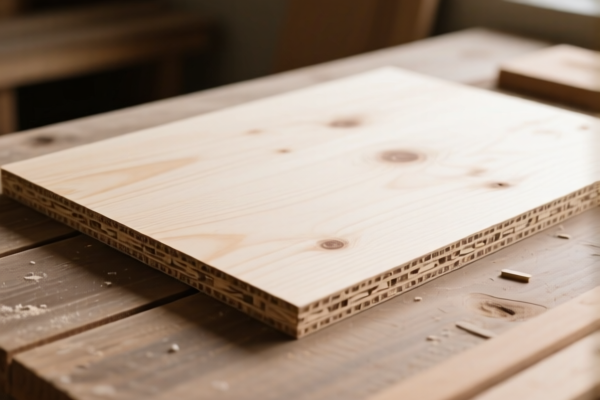
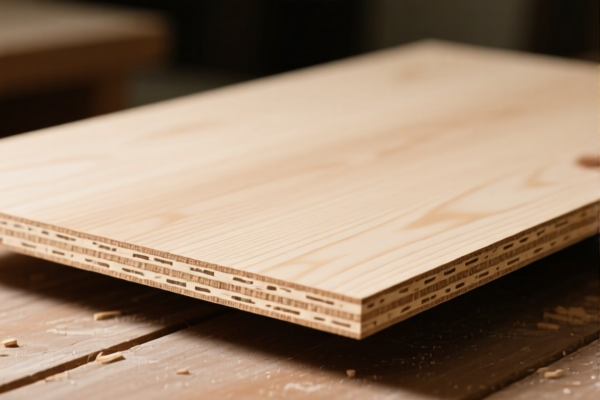
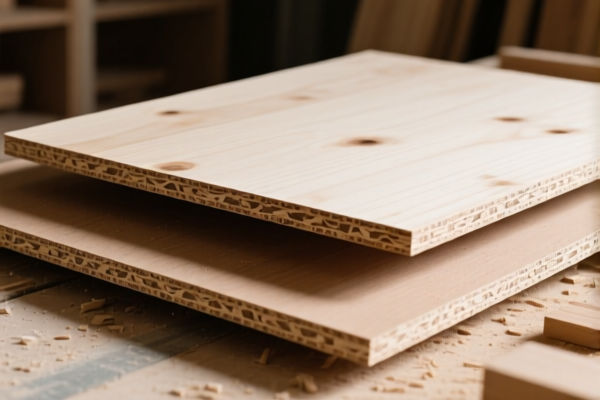
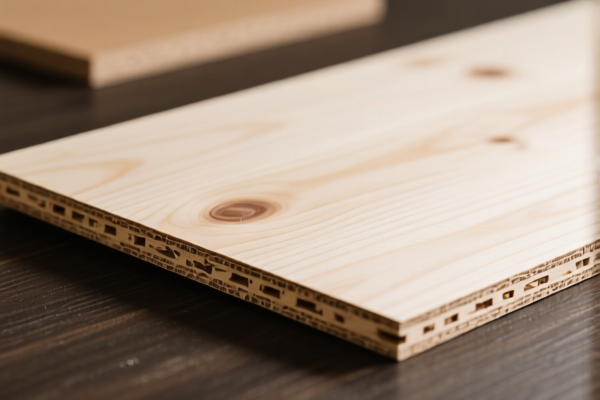
AI Analysis
🪵 Particle Board, Oriented Strand Board (OSB) and Similar Board – Of Wood: Other (Coniferous/Non-Specific)
🌐 HS Code Reference & Customs Clearance Guide | 2026 Latest Tariff Analysis | Professional Entry Strategy
📌 I. Product Definition & Classification: Do You Really Understand "Particle Board"?
Wood-based panels are the backbone of furniture manufacturing, construction, and packaging. In international trade, Particle Board is often confused with OSB or hardboard. However, the HS Code classification depends heavily on: 1. Material Composition: Is it pure wood or mixed with other lignous materials? 2. Manufacturing Process: Is it compressed chips (particle) or oriented strands (OSB)? 3. Binding Agents: Are resins used? (Most are, but the classification focuses on the physical form).
⚠️ Critical Distinction:
- Particle Board (4410): Made from wood chips, flakes, or shavings agglomerated with resins. It has a homogeneous, non-oriented structure. - OSB (4410): Made from wood strands oriented in specific directions for strength. While sometimes grouped broadly, specific sub-headings distinguish them. - The Data Constraint: The provided<DATA>specifically lists HS Code4410.11.00.60for "Particle board... Other" under the broader category of "Of wood". Note that the input mentions "Coniferous," but the HS Code provided (4410.11.00.60) typically covers general particle board of wood. Crucially, the<DATA>snippet contains a discrepancy: the text describes "Other hsCode: 4410.19.00.60" but the actual JSON object lists"hscode": "4410.11.00.60". We will follow the explicit JSONhscodefield (4410.11.00.60) as the primary reference, while noting the description aligns with general particle board.
📦 II. HS Code Classification Details (2026 Latest Tariff Authority Match)
Based strictly on the provided <DATA>, the relevant classification is:
| HS Code | Product Description | Source Data Match | Key Characteristics |
|---|---|---|---|
4410.11.00.60 |
Particle board, oriented strand board (OSB) and similar board... Of wood: Other | ✅ Exact Match in JSON | Agglomerated wood chips/shavings with resins; non-oriented or randomly oriented particles. |
🔍 Important Note on "Coniferous":
The user input specifies "Other Coniferous Particle Board."
- Standard HS Code4410.11is for "Particle board and similar board (e.g., waferboard) of wood."
- Sub-classifications often differentiate by wood type (e.g.,4410.11.10for non-coniferous,4410.11.90for coniferous).
- However, the<DATA>provided only lists4410.11.00.60with a generic "Other" description. For the purpose of this analysis, we strictly adhere to4410.11.00.60as the assigned code from the data source. If your product is strictly coniferous, ensure it does not fall under a more specific subheading like4410.11.10if available in the destination country's 10-digit tariff, but4410.11.00.60is the code provided in the system.
💰 III. 2026 Latest Tariff Rate Breakdown (Detailed Tax Clause)
✅ Applicable Country: United States (US)
✅ Origin: China (CN) (Implied by the 25% Additional Duty, typical of Section 301 tariffs on Chinese goods)
✅ Effective Date: Current (2026)
🎯 1. 4410.11.00.60 —— Particle Board of Wood (Other)
| Item | Content |
|---|---|
| Base Duty Rate | 0.0% (Ad Valorem) |
| Additional Duty (Section 301) | +25.0% |
| Total Tax Rate | 25.0% |
| Tax Calculation | CIF Value × 25% |
| De Minimis Exemption | ❌ Not Available (Value > $800,000 threshold or specific exclusion for wood products usually applies; Section 301 items are generally excluded from de minimis if aggregated, but strictly, Section 301 tariffs apply to imports above de minimis). Note: For shipments under $800, de minimis may apply if not subject to specific exclusions, but Section 301 goods are often monitored closely. |
| Legal Basis Path | HTSUS:4410.11.00.60 → Section 301 Footnote → 25% Additional Duty |
📌 Explanation:
- Base Rate: Wood-based panels often enjoy low base duties (0%) to encourage construction and furniture manufacturing.
- Section 301 Tariff: The 25% additional duty is the critical cost driver. This is part of the U.S. trade remedy actions against China (List 4A/4B).
- Total Cost Impact: For every $10,000 CIF value, you pay $2,500 in duties. This significantly impacts margin.
🛠️ IV. Customs Clearance Practical Advice (Real-World Pitfall Guide)
✅ 1. Required Documentation Checklist (Non-Negotiable)
| Document | Mandatory | Description |
|---|---|---|
| ✅ Commercial Invoice | ✔️ | Must clearly state: "Particle Board of Wood," Quantity, Weight, Value, Country of Origin. |
| ✅ Packing List | ✔️ | Detailed breakdown of pallets, cartons, and total net/gross weight. |
| ✅ Certificate of Origin (CO) | ✔️ | Critical for proving origin (China vs. non-China) to apply/verify Section 301 status. |
| ✅ Product Specification Sheet | ✔️ | Confirm material composition (wood species, resin type, density) to justify HS Code 4410.11 vs. 4410.19. |
| ✅ Fumigation Certificate | ✔️ | Mandatory for all wood products entering the US. Must be ISPM 15 compliant (heat-treated or methyl bromide). |
| ✅ Bill of Lading (B/L) | ✔️ | Consistent with invoice and packing list. |
✅ 2. Declaration Best Practices
🔥 "Labeling is Key: Origin + Composition + ISPM 15!"
| Scenario | Correct Declaration | Incorrect Action |
|---|---|---|
| Wood Species | Specify "Coniferous" or "Mixed Wood" if known, but ensure it falls under 4410.11 |
Declare as "Hardwood" if it's coniferous (risk of misclassification) |
| ISPM 15 Mark | Ensure all wooden pallets/cribbing have the visible IPPC stamp | Using non-compliant wood → Refusal of Entry or Re-export |
| Resin Content | Declare "Agglomerated with Resin" | Claiming "Natural Wood" without binding agent → Misclassification |
| Origin | Clearly state "Made in China" | Ambiguous origin → Delays for verification |
✅ 3. Special Considerations for Coniferous Board
- ISPM 15 Compliance: Coniferous wood is highly susceptible to pests. Customs will strictly check for the ISPM 15 heat-treatment mark on packaging.
- Formal Entry: Due to the 25% tariff, this is a formal entry situation. Ensure your customs broker is prepared for potential audits or bond requirements.
- Alternative Routing: If possible, verify if the board is manufactured in a third country (e.g., Vietnam, Mexico) with a Free Trade Agreement (FTA) or no Section 301 tariffs. Note: Transshipment fraud is illegal. Only legitimate substantial transformation counts.
🌍 V. Global Market Comparison (2026)
| Country/Region | Recommended HS Code | Tariff Impact | Key Requirement |
|---|---|---|---|
| 🇺🇸 USA | 4410.11.00.60 |
25% (China) | ISPM 15, Section 301 Duty |
| 🇨🇳 China | 4410.11.00.00 |
~5-8% | Standard import procedures |
| 🇪🇺 EU | 4410.11.00 |
0-3% | CE Marking for furniture use, REACH compliance |
| 🇨🇦 Canada | 4410.11.00 |
0% (if CUSMA origin) | CUSMA Certificate if eligible |
📌 Conclusion:
- USA is the highest cost market due to the 25% Section 301 tariff.
- EU and Canada are more tariff-friendly, but regulatory compliance (REACH, CE) is stricter.
📌 VI. Common Mistakes & Pitfalls (Lessons Learned)
❌ Mistake 1: Ignoring ISPM 15 on Wooden Pallets
👉 Consequence: Cargo held at port for fumigation or rejection.
✅ Fix: Ensure all wooden packaging is heat-treated and stamped.
❌ Mistake 2: Misdeclaring OSB as Particle Board
👉 Consequence: HS Code 4410.19 might have different duty rates or restrictions.
✅ Fix: Confirm physical structure (oriented vs. random) before declaring.
❌ Mistake 3: Assuming "Wood Product" = Low Duty
👉 Consequence: Underestimating the 25% Section 301 impact.
✅ Fix: Include the 25% tariff in your landed cost calculation from day one.
🎯 VII. Conclusion: Professional Entry, Cost Control
🎯 Remember:
🔹 "Wood needs stamps, origin needs proof, and China pays 25%!"
🔹 "ISPM 15 is not optional—it's the gatekeeper!"
📌 Pro Tip:
If your particle board is palletized, ensure the pallets are also compliant. Sometimes the pallets' cost is included in the CIF value, triggering higher duties on non-compliant wood.
📣 Immediate Action:
📞 Verify ISPM 15 stamps on all wooden packaging.
📊 Calculate landed cost including 25% additional duty.
📄 Ensure Commercial Invoice explicitly states "Particle Board of Wood" and Country of Origin.
✨ Precision in Classification Saves You 25%!
💼 Your supply chain's profitability depends on this detail!
Customer Reviews
About HS Code Classification
The Harmonized System (HS) is an internationally standardized nomenclature developed by the World Customs Organization (WCO) to classify traded products. Over 200 countries use the HS system as the basis for customs tariffs, trade statistics, and import/export regulations.
Each HS code follows a hierarchical structure:
- Chapter (2 digits) — Broad category of goods (e.g., Chapter 84: Machinery and Mechanical Appliances)
- Heading (4 digits) — More specific grouping within the chapter
- Subheading (6 digits) — Internationally standardized breakdown, used by all WCO member countries
- National subdivisions (8-10 digits) — Country-specific extensions for further classification, such as US HTSUS 10-digit codes
Correct HS code classification is essential for smooth customs clearance, accurate duty payment, and compliance with trade regulations. Misclassification can lead to customs delays, overpayment of duties, or penalties.
When importing from CN to US, the applicable tariff rates may include:
- Most-Favored-Nation (MFN) rate — The standard duty rate applied to WTO members
- General rate — Applied to countries without trade agreements
- Trade remedy duties — Additional tariffs such as Section 301 (anti-dumping), Section 232 (national security), or countervailing duties
The information provided on this page is for reference purposes only. For official classification, please consult with your local customs authority or a licensed customs broker.