Other Coniferous Wood Boards
CN → US| HS Code | Tariff Rate | Origin | Destination | Doc |
|---|---|---|---|---|
| 4418810000 | 38.2% | CN | US | Official Doc |
| 4418300100 | 38.2% | CN | US | Official Doc |
| 4409101060 | 35.0% | CN | US | Official Doc |
| 4407190066 | 35.0% | CN | US | Official Doc |
| 4407190001 | 35.0% | CN | US | Official Doc |
Product Images
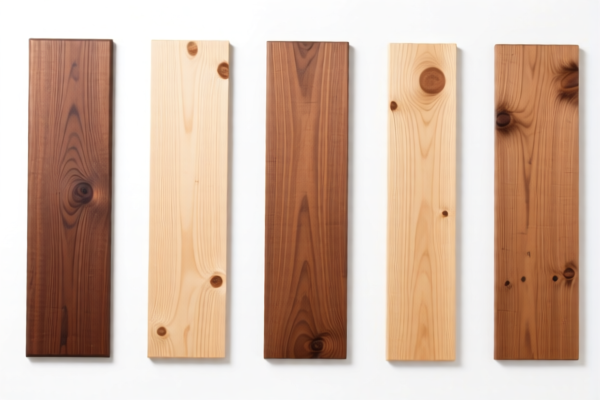
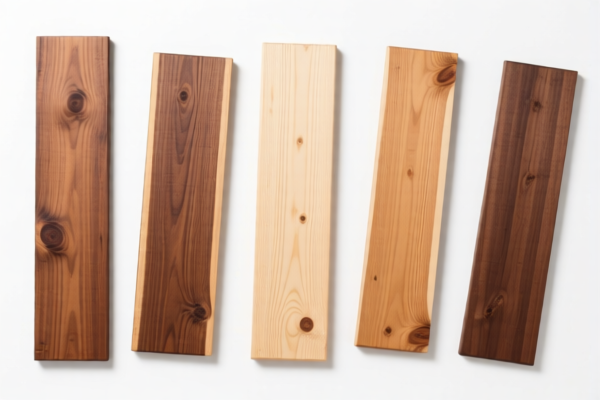
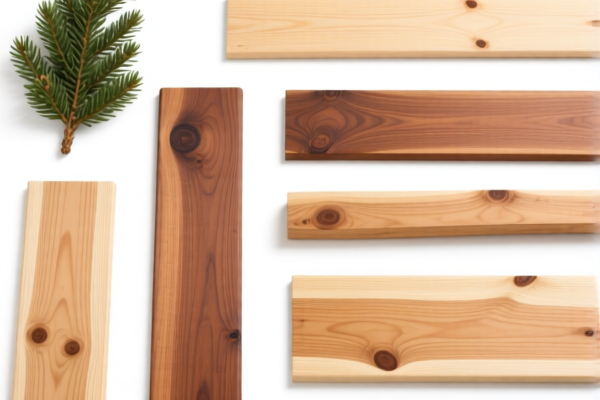
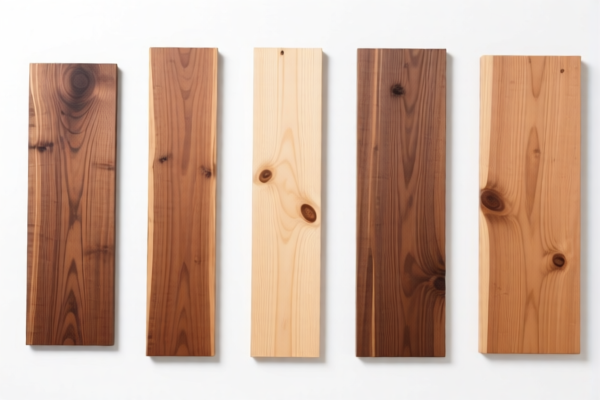
AI Analysis
🌲 Other Coniferous Wood Boards (Softwood Timber)
🌐 HS Code Reference & Clearance Guide | 2026 Latest Tariff Analysis | Professional Customs Strategy
📌 Part 1: Product Definition & Classification: Do You Really Understand "Coniferous Wood Boards"?
Coniferous wood boards (softwood) are essential materials in construction, engineering, and furniture manufacturing. In international trade, they are strictly categorized based on processing level (sawn vs. shaped) and end-use application. Misclassification is a common pitfall that leads to severe tariff penalties under US trade restrictions.
⚠️ Key Distinction Points:
- Structural/Engineered Use: Boards intended for beams, columns, or specific engineered wood products → HS 4418.
- General Construction/Columns & Beams (Fallback): General sawn timber for structural framing → HS 4418.30.
- Machined/Shaped Edges: Boards with continuous profiles (tongue-and-groove, etc.), regardless of specific application → HS 4409.
- Sawn Only (No Profiling): Basic planks/lumber with no continuous shaping → HS 4407.
📦 Part 2: HS Code Classification Details (2026 Authoritative Comparison)
| HS Code | Product Description | Application Scenario | Processing Level |
|---|---|---|---|
4418.81.00.00 |
Coniferous wood products, matched for wooden materials & engineered structural wood products | Engineered beams, structural components, prefabricated wooden houses | ✅ Engineered/Structured |
4418.30.01.00 |
Coniferous wood products, matched for wooden materials & columns and beams (fallback attribute) | General structural framing, load-bearing posts, standard beams | ✅ Structural/Sawn |
4409.10.10.60 |
Coniferous wood, matched for coniferous material & other categories | Flooring, cladding, furniture parts with continuous profiles (e.g., T&G) | ✅ Shaped/Machined |
4407.19.00.66 |
Coniferous wood, matched for coniferous material & other category descriptions | Basic sawn lumber, planks, no continuous edge profiling | ❌ Plain Sawed |
4407.19.00.01 |
Coniferous wood, matched for coniferous material & other categories | Basic sawn lumber, generic softwood planks | ❌ Plain Sawed |
🔍 Crucial Reminder:
- 4418 Series applies to products with specific structural functions or engineered configurations.
- 4409 Series applies if the wood has continuous longitudinal shapes (like tongue-and-groove), even if used for simple flooring.
- 4407 Series is for plain sawn wood. If you add any continuous shaping, it moves to 4409.
- Do not mix up "structural beams" (4418/4407) with "engineered structural products" (4418.81).
💰 Part 3: 2026 Latest Tariff Rate Breakdown (Including Additional Taxes)
✅ Applicable Country: United States (US)
✅ Origin: China (CN)
✅ Effective Date: Applies to imports subject to Section 301 & IEEPA regulations.
🎯 1. 4418.81.00.00 & 4418.30.01.00 —— Structural/Engineered Wood Products
| Item | Content |
|---|---|
| Base Tariff | 3.2% (ad valorem) |
| Additional Tariff (Section 301) | +25.0% |
| Section 122 Tariff | +10.0% |
| Total Tariff | 38.2% |
| Tax Calculation | CIF Value × 38.2% |
| De Minimis Exemption | ❌ Not Eligible (deny_de_minimis) |
| Legal Basis Path | USITC:4418 → Section 301 Footnote → IEEPA/Sec 122 |
📌 Explanation:
- These codes attract the highest tax burden due to their classification as structural/engineered items.
- The 38.2% rate includes the base duty, the major 25% Section 301 tariff, and the 10% Section 122 duty.
- High Risk: Misdeclaring these as general lumber (4407) to avoid taxes is a common trigger for customs audits.
🎯 2. 4409.10.10.60, 4407.19.00.66, 4407.19.00.01 —— Shaped or Plain Coniferous Lumber
| Item | Content |
|---|---|
| Base Tariff | 0.0% (ad valorem) |
| Additional Tariff (Section 301) | +25.0% |
| Section 122 Tariff | +10.0% |
| Total Tariff | 35.0% |
| Tax Calculation | CIF Value × 35.0% |
| De Minimis Exemption | ❌ Not Eligible (deny_de_minimis) |
| Legal Basis Path | USITC:4407/4409 → Section 301 Footnote → IEEPA/Sec 122 |
📌 Note:
- Even though the base tariff is 0%, the total effective rate is 35.0% due to additional levies.
- This rate applies to both shaped wood (4409) and plain sawn wood (4407) of coniferous origin.
- The key difference from the 4418 series is the 3.2% base duty saving, resulting in a 3.2% lower total rate.
🛠️ Part 4: Clearance Practical Advice (Pitfall Avoidance Guide)
✅ 1. Documentation Checklist (Mandatory)
| Document | Required | Description |
|---|---|---|
| ✅ Product Specification Sheet | ✔️ | Must specify species (e.g., Pine, Spruce, Fir), dimensions, moisture content, and treatment status. |
| ✅ Processing Diagram/Photos | ✔️ | Critical: Show edge profiles. If there are tongues/grooves, it MUST be 4409. If it's for a specific beam/column, show context for 4418/4418.30. |
| ✅ Commercial Invoice | ✔️ | Clearly state "Coniferous Wood Boards" or "Softwood Lumber," not generic "Wood Parts." |
| ✅ Phytosanitary Certificate | ✔️ | Mandatory for all wood products to prove pest-free status. |
| ✅ Packing List | ✔️ | Detail dimensions and volume (CBM). |
✅ 2. Declaration Strategies (Key Mantra)
🔥 “Profile Determines Code, Structure Determines Duty!”
| Scenario | Correct HS Code | Wrong Declaration | Consequence |
|---|---|---|---|
| Engineered Structural Component | 4418.81.00.00 |
"Wood Plank" | ⚠️ Under-declaration risk + 38.2% |
| General Beam/Column (Sawn) | 4418.30.01.00 |
"Flooring Board" | ⚠️ Wrong use category |
| Tongue-and-Groove Flooring/Cladding | 4409.10.10.60 |
"Plain Lumber" | ⚠️ 35% vs 38.2% (Slight saving, but correctness matters) |
| Plain Sawn Plank | 4407.19.00.66 / .01 |
"Engineered Wood" | ⚠️ Over-declaration risk + 38.2% |
✅ 3. Special Circumstances Handling
| Situation | Handling Advice |
|---|---|
| Mixed Shipments | If a shipment contains both plain sawn (4407) and shaped (4409) wood, must be split. Mixing leads to rejection or reclassification. |
| Heat Treated (HT) vs. Kiln Dried (KD) | Specify clearly. HT is often required for export to avoid fumigation. Does not change HS code but affects phytosanitary docs. |
| Engineered Wood (Glued/Laminated) | If glued into beams/boards, it likely falls under 4418. Ensure you have proof of "structural" intent. |
| Origin Marking | Must clearly mark "Made in China" to apply the correct 122/301 tariffs. Missing markings cause delays. |
🌍 Part 5: Global Market Comparison (2026 Latest)
| Country/Region | Recommended HS Code | Total Tariff (China Origin) | Certification/Remark |
|---|---|---|---|
| 🇺🇸 USA | 4418.81.00.00 / 4407.19.00.66 |
38.2% / 35.0% | High barrier. Section 301 + 122 apply. No de minimis. |
| 🇨🇳 China | 4418 / 4407 |
3.2% / 0% | Low base duty. No additional punitive tariffs for domestic trade. |
| 🇪🇺 EU | 4407 / 4409 |
0% - 1.5% | Requires EUTR compliance (legality verification). No US-style punitive tariffs. |
| 🇨🇦 Canada | 4407 / 4409 |
0% | FTA benefits may apply, but US duties do not apply. |
📌 Conclusion:
- The US market is significantly more expensive due to the 35-38.2% blended tariff rate.
- EU and other markets offer lower or zero base duties but have strict phytosanitary and legality (EUTR) requirements.
- Cost-Benefit Analysis: For US-bound softwood, the margin compression is severe. Consider sourcing from non-China origins if possible to avoid Section 122/301, though this depends on global supply chain realities.
📌 Part 6: Common Errors & Pitfalls (Lessons Learned)
❌ Error 1: Declaring "Tongue-and-Groove" flooring as "Plain Sawn Lumber" (4407)
👉 Consequence: Customs detects the profile via photos/specs. Re-categorized to 4409. While tax is same (35%), it triggers an audit for misdeclaration.
❌ Error 2: Ignoring the "Structural" nature of engineered wood beams
👉 Consequence: Declaring structural beams as generic 4407 planks to avoid the 3.2% base duty. Result: 38.2% assessed retroactively + penalties.
❌ Error 3: Missing "Section 122" declaration
👉 Consequence: If not explicitly accounted for in the entry summary, customs may assess the 10% separately or flag the entry.
✅ Correct Declaration Example:
"Coniferous Wood Boards, Softwood Pine, Kiln Dried, Dimensional Lumber 2x4x8', Plain Sawn, For Construction Framing, HT Treated" → HS 4407.19.00.66
OR
"Engineered Wooden Structural Beam, LVL, Coniferous Core, Glued, for Residential Roofing" → HS 4418.81.00.00
🎯 Part 7: Conclusion: Professional Declaration Saves Money!
🎯 Remember the Mantra:
🔹 "Profile = 4409, Structure = 4418, Plain = 4407."
🔹 "US Tariffs: 35% for plain, 38.2% for structural. No exceptions!"
🔹 "One wrong line, one hundred thousand dollars in taxes."
📌 Pro Tip:
If your supplier is not from China, check if they qualify for USMF (US-Made Friendly) exemptions or other trade agreements. However, for China-origin softwood, the 35-38.2% rate is currently unavoidable for standard imports.
Action:
📞 Contact a licensed customs broker immediately.
📄 Prepare detailed product photos and specs.
🚀 Secure your supply chain margin by planning for these high tariffs.
✨ Professional Customs Clearance Starts with Accurate Classification!
💼 Every percentage point of tax impacts your bottom line!
Customer Reviews
About HS Code Classification
The Harmonized System (HS) is an internationally standardized nomenclature developed by the World Customs Organization (WCO) to classify traded products. Over 200 countries use the HS system as the basis for customs tariffs, trade statistics, and import/export regulations.
Each HS code follows a hierarchical structure:
- Chapter (2 digits) — Broad category of goods (e.g., Chapter 84: Machinery and Mechanical Appliances)
- Heading (4 digits) — More specific grouping within the chapter
- Subheading (6 digits) — Internationally standardized breakdown, used by all WCO member countries
- National subdivisions (8-10 digits) — Country-specific extensions for further classification, such as US HTSUS 10-digit codes
Correct HS code classification is essential for smooth customs clearance, accurate duty payment, and compliance with trade regulations. Misclassification can lead to customs delays, overpayment of duties, or penalties.
When importing from CN to US, the applicable tariff rates may include:
- Most-Favored-Nation (MFN) rate — The standard duty rate applied to WTO members
- General rate — Applied to countries without trade agreements
- Trade remedy duties — Additional tariffs such as Section 301 (anti-dumping), Section 232 (national security), or countervailing duties
The information provided on this page is for reference purposes only. For official classification, please consult with your local customs authority or a licensed customs broker.