Other Coniferous Wood Furniture
CN → US| HS Code | Tariff Rate | Origin | Destination | Doc |
|---|---|---|---|---|
| 4403260164 | 35.0% | CN | US | Official Doc |
| 4401110000 | 35.0% | CN | US | Official Doc |
| 4407190092 | 35.0% | CN | US | Official Doc |
| 4407190093 | 35.0% | CN | US | Official Doc |
| 4403220165 | 35.0% | CN | US | Official Doc |
Product Images
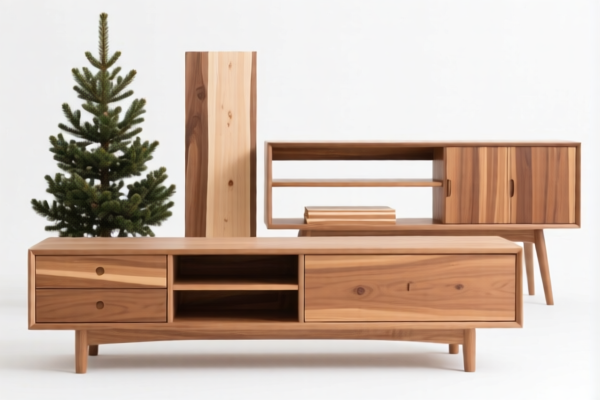
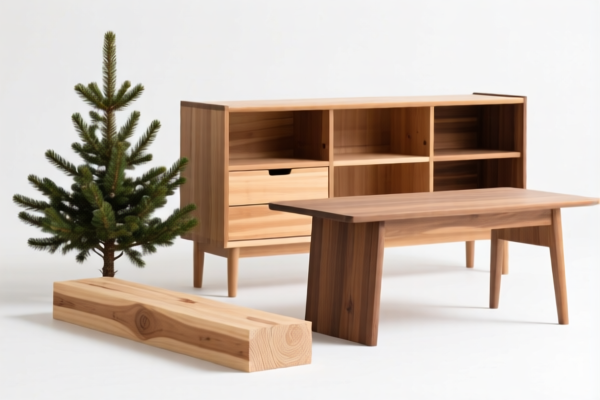
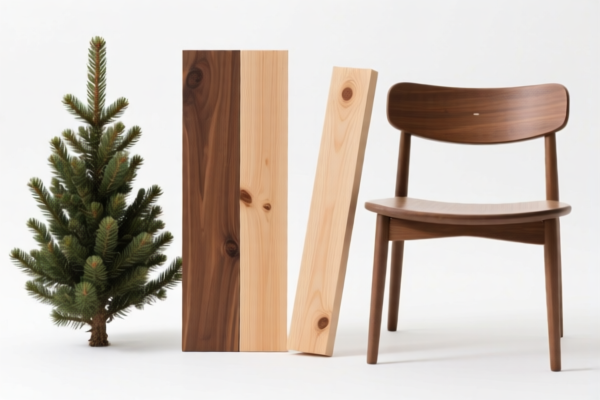
AI Analysis
🪵 Coniferous Wood Furniture (Raw Material Classification)
🌐 HS Code Reference & Customs Clearance Guide | 2026 Latest Tariff Analysis | Professional-Level Clearance Strategy
📌 I. Product Definition and Classification: What is "Other Coniferous Wood Furniture"?
In international trade, the term "Coniferous Wood Furniture" in its raw form typically refers to logs, sawn wood, or semi-processed timber specifically intended for furniture manufacturing. It is NOT finished furniture (like a chair or table), but rather the raw material substrate.
The classification depends on the degree of processing: 1. Raw Logs: Unprocessed or roughly squared wood (Chapters 4401 or 4403). 2. Sawn Wood/Planks: Processed into dimensions suitable for carpentry (Chapter 4407). 3. Finished Furniture: Assembled items (Chapter 9403) — Note: The provided data specifically focuses on the raw/semi-processed wood stage, not the assembled furniture.
⚠️ Key Distinction Point:
- If it is round logs (roughly shaped) → Look at 4401 (Fuel/Raw) or 4403 (Treated Logs).
- If it is sawn/lumber (flat planks/boards) → Look at 4407 (Sawn Wood).
- All items below are classified as "Coniferous" (Softwood), such as Pine, Spruce, Fir, or Douglas Fir.
📦 II. HS Code Classification Details (2026 Latest Tariff Authority Alignment)
Based on the provided data, here are the specific HS Codes and their logical justifications for "Other Coniferous Wood" used in furniture production.
| HS Code | Product Description | Classification Logic & Fit |
|---|---|---|
4403.26.01.64 |
Other Coniferous Logs, for Furniture | Match: Coniferous material + Furniture purpose + Bottom-category logic. ✅ Fits logs intended for furniture that don't fit other specific species codes. |
4401.11.00.00 |
Other Coniferous Logs (Fuel/Raw Category) | Match: Coniferous material + Log form + Fuel/Raw classification. ✅ Fits raw logs where the primary attribute is biomass/raw state, even if destined for furniture. |
4407.19.00.92 |
Other Coniferous Sawn Wood, for Furniture | Match: Coniferous material + Primary processing state + Furniture use. ✅ Fits sawn timber in the "Other" coniferous category, no conflict. |
4407.19.00.93 |
Other Coniferous Sawn Wood (Processing Attribute) | Match: Coniferous material + Sawn processing + Furniture use. ✅ No category conflict; fits semi-processed planks/board for furniture making. |
4403.22.01.65 |
Other Coniferous Logs (Bottom Category) | Match: Coniferous material + Log form + Bottom-category rule. ✅ Fits raw logs under the "Other" coniferous umbrella, consistent with raw material attributes. |
🔍 Key Takeaway:
- All listed codes carry a Total Tax Rate of 35.0% (US Market, Chinese Origin). - The codes split between Logs (4403/4401) and Sawn Wood (4407) based on physical form. -4401is typically for fuel/raw biomass;4403/4407are for industrial use (like furniture).
💰 III. 2026 Latest Tariff Rate Breakdown (Including Surtaxes & Policy Add-ons)
✅ Applicable Country: United States (US)
✅ Country of Origin: China (CN)
✅ Effective Date: 2025-11-10 onwards (including subsequent imports)
🎯 1. All Listed HS Codes (4403.26.01.64, 4401.11.00.00, 4407.19.00.92, 4407.19.00.93, 4403.22.01.65)
| Item | Content |
|---|---|
| Base Tariff | 0.0% (Ad Valorem) Note: Many wood products have low base MFN tariffs. |
| Section 301 Surtax | +25.0% Applied to Chinese-origin goods under US Trade Act Section 301. |
| Section 122 Tariff | +10.0% Specific surcharge applied to this category of goods. |
| Total Tariff Rate | 35.0% (0.0% + 25.0% + 10.0%) |
| Tax Calculation | CIF Value × 35% |
| De Minimis Exemption | ❌ Not Eligible (deny_de_minimis) Cannot use Section 321 (under $800) to avoid taxes. |
| Legal Path | Section 301: USITC List 3/4 → Section 122 Policy → HS Code Specific Footnotes |
📌 Explanation:
- Base Tariff (0%): The US generally encourages raw material imports, hence the 0% base rate.
- 301 Clause (25%): This is the heavy hitter. Wood products from China are heavily scrutinized.
- Section 122 (10%): This is a specific punitive tariff added on top.
- Total 35%: This is a significant cost. It erodes the profit margin of raw timber imports significantly.
🛠️ IV. Customs Clearance Practical Advice (Battle-Tested Pitfall Avoidance)
✅ 1. Required Documentation Checklist (Non-Negotiable)
| Document | Required | Description |
|---|---|---|
| ✅ Commercial Invoice | ✔️ | Must clearly state "Coniferous Wood for Furniture Manufacturing". Avoid vague terms like "Wood". |
| ✅ Packing List | ✔️ | Detail dimensions, weight, and number of pieces/logs. |
| ✅ Certificate of Origin (CO) | ✔️ | Crucial. Must be issued by a Chinese authority to prove CN origin (triggers the 35% tax). |
| ✅ Phytosanitary Certificate | ✔️ | Mandatory for Wood. Proves the wood is free of pests/insects (USDA requirements). Without this, goods will be rejected/quarantined. |
| ✅ Fumigation Certificate | ✔️ | Often required in addition to Phytosanitary cert. |
| ✅ Product Description | ✔️ | Specify species (e.g., Pine, Spruce) if known, though HS code covers "Other". |
| ✅ Bill of Lading (B/L) | ✔️ | Standard shipping doc. |
✅ 2. Declaration Tactics (Key Mantras)
🔥 "Form Defines Code, Species Defines Sub, Origin Defines Tax!"
| Scenario | Correct Declaration | Wrong Approach |
|---|---|---|
| Raw Logs | 4403.xxxx or 4401.11.00.00 |
Misdeclare as Lumber (4407) → Risk of misclassification penalties. |
| Sawn Planks/Boards | 4407.19.00.9x |
Misdeclare as Logs (4403) → Incorrect tax liability. |
| Finished Furniture | 9403.xxxx (Not in data) |
Do NOT use wood codes for assembled chairs/tables. |
| Treated vs. Untreated | Specify "Untreated" or "Chemically Treated" | Vague description → Customs delay for inspection. |
✅ 3. Special Situations & Handling
| Situation | Handling Advice |
|---|---|
| Mixed Shipment | If logs and planks are mixed, declare separately. Do not lump under one code if it misrepresents the form. |
| Species Uncertainty | If species is unknown, use "Other Coniferous" codes (4403.26, 4407.19). However, be prepared for USDA to test for species/pests. |
| Wood Packaging Material | If pallets are included, ensure they are ISPM 15 compliant (heat-treated/stamped). Otherwise, entire shipment held. |
| Section 301 Exclusions | Check if any specific wood HS codes have current exclusions. (Currently, most softwoods are included, hence the 25%). |
🌍 V. Global Market Comparison (2026 Latest)
| Country/Region | Recommended HS Code (Similar) | Tariff (China Origin) | Certification Requirement | Notes |
|---|---|---|---|---|
| 🇺🇸 USA | 4407.19.00.92 / 4403.26.01.64 |
35% (Base 0% + 301 25% + Sec 122 10%) | Phytosanitary + Fumigation | High Tariff Risk. 35% is the standard burden. |
| 🇨🇳 China | 4407.19.00 / 4403.22.00 |
5% - 10% | Fumigation (Export) | Domestic trade is cheaper. |
| 🇪🇺 EU | 4407.10 / 4403.10 |
0% - 5% (if GSP not applicable) | FSC/PEFC (Optional but preferred) | EUTR (EU Timber Regulation) requires due diligence. |
| 🇨🇦 Canada | 4407.10 |
0% (CUSMA if Canadian) | Phytosanitary | Similar to US but no Section 301. |
📌 Conclusion:
- The US market is the most expensive for Chinese coniferous wood due to the 35% total tariff. - Phytosanitary compliance is as important as the tariff. A clean tax rate means nothing if the wood is rejected for pests.
📌 VI. Common Errors & Pitfall Avoidance (Blood-Lesson Guide)
❌ Error 1: Declaring "Furniture" when it is Raw Wood
👉 Consequence: Wrong HS Code (9403 vs 4407). Potential penalty for misclassification.
❌ Error 2: Ignoring Phytosanitary Certificate
👉 Consequence: Immediate Quarantine or Return. Customs will hold the container until fumigation is proven.
❌ Error 3: Assuming "Base Tariff 0%" means Free Entry
👉 Consequence: 35% Tax Bill. Many importers get shocked by the Section 301 and Section 122 add-ons.
❌ Error 4: Misidentifying "Coniferous" vs "Non-Coniferous"
👉 Consequence: If it's Oak (Non-coniferous), the HS code changes entirely. Ensure species is correctly identified.
✅ Correct Practice:
"Coniferous Sawn Wood, Unseasoned, for Furniture Manufacturing, Species: Pine/Fir Mix, Fumigated, HS: 4407.19.00.92"
🎯 VII. Conclusion: Professional Declaration, Cost Control, Efficiency!
🎯 Remember the Mantra:
🔹 "Logs vs. Planks determine the 4403 vs 4407 code."
🔹 "China Origin means 35% Tax (0% Base + 25% 301 + 10% 122)."
🔹 "No Phytosanitary Cert = No Entry!"
📌 Pro Tip:
- For shipments to the US, pre-clearance is highly recommended.
- Ensure your supplier provides ISPM 15 stamps on all packaging.
- Calculate the Landed Cost carefully:
CIF Value * 1.35+ Duty + Handling + Storage.
📣 Immediate Action:
📞 Contact a licensed Customs Broker + Provide Species Details + Secure Phytosanitary Cert
🚀 Ensure your 35% tariff budget is accounted for in your pricing model.
✨ Professional Customs Clearance Starts with Accurate Classification!
💼 Your Profit Margin is Protected by Precision!
Customer Reviews
About HS Code Classification
The Harmonized System (HS) is an internationally standardized nomenclature developed by the World Customs Organization (WCO) to classify traded products. Over 200 countries use the HS system as the basis for customs tariffs, trade statistics, and import/export regulations.
Each HS code follows a hierarchical structure:
- Chapter (2 digits) — Broad category of goods (e.g., Chapter 84: Machinery and Mechanical Appliances)
- Heading (4 digits) — More specific grouping within the chapter
- Subheading (6 digits) — Internationally standardized breakdown, used by all WCO member countries
- National subdivisions (8-10 digits) — Country-specific extensions for further classification, such as US HTSUS 10-digit codes
Correct HS code classification is essential for smooth customs clearance, accurate duty payment, and compliance with trade regulations. Misclassification can lead to customs delays, overpayment of duties, or penalties.
When importing from CN to US, the applicable tariff rates may include:
- Most-Favored-Nation (MFN) rate — The standard duty rate applied to WTO members
- General rate — Applied to countries without trade agreements
- Trade remedy duties — Additional tariffs such as Section 301 (anti-dumping), Section 232 (national security), or countervailing duties
The information provided on this page is for reference purposes only. For official classification, please consult with your local customs authority or a licensed customs broker.