Other Coniferous Wood for Roofs
CN → US| HS Code | Tariff Rate | Origin | Destination | Doc |
|---|---|---|---|---|
| 4407190092 | 35.0% | CN | US | Official Doc |
| 4407190093 | 35.0% | CN | US | Official Doc |
Product Images
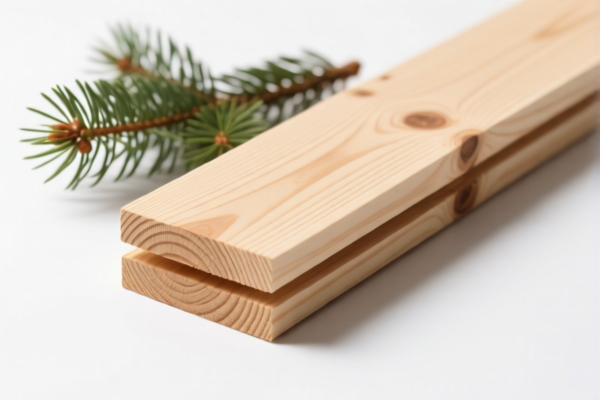
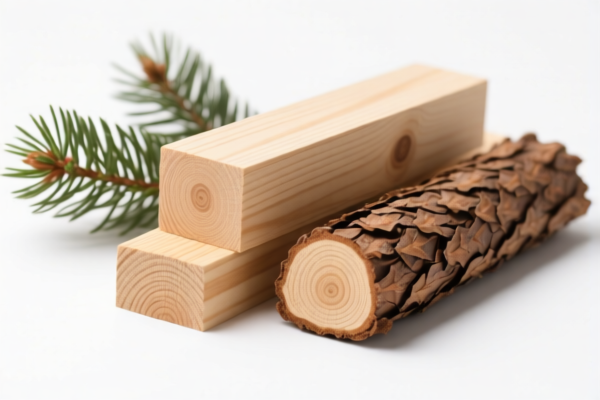
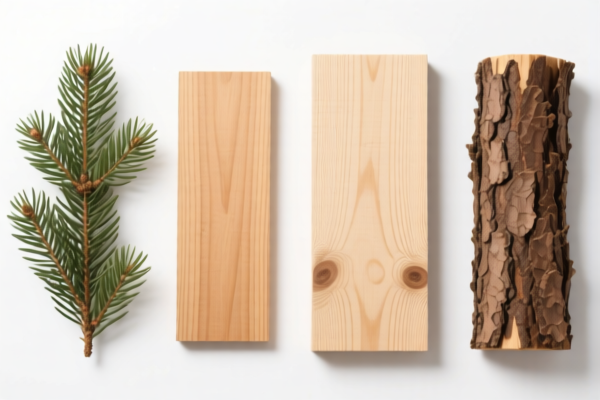
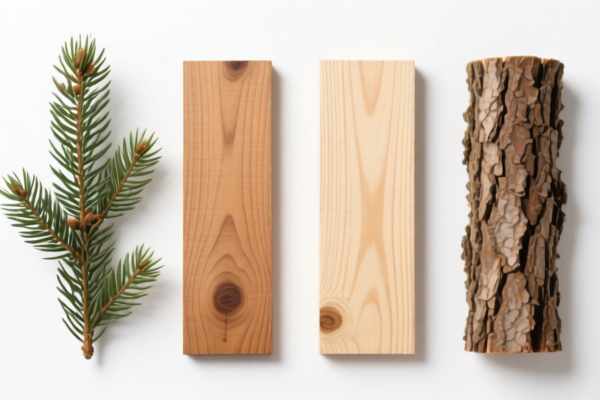
AI Analysis
🪵 Coniferous Wood Sawn for Roofs (Wood Sawn or Chipped Lengthwise, >6mm)
🌐 HS Code Reference & Customs Clearance Guide | 2026 Latest Tariff Analysis | Professional Strategy
📌 1. Product Definition & Classification: Do You Truly Understand "Roofing Wood"?
"Coniferous Wood for Roofs" typically refers to structural timber, rafters, purlins, or sheathing boards used in construction. In international trade, specifically under Chapter 44 (Wood and Articles of Wood), these products are strictly classified based on their processing state (sawn/chipped), species (coniferous), and treatment status.
The key distinction here is not just "for roofs," but the physical form and treatment: * Sawn/Chipped: The wood has been processed lengthwise. * Thickness: Must exceed 6 mm (otherwise, it falls under Chapter 48 or 4409). * Treatment: "Not treated" means no preservatives, fire retardants, or chemical impregnation have been applied. * Surface: "Rough" or "Other" indicates whether it is planed/sanded or left in its natural sawn state.
⚠️ Critical Distinction:
- If the wood is planed, sanded, or tongued/grooved → It may fall under different subheadings (e.g., 4409).
- If the wood is treated (e.g., with preservatives) → It falls under "Treated" subheadings (e.g., 4407.19.00.90).
- For Rough, Untreated, Coniferous Sawnt Wood >6mm, the relevant codes are in the 4407.19 series.
📦 2. HS Code Classification Details (2026 Latest Tariff Authority)
Based on the provided data, here are the specific HS Codes for Rough, Untreated Coniferous Wood exceeding 6mm in thickness:
| HS Code | Product Description | Application Scenario | Treatment Status |
|---|---|---|---|
4407.19.00.92 |
Other Coniferous Wood: Not Treated: Rough | Raw structural beams, rough-cut rafters, untreated log sections for roofing | ❌ Not Treated |
4407.19.00.93 |
Other Coniferous Wood: Not Treated: Other | Sawn wood that is not "Rough" (e.g., slightly surfaced but not planed/sanded), or generic "Other" category | ❌ Not Treated |
🔍 Key Insight:
-4407.19.00.92is specifically for Rough wood. If your product is clearly "rough-sawn" (no planing/sanding), this is the most precise code.
-4407.19.00.93is a catch-all for Other non-treated coniferous wood >6mm. Use this if the wood is not strictly "rough" but also not planed/sanded.
- Do Not Misclassify as "Treated Wood" (e.g., 4407.19.00.90 series) if no preservatives are used, as this leads to declaration errors.
💰 3. 2026 Latest Tariff Rate Breakdown (Including Additional Duties)
✅ Applicable Country: United States (US)
✅ Origin: China (CN) (Note: Tariff rates are typically origin-specific; assuming China origin based on typical trade context for such data)
✅ Effective Time: Current 2026 Tariff Schedule
🎯 1. 4407.19.00.92 —— Rough Coniferous Wood (Untreated)
| Item | Detail |
|---|---|
| Base Duty Rate | 0.0% (ad valorem) |
| Additional Duty (Section 301 / IEEPA) | +25.0% |
| Total Tax Rate | 25.0% |
| Tax Calculation | CIF Value × 25% |
| De Minimis Exemption | ❌ Not Applicable (Wood products generally do not qualify for de minimis exemptions under current enforcement) |
| Legal Basis | USITC Tariff Schedule: 4407.19.00.92 → Additional Duties Footnotes |
📌 Explanation:
- The 0% base rate applies to most wood products under normal MFN (Most Favored Nation) treatment.
- The 25% additional duty is applied due to trade measures (likely Section 301 tariffs on Chinese wood products).
- Total Cost Impact: For every $10,000 CIF value, you pay $2,500 in duties alone.
🎯 2. 4407.19.00.93 —— Other Coniferous Wood (Untreated)
| Item | Detail |
|---|---|
| Base Duty Rate | 0.0% (ad valorem) |
| Additional Duty (Section 301 / IEEPA) | +25.0% |
| Total Tax Rate | 25.0% |
| Tax Calculation | CIF Value × 25% |
| De Minimis Exemption | ❌ Not Applicable |
| Legal Basis | USITC Tariff Schedule: 4407.19.00.93 → Additional Duties Footnotes |
📌 Explanation:
- Identical tariff treatment to4407.19.00.92in terms of percentage.
- The difference lies in the physical description: "Other" vs. "Rough." Ensure your product description matches the code to avoid customs scrutiny.
🛠️ 4. Customs Clearance Practical Advice (Real-World Pitfall Avoidance)
✅ 1. Required Documentation Checklist (All Mandatory)
| Document | Mandatory? | Explanation |
|---|---|---|
| ✅ Commercial Invoice | ✔️ | Must clearly state: "Coniferous Wood, Sawn, >6mm, Untreated, Rough/Other." |
| ✅ Packing List | ✔️ | Detail dimensions, volume, and weight. Wood is bulky; volume weight is critical. |
| ✅ Fumigation Certificate | ✔️ | Critical! Even if "untreated," ISPM 15 standards usually require heat treatment or fumigation for raw wood to prevent pest intrusion. |
| ✅ Phytosanitary Certificate | ✔️ | Often required by USDA APHIS for raw wood imports. |
| ✅ Product Photos | ✔️ | Show cross-section, thickness (>6mm), and lack of chemical treatment (to prove "Not Treated"). |
| ✅ Bill of Lading | ✔️ | Consistent with invoice and packing list. |
✅ 2. Declaration Tips (Key Phrases)
🔥 "Be Precise: Specify 'Rough' vs. 'Other', 'Untreated', and 'Coniferous'"
| Scenario | Correct Declaration | Incorrect Practice |
|---|---|---|
| Rough-sawn beams for roofs | 4407.19.00.92 - "Rough, Untreated Coniferous Wood" |
Just "Wood Lumber" → Ambiguity leads to inspection |
| Sanded/pine boards | NOT 4407.19.00.92/93 | Misdeclaring sanded wood as "Rough" → Penalty |
| Treated wood (preservative) | NOT 4407.19.00.92/93 | Misdeclaring treated wood as "Untreated" → Illegal |
| Wood < 6mm thick | NOT 4407 | Misdeclaring thin wood as >6mm → Wrong Chapter |
✅ 3. Special Cases
| Case | Handling Advice |
|---|---|
| ISPM 15 Compliance | Ensure all pallets and wood packaging are marked with the IPPC logo. Raw wood itself must have a phytosanitary certificate. |
| "Untreated" Claim | Do not use chemicals like CCA (Chromated Copper Arsenate) or fire retardants if declaring "Not Treated." Any treatment changes the HS code. |
| Dimensional Accuracy | Verify thickness >6mm. If some pieces are 5mm, they must be separated or declared under a different code (e.g., 4409 or 4407 depending on edge profile). |
| Mixed Species | If coniferous and non-coniferous are mixed, the entire shipment may be classified under the least favorable code or require segregation. |
🌍 5. Global Market Comparison (2026 Latest)
| Country/Region | Recommended HS Code | Tariff Rate | Certification Required | Notes |
|---|---|---|---|---|
| 🇺🇸 USA | 4407.19.00.92 / .93 |
25% (Total) | ISPM 15, Phytosanitary | High duty due to Section 301 |
| 🇨🇳 China | 4407.19 | ~0-5% | N/A (Domestic) | Low duty for imports |
| 🇪🇺 EU | 4407.19 | 0% (If FSC/PEFC certified) | FSC/PEFC, EUTR | Strict due diligence on wood legality |
| 🇬🇧 UK | 4407.19 | 0% | UK Forestry Standard | Post-Brexit rules apply |
| 🇨🇦 Canada | 4407.19 | 0% (CUSMA) | ISPM 15 | Free trade under CUSMA if eligible |
📌 Conclusion:
- USA imposes a significant 25% duty on these products if originating from China.
- EU/UK require strict legality documentation (EUTR/UKFTS) but often have 0% base tariffs.
- Canada offers duty-free access under CUSMA if rules of origin are met.
📌 6. Common Mistakes & Pitfalls (Blood & Tears Lessons)
❌ Mistake 1: Declaring "Untreated" when wood is actually Fumigated Heat Treated (HT)
👉 Consequence: HT is considered "treated" under some interpretations if chemical markers are present. If declared as "Untreated," it may be flagged for pest risk.
👉 Fix: Clearly state "Heat Treated (HT)" under ISPM 15, but if the HS code distinguishes "Treated" vs "Not Treated" by chemical treatment, HT may still fall under "Not Treated" for tariff purposes, but customs may require proof.
❌ Mistake 2: Misdeclaring Planed/Sanded wood as "Rough"
👉 Consequence: If the wood is planed, it may fall under 4409 (Wood continuously shaped along any edge), which has different tariffs.
👉 Fix: Provide photos showing surface texture. If smooth, use 4409 codes.
❌ Mistake 3: Ignoring ISPM 15 for raw wood packaging
👉 Consequence: Shipment held or destroyed by USDA APHIS.
👉 Fix: Ensure all wood pallets/crates are IPPC marked.
❌ Mistake 4: Not verifying Thickness >6mm
👉 Consequence: If thickness is ≤6mm, it falls under 4409 or 4407 (thin wood), changing duty rates.
👉 Fix: Measure random samples; report average thickness accurately.
✅ Correct Practice:
"Coniferous Wood, Sawn, Rough, Untreated, Thickness >6mm, ISPM 15 Certified, for Roof Structural Use, Model: RAW-ROOF-01"
🎯 7. Conclusion: Precision in Classification Saves Money!
🎯 Remember the Key Rules:
🔹 "Rough vs. Planed": Rough = 4407.19.00.92; Planed = Possibly 4409.
🔹 "Untreated": No chemicals. If in doubt, assume it might be classified as "Treated" if any surface alteration exists.
🔹 ">6mm": Critical threshold. <6mm changes chapter/heading.
🔹 "25% Duty": For US imports from China, this is non-negotiable. Factor it into your pricing.
📌 Pro Tip:
- If your wood is FSC/PEFC certified, you may qualify for preferential tariffs in the EU or Canada.
- Always request a Phytosanitary Certificate from the exporter before shipping.
- Consider Pre-Clearance Services for high-value wood shipments to avoid port delays.
📣 Immediate Action:
📞 Consult a licensed customs broker with your product samples and photos.
🚀 Apply for an Advance Ruling if possible to lock in the HS Code and duty rate.
💼 Accurate classification from the start prevents costly penalties and delays!
✨ Professional Customs Clearance Starts with Accurate Classification!
💼 Every dollar saved in duties is pure profit!
Customer Reviews
About HS Code Classification
The Harmonized System (HS) is an internationally standardized nomenclature developed by the World Customs Organization (WCO) to classify traded products. Over 200 countries use the HS system as the basis for customs tariffs, trade statistics, and import/export regulations.
Each HS code follows a hierarchical structure:
- Chapter (2 digits) — Broad category of goods (e.g., Chapter 84: Machinery and Mechanical Appliances)
- Heading (4 digits) — More specific grouping within the chapter
- Subheading (6 digits) — Internationally standardized breakdown, used by all WCO member countries
- National subdivisions (8-10 digits) — Country-specific extensions for further classification, such as US HTSUS 10-digit codes
Correct HS code classification is essential for smooth customs clearance, accurate duty payment, and compliance with trade regulations. Misclassification can lead to customs delays, overpayment of duties, or penalties.
When importing from CN to US, the applicable tariff rates may include:
- Most-Favored-Nation (MFN) rate — The standard duty rate applied to WTO members
- General rate — Applied to countries without trade agreements
- Trade remedy duties — Additional tariffs such as Section 301 (anti-dumping), Section 232 (national security), or countervailing duties
The information provided on this page is for reference purposes only. For official classification, please consult with your local customs authority or a licensed customs broker.