Other Electrical Equipment and Devices with Independent Functions
CN → US| HS Code | Tariff Rate | Origin | Destination | Doc |
|---|---|---|---|---|
| 8543908885 | 85.0% | CN | US | Official Doc |
| 8479896500 | 20.3% | CN | US | Official Doc |
| 9032896085 | 36.7% | CN | US | Official Doc |
| 9032896075 | 36.7% | CN | US | Official Doc |
| 8543100000 | 36.9% | CN | US | Official Doc |
Product Images
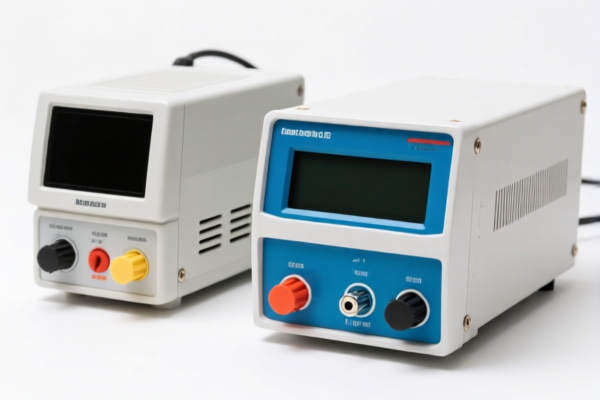
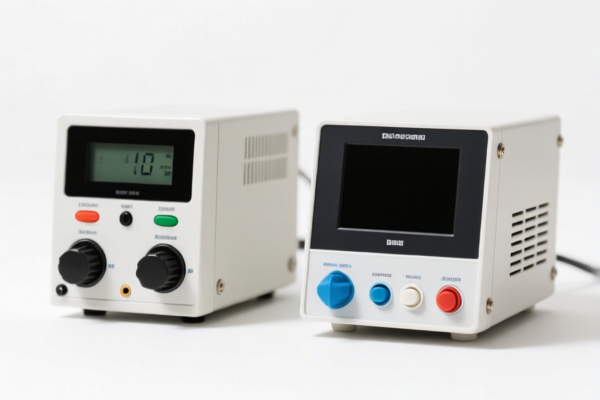
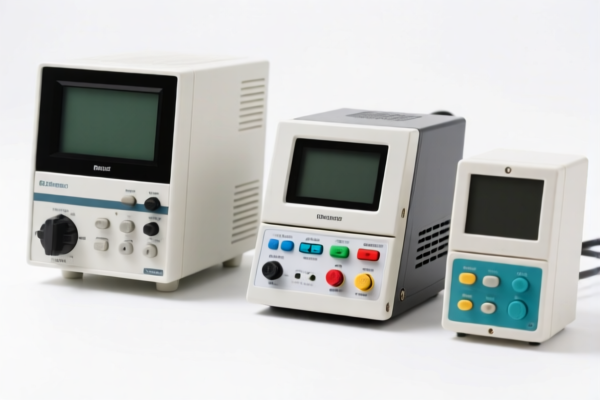
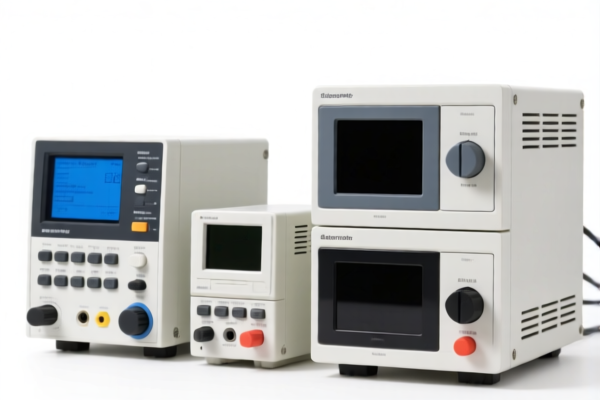
AI Analysis
⚡ Other Electrical Equipment and Devices with Independent Functions (Special Purpose Machines)
🌐 HS Code Reference & Customs Clearance Guide | 2026 Latest Tariff Analysis | Professional Clearance Strategy
📌 I. Product Definition & Classification: What Exactly Are These "Independent Function" Devices?
In international trade, the category "Other Electrical Equipment and Devices with Independent Functions" covers a wide range of specialized machinery and apparatus. These are not general-purpose motors, transformers, or simple cables. They are complete units designed to perform a specific, self-contained function (e.g., regulation, control, measurement, or specific industrial processing) that cannot be classified under more specific headings like "generators" or "motors."
The key distinction lies in "Independence": * Does it have its own control logic/power supply? If yes, it’s likely a "device with independent function." * Is it a component (part)? If no, it might be a part of a larger machine (e.g., a motor part), which falls under different chapters.
⚠️ Critical Distinction Point:
- If the device is primarily for regulation/control (e.g., thermostats, pressure regulators) → Likely Chapter 90 (9032).
- If the device is a general mechanical/electrical apparatus for specific tasks (e.g., cleaning, mixing, testing) not specified elsewhere → Likely Chapter 84 (8479) or Chapter 85 (8543).
- Misclassification Risk: Declaring a complex control unit as a "general part" often triggers higher tariffs or rejection.
📦 II. HS Code Classification Details (Based on Provided Data)
The provided data highlights five specific HS Codes for products described as having "independent functions." Below is the detailed breakdown, including the rationale for classification and the associated tax implications.
| HS Code | Product Description / Summary | Classification Logic | Total Tax Rate | Tax Detail Breakdown |
|---|---|---|---|---|
| 8543.90.88.85 | Other Electrical Machines & Apparatus | Matches the "independent electrical equipment" description perfectly. Falls under the residual category of Chapter 85. | 85.0% | Base: 0.0% Add: 25.0% Section 122: 10% Steel/Aluminum/Copper: 50% |
| 8479.89.65.00 | Machinery with Independent Functions | Matches "mechanical devices/apparatus with independent functions." Used for mechanical tasks not specified elsewhere. | 20.3% | Base: 2.8% Add: 7.5% Section 122: 10% |
| 9032.89.60.85 | Automatic Regulating/Control Instruments | "Other instruments/apparatus." Matches "not specified elsewhere" for electrical control devices. Typical for regulators/sensors. | 36.7% | Base: 1.7% Add: 25.0% Section 122: 10% |
| 9032.89.60.75 | Other Instruments & Apparatus | "Apparatus" aligns with "device." "N.E.S." (Not Elsewhere Specified) matches "other." No material/functional conflict. | 36.7% | Base: 1.7% Add: 25.0% Section 122: 10% |
| 8543.10.00.00 | Electric Machines with Independent Functions | Direct match for "electric machines/apparatus with independent functions, not specified elsewhere." | 36.9% | Base: 1.9% Add: 25.0% Section 122: 10% |
🔍 Key Insight:
- 8543.90.88.85 is the highest tax burden (85%) due to specific material-based tariffs (Steel/Aluminum/Copper).
- 8479.89.65.00 offers the lowest tax burden (20.3%), making it the preferred classification for mechanical-apparatus type devices if functionality allows.
- 9032.89.60.xx codes (36.7%) are typical for control/regulation devices (thermostats, pressure switches, etc.).
💰 III. 2026 Latest Tariff Rate Breakdown (Including Additional Taxes & Policy Surcharges)
✅ Applicable Country: United States (US)
✅ Origin: China (CN)
✅ Effective Date: 2025 Nov 10 onwards (including subsequent imports)
🎯 1. 8543.90.88.85 – Other Electrical Machines (High Tax Risk)
| Item | Details |
|---|---|
| Base Tariff | 0.0% |
| USITC Surcharge (Section 301) | +25.0% |
| Section 122 Tariff | +10.0% |
| Steel/Aluminum/Copper Surcharge | +50.0% |
| Total Rate | 85.0% |
| Calculation | CIF Value × 85.0% |
| De Minimis Exemption | ❌ Not Eligible (Strictly denied) |
| Legal Basis | USITC:8543.90.88.85 → FOOTNOTE:Steel/Aluminum/Copper → Section 122 → Section 301 |
📌 Explanation:
- This code attracts the maximum possible tariff because it likely involves steel, aluminum, or copper components (triggering the 50% surcharge).
- Warning: If your product contains metal components, this classification is extremely costly. Consider if it can be reclassified under 8479 or 8543.10 if functionally appropriate.
🎯 2. 8479.89.65.00 – Other Machinery with Independent Functions (Lowest Tax)
| Item | Details |
|---|---|
| Base Tariff | 2.8% |
| USITC Surcharge (Section 301) | +7.5% |
| Section 122 Tariff | +10.0% |
| Total Rate | 20.3% |
| Calculation | CIF Value × 20.3% |
| De Minimis Exemption | ❌ Not Eligible |
| Legal Basis | USITC:8479.89.65.00 → Section 122 → Section 301 |
📌 Strategy:
- If your device is mechanical in nature (e.g., a specialized cleaning tool, mixer, or mechanical tester) and has independent function, 8479 is the most cost-effective.
- Ensure the product description emphasizes "mechanical apparatus" rather than "electrical control" to justify this classification.
🎯 3. 9032.89.60.85 / 9032.89.60.75 – Automatic Regulating/Control Instruments
| Item | Details |
|---|---|
| Base Tariff | 1.7% |
| USITC Surcharge (Section 301) | +25.0% |
| Section 122 Tariff | +10.0% |
| Total Rate | 36.7% |
| Calculation | CIF Value × 36.7% |
| De Minimis Exemption | ❌ Not Eligible |
| Legal Basis | USITC:9032.89.60.xx → Section 122 → Section 301 |
📌 Note:
- These codes apply to control devices (e.g., thermostats, pressure regulators, flow controllers).
- The tax is moderate compared to 8543.90.88.85 but significantly higher than 8479.89.65.00.
- Differentiation: If your device regulates a process, use 9032. If it performs a physical task (cleaning, mixing), use 8479.
🎯 4. 8543.10.00.00 – Electric Machines with Independent Functions (Not Specified Elsewhere)
| Item | Details |
|---|---|
| Base Tariff | 1.9% |
| USITC Surcharge (Section 301) | +25.0% |
| Section 122 Tariff | +10.0% |
| Total Rate | 36.9% |
| Calculation | CIF Value × 36.9% |
| De Minimis Exemption | ❌ Not Eligible |
| Legal Basis | USITC:8543.10.00.00 → Section 122 → Section 301 |
📌 Explanation:
- This is the "general" category for electrical devices with independent functions that don’t fit other specific electrical categories.
- Use this if the device is electrical, not mechanical, and not a control instrument (9032).
🛠️ IV. Customs Clearance Operational Advice (Practical Pitfall Avoidance Guide)
✅ 1. Documentation Checklist (Mandatory)
| Document | Required? | Notes |
|---|---|---|
| ✅ Product Specification Sheet | ✔️ | Must detail function, independence, and technical parameters. |
| ✅ Circuit/Block Diagram | ✔️ | Proves "independent function" vs. "component." |
| ✅ Product Photos (with Labels) | ✔️ | Clear view of model, voltage, power, and any "Made in China" markings. |
| ✅ Commercial Invoice | ✔️ | Must describe product as "Equipment/Device with Independent Function" matching HS description. |
| ✅ Packing List | ✔️ | List all components; avoid splitting if it’s a single integrated unit. |
| ✅ Country of Origin Certificate | ✔️ | Essential for proving CN origin to apply specific tariffs. |
✅ 2. Declaration Strategy (Key Mantra)
🔥 "Function First, Independent Second, Name Precise, Tax Reduced!"
| Scenario | Correct Declaration | Wrong Practice |
|---|---|---|
| Device with own control board & power | Declare as "Independent Electrical Apparatus" (8543 or 9032) | Declare as "Part of Machine" → Higher risk of misclassification penalties. |
| Mechanical device (e.g., cleaner, mixer) | Declare as "Machinery with Independent Function" (8479) | Declare as "Electrical" (8543) → Misses out on lower 20.3% tax. |
| Control device (e.g., thermostat) | Declare as "Regulating/Control Instrument" (9032) | Declare as "General Electrical" (8543) → May incur higher taxes if 9032 is more accurate. |
| Device with Steel/Aluminum parts | CAUTION: Avoid 8543.90.88.85 if possible. | Declaring 8543.90.88.85 for metal parts → 85% Tax! |
✅ 3. Special Cases Handling
| Case | Advice |
|---|---|
| OEM Custom Device | Provide client order + design specs. Ensure description matches the primary function, not the client's brand. |
| Hybrid Device (Electrical + Mechanical) | Analyze the principal characteristic. If mechanical action dominates, consider 8479. If electrical control dominates, consider 8543 or 9032. |
| Device for Medical Use | If it’s a control unit for medical equipment, it may still fall under 9032 or 8543. Check if it fits "Medical Instrument" categories (often 9018/9019), but if not, use the "Independent Function" codes. |
| Device with Metal Components | If classifying under 8543.90.88.85, prepare for 50% additional tariff on steel/aluminum/copper. Consider reclassifying under 8479 if functionally permissible to save ~65%. |
🌍 V. Global Market Clearance Comparison (2026 Latest)
| Country/Region | Recommended HS Code | Tariff (China Origin) | Certification Requirements | Notes |
|---|---|---|---|---|
| 🇺🇸 USA | 8479.89.65.00 (if mechanical) |
20.3% | FCC, UL (if applicable) | Lowest Tax option if functionally valid. |
| 🇺🇸 USA | 8543.90.88.85 (if electrical/metal) |
85.0% | FCC, UL | Highest Tax. Avoid unless necessary. |
| 🇪🇺 EU | Various (Check NC Code) | 0%–5% (varies) | CE, RoHS, WEEE | Generally lower tariffs; no Section 301/122 equivalents. |
| 🇨🇳 China | Various | 5%–15% | CCC (if applicable) | Standard import duties. |
📌 Conclusion:
- The US market imposes heavy additional tariffs on Chinese-origin electrical/mechanical goods.
- Strategic Tip: If your product is mechanically inclined, strongly consider classifying under 8479.89.65.00 (20.3%) instead of 8543 (36.9%–85%). This can save 16%–65% in tariffs.
📌 VI. Common Mistakes & Pitfall Guide (Lessons from Blood & Tears)
❌ Mistake 1: Declaring a mechanical device (e.g., ultrasonic cleaner) as 8543.90.88.85.
👉 Consequence: Pay 85% tax instead of 20.3%. Loss of ~65% value!
❌ Mistake 2: Declaring a control device (e.g., pressure regulator) as 8479.
👉 Consequence: Customs may reject or reclassify to 9032 (36.7%), leading to delays and back taxes.
❌ Mistake 3: Ignoring the Steel/Aluminum/Copper surcharge in 8543.90.88.85.
👉 Consequence: Unexpected 50% extra tariff on products containing metal components.
❌ Mistake 4: Using vague terms like "Electrical Tool" without specifying "Independent Function."
👉 Consequence: Customs may classify under a default higher-duty code or request a Pre-Ruling, causing delays.
✅ Correct Practice:
"Ultrasonic Cleaning Machine, Model XYZ, Independent Function, Mechanical Apparatus, 220V, FCC Certified" → Classify under 8479.89.65.00.
🎯 VII. Conclusion: Professional Declaration Saves Money!
🎯 Remember the Mantra:
🔹 "Mechanical? Use 8479 (20.3%). Electrical Control? Use 9032 (36.7%). General Electrical? Use 8543.10 (36.9%). Metal Electrical? Avoid 8543.90.88.85 (85%)!"
🔹 "HS Code determines your profit margin. A wrong code can cost you 65% in tariffs!"
📌 Pro Tip:
If your product is originating from Vietnam, Mexico, Thailand, or Malaysia, you may qualify for IEEPA Exemptions or lower tariffs under trade agreements.
For complex products, apply for a Binding Ruling or Pre-Ruling from US Customs to confirm the correct HS Code before shipment.
📣 Take Action Now:
📞 Contact a Professional Customs Broker + Provide Product Specs + Apply for HS Code Pre-Ruling
🚀 Ensure your "Independent Function" device clears customs smoothly, efficiently, and profitably!
✨ Professional Clearance Starts with Accurate Classification!
💼 Every Cent of Cost Deserves Precise Calculation!
Customer Reviews
About HS Code Classification
The Harmonized System (HS) is an internationally standardized nomenclature developed by the World Customs Organization (WCO) to classify traded products. Over 200 countries use the HS system as the basis for customs tariffs, trade statistics, and import/export regulations.
Each HS code follows a hierarchical structure:
- Chapter (2 digits) — Broad category of goods (e.g., Chapter 84: Machinery and Mechanical Appliances)
- Heading (4 digits) — More specific grouping within the chapter
- Subheading (6 digits) — Internationally standardized breakdown, used by all WCO member countries
- National subdivisions (8-10 digits) — Country-specific extensions for further classification, such as US HTSUS 10-digit codes
Correct HS code classification is essential for smooth customs clearance, accurate duty payment, and compliance with trade regulations. Misclassification can lead to customs delays, overpayment of duties, or penalties.
When importing from CN to US, the applicable tariff rates may include:
- Most-Favored-Nation (MFN) rate — The standard duty rate applied to WTO members
- General rate — Applied to countries without trade agreements
- Trade remedy duties — Additional tariffs such as Section 301 (anti-dumping), Section 232 (national security), or countervailing duties
The information provided on this page is for reference purposes only. For official classification, please consult with your local customs authority or a licensed customs broker.