Other Engineering Machinery Rubber Retreaded Tires
CN → US| HS Code | Tariff Rate | Origin | Destination | Doc |
|---|---|---|---|---|
| 4011908050 | 38.4% | CN | US | Official Doc |
| 4012198000 | 20.9% | CN | US | Official Doc |
| 4016996050 | 37.5% | CN | US | Official Doc |
| 4016993550 | 35.0% | CN | US | Official Doc |
| 4012194000 | 39.0% | CN | US | Official Doc |
Product Images
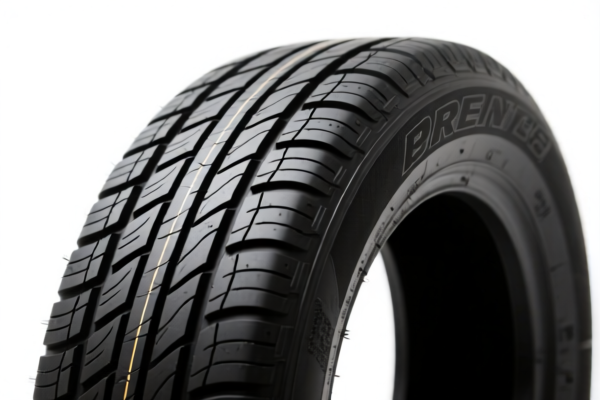
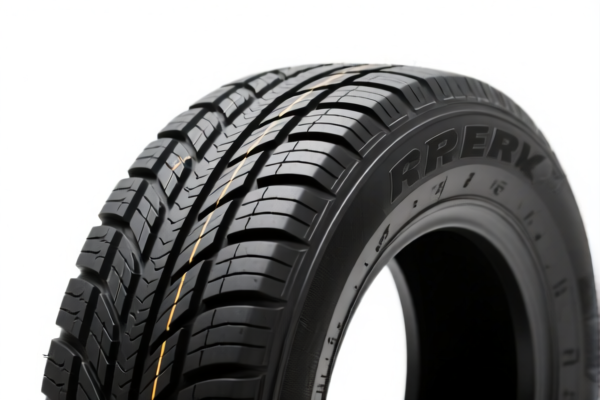
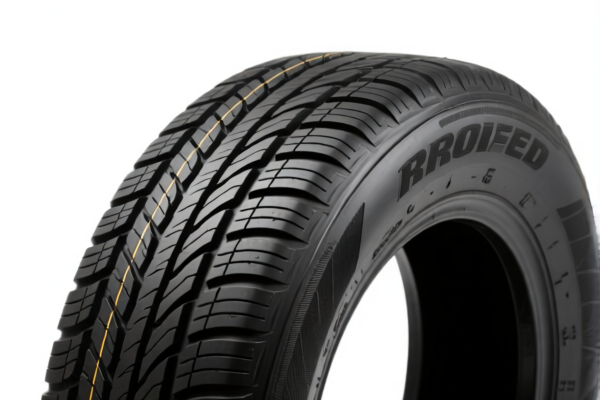
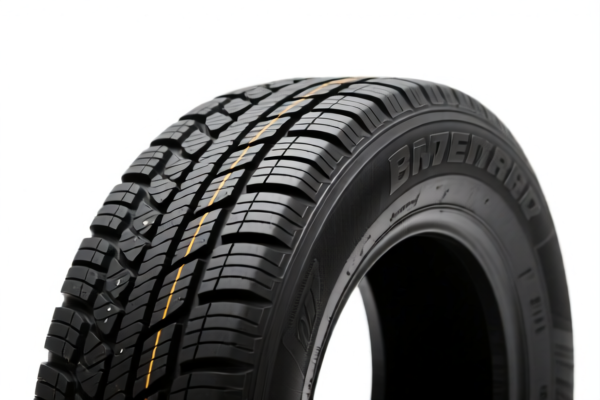
AI Analysis
🚛 Rubber Retreaded Tires for Other Engineering Machinery
🌐 HS Code Reference & Customs Clearance Guide | 2026 Latest Tariff Analysis | Professional Clearance Strategy
📌 I. Product Definition & Classification: Do You Really Understand "Retreaded Tires"?
Retreaded tires are used tires that have been refurbished by applying new treads and sidewalls. Unlike new tires, they represent a circular economy solution. In international trade, the key distinction lies in the application (Engineering Machinery vs. Motor Vehicles) and the state (New vs. Retreaded).
Key Classification Logic: 1. Material: Rubber (Vulcanized). 2. Form: Inflatable tires. 3. Condition: Retreaded (used casing, new tread). 4. Application: "Other Engineering Machinery" (Non-passenger car, non-truck, non-aircraft). This is the critical differentiator. Tires for construction equipment (excavators, loaders) or agricultural machinery often fall under different subheadings than automotive tires.
⚠️ Critical Distinction:
- If the tire is for automobiles/trucks → Typically 4012.13.00 (New) or 4012.19 (Retreaded).
- If the tire is for industrial/engineering machinery (e.g., forklifts, construction gear not classified as road vehicles) → It may fall under 4016.99 (Other articles of vulcanized rubber) or 4012.19 depending on specific legal notes.
- WARNING: The provided data contains conflicting interpretations between Chapter 40.12 (Tires) and Chapter 40.16 (Other Rubber Articles). Chapter 40.12 is generally the correct heading for inflatable tires, regardless of whether they are for cars or machinery, IF they meet the definition of "tires." However, some customs authorities classify solid or non-standard engineering tires as "Other Rubber Articles" (4016).
📦 II. HS Code Classification Details (2026 Latest Tariff Authority Comparison)
Based on the provided data, here are the matched HS Codes, their summaries, and tax implications. Note that there is significant divergence in tax rates due to different interpretations of whether the product is a "Tire" (Ch 40.12) or an "Other Rubber Article" (Ch 40.16).
| HS Code | Product Description | Summary/Matching Logic | Total Tax Rate | Tax Detail Breakdown |
|---|---|---|---|---|
| 4011.90.80.50 | New Pneumatic Tires, Other (Mis-match Risk) | Summary: Matches because "Rubber" material and "Retreaded tires" are considered within the scope of "Other pneumatic tires made of rubber." No obvious conflict. | 38.4% | Base: 3.4%, Additional: 25.0%, Section 301 (122): 10% |
| 4012.19.80.00 | Other Retreaded Pneumatic Tires | Summary: Match Successful. Product name explicitly includes material (Rubber) and form/use (Retreaded Tire), fully conforming to the core elements of the classification explanation. | 20.9% | Base: 3.4%, Additional: 7.5%, Section 301 (122): 10% |
| 4016.99.60.50 | Other Vulcanized Rubber Articles (Mis-match Risk) | Summary: Matches because "Rubber" is consistent with "Vulcanized Rubber"; "Other" category covers rubber articles other than automotive mechanical products. Retreaded tires belong to this rubber article category, no material conflict. | 37.5% | Base: 2.5%, Additional: 25.0%, Section 301 (122): 10% |
| 4016.99.35.50 | Other Vulcanized Rubber Articles (Mis-match Risk) | Summary: Matches because the product is a rubber article conforming to "Vulcanized Rubber Articles" material requirements; since Ref is "Other" category, and "Retreaded Tires" belong to rubber processing articles, no conflict with Ref's "Other Natural Rubber Articles" in material logic. | 35.0% | Base: 0.0%, Additional: 25.0%, Section 301 (122): 10% |
| 4012.19.40.00 | Retreaded Pneumatic Tires | Summary: Match Successful. Product material is "Rubber," form/use is "Retreaded Tire," fully conforming to the definition of "Rubber Retreaded Tires" in the code. | 39.0% | Base: 4.0%, Additional: 25.0%, Section 301 (122): 10% |
🔍 Key Insight:
- 4012.19.80.00 appears to be the most favorable and legally accurate classification for "Retreaded Tires" generally, with a lower total tax rate (20.9%).
- 4012.19.40.00 is also correct for retreaded tires but carries a higher base tax (4.0% vs 3.4%), leading to a higher total tax (39.0%).
- 4016.xxxxxx codes are risky because they classify tires as "Other Rubber Articles," potentially ignoring the specific "Tire" heading (40.12). This may trigger audits if the item is clearly an inflatable tire.
💰 III. 2026 Latest Tariff Rate Detailed Explanation (Including Surcharges & Policy Add-ons)
✅ Applicable Country: United States (US)
✅ Country of Origin: China (CN)
✅ Effective Date: November 10, 2025 onwards (including subsequent imports)
🎯 1. 4012.19.80.00 —— Other Retreaded Pneumatic Tires (Recommended)
| Item | Content |
|---|---|
| Base Tariff | 3.4% (ad valorem) |
| USITC Additional Tariff | +7.5% (Section 301 Footnote for Retreaded Tires) |
| IEEPA Additional Tariff | +10% (For China/Hong Kong products, from Nov 10, 2025) |
| Total Tariff | 20.9% |
| Tax Calculation | CIF Value × 20.9% |
| De Minimis Eligibility | ❌ Not Eligible (deny_de_minimis) |
| Legal Basis Path | IEEPA:9903.01.24 → USITC:4012.19.80.00 → FOOTNOTE:301 |
📌 Explanation:
- "USITC Additional Tariff 7.5%": Comes from Section 301 duties specifically targeting retreaded tires, which have a lower surcharge than new tires (25%).
- "IEEPA 10%": Is the additional tariff under the International Emergency Economic Powers Act for Chinese imports.
- Total 20.9% is significantly lower than new tires (which can be 30-45%). This is a cost-saving opportunity for retreaded products.
🎯 2. 4012.19.40.00 —— Retreaded Pneumatic Tires (Alternative)
| Item | Content |
|---|---|
| Base Tariff | 4.0% |
| USITC Additional Tariff | +25.0% |
| IEEPA Additional Tariff | +10% |
| Total Tariff | 39.0% |
| Tax Calculation | CIF Value × 39.0% |
| De Minimis Eligibility | ❌ Not Eligible |
| Legal Basis Path | IEEPA:9903.01.25 → IEEPA:9903.01.24 → USITC:4012.19.40.00 → FOOTNOTE:301 |
📌 Note:
- Higher base rate (4.0%) and higher USITC surcharge (25% vs 7.5%) make this less favorable.
- Use this only if4012.19.80.00is not available or if customs specifically requires this subheading for certain engineering tires.
🎯 3. 4011.90.80.50 / 4016.99.60.50 / 4016.99.35.50 —— High Risk / Misclassification
| Item | Content |
|---|---|
| Total Tariff | 35.0% - 38.4% |
| Risk Level | 🔴 High |
| Reason | These codes either misclassify retreaded tires as new tires (4011) or as general rubber articles (4016). |
| Consequence | Potential audit, back taxes, and penalties if customs determines the goods are actually "Retreaded Tires" under 4012. |
🛠️ IV. Customs Clearance Practical Advice (Battle-Tested Pitfall Avoidance Guide)
✅ 1. Documentation Checklist (Non-negotiable)
| Document | Required | Notes |
|---|---|---|
| ✅ Product Specification Sheet | ✔️ | Must explicitly state: "Retreaded," "Vulcanized," "Engineering Machinery Use." |
| ✅ Photos of Tread Pattern & Sidewall | ✔️ | Show signs of retreading (e.g., "Retreaded" marking, different tread vs. casing). |
| ✅ Bill of Lading & Commercial Invoice | ✔️ | Description must match HS Code: "Retreaded Pneumatic Tires for Engineering Machinery." |
| ✅ Origin Certificate | ✔️ | Essential for IEEPA tariff application. |
| ✅ Third-Party Inspection Report | ✔️ | Confirming the tires are retreaded, not new, and meet safety standards. |
| ✅ Technical Data Sheet | ✔️ | Details of the casing, tread compound, and curing process. |
✅ 2. Declaration Tips (Key Mantra)
🔥 "Retreaded ≠ New, Engineering ≠ Auto, Label Clearly, Tariff Lower!"
| Scenario | Correct Declaration | Wrong Action |
|---|---|---|
| Retreaded Tires for Construction Loaders | 4012.19.80.00 |
Declare as "New Tires" (4011.xxxx) → 38.4% Tax + Penalty |
| Solid Rubber Tires for Forklifts | 4016.99.xxxx |
Declare as "Pneumatic Tires" (4012.xxxx) → Misclassification |
| Retreaded Tires for Cars | 4012.13.00 |
Declare as "Engineering" → Customs rejection |
| Mixed Shipment (New + Retreaded) | Split Declaration | Mix them → Whole shipment flagged |
✅ 3. Special Handling
| Scenario | Handling Advice |
|---|---|
| "Other Engineering Machinery" Ambiguity | If the machinery is road-legal (e.g., large trucks), use auto tire codes. If off-road (e.g., excavators), ensure description emphasizes "Off-Road/Engineering" to support 4012.19.80.00. |
| USITC Footnote Dispute | If customs challenges the 7.5% rate, provide proof of retreading (e.g., manufacturing records, retread shop invoice). |
| Pre-Ruling Application | Highly recommended. Apply for an Advance Ruling from CBP to confirm 4012.19.80.00 eligibility before shipping. |
🌍 V. Global Market Comparison (2026 Latest)
| Country/Region | Recommended HS Code | Tariff | Certification | Notes |
|---|---|---|---|---|
| 🇺🇸 USA | 4012.19.80.00 |
20.9% | None Specific | Highest cost for new tires (30%+), but retreaded is cheaper. |
| 🇨🇳 China | 4012.19.80.00 |
5% | CCC (if applicable) | Lower base rate, no Section 301/IEEPA. |
| 🇪🇺 EU | 4012.19.80.00 |
0-4% | CE Marking | No major surcharges, but eco-labels may apply. |
| 🇦🇺 Australia | 4012.19.80.00 |
5% | RCM | No additional tariffs. |
| 🇯🇵 Japan | 4012.19.80.00 |
0-5% | JIS | Competitive rates. |
📌 Conclusion:
- The US is the most complex market due to Section 301 and IEEPA tariffs.
- Retreaded tires enjoy a preferential surcharge (7.5% vs 25%) in the US, making4012.19.80.00the golden code.
- Avoid4016codes unless the tire is non-pneumatic (solid).
📌 VI. Common Errors & Pitfall Guide (Lessons Learned)
❌ Error 1: Declaring Retreaded Tires as "New Tires" (4011)
👉 Consequence: 38.4% Tax + potential fraud penalties.
👉 Fix: Always declare as "Retreaded."
❌ Error 2: Using 4016.99 for Pneumatic Tires
👉 Consequence: Customs may reject the declaration or impose higher taxes for misclassification.
👉 Fix: Pneumatic tires belong to Chapter 40.12.
❌ Error 3: Vague Description ("Rubber Tires")
👉 Consequence: Customs ambiguity → Delayed clearance + higher scrutiny.
👉 Fix: Use precise terms: "Retreaded Pneumatic Tires for Off-Road Engineering Machinery."
❌ Error 4: Ignoring IEEPA 10% Surcharge
👉 Consequence: Underpayment of taxes → Back taxes + Interest.
👉 Fix: Include IEEPA 10% in all US cost calculations.
✅ Correct Practice:
"Retreaded Pneumatic Tires, 20.5R25, for Excavators, Vulcanized Rubber, Origin: China, Model: RET-2500"
🎯 VII. Conclusion: Precise Classification, Cost Saving, Smooth Clearance!
🎯 Remember the Mantra:
🔹 "Retreaded is 7.5%, New is 25%, Plus 10% IEEPA, Total 20.9%!"
🔹 "If it's Pneumatic, it's 4012, Not 4016, Avoid the Glitch!"
🔹 "HS Code Dictates Fate, 18% Difference, Clear Declaration, Save Thousands!"
📌 Pro Tip:
If your retreaded tires are sourced from Vietnam, Mexico, Thailand, or Malaysia, you may qualify for IEEPA Exemptions, reducing taxes to 0-5%.
Recommend pre-application for Advance Rulings to mitigate clearance risks.
📣 Take Action Now:
📞 Contact a Professional Broker + Provide Product Photos + Apply for HS Code Pre-Ruling
🚀 Let Your Retreaded Tires Clear Customs Smoothly, Export Efficiently, Maximize Profits!
✨ Professional Clearance Starts with Precise Classification!
💼 Every Cent of Your Cost Deserves to be Calculated Precisely!
Customer Reviews
About HS Code Classification
The Harmonized System (HS) is an internationally standardized nomenclature developed by the World Customs Organization (WCO) to classify traded products. Over 200 countries use the HS system as the basis for customs tariffs, trade statistics, and import/export regulations.
Each HS code follows a hierarchical structure:
- Chapter (2 digits) — Broad category of goods (e.g., Chapter 84: Machinery and Mechanical Appliances)
- Heading (4 digits) — More specific grouping within the chapter
- Subheading (6 digits) — Internationally standardized breakdown, used by all WCO member countries
- National subdivisions (8-10 digits) — Country-specific extensions for further classification, such as US HTSUS 10-digit codes
Correct HS code classification is essential for smooth customs clearance, accurate duty payment, and compliance with trade regulations. Misclassification can lead to customs delays, overpayment of duties, or penalties.
When importing from CN to US, the applicable tariff rates may include:
- Most-Favored-Nation (MFN) rate — The standard duty rate applied to WTO members
- General rate — Applied to countries without trade agreements
- Trade remedy duties — Additional tariffs such as Section 301 (anti-dumping), Section 232 (national security), or countervailing duties
The information provided on this page is for reference purposes only. For official classification, please consult with your local customs authority or a licensed customs broker.