Other Epoxy Resin Boards
CN → US| HS Code | Tariff Rate | Origin | Destination | Doc |
|---|---|---|---|---|
| 3907300000 | 41.1% | CN | US | Official Doc |
| 3907100000 | 41.5% | CN | US | Official Doc |
| 3907995050 | 41.5% | CN | US | Official Doc |
| 6810195000 | 38.9% | CN | US | Official Doc |
| 6810990080 | 35.0% | CN | US | Official Doc |
Product Images
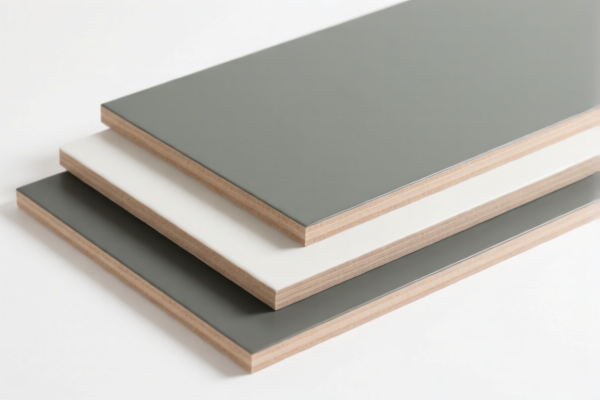
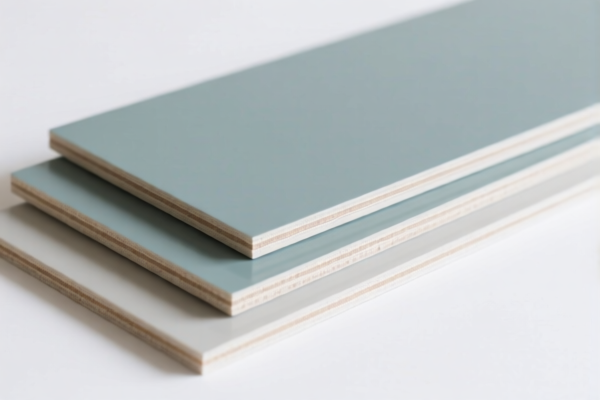
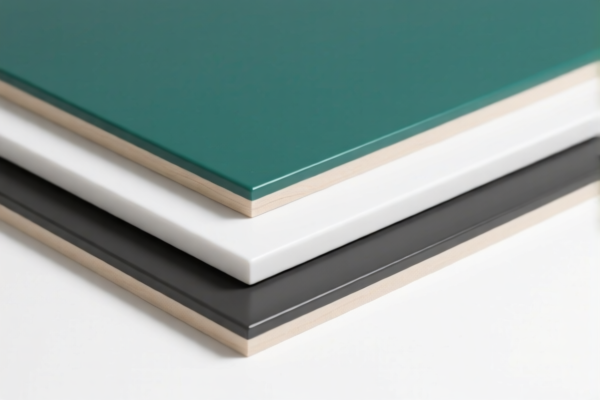
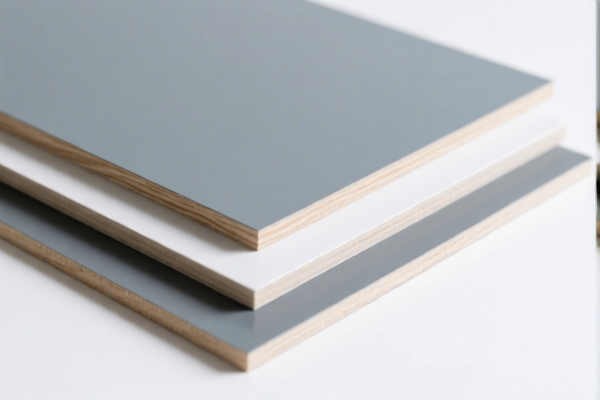
AI Analysis
🧪 Epoxy Resin Boards (其他环氧树脂板材)
🌐 HS Code Reference & Customs Clearance Guide | 2026 Latest Tariff Analysis | Professional Clearance Strategy
📌 I. Product Definition & Classification: What Exactly Are "Epoxy Resin Boards"?
Epoxy resin boards are rigid, flat panels made from epoxy resins, often reinforced with glass fiber, paper, or other substrates. They are widely used in the manufacturing of printed circuit boards (PCBs), electrical insulation, and decorative artificial stones.
In international trade, classification depends on the physical state and primary use of the board: * Raw Materials/Plates: Unprocessed or semi-processed plates intended for further manufacturing (e.g., PCB production). * Finished Articles: Processed into specific shapes or used as finished construction/decorative materials (e.g., artificial stone countertops).
⚠️ Key Distinction:
- If the board is essentially raw epoxy material or a simple plate for industrial processing → Classified under Chapter 39 (Plastics).
- If the board is processed into finished goods like artificial stone slabs or specific construction items → Classified under Chapter 68 (Mineral Products).
📦 II. HS Code Classification Details (2026 Latest Tariff Authority)
| HS Code | Product Description | Applicable Scenario | Tax Implication |
|---|---|---|---|
3907.30.00.00 |
Epoxy Resins in Primary Forms or as Plates; Related Products | Raw epoxy plates for PCB manufacturing, general industrial use | Total Tax: 41.1% |
3907.10.00.00 |
Direct Classification for Epoxy Resin | Matches direct epoxy resin categories; raw form | Total Tax: 41.5% |
3907.99.50.50 |
Epoxy & Other Polyesters Category | Broad category for epoxy and related polyester resins | Total Tax: 41.5% |
6810.19.50.00 |
Artificial Stone Articles | Epoxy boards used as decorative/artificial stone surfaces | Total Tax: 38.9% |
6810.99.00.80 |
Other Artificial Stone & Articles | General artificial stone products, non-specific use | Total Tax: 35.0% |
🔍 Key Reminder:
- Chapter 39 Codes apply to the resin material itself or plates for further industrial conversion.
- Chapter 68 Codes apply when the epoxy board is treated as a "mineral-like" artificial stone product, often for construction or decoration.
- Note: The tax rate drops significantly (from ~41.5% to 35%) when classified under Chapter 68 due to a lower base tariff.
💰 III. 2026 Latest Tariff Rate Breakdown (Including Surcharges & Policy Add-ons)
✅ Applicable Country: United States (US)
✅ Origin: China (CN)
✅ Effective Date: Includes imports from November 10, 2025 onwards
🎯 1. 3907.30.00.00 — Epoxy Resins in Primary Forms / Plates
| Item | Content |
|---|---|
| Base Tariff | 6.1% (ad valorem) |
| Section 301 Surcharge | +25.0% |
| 122-Clause Tariff | +10.0% |
| Total Effective Tax Rate | 41.1% |
| Calculation Method | CIF Value × 41.1% |
| De Minimis Exemption | ❌ Not Eligible |
📌 Explanation:
- Base 6.1%: Standard Most-Favored-Nation (MFN) duty for epoxy resins.
- Section 301 (+25%): Additional tariff on Chinese goods under US Trade Act Section 301.
- 122-Clause (+10%): Additional surcharge targeting specific Chinese-origin industrial materials.
- Total: 41.1% — This is a high-cost category. Precise classification is critical to avoid overpayment.
🎯 2. 3907.10.00.00 — Direct Epoxy Resin Classification
| Item | Content |
|---|---|
| Base Tariff | 6.5% |
| Section 301 Surcharge | +25.0% |
| 122-Clause Tariff | +10.0% |
| Total Effective Tax Rate | 41.5% |
| Calculation Method | CIF Value × 41.5% |
| De Minimis Exemption | ❌ Not Eligible |
📌 Note:
- Slightly higher base rate (6.5% vs 6.1%) makes this code more expensive than3907.30.00.00.
- Only use if the product strictly fits the "direct epoxy resin" definition in the tariff schedule.
🎯 3. 3907.99.50.50 — Epoxy & Other Polyesters
| Item | Content |
|---|---|
| Base Tariff | 6.5% |
| Section 301 Surcharge | +25.0% |
| 122-Clause Tariff | +10.0% |
| Total Effective Tax Rate | 41.5% |
| Calculation Method | CIF Value × 41.5% |
| De Minimis Exemption | ❌ Not Eligible |
📌 Note:
- Same total tax as3907.10.00.00.
- Use only if the product falls under "other epoxy and polyester" subheadings. Avoid unless necessary.
🎯 4. 6810.19.50.00 — Artificial Stone Articles
| Item | Content |
|---|---|
| Base Tariff | 3.9% |
| Section 301 Surcharge | +25.0% |
| 122-Clause Tariff | +10.0% |
| Total Effective Tax Rate | 38.9% |
| Calculation Method | CIF Value × 38.9% |
| De Minimis Exemption | ❌ Not Eligible |
📌 Analysis:
- Savings Alert: Base tariff is much lower (3.9% vs 6.5%).
- Total: 38.9% — This is 2.6% cheaper than Chapter 39 classifications.
- Requirement: Must prove the board is used/processed as "artificial stone" (e.g., for countertops, tiles, decorative panels).
🎯 5. 6810.99.00.80 — Other Artificial Stone & Articles
| Item | Content |
|---|---|
| Base Tariff | 0.0% |
| Section 301 Surcharge | +25.0% |
| > 122-Clause Tariff | +10.0% |
| Total Effective Tax Rate | 35.0% |
| Calculation Method | CIF Value × 35.0% |
| De Minimis Exemption | ❌ Not Eligible |
📌 Analysis:
- Best Option for Cost: Base tariff is 0%!
- Total: 35.0% — This is the lowest possible tax rate among all options, saving 6.5% compared to Chapter 39 codes.
- Requirement: Must classify as a generic "other" artificial stone article. Ideal for finished epoxy stone products not specifically listed elsewhere.
🛠️ IV. Customs Clearance Practical Advice (Real-World Pitfall Avoidance)
✅ 1. Required Documentation Checklist (Non-Negotiable)
| Document | Mandatory? | Purpose |
|---|---|---|
| ✅ Product Specification Sheet | ✔️ | Details composition, thickness, dimensions, intended use (PCB vs. Stone) |
| ✅ Certificate of Origin (CO) | ✔️ | Proves Chinese origin; critical for calculating 301 & 122-Clause duties |
| ✅ Commercial Invoice | ✔️ | Must clearly state "Epoxy Resin Board" or "Artificial Stone Slab" — no vague terms |
| ✅ Packing List | ✔️ | Shows weight, volume, and packaging type |
| ✅ Technical Data Sheet (TDS) | ✔️ | Helps Customs verify if it’s "primary form" (Ch 39) or "processed article" (Ch 68) |
| ✅ Usage Declaration | ✔️ | Explain end-use (e.g., "For PCB manufacturing" vs. "For kitchen countertops") |
✅ 2. Declaration Strategy (Key Mantra)
🔥 "Use Dictates Class: PCB = Ch39, Stone = Ch68. Lower Base = Lower Tax!"
| Scenario | Correct HS Code | Reason | Tax Rate |
|---|---|---|---|
| Raw epoxy plates for PCBs | 3907.30.00.00 |
Primary form, industrial input | 41.1% |
| Epoxy resin granules/powder | 3907.10.00.00 |
Direct resin classification | 41.5% |
| General epoxy/polyester mix | 3907.99.50.50 |
Broad polyester category | 41.5% |
| Epoxy-based countertop tiles | 6810.19.50.00 |
Classified as artificial stone | 38.9% |
| General epoxy stone slabs | 6810.99.00.80 |
Generic artificial stone article | 35.0% ✅ BEST |
📌 Critical Tip:
- If your product is a finished decorative stone panel, do NOT classify under Chapter 39.
- Classifying under6810.99.00.80can save you 6.5% in total duty.
- However, you must provide evidence (photos, specs) that it is used as "artificial stone," not raw resin.
✅ 3. Special Cases & Handling
| Situation | Recommendation |
|---|---|
| OEM Custom Boards | Provide customer design specs. If for PCBs, use Ch39. If for decor, use Ch68. |
| Mixed Materials | If reinforced with glass fiber, still likely Ch39 unless processed into stone. |
| Artificial Stone Claims | Must show non-mineral origin (epoxy) but functional equivalence to stone. Provide material safety data sheets (MSDS). |
| Small Samples | Not eligible for de minimis due to 301/122-Clause surcharges. Full duties apply regardless of value. |
🌍 V. Global Market Comparison (2026 Latest)
| Country/Region | Recommended HS Code | Tariff (China Origin) | Certification | Notes |
|---|---|---|---|---|
| 🇺🇸 USA | 6810.99.00.80 |
35.0% | None specific | Lowest rate. Avoid Ch39 unless necessary. |
| 🇨🇳 China | 3907.30.00.00 |
6.1% | CCC (if applicable) | No 301/122-Clause. Much lower duty. |
| 🇪🇺 EU | 3907.30.00.00 |
0% - 6% | REACH, RoHS | No additional surcharges. |
| 🇦🇺 Australia | 6810.19.50.00 |
5% - 10% | AS/NZS | Moderate duty, no extra surcharges. |
| 🇯🇵 Japan | 3907.30.00.00 |
0% - 5% | JIS | Low duty, focus on quality standards. |
📌 Conclusion:
- USA is the only market with heavy surcharges (301 + 122-Clause).
- Strategy for USA: Maximize use of Chapter 68 (6810.99.00.80) to achieve the 35.0% rate.
- Avoid Chapter 39 unless the product is unequivocally raw resin or PCB substrate.
📌 VI. Common Mistakes & Pitfalls (Lessons Learned)
❌ Mistake 1: Classifying finished epoxy stone countertops under 3907.30.00.00
👉 Consequence: You pay 41.1% instead of 35.0% → 6.1% extra cost on CIF value.
❌ Mistake 2: Using vague descriptions like "Plastic Board" on the invoice
👉 Consequence: Customs may default to highest tax rate or demand detailed specs → Delays + Penalties.
❌ Mistake 3: Ignoring the 122-Clause Tariff
👉 Consequence: Underpayment → Back taxes + Interest upon audit.
❌ Mistake 4: Claiming De Minimis Exemption for samples
👉 Consequence: Denied. All US imports from China with these HS codes are subject to full duties.
✅ Correct Approach:
"Epoxy Resin Artificial Stone Slab, Polished Finish, 2cm Thickness, for Countertop Use, Model XYZ, MSDS Included"
🎯 VII. Conclusion: Precise Classification Saves Money!
🎯 Remember the Mantra:
🔹 "PCBs go Ch39 (41%), Stone Goes Ch68 (35%)!"
🔹 "Lower Base Tariff = Lower Total Duty. Don't Pay 41.5% if you can pay 35.0%!"
📌 Pro Tip:
If your epoxy board is destined for non-US markets (EU, Asia, etc.), duties are significantly lower.
For US exports, always apply for a Customs Ruling (CBP Ruling) to confirm if your product qualifies as "Artificial Stone" (6810.99.00.80) to secure the 35.0% rate.
📣 Immediate Action:
📞 Consult a licensed customs broker
📄 Submit product specs + photos for HS Code confirmation
🚀 Optimize your supply chain by saving 6.5% in duties!
✨ Professional Clearance Starts with Accurate Classification!
💼 Every percentage point counts. Don't leave money on the table!
Customer Reviews
About HS Code Classification
The Harmonized System (HS) is an internationally standardized nomenclature developed by the World Customs Organization (WCO) to classify traded products. Over 200 countries use the HS system as the basis for customs tariffs, trade statistics, and import/export regulations.
Each HS code follows a hierarchical structure:
- Chapter (2 digits) — Broad category of goods (e.g., Chapter 84: Machinery and Mechanical Appliances)
- Heading (4 digits) — More specific grouping within the chapter
- Subheading (6 digits) — Internationally standardized breakdown, used by all WCO member countries
- National subdivisions (8-10 digits) — Country-specific extensions for further classification, such as US HTSUS 10-digit codes
Correct HS code classification is essential for smooth customs clearance, accurate duty payment, and compliance with trade regulations. Misclassification can lead to customs delays, overpayment of duties, or penalties.
When importing from CN to US, the applicable tariff rates may include:
- Most-Favored-Nation (MFN) rate — The standard duty rate applied to WTO members
- General rate — Applied to countries without trade agreements
- Trade remedy duties — Additional tariffs such as Section 301 (anti-dumping), Section 232 (national security), or countervailing duties
The information provided on this page is for reference purposes only. For official classification, please consult with your local customs authority or a licensed customs broker.