Other Fabric Robe for Children
CN → USProduct Images
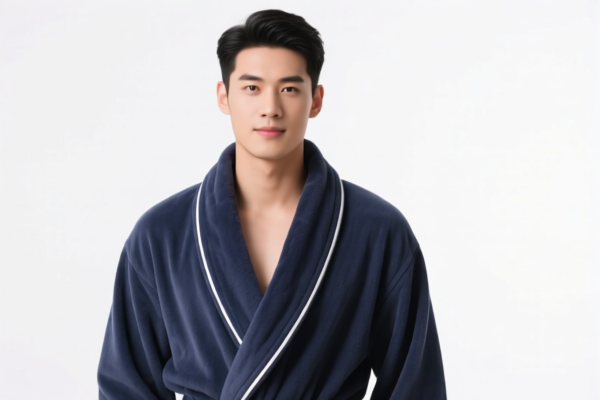
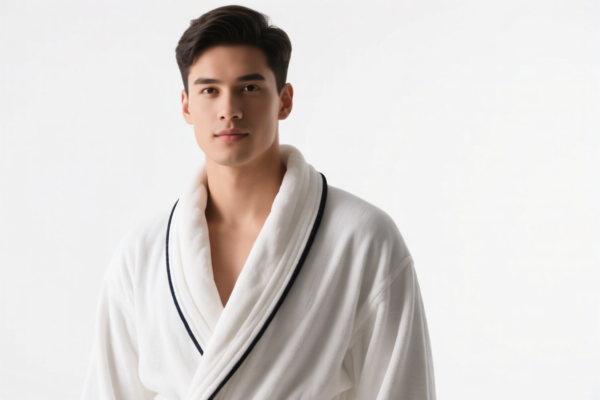
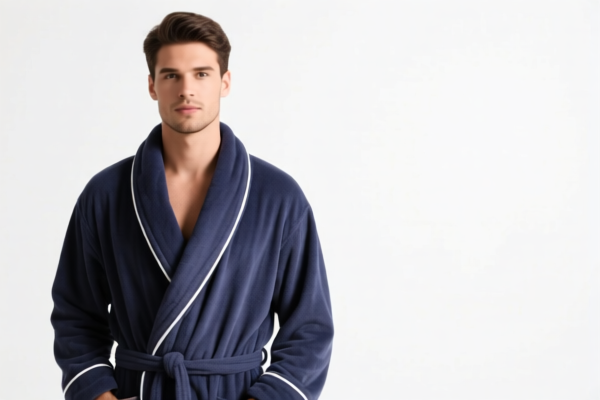
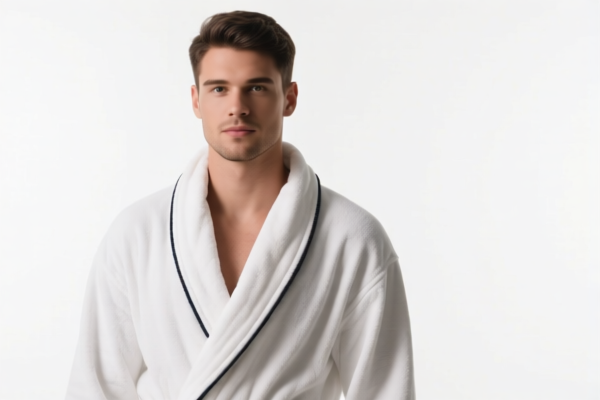
AI Analysis
🧸 Children’s Other Fabric Robes (Other Made-Up Clothing Accessories)
🌐 HS Code Reference & Clearance Guide | 2026 Latest Tariff Analysis | Professional Clearance Strategy
📌 I. Product Definition and Classification: What is an "Other Fabric Robe"?
"Other Fabric Robe for Children" is a broad category in international trade that primarily covers non-knit, non-elastic, and non-specialized fabric garments for children, specifically robes, dressing gowns, or similar loose-fitting outerwear that do not fall into specific categories like "Swimsuits," "Snowsuits," or "Satin Robes" (if specified otherwise).
In customs classification, the key distinction lies in the material composition (woven vs. knitted) and specific function. Since the query specifies "Fabric" (often implying woven textiles in general trade contexts, but can include knitted) and "Other," we must look at the General Rules of Interpretation (GRI) for Heading 61 (Knitted/Crocheted) or 62 (Non-Knitted/Woven).
⚠️ Key Distinction Point:
- If the robe is Knitted or Crocheted (e.g., Terry cloth bathrobes, fleece robes) → Classified under Chapter 61.
- If the robe is Woven (e.g., Cotton broadcloth, Polyester woven robes) → Classified under Chapter 62.
- Most common "Fabric Robes" for children (bathrobes, dressing gowns) are often Knitted (Terry/Fleece). If unspecified, 6108 or 6110 are the primary candidates. However, "Other Fabric" often implies Woven in strict tariff queries unless "Knitted" is stated. Let's assume the most common trade scenario: Woven Cotton/Polyester Robes or Knitted Terry Robes.📌 Clarification for this Guide:
Given the ambiguity, we will provide the two most likely HS Codes based on material:
1. Knitted/Crocheted Robes (Most common for children's bathrobes) → HS 6108.32
2. Woven/Other Fabric Robes (General "Other" category) → HS 6211.39
📦 II. HS Code Classification Details (2026 Latest Tariff Authority Match)
| HS Code | Product Description | Applicable Scenario | Material Type |
|---|---|---|---|
6108.32.00.00 |
Knitted or crocheted bathrobes, dressing gowns and similar articles, for girls/women | Children's terry cloth or fleece bathrobes | ✅ Knitted |
6108.39.00.00 |
Other knitted/crocheted garments for women/children (not bathrobes) | Non-bathrobe knitted robes, nightgowns | ✅ Knitted |
6211.39.00.00 |
Woven garments for girls/women, other (including robes, sarongs, etc.) | Woven cotton/polyester dressing gowns | ✅ Woven |
6211.49.00.00 |
Other women's/children's woven garments | General "Other" woven clothing | ✅ Woven |
6109.10.00.00 |
T-shirts, singlets, and other vests (Knitted) | If the robe is very light and vest-like | ✅ Knitted |
6110.20.00.00 |
Sweaters, pullovers, cardigans (Knitted) | If the robe is sweater-material | ✅ Knitted |
🔍 Critical Reminder:
- "Fabric" is not a standalone HS code. You must determine if it is Knitted (61) or Woven (62).
- Bathrobes are specifically mentioned in 6108.32 (if knitted) and 6209.22/29 (if for infants/toddlers). For older children (usually >2 years), they fall under 6108 or 6211.
- Do not misclassify as "Sleepwear" (6108.42/6108.49) if the item is clearly a robe.
- Age Group: If the child is < 2 years, consider Chapter 6109 or 6209. For > 2 years, 6108/6211 is standard.
💰 III. 2026 Latest Tariff Rate Detail (Including Surcharges, Policy Add-ons)
✅ Applicable Country: United States (US)
✅ Origin: China (CN)
✅ Effective Date: November 10, 2025 onwards (including subsequent imports)
🎯 1. 6108.32.00.00 —— Knitted Bathrobes (Most Common for Children)
| Item | Content |
|---|---|
| Base Rate | 16% (ad valorem) |
| USITC Surcharge | +25% (from USITC Footnote 9903.88.01) |
| IEEPA Surcharge | +10% (targeting China/HK products, from Nov 10, 2025) |
| Total Rate | 51% |
| Tax Calculation | CIF Value × 51% |
| De Minimis Eligibility | ❌ Not Eligible (deny_de_minimis) |
| Legal Path | IEEPA:9903.01.25 → IEEPA:9903.01.24 → USITC:6108.32.00.00 → FOOTNOTE:9903.88.01 |
📌 Explanation:
- 16% is the standard MFN tariff for knitted women’s/children’s robes.
- 25% is the Section 301 tariff.
- 10% is the IEEPA tariff.
- Total: 51%. This is a high-cost category for importers.
🎯 2. 6211.39.00.00 —— Woven Other Garments (Less Common, but Possible)
| Item | Content |
|---|---|
| Base Rate | 16% (ad valorem) |
| USITC Surcharge | +25% |
| IEEPA Surcharge | +10% |
| Total Rate | 51% |
| Tax Calculation | CIF Value × 51% |
| De Minimis Eligibility | ❌ Not Eligible (deny_de_minimis) |
| Legal Path | IEEPA:9903.01.25 → IEEPA:9903.01.24 → USITC:6211.39.00.00 → FOOTNOTE:9903.88.01 |
📌 Note:
- Woven children’s garments are taxed similarly to knitted ones in the US.
- Even if labeled "Other Fabric," if it is woven, it still faces 51% total duty.
🛠️ IV. Clearance Practical Advice (Battle-Tested Pitfall Avoidance Guide)
✅ 1. Required Documentation Checklist (All Mandatory)
| Document | Mandatory | Explanation |
|---|---|---|
| ✅ Product Spec Sheet | ✔️ | Material (e.g., 100% Cotton, Terry), Size, Age Group |
| ✅ Fabric Swatch/Test Report | ✔️ | To prove Knitted vs. Woven |
| ✅ Product Photos (Front/Back/Label) | ✔️ | Show it is a "Robe" (open front, belt, no buttons/zippers full closure) |
| ✅ Third-Party Lab Report | ✔️ | CPSIA Compliance (Lead, Phthalates), CDR (Chemical Disclosure Report) |
| ✅ Commercial Invoice | ✔️ | Clearly state "Children’s Knitted/Woven Robe" |
| ✅ Certificate of Origin (CO) | ✔️ | For potential preference claims (if from Vietnam/Mexico) |
| ✅ Packaging List | ✔️ | Show quantity, weight, and packaging type |
✅ 2. Declaration Tips (Key Mantra)
🔥 "Material First, Age Group Clear, Robe Not Sleepwear, Labeling Must Be Clear!"
| Scenario | Correct Declaration | Wrong Practice |
|---|---|---|
| Knitted Terry Bathrobe | 6108.32.00.00 |
Misdeclare as "Pyjamas" (6108.42) → 16% vs 51% (Still 51%, but audit risk!) |
| Woven Cotton Dressing Gown | 6211.39.00.00 |
Misdeclare as "Other" without detail → Delays |
| Infant (<2y) Robe | 6109.10.00.00 or 6209.22 |
Misdeclare as "Children" (>2y) → Incorrect duty |
| Mixed Material (e.g., Cotton/Poly) | Declare Cotton if >50% | Declare "Polyester" → Higher duty risk |
✅ 3. Special Case Handling
| Scenario | Handling Advice |
|---|---|
| OEM Custom Robes | Provide design files + fabric test reports to prove "Robe" structure |
| Robes with Accessories (Belt, Pocket) | Still classified as Robes (6108.32/6211.39), do not split parts |
| Robes for Medical Use | If for special medical needs, provide doctor’s note for potential exemption (rare) |
| Robes from Vietnam/Mexico | Eligible for IEEPA Exemption (0-5% total duty). Highly Recommended to source from these countries! |
🌍 V. Global Market Comparison (2026 Latest)
| Country/Region | Recommended HS Code | Tariff (China Origin) | Certification Required | Notes |
|---|---|---|---|---|
| 🇺🇸 USA | 6108.32.00.00 |
51% (Total) | CPSIA + CDR | High duty, strict labeling |
| 🇨🇳 China | 6108.32.00.00 |
5% | CCC (if applicable) | No surcharge |
| 🇪🇺 EU | 6108.32.00.00 |
12% | CE (if applicable) | REACH compliance needed |
| 🇦🇺 Australia | 6108.32.00.00 |
5% | GMark (if applicable) | No surcharge |
| 🇯🇵 Japan | 6108.32.00.00 |
14% | PSE (if applicable) | No surcharge |
📌 Conclusion:
- USA is the most expensive market due to 301 + IEEPA surcharges (51%).
- EU, AU, JP have moderate duties (5-14%) but strict chemical/environmental compliance (REACH, GMark).
- China domestic market is cheapest (5%).
📌 VI. Common Mistakes & Pitfalls (Blood Lessons)
❌ Mistake 1: Misclassifying Robes as Sleepwear (6108.42)
👉 Consequence: Same duty rate (51%), but audit risk if structure differs. Robes are open-front, sleepwear is closed.
❌ Mistake 2: Ignoring CPSIA Compliance for Children’s Products
👉 Consequence: Goods Detained or Destroyed by CBP. No exception!
❌ Mistake 3: Using "Fabric Robe" as a generic description without Material Specification
👉 Consequence: Customs cannot determine Knitted vs. Woven → Delay & Penalty.
❌ Mistake 4: Assuming De Minimis (Section 321) applies
👉 Consequence: Denied. Children’s clothing is explicitly excluded from de minimis if duty >0.
✅ Correct Declaration Example:
"Children’s Knitted Terry Cloth Bathrobe, 100% Cotton, Age 2-5 Years, with Belt, Model XYZ, CPSIA Compliant"
🎯 VII. Conclusion: Professional Classification Saves Money!
🎯 Remember the Mantra:
🔹 "Knitted = 6108.32, Woven = 6211.39, Both = 51% in USA!"
🔹 "CPSIA is Non-Negotiable for Kids' Products!"
🔹 "Source from Vietnam/Mexico for IEEPA Exemption!"
📌 Pro Tip:
If your robes are originating from Vietnam, Mexico, Thailand, or Malaysia, you can apply for IEEPA Exemption, reducing the total duty to 0-5%.
Recommendation: Seek Advance Ruling from CBP to confirm classification and exemption status.
📣 Take Action Now:
📞 Contact a Professional Customs Broker + Provide Fabric Swatch + Apply for CPSIA Certification
🚀 Let your children’s robes clear smoothly, reduce costs, and boost profits!
✨ Professional Clearance Starts with Accurate Classification!
💼 Every cent of your cost deserves precise calculation!
Customer Reviews
About HS Code Classification
The Harmonized System (HS) is an internationally standardized nomenclature developed by the World Customs Organization (WCO) to classify traded products. Over 200 countries use the HS system as the basis for customs tariffs, trade statistics, and import/export regulations.
Each HS code follows a hierarchical structure:
- Chapter (2 digits) — Broad category of goods (e.g., Chapter 84: Machinery and Mechanical Appliances)
- Heading (4 digits) — More specific grouping within the chapter
- Subheading (6 digits) — Internationally standardized breakdown, used by all WCO member countries
- National subdivisions (8-10 digits) — Country-specific extensions for further classification, such as US HTSUS 10-digit codes
Correct HS code classification is essential for smooth customs clearance, accurate duty payment, and compliance with trade regulations. Misclassification can lead to customs delays, overpayment of duties, or penalties.
When importing from CN to US, the applicable tariff rates may include:
- Most-Favored-Nation (MFN) rate — The standard duty rate applied to WTO members
- General rate — Applied to countries without trade agreements
- Trade remedy duties — Additional tariffs such as Section 301 (anti-dumping), Section 232 (national security), or countervailing duties
The information provided on this page is for reference purposes only. For official classification, please consult with your local customs authority or a licensed customs broker.