Other Forklift Rubber Used Tires
CN → US| HS Code | Tariff Rate | Origin | Destination | Doc |
|---|---|---|---|---|
| 4011908050 | 38.4% | CN | US | Official Doc |
| 4012198000 | 20.9% | CN | US | Official Doc |
| 4016996050 | 37.5% | CN | US | Official Doc |
| 4016993550 | 35.0% | CN | US | Official Doc |
| 4012194000 | 39.0% | CN | US | Official Doc |
Product Images
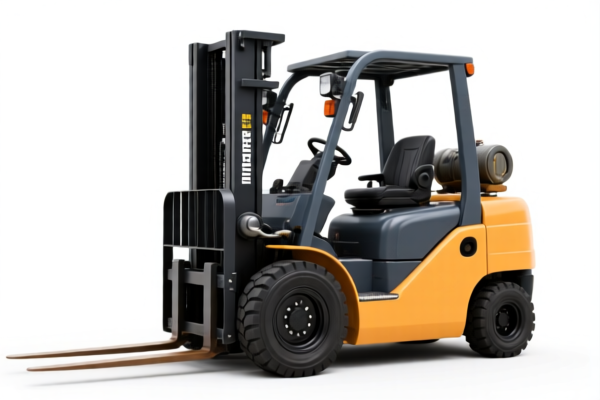
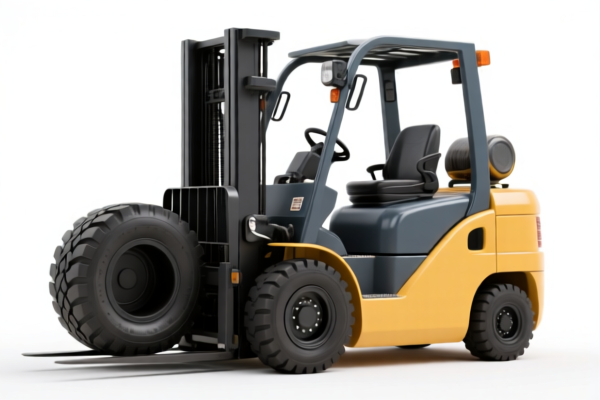
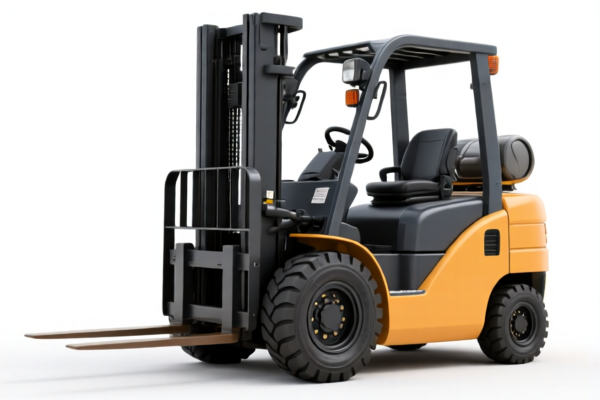
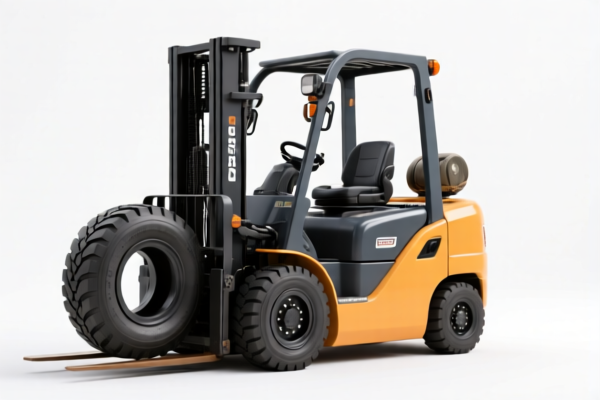
AI Analysis
🚜️ Other Forklift Rubber Used Tires (Solid & Cushion Tires)
🌐 HS Code Reference & Customs Clearance Guide | 2026 Updated Tariff Analysis | Professional Strategy for Heavy Duty Equipment Parts
📌 I. Product Definition & Classification: Do You Know Your Tire Type?
"Other Forklift Rubber Used Tires" typically refer to solid rubber tires or cushion tires used on forklifts, pallet jacks, and industrial trucks. These are distinct from pneumatic (air-filled) tires. In international trade, the critical distinction lies in whether the tire is pneumatic or non-pneumatic (solid/cushion) and whether it is new or recapped/refurbished.
⚠️ Key Distinction Point:
- If the tire is pneumatic (has an inner tube or tubeless air chamber) → It falls under Chapter 4011.
- If the tire is solid rubber or cushion (non-pneumatic, often used in warehouses) → It falls under Chapter 4016.
- Used/Recapped Status: The term "Used" in commercial descriptions often implies "Recapped" or "Retreaded." New solid tires are new; recapped ones are refurbished.
📦 II. HS Code Classification Details (2026 Latest Tariff Reference)
Based on the provided data, here are the matched HS Codes, explanations, and tax breakdowns.
| HS Code | Product Description | Match Summary | Total Tax Rate* |
|---|---|---|---|
4011.90.80.50 |
Other Pneumatic Rubber Tires (New/General) | Match Basis: The description includes "Rubber" material, and "Recapped Tires" fall under the category of rubber pneumatic tires. Matches the attribute "Other types of new rubber pneumatic tires" in classification explanations. No obvious conflict. | 38.4% |
4012.19.80.00 |
Recapped or Retreaded Pneumatic Tires | Match Success: The product name explicitly includes material ("Rubber") and form/use ("Recapped/Used Tires"), fully complying with the core elements of the classification explanation. | 20.9% |
4016.99.60.50 |
Other Vulcanized Rubber Articles (Non-Pneumatic) | Match Basis: "Rubber" matches "Vulcanized Rubber"; the "Other" category covers rubber articles other than motor vehicle mechanical parts. Forklift solid tires belong to this rubber article category, with no material conflict. | 37.5% |
4016.99.35.50 |
Other Vulcanized Rubber Articles (Specific Sub-category) | Match Basis: The product is a rubber article, meeting the "Vulcanized Rubber Articles" material requirement. Since the reference is "Other," and "Recapped Tires" are rubber processed products, there is no material conflict with "Other Natural Rubber Articles." | 35.0% |
4012.19.40.00 |
Recapped or Retreaded Pneumatic Tires (Specific) | Match Success: Material is "Rubber," form/use is "Recapped/Used Tires," fully complying with the definition of "Rubber Recapped Tires." | 39.0% |
🔍 Critical Clarification:
- If your "Used Forklift Tires" are Solid/Cushion Tires (No Air): They should theoretically fall under Chapter 4016 (Other articles of vulcanized rubber). The most likely candidates from your data are4016.99.60.50(37.5%) or4016.99.35.50(35.0%).
- If your "Used Forklift Tires" are Pneumatic (Air-filled, Retreaded): They fall under Chapter 4012. The most precise match for "Recapped/Used Pneumatic Tires" is4012.19.80.00(20.9%) or4012.19.40.00(39.0%).
- Note on "Used": Customs often treats "Used" as "Recapped/Retreaded" for tax purposes. If the tires are genuinely used (not retreaded) and cannot be sold as new/recapped, they might be classified as scrap or waste, but commercial imports usually assume they are Recapped/Retreaded.
💰 III. 2026 Latest Tariff Rate Breakdown (Including Surtaxes & Policy Add-ons)
✅ Applicable Country: United States (US)
✅ Country of Origin: China (CN)
✅ Effective Date: November 10, 2025 onwards (including subsequent imports)
🎯 1. 4012.19.80.00 – Recapped Pneumatic Tires (Best Rate for Pneumatic)
| Item | Details |
|---|---|
| Base Duty | 3.4% |
| Section 301 Surtax | +7.5% |
| IEEPA 122 Clause | +10% |
| Total Tax Rate | 20.9% |
| Calculation | CIF Value × 20.9% |
| De Minimis Exemption | ❌ Not Eligible (Deny De Minimis) |
| Legal Basis | Section 301: 4012.19.80.00 → IEEPA: 122 Clause |
📌 Explanation:
- This is the lowest total tax rate among the pneumatic recapped options.
- The 7.5% surtax is lower than the 25% applied to other categories, likely due to specific trade agreements or sub-category exemptions within Section 301.
🎯 2. 4016.99.35.50 – Other Vulcanized Rubber Articles (Best Rate for Solid/Non-Pneumatic)
| Item | Details |
|---|---|
| Base Duty | 0.0% |
| Section 301 Surtax | +25.0% |
| IEEPA 122 Clause | +10% |
| Total Tax Rate | 35.0% |
| Calculation | CIF Value × 35.0% |
| De Minimis Exemption | ❌ Not Eligible |
| Legal Basis | Section 301: 4016.99.35.50 → IEEPA: 122 Clause |
📌 Explanation:
- If your forklift tires are Solid Rubber/Cushion (non-pneumatic), this code offers a 0% base duty, but the 25% Section 301 surtax applies, resulting in a 35% total rate.
- This is competitive compared to4016.99.60.50(37.5%).
🎯 3. 4016.99.60.50 – Other Vulcanized Rubber Articles (General)
| Item | Details |
|---|---|
| Base Duty | 2.5% |
| Section 301 Surtax | +25.0% |
| IEEPA 122 Clause | +10% |
| Total Tax Rate | 37.5% |
| Calculation | CIF Value × 37.5% |
| De Minimis Exemption | ❌ Not Eligible |
📌 Explanation:
- Similar to above, but with a 2.5% base duty, making the total rate higher than4016.99.35.50.
🎯 4. 4011.90.80.50 – Other Pneumatic Tires (New/General)
| Item | Details |
|---|---|
| Base Duty | 3.4% |
| Section 301 Surtax | +25.0% |
| IEEPA 122 Clause | +10% |
| Total Tax Rate | 38.4% |
| Calculation | CIF Value × 38.4% |
| De Minimis Exemption | ❌ Not Eligible |
🎯 5. 4012.19.40.00 – Recapped Pneumatic Tires (Specific)
| Item | Details |
|---|---|
| Base Duty | 4.0% |
| Section 301 Surtax | +25.0% |
| IEEPA 122 Clause | +10% |
| Total Tax Rate | 39.0% |
| Calculation | CIF Value × 39.0% |
| De Minimis Exemption | ❌ Not Eligible |
🛠️ IV. Customs Clearance Practical Advice (Actionable Pitfall Avoidance)
✅ 1. Prepare Documentation Checklist (Mandatory)
| Document | Required | Notes |
|---|---|---|
| ✅ Product Specification Sheet | ✔️ | Must specify: Pneumatic vs. Solid, Size (e.g., 7.00-12), Load Rating, Material (Vulcanized Rubber). |
| ✅ Photos (Including Tread Pattern) | ✔️ | Clear images to prove it is Recapped/Used and not new. For solid tires, show the flat cushion bottom. |
| ✅ Commercial Invoice | ✔️ | Description must match HS Code logic: e.g., "Recapped Pneumatic Rubber Tires for Forklifts" or "Solid Vulcanized Rubber Tires." |
| ✅ Country of Origin Certificate | ✔️ | Essential for applying surtax rates. |
| ✅ Packing List | ✔️ | Clearly state quantity and weight. |
✅ 2. Declaration Strategy (Key Tips)
🔥 "Clarify Pneumatic vs. Solid, Prove Recapped Status, Avoid 'Used' Ambiguity!"
| Scenario | Correct Declaration | Wrong Practice |
|---|---|---|
| Pneumatic, Recapped | Use 4012.19.80.00 (20.9%) |
Declare as "New Tires" → Wrong code, penalty |
| Solid Rubber (Cushion) | Use 4016.99.35.50 (35.0%) |
Declare as "Pneumatic" → Wrong code, penalty |
| Genuine Used (Scrap) | Declare as "Rubber Waste/Scrap" | Declare as "Tires for Use" → Customs rejection |
| Mixed Shipment | Separate Pneumatic and Solid in invoice | Mixed declaration → Customs hold |
📌 Important Note:
- The term "Used" in commercial English can be ambiguous. Customs prefers "Recapped" or "Retreaded" for pneumatic tires that have been re-surfaced.
- For Solid Tires, they are rarely "recapped"; they are just "Used" or "Second-hand." If they are worn, they may be classified as waste. If they have usable life, they are "Used Rubber Articles." Ensure you have proof of condition (e.g., "80% Tread Life Remaining" for solid tires).
✅ 3. Special Cases
| Case | Handling Advice |
|---|---|
| OEM Replacement Tires | If new, use 4011.xxxx codes. Higher base duty but no "recapped" verification needed. |
| Tires with Steel Belts | Confirm if the rubber covers the steel. If so, it's still rubber articles. |
| Tires for Export Re-import | If originally exported from US and re-imported, you may qualify for duty drawback. |
🌍 V. Global Market Comparison (2026)
| Country/Region | Recommended HS Code | Estimated Duty | Certification | Notes |
|---|---|---|---|---|
| 🇺🇸 USA | 4012.19.80.00 (Pneumatic Recapped) or 4016.99.35.50 (Solid) |
20.9% or 35.0% | None specific | High surtax applies. De Minimis excluded. |
| 🇨🇳 China | 4012.19.80.00 or 4016.99.90.00 |
5-10% | None | Lower base duty, no Section 301 surtax. |
| 🇪🇺 EU | 4012.19.00 or 4016.99 |
0-3% | CE (if applicable) | No surtax. Easy clearance. |
| 🇦🇺 Australia | 4012.19.00 or 4016.99 |
5-10% | RCM | No surtax. |
📌 Conclusion:
- USA is the most challenging market due to Section 301 and IEEPA surtaxes.
- Pneumatic Recapped Tires (4012.19.80.00) have the lowest US duty (20.9%) among the provided options.
- Solid Tires (4016.99.35.50) have a 35.0% rate, which is higher than pneumatic recapped but lower than new pneumatic tires.
📌 VI. Common Errors & Pitfall Avoidance
❌ Error 1: Declaring "Used Tires" as "New Tires" to avoid surtax.
👉 Consequence: Customs detects tread wear or lack of new packaging → Penalty + Back Duties + Seizure.
❌ Error 2: Confusing Pneumatic with Solid Tires.
👉 Consequence: Wrong HS Code → Delay in Clearance + Additional Inspections.
❌ Error 3: Ignoring the "122 Clause" IEEPA surtax.
👉 Consequence: Underpayment by 10% → Interest + Penalties.
❌ Error 4: Using vague descriptions like "Forklift Parts."
👉 Consequence: Customs cannot determine HS Code → Manual Assessment + High Duty Estimate.
✅ Correct Practice:
"Recapped Pneumatic Rubber Tires, Size 7.00-12, For Forklifts, Origin China"
OR
"Solid Vulcanized Rubber Cushion Tires, For Warehouse Forklifts, Origin China"
🎯 VII. Conclusion: Professional Declaration, Cost Savings
🎯 Key Takeaway:
🔹 For Pneumatic Recapped Tires: Aim for
4012.19.80.00(20.9%).
🔹 For Solid/Cushion Tires: Aim for4016.99.35.50(35.0%).
🔹 Always Prove "Recapped" or "Solid" Status with photos and specs.
🔹 De Minimis (De Minimis Exemption) Does NOT Apply to these goods from China to the US.
📌 Pro Tip:
If you are importing large volumes, consider applying for a Customs Ruling from CBP to confirm the HS Code classification before shipment. This provides legal certainty and avoids costly delays.
📣 Immediate Action:
📞 Consult with a licensed US Customs Broker.
📄 Provide clear photos of the tire tread and sidewall.
🚀 Ensure your commercial invoice explicitly states "Recapped" or "Solid" to match the HS Code.
✨ Precision in Classification, Savings in Duties!
💼 Your Supply Chain Efficiency Starts Here!
Customer Reviews
About HS Code Classification
The Harmonized System (HS) is an internationally standardized nomenclature developed by the World Customs Organization (WCO) to classify traded products. Over 200 countries use the HS system as the basis for customs tariffs, trade statistics, and import/export regulations.
Each HS code follows a hierarchical structure:
- Chapter (2 digits) — Broad category of goods (e.g., Chapter 84: Machinery and Mechanical Appliances)
- Heading (4 digits) — More specific grouping within the chapter
- Subheading (6 digits) — Internationally standardized breakdown, used by all WCO member countries
- National subdivisions (8-10 digits) — Country-specific extensions for further classification, such as US HTSUS 10-digit codes
Correct HS code classification is essential for smooth customs clearance, accurate duty payment, and compliance with trade regulations. Misclassification can lead to customs delays, overpayment of duties, or penalties.
When importing from CN to US, the applicable tariff rates may include:
- Most-Favored-Nation (MFN) rate — The standard duty rate applied to WTO members
- General rate — Applied to countries without trade agreements
- Trade remedy duties — Additional tariffs such as Section 301 (anti-dumping), Section 232 (national security), or countervailing duties
The information provided on this page is for reference purposes only. For official classification, please consult with your local customs authority or a licensed customs broker.