Other Fur Clothing Accessories
CN → US| HS Code | Tariff Rate | Origin | Destination | Doc |
|---|---|---|---|---|
| 4303900000 | 35.0% | CN | US | Official Doc |
| 6214200000 | 24.2% | CN | US | Official Doc |
| 6214900090 | 28.8% | CN | US | Official Doc |
| 6117101000 | 27.1% | CN | US | Official Doc |
| 6117808720 | 15.0% | CN | US | Official Doc |
Product Images
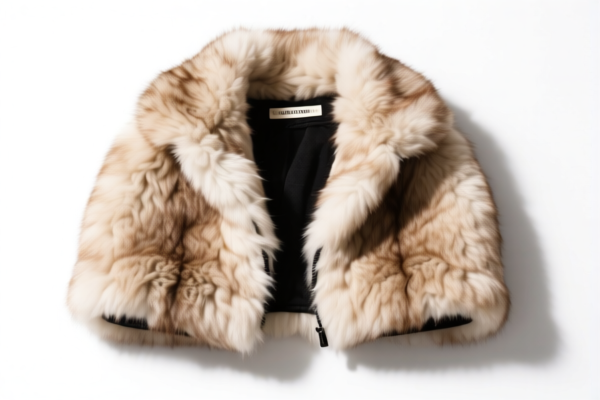
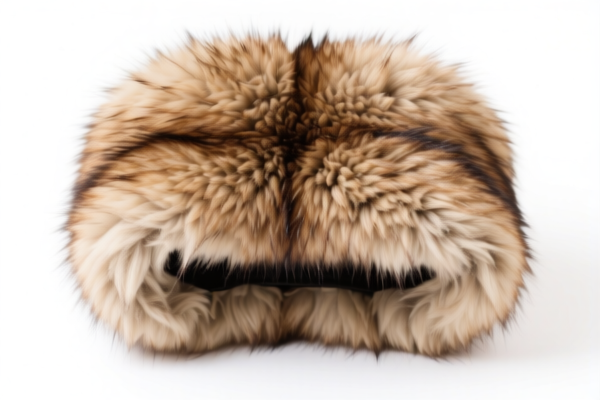
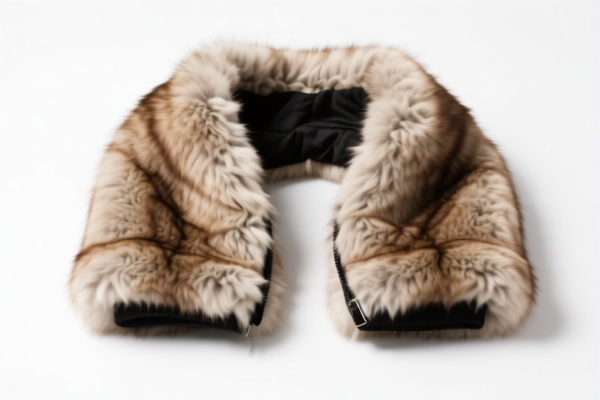
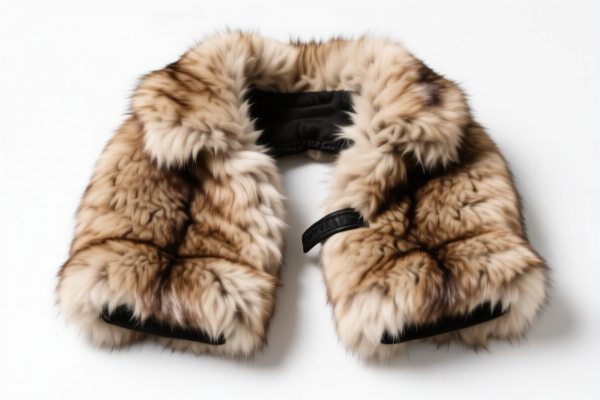
AI Analysis
🧥 Other Fur Clothing Accessories (Animal Hair Accessories)
🌐 HS Code Reference & Customs Clearance Guide | 2026 Latest Tariff Analysis | Professional Clearance Strategy
📌 I. Product Definition: What Are "Other Fur Clothing Accessories"?
"Other fur clothing accessories" refer to items made from animal hair or fur that are not complete garments (like coats or jackets) but serve as functional or decorative components of clothing. In international trade, these are primarily categorized into two groups:
1. Scarves, Shawls, and Wraps: Long pieces of fabric used around the neck or shoulders, often made from wool, cashmere, or other animal hairs. 2. Clothing Accessories: Non-garment items such as hats, gloves, belts, trimmings, or other attachments made from fur or animal hair.
⚠️ Key Distinction:
- If the item is a complete garment (e.g., a fur coat) → It falls under 4303.
- If the item is a scarf, shawl, or accessory made of animal hair → It falls under Chapter 61 (Knitted/Crocheted) or Chapter 62 (Non-Knitted/Non-Crocheted), depending on the manufacturing method.
- Crucial Note: Many "fur accessories" are misclassified as "garments" by mistake, leading to higher taxes.
📦 II. HS Code Classification Details (2026 Latest Tariff Authority Comparison)
| HS Code | Product Description | Application Scenario | Manufacturing Method |
|---|---|---|---|
4303.90.00.00 |
Articles of fur skins and other materials (Other) | Complete fur garments not elsewhere specified (e.g., fur vests, fur collars if considered part of a garment) | Tanned/Sewn Fur |
6214.20.00.00 |
Scarves, shawls, wrapping cloths, etc. (Of wool or fine animal hair) | Wool or cashmere scarves, shawls, and similar triangular or rectangular wraps | Non-Knitted (Woven/Needlefelted) |
6214.90.00.90 |
Scarves, shawls, etc. (Of other textile materials) | Accessories made from mixed materials or less common animal hairs not specified in 6214.20 | Non-Knitted |
6117.10.10.00 |
Accessories (Knitted/Crocheted) of wool or fine animal hair | Knitted hats, gloves, scarves made of wool/cashmere | Knitted/Crocheted |
6117.80.87.20 |
Other accessories (Knitted/Crocheted) | Other knitted fur accessories (e.g., belts, hair accessories, trimmings) | Knitted/Crocheted |
🔍 Key Reminder:
- "Fur Skins" (4303) vs. "Textile Hair Products" (61/62):
- 4303 applies to products made from processed animal skins/furs (e.g., mink, fox, rabbit pelts sewn together).
- 61/62 applies to products made from animal hair fibers spun into yarn and knitted/woven (e.g., wool scarves, cashmere shawls).
- Do not mix these categories. Misclassifying a wool scarf as "fur skin" will result in a 45% tax rate instead of ~24%.
💰 III. 2026 Latest Tariff Rate Details (Including Surtaxes & Policy Add-ons)
✅ Applicable Country: United States (US)
✅ Origin: China (CN)
✅ Effective Date: 2025/2026 (Includes subsequent imports)
🎯 1. 4303.90.00.00 —— Articles of Fur Skins (Other)
| Item | Details |
|---|---|
| Base Duty | 0% (ad valorem) |
| Section 301 Surcharge | +25% |
| IEEPA Surcharge | +10% (For China/Hong Kong products) |
| Total Tax Rate | 35.0% |
| Tax Calculation | CIF Value × 35% |
| De Minimis Eligibility | ❌ Not Eligible (deny_de_minimis) |
| Legal Basis Path | IEEPA:9903.01.25 → IEEPA:9903.01.24 → USITC:4303.90.00.00 → FOOTNOTE:9903.88.01 |
📌 Explanation:
- This code applies to real fur garments or accessories made from pelts/skins.
- The 35% total rate is significant. Many importers confuse this with textile scarves, but if it’s made from animal skin, it triggers the higher 0% base + 25% Section 301 + 10% IEEPA.
🎯 2. 6214.20.00.00 —— Scarves, Shawls (Of Wool/Fine Animal Hair)
| Item | Details |
|---|---|
| Base Duty | 6.7% |
| Section 301 Surcharge | +7.5% |
| IEEPA Surcharge | +10% |
| Total Tax Rate | 24.2% |
| Tax Calculation | CIF Value × 24.2% |
| De Minimis Eligibility | ❌ Not Eligible (deny_de_minimis) |
| Legal Basis Path | IEEPA:9903.01.25 → IEEPA:9903.01.24 → USITC:6214.20.00.00 → FOOTNOTE:9903.88.01 |
📌 Note:
- This is for wool or fine animal hair (cashmere, mohair, alpaca) scarves and shawls.
- Lower than fur skins (35%) because the base duty is higher (6.7%) but the Section 301 rate is lower (7.5% vs. 25%).
- Common Scenario: A 100% cashmere scarf is misclassified as "fur skin" (4303) → Overpaid by 10.8%.
🎯 3. 6214.90.00.90 —— Scarves, Shawls (Other Textile Materials)
| Item | Details |
|---|---|
| Base Duty | 11.3% |
| Section 301 Surcharge | +7.5% |
| IEEPA Surcharge | +10% |
| Total Tax Rate | 28.8% |
| Tax Calculation | CIF Value × 28.8% |
| De Minimis Eligibility | ❌ Not Eligible (deny_de_minimis) |
| Legal Basis Path | IEEPA:9903.01.25 → IEEPA:9903.01.24 → USITC:6214.90.00.90 → FOOTNOTE:9903.88.01 |
📌 Note:
- Applies to scarves/shawls made from other textile materials (not wool/fine animal hair).
- Higher base duty (11.3%) but lower Section 301 (7.5%).
- Use Case: Mixed-material scarves or those made from synthetic-animal-hair blends not covered in 6214.20.
🎯 4. 6117.10.10.00 —— Accessories (Knitted/Crocheted) of Wool/Fine Animal Hair
| Item | Details |
|---|---|
| Base Duty | 9.6% |
| Section 301 Surcharge | +7.5% |
| IEEPA Surcharge | +10% |
| Total Tax Rate | 27.1% |
| Tax Calculation | CIF Value × 27.1% |
| De Minimis Eligibility | ❌ Not Eligible (deny_de_minimis) |
| Legal Basis Path | IEEPA:9903.01.25 → IEEPA:9903.01.24 → USITC:6117.10.10.00 → FOOTNOTE:9903.88.01 |
📌 Note:
- For knitted or crocheted accessories like wool hats, gloves, or scarves.
- Key Difference: If the item is knitted, use Chapter 61; if woven/needlefelted, use Chapter 62.
- Example: A knitted wool hat →6117.10.10.00(27.1%). A woven wool scarf →6214.20.00.00(24.2%).
🎯 5. 6117.80.87.20 —— Other Accessories (Knitted/Crocheted)
| Item | Details |
|---|---|
| Base Duty | 5.0% |
| Section 301 Surcharge | 0.0% |
| IEEPA Surcharge | +10% |
| Total Tax Rate | 15.0% |
| Tax Calculation | CIF Value × 15.0% |
| De Minimis Eligibility | ❌ Not Eligible (deny_de_minimis) |
| Legal Basis Path | IEEPA:9903.01.25 → IEEPA:9903.01.24 → USITC:6117.80.87.20 → FOOTNOTE:9903.88.01 |
📌 Note:
- Lowest Tax Rate (15%)! Applies to other knitted/crocheted accessories not specified in 6117.10.
- Examples: Knitted fur trimmings, hair accessories, belts, or other small knitted items made of animal hair.
- Strategy: If your accessory can be classified here (e.g., a knitted belt or trim), it saves 20% tax compared to fur skins.
🛠️ IV. Customs Clearance Practical Advice (Real-World Pitfall Guide)
✅ 1. Required Documentation Checklist
| Document | Required | Description |
|---|---|---|
| ✅ Product Specification Sheet | ✔️ | Material composition (e.g., 100% Cashmere, Mink Fur), dimensions, weight |
| ✅ Material Test Report | ✔️ | To prove if it’s "wool/fine animal hair" vs. "fur skin" (critical for 4303 vs. 61/62) |
| ✅ Product Photos | ✔️ | Clear images showing texture, knitting pattern, or fur pile |
| ✅ Commercial Invoice | ✔️ | Must state "Accessory" or "Scarf," not "Garment" if applicable |
| ✅ Packing List | ✔️ | Ensure items are grouped correctly (e.g., scarves together, not mixed with coats) |
| ✅ Certification | ✔️ | If applicable, OEKO-TEX, Woolmark, or Fur Free labels |
✅ 2. Declaration Tips (Key Mantras)
🔥 "Material Matters: Skin is 35%, Wool is 24%, Knitted Accessory is 15%!"
| Scenario | Correct HS Code | Wrong Code | Consequence |
|---|---|---|---|
| Cashmere Scarf | 6214.20.00.00 (24.2%) |
4303.90.00.00 (35%) |
Overpay by 10.8% |
| Knitted Wool Hat | 6117.10.10.00 (27.1%) |
6214.20.00.00 (24.2%) |
Slight Overpay (but acceptable if misclassified) |
| Fur Collar (Skin) | 4303.90.00.00 (35%) |
6117.80.87.20 (15%) |
Underpay → Penalty + Back Taxes! |
| Knitted Fur Trim | 6117.80.87.20 (15%) |
4303.90.00.00 (35%) |
Overpay by 20% |
📌 Critical Advice:
- "Fur Skin" (4303) = Pelts sewn together. High tax (35%).
- "Animal Hair" (61/62) = Yarn spun and knitted/woven. Lower tax (15%–28.8%).
- Always provide material tests to prove it’s not "fur skin" if you claim a lower rate.
✅ 3. Special Cases Handling
| Scenario | Recommendation |
|---|---|
| Mixed Material Scarf (e.g., 50% Wool, 50% Synthetic) | Check if wool content >50%. If yes, 6214.20.00.00 (24.2%). If no, 6214.90.00.90 (28.8%). |
| Knitted Fur-like Accessory (e.g., faux fur knitted item) | Classify as textile accessory (6117.80.87.20), NOT fur skin. Rate: 15%. |
| Fur Trim on a Garment | If sold separately, it’s an accessory. If sewn to a coat, it’s part of the garment (4303.90.00.00). |
| De Minimis (Section 321) | ❌ Not Applicable. All these HS codes are deny_de_minimis. Must file formal entry. |
🌍 V. Global Market Comparison (2026 Latest)
| Country/Region | Recommended HS Code | Tax Rate | Certification | Note |
|---|---|---|---|---|
| 🇺🇸 US | 6117.80.87.20 |
15% | OEKO-TEX | Lowest rate for knitted accessories |
| 🇺🇸 US | 4303.90.00.00 |
35% | None | High tax for real fur skins |
| 🇨🇳 China | 6214.20.00.00 |
5%–10% | CCC (if applicable) | No Section 301/IEEPA |
| 🇪🇺 EU | 6214.20.00.00 |
0%–12% | CE/Ecolabel | Varies by country |
| 🇦🇺 Australia | 6214.20.00.00 |
5% | None | Low duty |
📌 Conclusion:
- US Tariffs are Highly Discriminatory based on material and manufacturing.
- Knitted accessories (6117.80.87.20) offer the best tax advantage (15%).
- Real fur skins (4303) are penalized at 35%.
- Wool scarves (6214.20.00.00) are moderate at 24.2%.
📌 VI. Common Mistakes & Pitfall Guide (Lessons Learned)
❌ Mistake 1: Calling a wool scarf a "fur accessory"
👉 Result: Customs may classify it as 4303.90.00.00 → 35% tax instead of 24.2%.
👉 Fix: Declare as "Wool Scarf, Knitted/Woven" with material test.
❌ Mistake 2: Calling a knitted fur trim a "garment"
👉 Result: Classified as 4303.90.00.00 → 35% tax.
👉 Fix: Declare as "Knitted Accessory" → 6117.80.87.20 → 15% tax.
❌ Mistake 3: Ignoring Section 321 (De Minimis)
👉 Result: Trying to ship under $800 to avoid taxes.
👉 Fix: All these HS codes are denied de minimis. Must file formal entry.
❌ Mistake 4: Confusing Knitted (61) vs. Woven (62)
👉 Result: Wrong HS code, potential audit.
👉 Fix: Check manufacturing process. Knitted = Loop structure. Woven = Interlaced threads.
✅ Correct Declaration Example:
"Knitted Wool Accessory, Hat, 100% Wool, Model XYZ, OEKO-TEX Certified, HS Code: 6117.10.10.00"
🎯 VII. Conclusion: Professional Classification Saves Money!
🎯 Remember the Mantra:
🔹 "Skin is 35%, Wool Scarf is 24%, Knitted Accessory is 15%!"
🔹 "Material Test is Key, De Minimis is No-Go, Declare Accurately, Save Thousands!"
📌 Pro Tip:
If your product is a knitted accessory made of animal hair, always aim for 6117.80.87.20 (15% tax). It’s the most cost-effective classification for "other fur clothing accessories."
For wool scarves, use 6214.20.00.00 (24.2%).
For real fur skins, prepare for 35% tax under 4303.90.00.00.
📣 Immediate Action:
📞 Contact a Customs Broker + Provide Material Test + Apply for HS Code Advance Ruling
🚀 Let your accessories clear customs smoothly, efficiently, and profitably!
✨ Professional Customs Clearance Starts with Accurate Classification!
💼 Your Every Cent of Cost Deserves Precise Calculation!
Customer Reviews
About HS Code Classification
The Harmonized System (HS) is an internationally standardized nomenclature developed by the World Customs Organization (WCO) to classify traded products. Over 200 countries use the HS system as the basis for customs tariffs, trade statistics, and import/export regulations.
Each HS code follows a hierarchical structure:
- Chapter (2 digits) — Broad category of goods (e.g., Chapter 84: Machinery and Mechanical Appliances)
- Heading (4 digits) — More specific grouping within the chapter
- Subheading (6 digits) — Internationally standardized breakdown, used by all WCO member countries
- National subdivisions (8-10 digits) — Country-specific extensions for further classification, such as US HTSUS 10-digit codes
Correct HS code classification is essential for smooth customs clearance, accurate duty payment, and compliance with trade regulations. Misclassification can lead to customs delays, overpayment of duties, or penalties.
When importing from CN to US, the applicable tariff rates may include:
- Most-Favored-Nation (MFN) rate — The standard duty rate applied to WTO members
- General rate — Applied to countries without trade agreements
- Trade remedy duties — Additional tariffs such as Section 301 (anti-dumping), Section 232 (national security), or countervailing duties
The information provided on this page is for reference purposes only. For official classification, please consult with your local customs authority or a licensed customs broker.