Other Garment Accessories
CN → US| HS Code | Tariff Rate | Origin | Destination | Doc |
|---|---|---|---|---|
| 4203406000 | 35.0% | CN | US | Official Doc |
| 6117809570 | 32.1% | CN | US | Official Doc |
| 6217108500 | 24.6% | CN | US | Official Doc |
| 6217109550 | 32.1% | CN | US | Official Doc |
| 7117909000 | 28.5% | CN | US | Official Doc |
Product Images
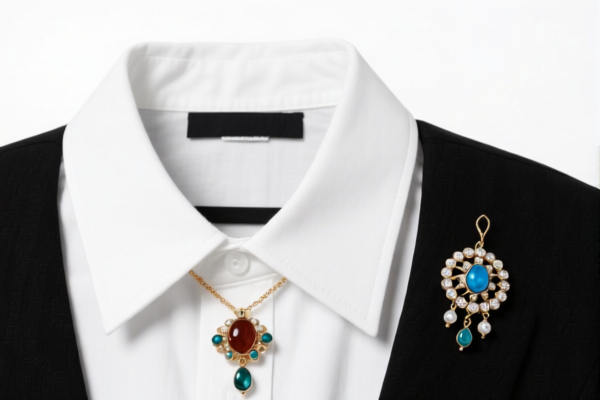
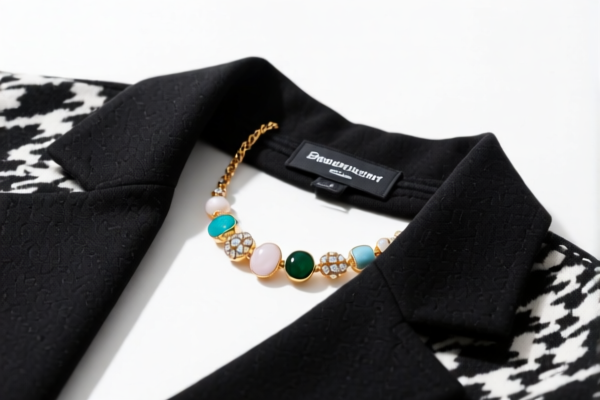
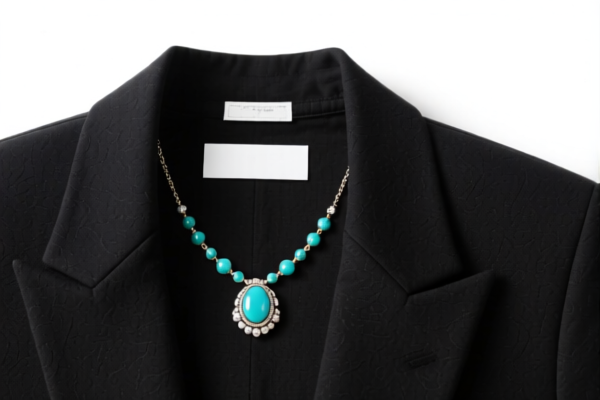
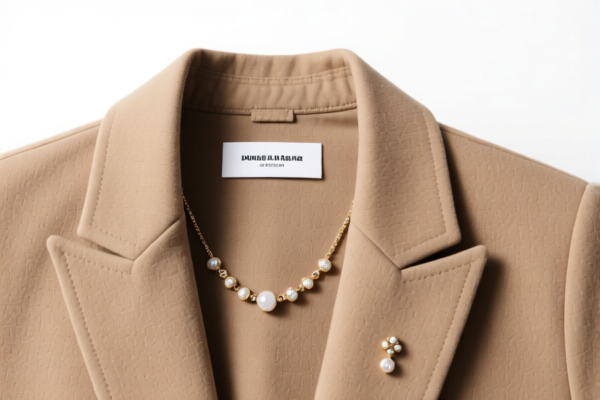
AI Analysis
👗 Other Garment Accessories: The Ultimate HS Code Classification & Customs Clearance Guide (2026 Update)
🌐 HS Code Reference & Clearance Guide | 2026 Latest Tariff Analysis | Professional Entry Strategy
📌 I. Product Definition & Classification: Do You Truly Understand "Other Garment Accessories"?
"Other Garment Accessories" is a broad, catch-all category in international trade, referring to items used to complete, decorate, or functionally enhance garments (clothing). These are NOT the main fabric panels, but rather the functional or aesthetic elements attached to them.
In customs terminology, this category often serves as a "Residual" or "Fallback" classification when specific material-based codes (like leather, wool, or silk) do not apply. Common examples include: * Non-metallic trims: Plastic buttons, zippers, lace, embroidery patches, drawstrings, elastic bands. * Textile accessories: Fabric belts, woven labels, non-woven interfacing, decorative ribbons. * Synthetic accessories: Plastic buckles, Velcro strips, non-metallic hooks.
⚠️ Key Distinction Point:
- If the accessory is made of metal (e.g., metal buckles, metal eyelets), it may fall under Chapter 71 or 83.
- If it is made of leather, it falls under Chapter 42.
- "Other Garment Accessories" typically refers to textile, plastic, or mixed-material items that do not fit into specific primary chapters.
📦 II. HS Code Classification Details (2026 Latest Tariff Authority Comparison)
Below are the 5 HS Codes identified for this product category, based on the provided data. Note that these are "Residual/Catch-all" codes for items that don't fit more specific material descriptions.
| HS Code | Product Description | Application Scenario | Material/Feature |
|---|---|---|---|
4203.40.60.00 |
Other made-up clothing accessories | Residual category for leather-like or unspecified material accessories | No specific material conflict; "Catch-all" for Chapter 42 |
6117.80.95.70 |
Other made-up clothing accessories (Knitted/Crocheted) | Knitted/crocheted accessories not specified elsewhere | Textile-based, no material conflict |
6217.10.85.00 |
Other made-up clothing accessories (Woven) | Woven accessories with matching function/form; Residual category | Woven textile, no material conflict |
6217.10.95.50 |
Other made-up clothing accessories (Woven) | Woven accessories; Other residual category | Woven textile, no material conflict |
7117.90.90.00 |
Other imitation jewelry/accessories | Accessories classified under jewelry/chapter 71 if applicable | No specific material description; Residual category for Chapter 71 |
🔍 Critical Reminder:
-4203.40.60.00is used when the accessory is made of leather or composition leather (Chapter 42).
-6117.80.95.70is for knitted/crocheted textile accessories (Chapter 61).
-6217.10.85.00and6217.10.95.50are for woven textile accessories (Chapter 62). The difference between 85.00 and 95.50 is often based on specific national sub-classifications or minor functional differences.
-7117.90.90.00applies if the accessory is considered "Imitation Jewelry" or decorative items under Chapter 71.
💰 III. 2026 Latest Tariff Rate Breakdown (Including Additional Taxes & Policy Surcharges)
✅ Applicable Country: United States (US)
✅ Origin: China (CN)
✅ Effective Date: 2025/2026 (Post-2025 adjustments)
🎯 1. 4203.40.60.00 – Other Made-Up Clothing Accessories (Leather/Composition Leather)
| Item | Content |
|---|---|
| Base Tariff | 0.0% (Ad valorem) |
| Section 301 Surcharge | +25.0% (From USITC Footnote 9903.40.60) |
| IEEPA Surcharge (Section 122) | +10.0% (Targeting China/ HK products) |
| Total Rate | 35.0% |
| Tax Calculation | CIF Value × 35% |
| De Minimis Exemption | ❌ Not Eligible (deny_de_minimis) |
| Legal Basis Path | IEEPA:9903.01.25 → IEEPA:9903.01.24 → USITC:4203.40.60.00 → FOOTNOTE:9903.88.01 |
📌 Explanation:
- 25% Section 301 Tariff: Applied to most leather goods from China due to trade restrictions.
- 10% IEEPA Surcharge: Additional tariff under International Emergency Economic Powers Act.
- Total 35%: High cost due to lack of base tariff exemption.
🎯 2. 6117.80.95.70 – Other Made-Up Clothing Accessories (Knitted)
| Item | Content |
|---|---|
| Base Tariff | 14.6% (Ad valorem) |
| Section 301 Surcharge | +7.5% (Partial reduction compared to base textile rates) |
| IEEPA Surcharge (Section 122) | +10.0% |
| Total Rate | 32.1% |
| Tax Calculation | CIF Value × 32.1% |
| De Minimis Exemption | ❌ Not Eligible |
| Legal Basis Path | IEEPA:9903.01.24 → USITC:6117.80.95.70 → FOOTNOTE:9903.88.01 |
📌 Note:
- Knitted accessories often have a higher base tariff (14.6%) but a lower Section 301 surcharge (7.5%) compared to leather goods.
- Still subject to the full 10% IEEPA surcharge.
🎯 3. 6217.10.85.00 – Other Made-Up Clothing Accessories (Woven)
| Item | Content |
|---|---|
| Base Tariff | 14.6% (Ad valorem) |
| Section 301 Surcharge | 0.0% (Exempt from Section 301 additional duty) |
| IEEPA Surcharge (Section 122) | +10.0% |
| Total Rate | 24.6% |
| Tax Calculation | CIF Value × 24.6% |
| De Minimis Exemption | ❌ Not Eligible |
| Legal Basis Path | IEEPA:9903.01.24 → USITC:6217.10.85.00 → FOOTNOTE:9903.88.01 |
📌 Critical Insight:
- This is the most cost-effective option among the listed codes for woven items.
- Zero Section 301 Surcharge significantly reduces the total burden.
- Ideal for woven fabric accessories (e.g., woven labels, woven belts, fabric straps).
🎯 4. 6217.10.95.50 – Other Made-Up Clothing Accessories (Woven, Other)
| Item | Content |
|---|---|
| Base Tariff | 14.6% (Ad valorem) |
| Section 301 Surcharge | +7.5% |
| IEEPA Surcharge (Section 122) | +10.0% |
| Total Rate | 32.1% |
| Tax Calculation | CIF Value × 32.1% |
| De Minimis Exemption | ❌ Not Eligible |
| Legal Basis Path | IEEPA:9903.01.24 → USITC:6217.10.95.50 → FOOTNOTE:9903.88.01 |
📌 Note:
- Similar to6117.80.95.70in total tax rate (32.1%).
- The 7.5% Section 301 surcharge applies here, unlike the 0% for6217.10.85.00.
- Use this code if6217.10.85.00is not applicable due to specific functional differences.
🎯 5. 7117.90.90.00 – Other Imitation Jewelry/Accessories
| Item | Content |
|---|---|
| Base Tariff | 11.0% (Ad valorem) |
| Section 301 Surcharge | +7.5% |
| IEEPA Surcharge (Section 122) | +10.0% |
| Total Rate | 28.5% |
| Tax Calculation | CIF Value × 28.5% |
| De Minimis Exemption | ❌ Not Eligible |
| Legal Basis Path | IEEPA:9903.01.24 → USITC:7117.90.90.00 → FOOTNOTE:9903.88.01 |
📌 Note:
- Lower base tariff (11.0%) but still subject to 7.5% Section 301 and 10% IEEPA.
- Suitable for decorative accessories that resemble jewelry (e.g., plastic brooches, decorative pins) but are not precious metal.
🛠️ IV. Customs Clearance Practical Advice (Battle-Tested Pitfall Guide)
✅ 1. Preparation Checklist (Non-Negotiable)
| Document | Required | Explanation |
|---|---|---|
| ✅ Product Specification Sheet | ✔️ | Must detail material composition (e.g., 100% Polyester, Plastic, Leather) |
| ✅ Product Photos | ✔️ | Clear images showing function, attachment method, and material texture |
| ✅ Commercial Invoice | ✔️ | Must describe item as "Garment Accessory" with precise HS Code |
| ✅ Packing List | ✔️ | Separate accessories from main garments if possible to clarify value |
| ✅ Certificate of Origin (CO) | ✔️ | Essential for verifying China origin and applying surcharges |
| ✅ Third-Party Test Report | ✔️ | If claiming specific material (e.g., "Genuine Leather"), provide proof |
✅ 2. Declaration Tips (Key Mantra)
🔥 "Material Defines Code, Function Defines Category, Name Must Be Precise!"
| Scenario | Correct Declaration | Wrong Practice |
|---|---|---|
| Woven Fabric Belt | 6217.10.85.00 (0% Section 301) |
Misdeclare as 6217.10.95.50 → 7.5% higher tax! |
| Plastic Button | 6217.10.85.00 or 4203.40.60.00 (if leather-like) |
Declare as "Plastic Part" → Misclassification Penalty |
| Knitted Elastic Band | 6117.80.95.70 |
Declare as "Woven" → Delay & Inspection |
| Decorative Brooch | 7117.90.90.00 |
Declare as "Garment Accessory" → Higher Tax |
✅ 3. Special Case Handling
| Situation | Handling Advice |
|---|---|
| Mixed Materials | If an accessory contains both leather and fabric, use the principal material rule. If leather is dominant, use 4203.40.60.00. |
| OEM Custom Accessories | Provide design specs to prove functionality. Avoid generic terms like "Part." |
| Accessory Shipped Separately | Declare separately with its own HS Code. Do not bundle under the main garment's code. |
| Imitation Jewelry | If the item is clearly decorative (not functional), use 7117.90.90.00 to save on base tariff. |
🌍 V. Global Market Clearance Comparison (2026 Latest)
| Country/Region | Recommended HS Code | Tariff (China Origin) | Certification Requirements | Notes |
|---|---|---|---|---|
| 🇺🇸 USA | 6217.10.85.00 |
24.6% (Lowest) | None specific for textiles | 4203 is 35%; 7117 is 28.5% |
| 🇨🇳 China | 6217.10.85.00 |
~10-15% | CCC (if applicable) | No Section 301/IEEPA |
| 🇪🇺 EU | 6217.10.85.00 |
4% (MFN) | CE (if electrical), REACH | No Section 301 |
| 🇬🇧 UK | 6217.10.85.00 |
4% (MFN) | UKCA | Post-Brexit rules apply |
| 🇯🇵 Japan | 6217.10.85.00 |
9.5% | PSE (if applicable) | No additional surcharges |
📌 Conclusion:
- USA is the most complex market due to Section 301 and IEEPA surcharges.
-6217.10.85.00is the most strategic code for woven accessories entering the US, as it avoids the 7.5% Section 301 surcharge.
- Leather accessories (4203.40.60.00) are the most expensive to import into the US (35%).
📌 VI. Common Mistakes & Pitfalls (Lessons Learned)
❌ Mistake 1: Declaring all accessories as "Garment Parts" under one HS Code
👉 Consequence: Misclassification → Customs Delay + Fines
❌ Mistake 2: Using 6217.10.95.50 for woven items when 6217.10.85.00 applies
👉 Consequence: 7.5% unnecessary tax increase per CIF value
❌ Mistake 3: Not separating leather accessories
👉 Consequence: Subject to 35% total tariff instead of 24.6%
❌ Mistake 4: Ignoring IEEPA 10% Surcharge
👉 Consequence: Underpayment of duties → Seizure of Goods
✅ Correct Approach:
"Woven Polyester Garment Accessory, Elastic Belt, 100% Polyester, Made in China, HS 6217.10.85.00"
🎯 VII. Conclusion: Precision Classification, Cost Optimization!
🎯 Remember the Mantra:
🔹 "Woven Accessory, Choose 85, Save 7.5%!"
🔹 "Leather Accessory, Pay 35%, Plan Ahead!"
🔹 "IEEPA 10% is Non-Negotiable for China Origin!"
📌 Pro Tip:
If your goods are originating from Vietnam, Thailand, or Malaysia, you may qualify for IEEPA Exemptions or lower Section 301 rates under FTAs.
Consider applying for a Pre-Ruling (Advance Ruling) from US Customs to confirm the correct HS Code and avoid post-entry audits.
📣 Immediate Action:
📞 Consult with a Licensed Customs Broker + Provide Product Specs + Request HS Code Pre-Ruling
🚀 Clear Customs Smoothly, Optimize Costs, Maximize Profits!
✨ Professional Customs Clearance Starts with Accurate Classification!
💼 Every Percent of Tariff Saves You Money!
Customer Reviews
About HS Code Classification
The Harmonized System (HS) is an internationally standardized nomenclature developed by the World Customs Organization (WCO) to classify traded products. Over 200 countries use the HS system as the basis for customs tariffs, trade statistics, and import/export regulations.
Each HS code follows a hierarchical structure:
- Chapter (2 digits) — Broad category of goods (e.g., Chapter 84: Machinery and Mechanical Appliances)
- Heading (4 digits) — More specific grouping within the chapter
- Subheading (6 digits) — Internationally standardized breakdown, used by all WCO member countries
- National subdivisions (8-10 digits) — Country-specific extensions for further classification, such as US HTSUS 10-digit codes
Correct HS code classification is essential for smooth customs clearance, accurate duty payment, and compliance with trade regulations. Misclassification can lead to customs delays, overpayment of duties, or penalties.
When importing from CN to US, the applicable tariff rates may include:
- Most-Favored-Nation (MFN) rate — The standard duty rate applied to WTO members
- General rate — Applied to countries without trade agreements
- Trade remedy duties — Additional tariffs such as Section 301 (anti-dumping), Section 232 (national security), or countervailing duties
The information provided on this page is for reference purposes only. For official classification, please consult with your local customs authority or a licensed customs broker.