Other Hand Tools
CN → US| HS Code | Tariff Rate | Origin | Destination | Doc |
|---|---|---|---|---|
| 8203206060 | 0.0% | CN | US | Official Doc |
| 8203406000 | 38.3% | CN | US | Official Doc |
| 8205598000 | 38.7% | CN | US | Official Doc |
| 8201906000 | 35.0% | CN | US | Official Doc |
| 8201300080 | 35.0% | CN | US | Official Doc |
| 8205591000 | 42.2% | CN | US | Official Doc |
Product Images
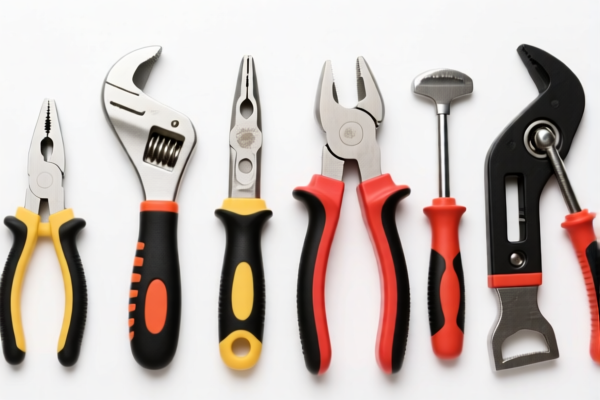


AI Analysis
🛠️ Other Hand Tools (Manual Tools)
🌐 HS Code Reference & Customs Clearance Guide | 2026 Latest Tariff Analysis | Professional Clearance Strategy
📌 I. Product Definition & Classification: What Are "Other Hand Tools"?
"Other Hand Tools" (HS Chapter 82) refers to manual tools used for cutting, gripping, shaping, or fastening. Unlike power tools (HS 82.05 often captures this "other" category in specific contexts, or more commonly, they fall under 82.01–82.04 depending on specificity), this term is a residual (catch-all) category.
Key Distinction:
- Specific Tools: Pliers, screwdrivers, spanners, saws have dedicated HS codes (e.g., 8203, 8204, 8205).
- "Other Hand Tools": Tools that do not fit specific subheadings (e.g., specialized manual tweezers, niche gripping devices, or general-purpose manual tools not explicitly listed elsewhere).
- Material: Almost always made of base metals (iron, steel, copper alloys) or sometimes stainless steel. Wooden/plastic handles are incidental and do not change the classification.
⚠️ Critical Classification Point:
- If the tool is a pincer, pliers, or tweezers → Likely 8203.20.60.60
- If it is a general "other" manual tool not fitting 8201–8204 specifics → Likely 8205.59.80.00 or 8205.59.10.00
- If it is agricultural/forestry related → Likely 8201.30.00.80 or 8201.90.60.00
📦 II. HS Code Classification Details (2026 Latest Tariff Authority Comparison)
The data provided indicates 5 potential HS Codes based on different interpretations of "Other Hand Tools" and their specific sub-types. Here is the breakdown:
| HS Code | Product Description | Applicability | Key Rationale from Data |
|---|---|---|---|
8203.20.60.60 |
Pliers, pincers, tweezers & similar tools | Tools resembling pliers/tweezers | "Hand tools" match category; "Other" matches residual; Metal material assumed consistent. |
8203.40.60.00 |
Axes, hatchets, billhooks, hayhooks, pruning hooks & similar tools; chisels & wood carving tools | Niche manual cutting tools | "Other" matches residual; Base metal material inferred; No conflict with "Other (including parts)" clause. |
8205.59.80.00 |
Other hand tools (excluding 8201–8204) | General "Other" manual tools | Description "Other Hand Tools" matches classification exactly; No material/form conflict. |
8201.90.60.00 |
Other tools for agriculture, horticulture, or forestry | Garden/Forestry hand tools | "Other" matches residual; Metal/base metal material standard; No conflict with agricultural use logic. |
8201.30.00.80 |
Axes, hatchets, billhooks, hayhooks, pruning hooks & similar tools (Agri/Forestry) | Specific Agri/Forestry tools | "Other" category; Logic matches agricultural use; "Description Missing" principle applied; No material conflict. |
8205.59.10.00 |
Other hand tools (Specific Residual) | Catch-all for unspecified tools | Matches "Other Hand Tools" usage; "Other" category catch-all; No obvious material conflict. |
🔍 Key Insight:
- The term "Other" is a legal residual. It captures everything not explicitly listed in 8201 (Agri tools), 8202 (Saws), 8203 (Pliers/Tweezers), or 8204 (Wrenches).
- Material Assumption: All these codes assume Metal/Base Metal construction. If your tool is plastic or wood-dominated, these codes may be incorrect.
💰 III. 2026 Latest Tariff Rate Breakdown (Including Surtaxes & Policy Surcharges)
✅ Applicable Country: United States (US)
✅ Origin: China (CN)
✅ Effective Date: 2025/2026 Period (Current Trade Status)
🎯 1. 8203.20.60.60 – Pliers, Tweezers, etc. (Metal)
| Item | Detail |
|---|---|
| Base Duty | 12¢/doz. + 5.5% (Specific + Ad Valorem) |
| Section 301 Surtax | +25.0% (USITC Footnote 9903.88.01) |
| Section 122/IEEPA Surtax | +10.0% (针对中国/香港产品) |
| Total Effective Rate | ~55.5% + $0.12/doz. |
| Calculation | (CIF Value × 5.5%) + (CIF Value × 25%) + (CIF Value × 10%) + Specific Fee |
| De Minimis Exemption? | ❌ NO (Deny de_minimis) |
| Legal Path | USITC:8203.20.60.60 → FOOTNOTE:9903.88.01 → IEEPA:9903.01.25 |
📌 Explanation:
- This code has a specific duty ($0.12 per dozen) plus high ad valorem taxes.
- The 301 tariff (25%) and IEEPA tariff (10%) are stacked on top of the base rate.
- High Cost: This is one of the more expensive classifications due to the specific fee + triple-layer tax.
🎯 2. 8203.40.60.00 – Niche Cutting/Carving Tools
| Item | Detail |
|---|---|
| Base Duty | 3.3% |
| Section 301 Surtax | +25.0% |
| Section 122/IEEPA Surtax | +10.0% |
| Total Effective Rate | 38.3% |
| Calculation | CIF Value × 38.3% |
| De Minimis Exemption? | ❌ NO |
| Legal Path | USITC:8203.40.60.00 → FOOTNOTE:9903.88.01 → IEEPA:9903.01.25 |
📌 Explanation:
- Lower base rate than 8203.20, but still subject to 35% total surtax (25% + 10%).
- Suitable for specialized tools like chisels, pruning hooks, or carving tools.
🎯 3. 8205.59.80.00 – General "Other Hand Tools"
| Item | Detail |
|---|---|
| Base Duty | 3.7% |
| Section 301 Surtax | +25.0% |
| Section 122/IEEPA Surtax | +10.0% |
| Total Effective Rate | 38.7% |
| Calculation | CIF Value × 38.7% |
| De Minimis Exemption? | ❌ NO |
| Legal Path | USITC:8205.59.80.00 → FOOTNOTE:9903.88.01 → IEEPA:9903.01.25 |
📌 Explanation:
- This is the most common classification for general "other" hand tools (e.g., specialized wrenches, hammers, or tools not listed in 8201–8204).
- 38.7% is the benchmark rate for generic manual tools from China.
🎯 4. 8201.90.60.00 – Agricultural/Forestry Hand Tools (Other)
| Item | Detail |
|---|---|
| Base Duty | 0.0% |
| Section 301 Surtax | +25.0% |
| Section 122/IEEPA Surtax | +10.0% |
| Total Effective Rate | 35.0% |
| Calculation | CIF Value × 35.0% |
| De Minimis Exemption? | ❌ NO |
| Legal Path | USITC:8201.90.60.00 → FOOTNOTE:9903.88.01 → IEEPA:9903.01.25 |
📌 Explanation:
- Lowest Base Rate (0%) among the options.
- Only applies if the tool is strictly for agriculture, horticulture, or forestry.
- Risk: Misclassification if the tool is for general use (e.g., a general-purpose knife used in farming vs. industrial cutting).
🎯 5. 8201.30.00.80 – Specific Agri/Forestry Tools (Axes/Hatchets)
| Item | Detail |
|---|---|
| Base Duty | 0.0% |
| Section 301 Surtax | +25.0% |
| Section 122/IEEPA Surtax | +10.0% |
| Total Effective Rate | 35.0% |
| Calculation | CIF Value × 35.0% |
| De Minimis Exemption? | ❌ NO |
| Legal Path | USITC:8201.30.00.80 → FOOTNOTE:9903.88.01 → IEEPA:9903.01.25 |
📌 Explanation:
- Same 35% total rate as 8201.90.60.00.
- Specific for axes, hatchets, billhooks, etc.
- Note: The data summary mentions "Description Missing Principle," implying this is a fallback if specific details are lacking but agri-use is inferred.
🎯 6. 8205.59.10.00 – Other Hand Tools (Residual)
| Item | Detail |
|---|---|
| Base Duty | 7.2% |
| Section 301 Surtax | +25.0% |
| Section 122/IEEPA Surtax | +10.0% |
| Total Effective Rate | 42.2% |
| Calculation | CIF Value × 42.2% |
| De Minimis Exemption? | ❌ NO |
| Legal Path | USITC:8205.59.10.00 → FOOTNOTE:9903.88.01 → IEEPA:9903.01.25 |
📌 Explanation:
- Higher base rate (7.2%) than general "other" tools (8205.59.80.00).
- Likely applies to a narrower subset of "other" tools where the 8-digit subheading has a higher duty.
🛠️ IV. Customs Clearance Practical Advice (Battle-Tested Pitfall Guide)
✅ 1. Documentation Checklist (Non-Negotiable)
| Document | Required? | Purpose |
|---|---|---|
| ✅ Product Specification Sheet | ✔️ | Must detail: Material (Metal/Base Metal), Function, Dimensions, Weight. |
| ✅ Product Photos | ✔️ | Show the tool clearly. If it looks like pliers, declare 8203.20. |
| ✅ Commercial Invoice | ✔️ | Description must be precise: "Manual Steel Pliers" vs. "Other Hand Tools". |
| ✅ Packaging List | ✔️ | Confirm if handles are wood/plastic (does not change HS, but helps verification). |
| ✅ FCC/CE Certificates | ❌ (If applicable) | Not required for manual tools, but good for quality proof. |
✅ 2. Declaration Strategy (Key Mantra)
🔥 "Material Matters, Function Defines, 'Other' is a Trap!"
| Scenario | Correct HS Code | Wrong Declaration | Consequence |
|---|---|---|---|
| Pliers/Tweezers | 8203.20.60.60 |
"Other Hand Tools" | Under-declaration penalty; Audit risk. |
| Garden Trowel | 8201.90.60.00 |
"Other Hand Tools" | Over-payment (35% vs potential lower if misclassified, but here 35% is best for agri). |
| General Wrench | 8203.20.60.60 or 8205.59.80.00 |
"Power Tool" | Major Classification Error; 100% duty + fine. |
| Wooden Hammer | 8205.59.80.00 (if head is metal) |
"Tool" | Customs Inquiry; May be classified under 82.05 if metal head. |
📌 Critical Warning:
- Never declare "Other Hand Tools" if the item fits a specific category like 8203 (Pliers) or 8204 (Spanners).
- "Other" is for tools that are not pliers, wrenches, or saws.
- If your tool is a general-purpose hammer, it often falls under 8205.59.80.00.
✅ 3. Special Cases & Mitigation
| Situation | Advice |
|---|---|
| OEM Tools with Custom Brand | Provide brand authorization + design specs. Ensure description matches the physical form (e.g., "Manual Cutting Pliers"), not just the brand. |
| Tools with Plastic Handles | Still classified as Metal Hand Tools (HS 82). The handle is incidental. Do not classify under HS 39 (Plastics). |
| Mixed Container (Pliers + Wrenches) | Declare separately if possible. If mixed, use the highest duty rate for safety, or classify based on the majority by value/weight (consult customs broker). |
| Low-Value Shipments (<$800) | ❌ De Minimis Exemption DOES NOT APPLY to these HS codes due to Section 301 and IEEPA tariffs. All duties must be paid. |
🌍 V. Global Market Clearance Comparison (2026)
| Country/Region | Recommended HS Code | Estimated Duty (China Origin) | Key Certifications | Notes |
|---|---|---|---|---|
| 🇺🇸 USA | 8205.59.80.00 (General) |
38.7% (3.7% base + 35% surtax) | N/A | High Tax. 301 & IEEPA apply. No de minimis. |
| 🇨🇳 China | 8205.59.80.00 |
5-7% | CCC (if applicable) | Lower base duty. No surtax. |
| 🇪🇺 EU | 8205.59.80.00 |
0-4.5% | CE (if electrical, but manual tools usually exempt) | No Section 301 equivalent. Lower cost. |
| 🇬🇧 UK | 8205.59.80.00 |
0-4.5% | UKCA | Post-Brexit, similar to EU. |
| 🇯🇵 Japan | 8205.59.80.00 |
0-5% | PSE (if electrical) | Low duty, strict quality checks. |
📌 Conclusion:
- USA is the most expensive market for "Other Hand Tools" due to 35%+ surtaxes.
- EU/UK/Japan offer significantly lower duty rates.
- Strategy: Consider supply chain diversification (e.g., Vietnam/Mexico) if targeting the US market to avoid 301/IEEPA tariffs.
📌 VI. Common Errors & Pitfalls (Blood & Tears Lesson)
❌ Error 1: Classifying Pliers as "Other Hand Tools" (8205.59.80.00)
👉 Result: Customs rejects because pliers have a specific code (8203.20.60.60). Penalty for misdeclaration.
❌ Error 2: Declaring Agricultural Tools as "Other" without proof
👉 Result: Customs may upgrade to general tools (8205.59.80.00) and charge 38.7% instead of 35.0%. Minor savings, but audit risk.
❌ Error 3: Assuming De Minimis ($800) applies
👉 Result: ALL shipments are taxed. The 301 and IEEPA tariffs explicitly deny de minimis exemption. Every shipment pays duty.
✅ Correct Practice:
"Manual Steel Pliers, 8-inch, with Rubber Grip, Model XYZ, Made in China"
HS Code:8203.20.60.60
Duty: 12¢/doz + 5.5% + 25% + 10%
🎯 VII. Conclusion: Precision Pays, Ambiguity Penalties!
🎯 Remember the Mantra:
🔹 "Be Specific: Pliers, Wrenches, or Other?"
🔹 "35-38% is the US Tax Reality; Plan Costs Accordingly!"
🔹 "No De Minimis for China-Metal Tools to USA!"
📌 Pro Tip:
If your "Other Hand Tools" can be clearly defined as Agricultural (8201.90.60.00), you save 3.7% in base duty compared to general "Other" (8205.59.80.00). Provide clear usage documentation to justify the agri-classification.
📣 Immediate Action:
📞 Consult a Customs Broker: Get an Advance Ruling for your specific tool shape.
📦 Tag Items Correctly: Ensure your commercial invoice describes the exact physical form (e.g., "Manual Cutting Tool" vs. "Pliers").
💰 Budget for 35-40% Duty: Do not underestimate US clearance costs for metal hand tools.
✨ Professional Clearance Starts with Accurate Classification!
💼 Your Profit Margin Depends on Your HS Code!
Customer Reviews
About HS Code Classification
The Harmonized System (HS) is an internationally standardized nomenclature developed by the World Customs Organization (WCO) to classify traded products. Over 200 countries use the HS system as the basis for customs tariffs, trade statistics, and import/export regulations.
Each HS code follows a hierarchical structure:
- Chapter (2 digits) — Broad category of goods (e.g., Chapter 84: Machinery and Mechanical Appliances)
- Heading (4 digits) — More specific grouping within the chapter
- Subheading (6 digits) — Internationally standardized breakdown, used by all WCO member countries
- National subdivisions (8-10 digits) — Country-specific extensions for further classification, such as US HTSUS 10-digit codes
Correct HS code classification is essential for smooth customs clearance, accurate duty payment, and compliance with trade regulations. Misclassification can lead to customs delays, overpayment of duties, or penalties.
When importing from CN to US, the applicable tariff rates may include:
- Most-Favored-Nation (MFN) rate — The standard duty rate applied to WTO members
- General rate — Applied to countries without trade agreements
- Trade remedy duties — Additional tariffs such as Section 301 (anti-dumping), Section 232 (national security), or countervailing duties
The information provided on this page is for reference purposes only. For official classification, please consult with your local customs authority or a licensed customs broker.