Other Hand Tools Not Specified
CN → US| HS Code | Tariff Rate | Origin | Destination | Doc |
|---|---|---|---|---|
| 8203206060 | 0.0% | CN | US | Official Doc |
| 8203406000 | 38.3% | CN | US | Official Doc |
| 8205598000 | 38.7% | CN | US | Official Doc |
| 8201906000 | 35.0% | CN | US | Official Doc |
| 8201300080 | 35.0% | CN | US | Official Doc |
Product Images
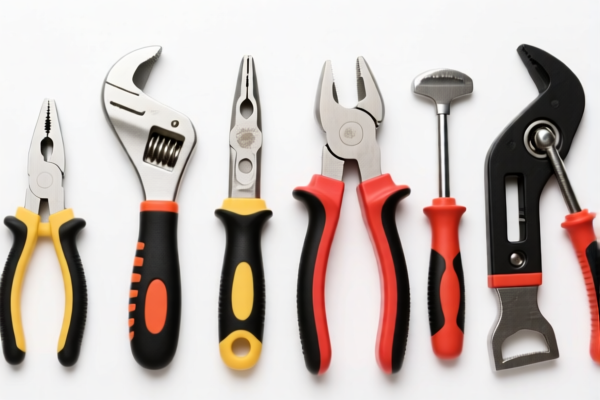


AI Analysis
🔧 Other Hand Tools Not Specified (Unspecified Hand Tools)
🌐 HS Code Reference & Customs Clearance Guide | 2026 Latest Tariff Analysis | Professional Strategy for Metal Tools
📌 1. Product Definition & Classification: What Are "Other Hand Tools"?
In international trade, "Other Hand Tools Not Specified" typically refers to metal manual tools that do not fit into specific, named categories like pliers, screwdrivers, or hammers. These tools are generally made of base metals (iron/steel) and are used for tasks such as gripping, cutting, twisting, or driving fasteners without power assistance.
⚠️ Key Distinction Point:
- If the tool is a specific named tool (e.g., specific pliers, wrenches), it falls under specific subheadings in 8203 or 8201.
- If the tool is a general-purpose or miscellaneous tool without a specific name in Chapter 82, it falls under "Other" categories.
- Material Matters: Most hand tools in this context are made of base metals (not precious metals).
📦 2. HS Code Classification Matrix (2026 Latest Tariff Authority)
Based on the provided data, here are the 5 possible HS Codes for "Other Hand Tools Not Specified" and their corresponding tax implications.
| HS Code | Product Description Summary | Key Characteristics | Total Tax Rate |
|---|---|---|---|
8203.20.60.60 |
Other hand tools, consistent with category purpose, Metal | Specific classification logic; likely a specific type of "other" tool under Chapter 82.03. | 12¢/doz. + 5.5% + 35.0% |
8203.40.60.00 |
Other hand tools, Base Metal, other category | Broad "other" category; material is base metal (iron/steel). | 38.3% |
8205.59.80.00 |
Other hand tools, Consistent Explanation, No Conflict | General "other" category under Chapter 82.05; no material/form conflict. | 38.7% |
8201.90.60.00 |
Other hand tools, Other Category, Metal/Base Metal | Tools under Chapter 82.01 (Axes, picks, etc.) or similar; "Other" subcategory. | 35.0% |
8201.30.00.80 |
Other hand tools, Other Category, No Conflict | Similar to above; likely agricultural or construction-related hand tools. | 35.0% |
🔍 Critical Insight:
- Chapter 82 vs. 8203: Tools under8203(Pliers, pincers, tongs, etc.) often have different tax structures than8201(Axes, picks, hoes, etc.).
- "Not Specified" Means General: If your tool doesn't fit into specific named buckets, customs will look at the material (base metal) and function to place it in "Other" subheadings.
💰 3. 2026 Tariff Rate Breakdown (Detailed Tax Clauses)
✅ Applicable Country: United States (US)
✅ Origin: China (CN)
✅ Effective Date: November 10, 2025 onwards
🎯 1. 8203.20.60.60 – Specific "Other" Hand Tool (Metal)
| Item | Detail |
|---|---|
| Base Tariff | 12¢/doz. + 5.5% (Ad Valorem) |
| Section 301 Tariff | +25.0% |
| Section 122 Tariff | +10.0% |
| Total Effective Rate | 5.5% + 35.0% + 12¢/doz. |
| Calculation | (CIF Value × 40.5%) + (12¢ per dozen) |
| De Minimis Exemption | ❌ Not Applicable |
| Legal Basis | Section 301 (25%) + Section 122 (10%) + Base Tariff (5.5%) |
📌 Explanation:
- This code has a specific unit charge (12¢ per dozen) PLUS ad valorem taxes.
- Total Tax Burden: 5.5% (base) + 25% (301) + 10% (122) = 40.5% Ad Valorem + Fixed Fee.
- Warning: The per-unit charge applies regardless of value. Low-value shipments may face high effective percentages.
🎯 2. 8203.40.60.00 – Other Base Metal Hand Tools
| Item | Detail |
|---|---|
| Base Tariff | 3.3% |
| Section 301 Tariff | +25.0% |
| Section 122 Tariff | +10.0% |
| Total Effective Rate | 38.3% |
| Calculation | CIF Value × 38.3% |
| De Minimis Exemption | ❌ Not Applicable |
| Legal Basis | Section 301 + Section 122 + Base Tariff |
📌 Explanation:
- Pure ad valorem tax.
- Total Tax Burden: 3.3% + 25% + 10% = 38.3%.
- Note: Slightly lower than8203.20due to lower base rate (3.3% vs 5.5%).
🎯 3. 8205.59.80.00 – Other Hand Tools (No Conflict)
| Item | Detail |
|---|---|
| Base Tariff | 3.7% |
| Section 301 Tariff | +25.0% |
| Section 122 Tariff | +10.0% |
| Total Effective Rate | 38.7% |
| Calculation | CIF Value × 38.7% |
| De Minimis Exemption | ❌ Not Applicable |
| Legal Basis | Section 301 + Section 122 + Base Tariff |
📌 Explanation:
- Slightly higher base rate (3.7%) makes this 38.7% total.
- Comparison: This is one of the highest rates among the options.
- Why? Chapter 82.05 often covers tools not specified elsewhere, including hammers, chisels, screwdrivers, etc., if not covered in 82.03 or 82.01.
🎯 4. 8201.90.60.00 – Other Hand Tools (Other Category)
| Item | Detail |
|---|---|
| Base Tariff | 0.0% |
| Section 301 Tariff | +25.0% |
| Section 122 Tariff | +10.0% |
| Total Effective Rate | 35.0% |
| Calculation | CIF Value × 35.0% |
| De Minimis Exemption | ❌ Not Applicable |
| Legal Basis | Section 301 + Section 122 |
📌 Explanation:
- Lowest Ad Valorem Rate: 0% base tariff.
- Total Tax Burden: 0% + 25% + 10% = 35.0%.
- Why? Chapter 82.01 covers axes, picks, hoes, etc. The "Other" subheading captures miscellaneous tools under this chapter.
🎯 5. 8201.30.00.80 – Other Hand Tools (No Material Conflict)
| Item | Detail |
|---|---|
| Base Tariff | 0.0% |
| Section 301 Tariff | +25.0% |
| Section 122 Tariff | +10.0% |
| Total Effective Rate | 35.0% |
| Calculation | CIF Value × 35.0% |
| De Minimis Exemption | ❌ Not Applicable |
| Legal Basis | Section 301 + Section 122 |
📌 Explanation:
- Identical to8201.90.60.00in total tax.
- Differentiation:8201.30may refer to specific types of axes or similar tools, while8201.90is the general "Other" bucket.
- Recommendation: If your tool is not a named axe/pick,8201.90is safer.
🛠️ 4. Customs Clearance Practical Advice
✅ 1. Document Preparation Checklist
| Document | Required? | Notes |
|---|---|---|
| Product Specifications | ✅ Yes | Must describe function, material (base metal), and whether it is power-assisted. |
| Material Composition | ✅ Yes | Confirm it is base metal (iron/steel), not stainless steel or aluminum (which may have different tariffs). |
| Photos (Clear & Detailed) | ✅ Yes | Show the entire tool, including handles. If wooden/plastic handles, specify. |
| Commercial Invoice | ✅ Yes | Description must be precise: "Hand Tool, Base Metal, Not Elsewhere Specified." |
| Origin Certificate | ✅ Yes | Required for Section 122 and 301 determinations. |
| HS Code Pre-Ruling | ✅ Recommended | Given the complexity of "Other" categories, a pre-ruling from CBP is highly advised. |
✅ 2. Classification Strategy & Pitfalls
🔥 "Know Your Chapter: 82.01, 82.03, or 82.05?"
| Scenario | Correct HS Code | Risk if Wrong |
|---|---|---|
| Tool is a pliers, pincers, tongs | 8203.xx.xx |
Misclassification → Potential penalties. |
| Tool is a hammer, chisel, punch | 8205.xx.xx |
Misclassification → Potential penalties. |
| Tool is an axe, pick, hoe | 8201.xx.xx |
Misclassification → Potential penalties. |
| True "Other" Tool | 8203.40, 8205.59, or 8201.90 |
Depends on functional similarity. |
⚠️ Critical Note:
- "Not Specified" is Not a Valid Description: You must describe the tool by its function and material.
- Avoid Vague Terms: Do not use "Miscellaneous Tool." Use "Heavy-Duty Wrench, Base Metal, For Industrial Use."
✅ 3. Special Considerations
| Situation | Recommendation |
|---|---|
| Mixed Materials | If the tool has wooden/plastic handles, ensure the primary material is base metal. If the handle is the main value, it may fall under Chapter 44 or 39. |
| Set of Tools | If packaged as a set, classify based on the principal function or the item that gives the set its essential character. |
| Stainless Steel | Confirm if the tool is stainless. If so, tariff rates may differ (check 82.03/82.01 for stainless-specific notes). |
| Small Quantities | Even for small shipments, De Minimis (Section 321) does NOT apply due to Section 301 and 122 tariffs. |
🌍 5. Global Market Comparison (2026)
| Country/Region | Recommended HS Code | Estimated Tariff | Notes |
|---|---|---|---|
| 🇺🇸 USA | 8201.90.60.00 or 8205.59.80.00 |
35.0% – 38.7% | High due to Section 301 + 122. |
| 🇨🇳 China | Same HS Code | ~5% | Low base tariff. |
| 🇪🇺 EU | Same HS Code | ~6.5% | Standard NMF rate. |
| 🇦🇺 Australia | Same HS Code | ~5% | Standard rate. |
| 🇯🇵 Japan | Same HS Code | ~5.3% | Standard rate. |
📌 Conclusion:
- USA is the most expensive market for these tools due to additional tariffs.
- Cost Impact: A $1,000 shipment of hand tools could incur $350–$390 in US import duties.
- Strategy: Consider tariff engineering (e.g., separating tools, changing materials) if feasible.
📌 6. Common Mistakes & How to Avoid Them
❌ Mistake 1: Using "Hand Tool" as the only description.
👉 Result: Customs will guess → Possible misclassification → Delay + Penalties.
✅ Fix: Use "Base Metal Pliers, Not Elsewhere Specified."
❌ Mistake 2: Assuming "Other" means "Low Tariff."
👉 Result: "Other" categories often have high base tariffs + Section 301 + 122.
✅ Fix: Calculate total tax including all surcharges.
❌ Mistake 3: Ignoring Section 122 Tariff.
👉 Result: Underestimating costs by 10%.
✅ Fix: Always add 10% for Chinese-origin goods in the USA.
❌ Mistake 4: Assuming De Minimis Exemption.
👉 Result: Shipment held at border because Section 301/122 apply regardless of value.
✅ Fix: Prepare full entry documents for all shipments.
🎯 7. Final Recommendations
🎯 Key Takeaway:
🔹 "Other Hand Tools" are NOT a single category.
🔹 Identify the primary function (e.g., gripping, cutting, striking) to narrow down to 82.03, 82.01, or 82.05.
🔹 Total Tax is High: Expect 35%–38.7% for US imports.
🔹 Get a Pre-Ruling: Given the ambiguity, a CBP pre-ruling is the safest path.
📌 Pro Tip:
If your tool can be classified under a specific named heading (e.g., "Wrench" under 82.04), do so. Specific headings often have lower base tariffs than "Other" categories.
Example: If your "Other Hand Tool" is actually a wrench, check 82.04. If it's a hammer, check 82.05. Only use "Other" if no specific name fits.
📣 Action Plan:
1. Identify Function: What does the tool do?
2. Check Chapter 82: Is it 82.01, 82.03, or 82.05?
3. Calculate Total Tax: Base + 25% (301) + 10% (122).
4. Prepare Documentation: Detailed description, material specs, photos.
5. Consult Customs Broker: Get a professional opinion before shipping.
✨ Precision in Classification Saves Money!
💼 Don't let "Other" become "Overpriced"! Optimize your HS Code today.
Customer Reviews
About HS Code Classification
The Harmonized System (HS) is an internationally standardized nomenclature developed by the World Customs Organization (WCO) to classify traded products. Over 200 countries use the HS system as the basis for customs tariffs, trade statistics, and import/export regulations.
Each HS code follows a hierarchical structure:
- Chapter (2 digits) — Broad category of goods (e.g., Chapter 84: Machinery and Mechanical Appliances)
- Heading (4 digits) — More specific grouping within the chapter
- Subheading (6 digits) — Internationally standardized breakdown, used by all WCO member countries
- National subdivisions (8-10 digits) — Country-specific extensions for further classification, such as US HTSUS 10-digit codes
Correct HS code classification is essential for smooth customs clearance, accurate duty payment, and compliance with trade regulations. Misclassification can lead to customs delays, overpayment of duties, or penalties.
When importing from CN to US, the applicable tariff rates may include:
- Most-Favored-Nation (MFN) rate — The standard duty rate applied to WTO members
- General rate — Applied to countries without trade agreements
- Trade remedy duties — Additional tariffs such as Section 301 (anti-dumping), Section 232 (national security), or countervailing duties
The information provided on this page is for reference purposes only. For official classification, please consult with your local customs authority or a licensed customs broker.