Other High Temperature Resistant Sulfurized Rubber Pads
CN → US| HS Code | Tariff Rate | Origin | Destination | Doc |
|---|---|---|---|---|
| 4016935010 | 37.5% | CN | US | Official Doc |
| 8487900080 | 88.9% | CN | US | Official Doc |
| 4016935020 | 37.5% | CN | US | Official Doc |
Product Images
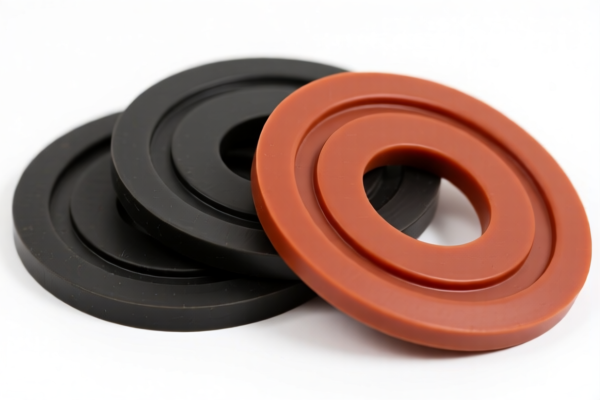
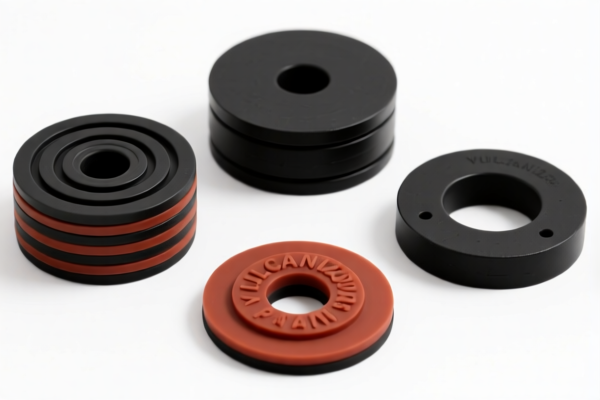
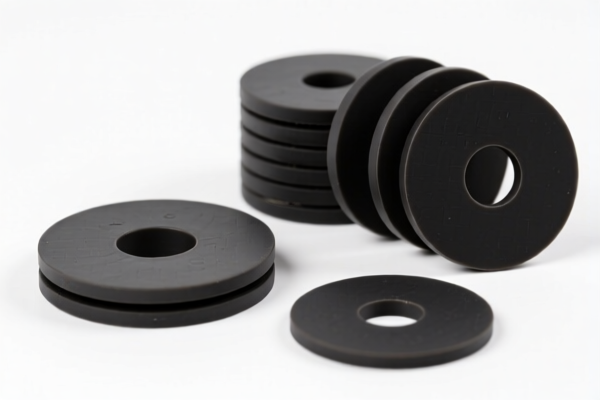
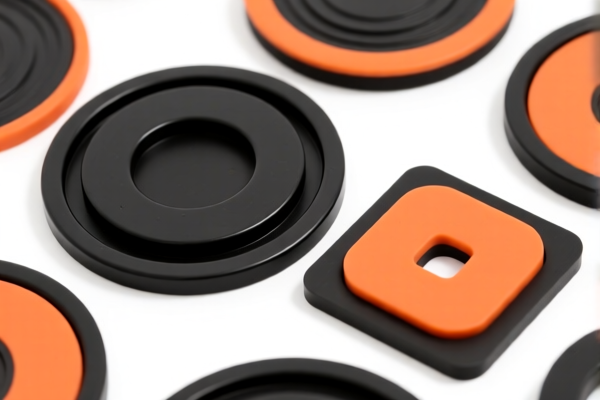
AI Analysis
🛡️ Other High Temperature Resistant Sulfurized Rubber Pads (Gaskets & Washers)
🌐 HS Code Reference & Customs Clearance Guide | 2026 Latest Tariff Analysis | Professional-Level Compliance Strategy
📌 Part I: Product Definition & Classification: Do You Really Understand "Sulfurized Rubber Pads"?
Sulfurized rubber pads, known for their resistance to high temperatures, acids, and alkalis, are critical components in industrial sealing, vibration damping, and mechanical protection. In international trade, they are often misclassified due to confusion between their material (rubber) and their function (mechanical part vs. rubber product).
Key Distinctions in Classification: * As a Rubber Product (Chapter 40): If the item is primarily defined by its material properties (vulcanized/sulfurized rubber) and generic shape (pad/gasket), it falls under 4016. * As a Mechanical Part (Chapter 84): If the item is specifically identified as a spare part for a machine, with no other specific rubber classification fitting, it may fall under 8487.
⚠️ Critical Differentiation Point: - If the pad is a generic sealing/gasket component made of vulcanized rubber, without specific machine integration context → Classify under 4016. - If the pad is explicitly marketed as a spare part for specific machinery (and no better heading exists for rubber parts), it may be classified under 8487. - Note: Misclassification can lead to drastic tariff differences (37.5% vs. 88.9%).
📦 Part II: HS Code Classification Details (2026 Latest Tariff Authority Comparison)
| HS Code | Product Description | Applicable Scenario | Conflict Check |
|--------|--------------------------|--------------------|
| 4016.93.50.10 | Other耐酸碱硫化橡胶垫 (Acid/Alkali Resistant Sulfurized Rubber Pads) | Generic rubber pads, gaskets, washers. Material is vulcanized rubber. | ✅ No conflict with electrical/oil seal definitions. |
| 8487.90.00.80 | Other mechanical parts, rubber pads | Specific mechanical spare parts. No electrical attributes or oil seal conflicts. | ⚠️ High Risk: Higher tariff due to "mechanical part" classification + metal/steel surcharges if misapplied. |
| 4016.93.50.20 | Other耐酸碱硫化橡胶垫 (Rubber Pads/Washers) | Generic pads/washers. Function: sealing/damping. | ✅ No conflict with other categories. |
🔍 Key Reminder: - The term "Sulfurized Rubber" (硫化橡胶) strongly points to Chapter 40 (Rubber Products). - 8487 is a "basket" category for mechanical parts not specified elsewhere. If a specific rubber classification (4016) exists, it usually takes precedence unless the item is a specialized, non-generic machine part. - Avoid 8487 if possible due to the significantly higher total tax burden (see Part III).
💰 Part III: 2026 Latest Tariff Rate Details (Including Surcharges & Policy Add-ons)
✅ Applicable Country: United States (US) ✅ Origin: China (CN) ✅ Effective Time: Ongoing (as of 2026)
🎯 1. 4016.93.50.10 & 4016.93.50.20 —— Rubber Pads (Chapter 40 Classification)
| Item | Content |
|---|---|
| Base Tariff | 2.5% (Ad valorem) |
| Section 301 Surcharge | +25.0% |
| Section 122 Tariff | +10.0% |
| Total Tax Rate | 37.5% |
| Tax Calculation | CIF Value × 37.5% |
| De Minimis Exemption | ❌ Not Eligible (De minimis does not apply to Section 301 goods) |
| Legal Basis Path | Base: 2.5% + 301: 25% + 122: 10% |
📌 Explanation: - These HS codes fall under the Rubber Products chapter. - The 25% Section 301 tariff applies to most Chinese rubber goods. - The 10% Section 122 tariff is an additional levy on certain imported goods. - Total: 37.5% is the standard high-cost rate for rubber pads from China.
🎯 2. 8487.90.00.80 —— Mechanical Parts (Chapter 84 Classification)
| Item | Content |
|---|---|
| Base Tariff | 3.9% (Ad valorem) |
| Section 301 Surcharge | +25.0% |
| Section 122 Tariff | +10.0% |
| Steel/Aluminum/Copper Surcharge | +50.0% (Note: This applies if the pad contains metal components or is misclassified due to metal-related rules) |
| Total Tax Rate | 88.9% |
| Tax Calculation | CIF Value × 88.9% |
| De Minimis Exemption | ❌ Not Eligible |
| Legal Basis Path | Base: 3.9% + 301: 25% + 122: 10% + Metal Surcharge: 50% |
📌 Explanation: - This code carries a drastically higher rate (88.9%). - The 50% surcharge is triggered by specific provisions for metal, aluminum, or copper-related items. Even if the pad is rubber, if it is classified under 8487 (mechanical parts), customs may apply stricter scrutiny or additional surcharges if any metal backing/pins are involved, or due to the broader "mechanical part" tax basket. - Recommendation: Avoid this classification for pure rubber pads unless legally mandated. The cost difference is massive.
🛠️ Part IV: Customs Clearance Operational Advice (Practical Pitfall Guide)
✅ 1. Preparation Checklist (Non-negotiable)
| Document | Mandatory | Description |
|---|---|---|
| ✅ Product Specification Sheet | ✔️ | Must detail: Material (Sulfurized/Vulcanized Rubber), Temperature Resistance, Acid/Alkali Resistance, Hardness (Shore A). |
| ✅ Product Photos | ✔️ | Clear images showing the pad shape, texture, and any labeling. |
| ✅ Commercial Invoice | ✔️ | Description: "Sulfurized Rubber Pad, Acid/Alkali Resistant, for Industrial Use". Do NOT write "Machine Part" unless specifically true. |
| ✅ Packing List | ✔️ | Quantity, weight, dimensions. |
| ✅ Certificate of Origin | ✔️ | For preferential treatment if available (though unlikely for US/China). |
| ✅ Test Report | ✔️ | Optional but recommended: Proof of temperature/chemical resistance. |
✅ 2. Declaration Strategy (Key Mantra)
🔥 "Material First, Function Second, Avoid 'Mechanical' Trap!"
| Scenario | Correct Declaration | Wrong Practice |
|---|---|---|
| Pure Rubber Pad (Gasket/Washer) | HS: 4016.93.50.10Desc: "Sulfurized Rubber Pad" |
Using "Mechanical Part" → 88.9% |
| Rubber Pad with Metal Pin | Check if metal is integral. If yes, may still be 4016 if rubber is dominant. | Over-classifying to 8487 → 88.9% |
| Generic Seal | HS: 4016.93.50.20 |
Using "Oil Seal" if not oil-specific |
| Specific Machine Spare | Only if no rubber classification fits. | Using 8487 for generic pads |
✅ 3. Special Situation Handling
| Situation | Handling Advice |
|---|---|
| OEM Custom Pads | Provide design drawings to prove it's a generic rubber product, not a unique machine part. |
| Multi-material Pads | If the pad has a rubber layer on a metal backing, ensure the rubber provides the essential character. If not, it may be classified as metal → 88.9% or higher. |
| High-Temperature Claims | Provide test data to justify "Sulfurized/Vulcanized" status. |
| De Minimis (Section 321) | ❌ Not Applicable. Section 301 and 122 tariffs apply regardless of value. |
🌍 Part V: Global Market Comparison (2026 Latest)
| Country/Region | Recommended HS Code | Tariff (China Origin) | Notes |
|---|---|---|---|
| 🇺🇸 USA | 4016.93.50.10 |
37.5% | Avoid 8487 (88.9%). |
| 🇨🇳 China | 4016.93.50.10 |
5% | No surcharges. |
| 🇪🇺 EU | 4016.93 |
0-6% | No Section 301/122. |
| 🇦🇺 Australia | 4016.93 |
5% | No surcharges. |
| 🇯🇵 Japan | 4016.93 |
0-5% | No surcharges. |
📌 Conclusion: - USA is the critical market with high surcharges. - Correct classification (4016 vs 8487) is the single biggest cost factor. - Always prefer Chapter 40 for rubber products to avoid the 88.9% penalty.
📌 Part VI: Common Errors & Pitfalls (Lessons Learned)
❌ Error 1: Using "Mechanical Part" or "Spare Part" in the description for generic rubber pads.
👉 Consequence: Customs may misclassify under 8487 → Tax jumps from 37.5% to 88.9%.
❌ Error 2: Ignoring Section 122 and 301 tariffs.
👉 Consequence: Under-declaration → Penalties, interest, and audits.
❌ Error 3: Assuming De Minimis applies.
👉 Consequence: Packages under $800 are still subject to Section 301/122 tariffs → Immediate tax collection.
❌ Error 4: Confusing "Sulfurized" with "Latex".
👉 Consequence: Wrong HS code → Delays and corrections.
✅ Correct Approach:
"Sulfurized Rubber Pad, Acid/Alkali Resistant, Industrial Gasket, Model XYZ, Hardness 70 Shore A"
🎯 Part VII: Conclusion: Precise Classification Saves Money!
🎯 Remember the Mantra:
🔹 "Rubber First, 37.5%; Mechanical Trap, 88.9%!" 🔹 "HS Code Decides Life or Death, 50% Difference is Huge!"
📌 Pro Tip:
If your rubber pads originate from Vietnam, Mexico, Thailand, or Malaysia, you may be eligible for IEEPA Exemptions or lower tariffs.
Always apply for an Advance Ruling if you are unsure about the classification between 4016 and 8487.
📣 Immediate Action:
📞 Contact a professional customs broker + Provide Product Images + Apply for HS Code Advance Ruling
🚀 Let your rubber pads clear customs smoothly, efficiently, and profitably!
✨ Professional Customs Clearance Starts with Accurate Classification!
💼 Every Penny of Your Cost Deserves Precise Calculation!
Customer Reviews
About HS Code Classification
The Harmonized System (HS) is an internationally standardized nomenclature developed by the World Customs Organization (WCO) to classify traded products. Over 200 countries use the HS system as the basis for customs tariffs, trade statistics, and import/export regulations.
Each HS code follows a hierarchical structure:
- Chapter (2 digits) — Broad category of goods (e.g., Chapter 84: Machinery and Mechanical Appliances)
- Heading (4 digits) — More specific grouping within the chapter
- Subheading (6 digits) — Internationally standardized breakdown, used by all WCO member countries
- National subdivisions (8-10 digits) — Country-specific extensions for further classification, such as US HTSUS 10-digit codes
Correct HS code classification is essential for smooth customs clearance, accurate duty payment, and compliance with trade regulations. Misclassification can lead to customs delays, overpayment of duties, or penalties.
When importing from CN to US, the applicable tariff rates may include:
- Most-Favored-Nation (MFN) rate — The standard duty rate applied to WTO members
- General rate — Applied to countries without trade agreements
- Trade remedy duties — Additional tariffs such as Section 301 (anti-dumping), Section 232 (national security), or countervailing duties
The information provided on this page is for reference purposes only. For official classification, please consult with your local customs authority or a licensed customs broker.