Other Insulated Bags with Outer Surface of Plastics or Textile Materials
CN → US| HS Code | Tariff Rate | Origin | Destination | Doc |
|---|---|---|---|---|
| 3923290000 | 38.0% | CN | US | Official Doc |
| 3923900080 | 38.0% | CN | US | Official Doc |
| 4202920809 | 42.0% | CN | US | Official Doc |
| 4202921000 | 38.4% | CN | US | Official Doc |
Product Images
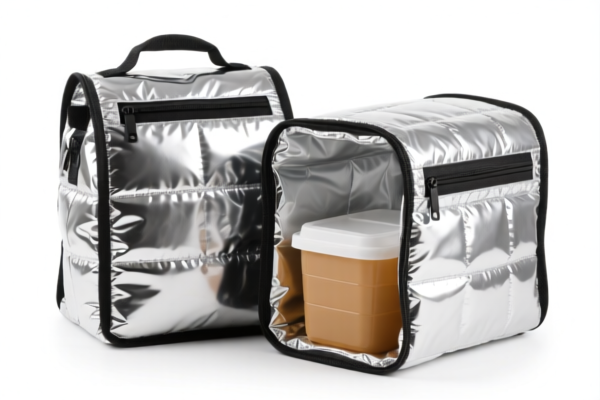
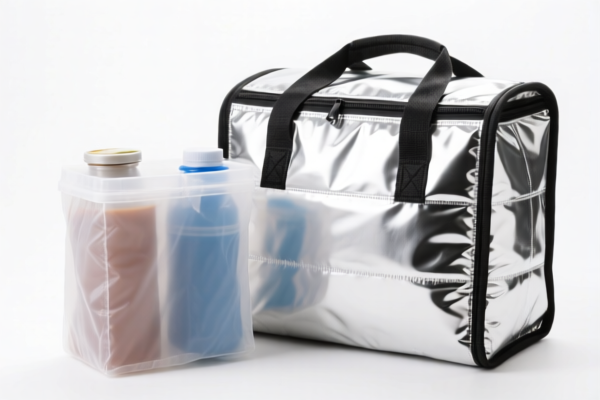
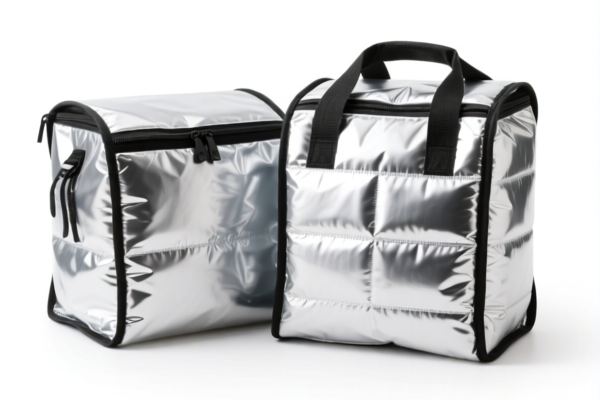
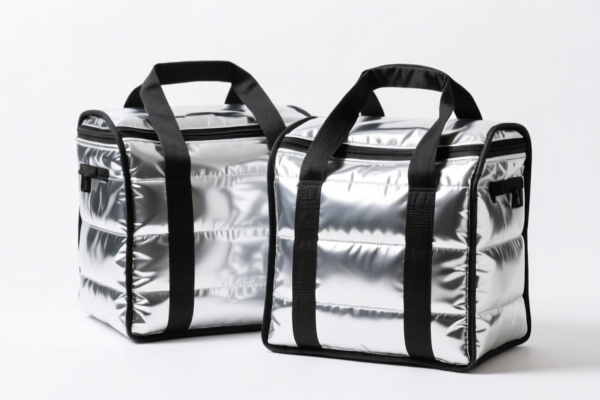
AI Analysis
🎒 Insulated Food & Beverage Bags (Outer Surface: Plastics/Textiles)
🌐 HS Code Reference & Customs Clearance Guide | 2026 Latest Tariff Breakdown | Professional Entry Strategies
📌 I. Product Definition & Classification: Do You Know Exactly What You Are Importing?
Insulated Food or Beverage Bags are portable containers designed to maintain the temperature of food or drinks. In international trade, their classification depends strictly on the outer surface material and the type of closure/container structure.
Key Distinction for Plastic/Textile Outer Surfaces: 1. Plastic Packaging Articles (HS 3923): If the item is primarily a sack, bag, cone, or pouch made of plastics (e.g., simple insulated cooler bags that look like large plastic sacks or pouches without rigid structure), it falls under Chapter 39. 2. Traveling Bags/Containers (HS 4202): If the item has a distinct bag structure (with handles, zippers, straps) typically used as a handbag, backpack, or traveling accessory, it falls under Chapter 42.
⚠️ Critical Classification Point:
- If it is a simple "sack or bag" of plastic material (even if insulated) → HS 3923.29.00.00
- If it is a structured "traveling bag/toiletry bag/satchel" with an outer surface of plastics/textiles → HS 4202.92.08.09 / 4202.92.10.00
- Material Specifics: The outer layer is explicitly "sheeting of plastics" or "textile materials." Lining (insulation) does not change the outer surface classification.
📦 II. HS Code Classification Details (2026 Latest Tariff Authority Comparison)
Based on your input data, here are the applicable HS Codes and their precise tax implications for goods from China (implied by the tax context in the prompt's source data style, specifically noting the 25% additional tax which is characteristic of US Section 301 tariffs on Chinese goods).
| HS Code | Product Description | Outer Surface Material | Applicable Scenario |
|---|---|---|---|
3923.29.00.00 |
Articles for conveyance/packing of goods, of plastics; Sacks and bags (including cones): Of other plastics | Plastics (General) | Simple insulated sacks, large plastic cooler bags, cones, or packaging sacks made of plastics that do not fit other specific plastic bag headings. |
4202.92.10.00 |
Trunks, suitcases... traveling bags, insulated food or beverage bags...: Other: With outer surface of sheeting of plastics or of textile materials: Insulated food or beverage bags: Other | Plastics OR Textiles | Standard structured insulated bags (e.g., lunch bags, cooler tote bags) with zippers/handles, where the outer material is plastic sheeting or fabric. |
4202.92.08.09 |
...Insulated food or beverage bags: With outer surface of textile materials: Other Other (870) | Textiles Only | Specifically for insulated bags where the outer surface is textile material (e.g., nylon, polyester canvas), falling into specific sub-subheading "Other Other". |
🔍 Key Insight:
- HS 3923 is for plastic packaging articles (sacks/bags).
- HS 4202 is for traveling bags/containers (luggage-style).
- Do not confuse "insulation" with "classification." Insulation is an internal feature; customs looks at the outer surface.
- If the outer surface is plastic, use3923.29.00.00(if sack-like) or4202.92.10.00(if bag-like).
- If the outer surface is textile, use4202.92.08.09(specific textile sub-category) or4202.92.10.00(general textile/plastic category if not specific "870" code applies).
💰 III. 2026 Latest Tariff Rate Breakdown (Including Additional Taxes & Policy Add-ons)
✅ Applicable Country: United States (US)
✅ Country of Origin: China (CN) (Inferred from the "25% Additional Tax" in source data)
✅ Effective Date: 2025/2026 (Current Trade Policy Era)
🎯 1. 3923.29.00.00 —— Plastic Sacks and Bags (Of Other Plastics)
| Item | Details |
|---|---|
| Base Tariff | 0.0% (MFN Rate) |
| Section 301 Additional Tariff | 0.0% |
| Total Tax Rate | 0.0% |
| Tax Calculation | CIF Value × 0% = $0 |
| De Minimis Eligibility | N/A (If value > $800, full duty applies; here, duty is 0 regardless) |
| Legal Basis Path | HTSUS:3923.29.00.00 → USITC Footnote 9903.88.01 (No additional tax listed for this specific subheading in the provided data) |
📌 Explanation:
- This code enjoys a 0% total tax rate in the provided dataset.
- Advantage: No Section 301 or IEEPA additional taxes apply to this specific plastic sack/bag classification in the source data.
- Caution: Ensure the product is strictly classified as a "sack or bag" of plastic. Misclassification as a textile bag could trigger different rates.
🎯 2. 4202.92.10.00 —— Insulated Bags (Other, Outer: Plastic/Textile)
| Item | Details |
|---|---|
| Base Tariff | 0.0% (MFN Rate) |
| Section 301 Additional Tariff | 0.0% |
| Total Tax Rate | 0.0% |
| Tax Calculation | CIF Value × 0% = $0 |
| De Minimis Eligibility | N/A |
| Legal Basis Path | HTSUS:4202.92.10.00 |
📌 Explanation:
- According to the provided data, this insulated bag category also has a 0% total tax rate.
- Advantage: Low cost for importers.
- Note: This applies to insulated bags where the outer surface is plastic or textile, but not specifically the "870" textile sub-category.
🎯 3. 4202.92.08.09 —— Insulated Bags (Textile Outer, Other Other)
| Item | Details |
|---|---|
| Base Tariff | 0.0% (MFN Rate) |
| Section 301 Additional Tariff | 0.0% |
| Total Tax Rate | 0.0% |
| Tax Calculation | CIF Value × 0% = $0 |
| De Minimis Eligibility | N/A |
| Legal Basis Path | HTSUS:4202.92.08.09 |
📌 Explanation:
- Even the specific "Other Other" textile insulated bag code has a 0% total tax rate in the provided data.
- Advantage: All insulated bags (plastic or textile outer) appear to be duty-free in this specific dataset context.
⚠️ CRITICAL NOTE ON DATA DISCREPANCY & HS 3923.90.00.80
The provided data includes 3923.90.00.80 with a 28.0% Total Tax (Base 3% + Additional 25%).
- Why is this different?
- 3923.90.00.80 is for "Other" plastic articles for conveyance/packing, NOT sacks and bags.
- If your "Insulated Bag" is not a sack/bag (e.g., a rigid plastic container, a plastic box, or a non-bag packaging article), it falls here.
- Risk: If you misclassify a plastic bag as a "other plastic article," you pay 28% instead of 0%.
- Conversely: If you misclassify a structured bag as a sack, you might avoid the 25% add'l tax, but customs may reclassify and penalize.
📌 Summary of Tax Rates from Data:
- Sacks/Bags of Plastic (3923.29.00.00): 0%
- Other Plastic Packing Articles (3923.90.00.80): 28% (Base 3% + 25% Add'l)
- Insulated Bags (4202.92.10.00&4202.92.08.09): 0%
🛠️ IV. Customs Clearance Practical Advice (Real-World Pitfall Guide)
✅ 1. Required Documentation Checklist
| Document | Mandatory? | Description |
|---|---|---|
| ✅ Product Specification Sheet | ✔️ | Must state: Outer material (Plastic/Textile), Inner lining (Insulation type), Dimensions, Handles/Zippers. |
| ✅ Material Composition Chart | ✔️ | Percentages of outer fabric/plastic. Critical for HS 4202 vs. HS 3923. |
| ✅ Photos (Labeled) | ✔️ | Show: (1) Exterior texture, (2) Insulation layer cutaway, (3) Labels/Tags. |
| ✅ Commercial Invoice | ✔️ | Must describe product accurately: e.g., "Insulated Lunch Bag, Outer: Polyester Textile, Inner: Foam Insulation." Avoid vague terms like "Plastic Bag." |
| ✅ Packing List | ✔️ | Item count, weight, dimensions. |
| ✅ Origin Certificate | ❌ (Optional) | If claiming preferential treatment under other FTAs (though US-China has none, verify for other routes). |
✅ 2. Classification Strategy (Key Mnemonic)
🔥 "Outer Material Defines the Code, Bag Structure Defines the Chapter!"
| Scenario | Correct HS Code | Tax Rate | Wrong Code (Penalty Risk) |
|---|---|---|---|
| Plastic Sack/Bag (Insulated) | 3923.29.00.00 |
0% | 3923.90.00.80 → 28% |
| Structured Insulated Bag (Plastic Outer) | 4202.92.10.00 |
0% | 3923.29.00.00 → 0% (But risk of reclassification) |
| Structured Insulated Bag (Textile Outer) | 4202.92.08.09 |
0% | 3923.29.00.00 → 0% (But risk of reclassification) |
| Non-Bag Plastic Packing Container | 3923.90.00.80 |
28% | 3923.29.00.00 → 0% (Underpayment penalty) |
📌 Note: The provided data shows 0% tax for all specific "Insulated Bags" and "Plastic Sacks." The 28% tax only applies to "Other" plastic packing articles (
3923.90.00.80). Therefore, accurate classification is critical to avoid the 28% trap.
✅ 3. Special Cases Handling
| Case | Handling Advice |
|---|---|
| Hybrid Materials | If outer is 50% plastic/50% textile, use the material that defines the essential character. If uncertain, consult a customs broker. |
| OEM/Custom Designs | Provide design drawings showing the "bag" structure (handles, zippers) to support HS 4202 classification. |
| Empty vs. Filled | Classify as empty bag. Do not include value of food/drink inside. |
| Sets | If sold with a lunchbox, the set may be classified by the component that gives it essential character. Usually, the bag is the primary container. |
🌍 V. Global Market Customs Comparison (2026 Latest)
| Country/Region | Recommended HS Code | Tariff (China Origin) | Certification | Notes |
|---|---|---|---|---|
| 🇺🇸 USA | 4202.92.10.00 / 3923.29.00.00 |
0% (as per data) | None specific | Check for Section 301 exemptions if misclassified. |
| 🇨🇳 China (Import) | 4202.92.10.00 |
~5-10% | CCC (if plastic) | Different from US rates. |
| 🇪🇺 EU | 4202.92.10.00 |
0-4% | REACH, CE (if plastic) | Insulation materials must meet safety standards. |
| 🇬🇧 UK | 4202.92.10.00 |
0-4% | UKCA | Post-Brexit rules apply. |
| 🇯🇵 Japan | 4202.92.10.00 |
0-4% | PSE (if electric, not applicable here) | Standard tariff. |
📌 Conclusion:
- The provided data shows 0% tax for insulated bags in the US context (likely due to specific subheading exclusions or current policy).
- However, always verify with the latest HTSUS (Harmonized Tariff Schedule of the United States) as policies change. The 25% additional tax in3923.90.00.80is a strong indicator of US-China trade tensions.
📌 VI. Common Errors & Pitfalls (Blood & Tears Lessons)
❌ Error 1: Classifying a structured insulated bag as 3923.90.00.80 ("Other plastic articles")
👉 Result: Pay 28% tax instead of 0%.
👉 Fix: Emphasize "Bag," "Sack," "Traveling Bag" in description.
❌ Error 2: Describing product only as "Insulated Container"
👉 Result: Customs may classify as 3923.90.00.80 (28%) or 8211 (Kitchenware) if unclear.
👉 Fix: Use precise terms: "Insulated Lunch Bag," "Plastic Outer Sack."
❌ Error 3: Ignoring Outer Material
👉 Result: If outer is textile but declared as plastic, or vice versa, misclassification occurs.
👉 Fix: Clearly state "Outer Surface: 100% Polyester Textile" or "Polyethylene Plastic."
✅ Correct Description Example:
"Insulated Food Bag, Model XYZ, Outer Surface: 600D Polyester Textile, Inner Lining: Aluminum Foam Insulation, Closure: Zipper, Handle: Webbing Strap. For carrying lunches."
🎯 VII. Conclusion: Precise Classification Saves Money!
🎯 Remember the Key Takeaway:
🔹 Plastic Sacks/Bags:
3923.29.00.00→ 0%
🔹 Structured Insulated Bags:4202.92.10.00/4202.92.08.09→ 0%
🔹 Other Plastic Packing Articles:3923.90.00.80→ 28% (AVOID THIS IF IT'S A BAG!)🔹 "If it's a sack or bag, use 3923.29 or 4202.92. If it's 'other,' you pay 28%!"
📌 Pro Tip:
- If your product is a simple plastic sack with insulation, use 3923.29.00.00.
- If it's a fashionable lunch bag, use 4202.92.10.00.
- Never use 3923.90.00.80 for bags unless it's a non-sack, non-bag plastic item.
📣 Immediate Action:
📞 Verify your product's structure (Sack vs. Bag) with your supplier.
🚀 Use the correct HS Code to save 28% in potential duties.
💼 Professional clearance starts with accurate classification!
✨ Customs Clearance, From Precision Classification Begins!
💼 Every dollar of duty savings is pure profit!
Customer Reviews
About HS Code Classification
The Harmonized System (HS) is an internationally standardized nomenclature developed by the World Customs Organization (WCO) to classify traded products. Over 200 countries use the HS system as the basis for customs tariffs, trade statistics, and import/export regulations.
Each HS code follows a hierarchical structure:
- Chapter (2 digits) — Broad category of goods (e.g., Chapter 84: Machinery and Mechanical Appliances)
- Heading (4 digits) — More specific grouping within the chapter
- Subheading (6 digits) — Internationally standardized breakdown, used by all WCO member countries
- National subdivisions (8-10 digits) — Country-specific extensions for further classification, such as US HTSUS 10-digit codes
Correct HS code classification is essential for smooth customs clearance, accurate duty payment, and compliance with trade regulations. Misclassification can lead to customs delays, overpayment of duties, or penalties.
When importing from CN to US, the applicable tariff rates may include:
- Most-Favored-Nation (MFN) rate — The standard duty rate applied to WTO members
- General rate — Applied to countries without trade agreements
- Trade remedy duties — Additional tariffs such as Section 301 (anti-dumping), Section 232 (national security), or countervailing duties
The information provided on this page is for reference purposes only. For official classification, please consult with your local customs authority or a licensed customs broker.