Other Laminated Plastic Sheets
CN → US| HS Code | Tariff Rate | Origin | Destination | Doc |
|---|---|---|---|---|
| 3919905060 | 40.8% | CN | US | Official Doc |
| 3919102055 | 40.8% | CN | US | Official Doc |
| 3920992000 | 39.2% | CN | US | Official Doc |
| 3920991000 | 41.0% | CN | US | Official Doc |
| 3926400090 | 15.3% | CN | US | Official Doc |
Product Images

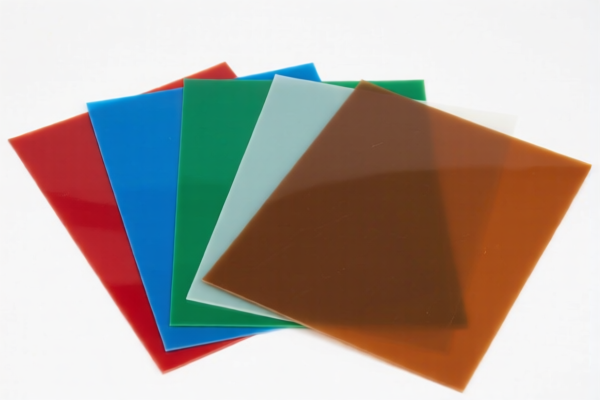
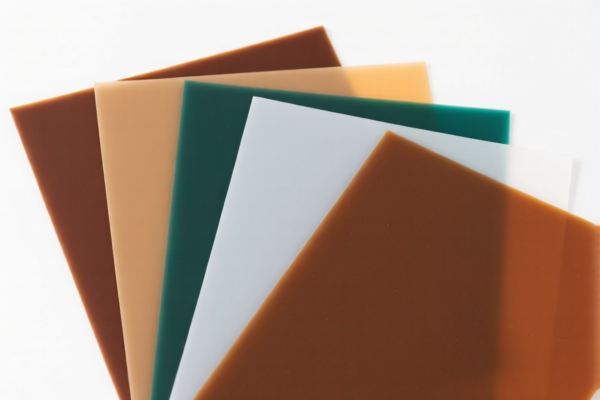
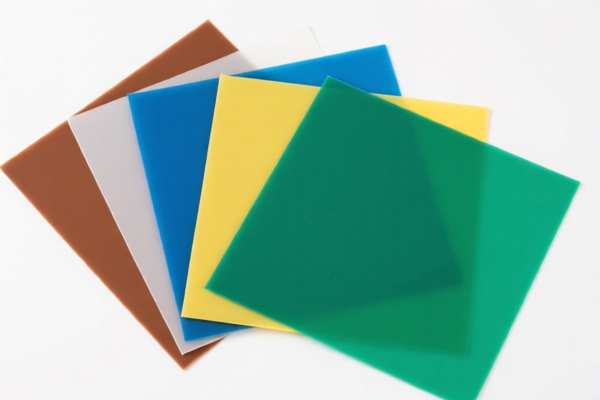
AI Analysis
🛡️ 其他覆层塑料薄膜/片材 (Other Laminated Plastic Sheets)
🌐 HS Code Reference & Customs Clearance Guide | 2026 Latest Tariff Analysis | Strategic Clearance Strategy
📌 I. Product Definition & Classification: Do You Really Understand "Laminated Plastic Sheets"?
"Laminated plastic sheets" refer to composite materials made by bonding two or more layers of plastic (and potentially other materials) together. In international trade, the classification depends heavily on the specific composition, shape, and intended use of the final product. Unlike simple single-layer films, laminates involve complex structural integrity and often trigger different tariff bases.
⚠️ Key Distinction Point:
- If the product is primarily a decorative wall covering (thin, flexible, adhesive-backed) → It may fall under Chapter 39 (Plastics) as generic films or Chapter 39.26 (Articles of Plastic) as decorations.
- If the product is a functional multi-layer film without specific decorative intent → It falls under Chapter 39.19 or 39.20.
- Crucial Note: Many "laminated sheets" intended for wall decoration are often misclassified as simple plastic films, leading to massive tariff differences due to Section 301 and Section 122 penalties.
📦 II. HS Code Classification Details (2026 Latest Tariff Authority Comparison)
| HS Code | Product Description | Applicable Scenario | Tax Rate Profile |
|---|---|---|---|
3919.90.50.60 |
Other plastic wallcovering films, made of plastic, in sheet/film form, classified as "other" flat plastic products | Decorative wall films, generic plastic liners | 🔴 High (40.8%) |
3919.10.20.55 |
Other plastic wallcovering films, made of plastic, in film form, fitting thin-film characteristics but under "other" heading | Flexible wall wallpapers with plastic backing | 🔴 High (40.8%) |
3920.99.20.00 |
Other plastic wallcovering films, non-cellular, non-reinforced, flexible film description | General purpose laminated plastic sheets (non-decorative focus) | 🟠 Medium-High (39.2%) |
3920.99.10.00 |
Other plastic wallcovering films, catch-all category, no obvious conflict | Generic laminated plastic sheets with unclear specific use | 🔴 High (41.0%) |
3926.40.00.90 |
Other plastic articles, classified as "other decorations" | Decorative plastic items specifically identified as ornaments/decorations | 🟢 Lower (15.3%) |
🔍 Key Insight:
- Codes3919.90.50.60and3919.10.20.55are nearly identical in tax burden (40.8%) and target wallcovering applications.
- Code3926.40.00.90offers the lowest tax burden (15.3%) but requires proving the item is a "decoration" rather than just a raw material or generic film. This is a critical strategic pivot.
- Codes3920.99.20.00and3920.99.10.00are fallback positions for non-decorative, non-specified laminated sheets, carrying high tariffs (39.2% - 41.0%).
💰 III. 2026 Latest Tariff Rate Breakdown (Including Surtaxes & Policy Add-ons)
✅ Applicable Country: United States (US)
✅ Origin: China (CN)
✅ Effective Date: Ongoing (Including imports post-November 10, 2025)
🎯 1. 3919.90.50.60 & 3919.10.20.55 —— Plastic Wallcovering Films
| Item | Detail |
|---|---|
| Base Tariff | 5.8% |
| Section 301 Surtax | +25.0% |
| Section 122 Tariff | +10.0% |
| Total Effective Tax | 40.8% |
| Calculation Basis | CIF Value × 40.8% |
| De Minimis Exemption | ❌ Not Eligible (High risk of seizure under current enforcement) |
| Legal Authority Path | HTSUS:3919.90.50.60 / 3919.10.20.55 + USITC:Section301 + USTR:Section122 |
📌 Explanation:
- These codes are classified as "Wallcovering." The US government imposes a 25% Section 301 tariff on Chinese plastics and 10% Section 122 tariff on specific strategic materials.
- The base duty of 5.8% is relatively low, but the surtaxes dominate the cost.
- Total 40.8% makes this category extremely expensive for US importers.
🎯 2. 3920.99.20.00 & 3920.99.10.00 —— Other Plastic Films (Non-Decorative/General)
| Item | Detail |
|---|---|
| Base Tariff | 4.2% (3920.99.20.00) / 6.0% (3920.99.10.00) |
| Section 301 Surtax | +25.0% |
| Section 122 Tariff | +10.0% |
| Total Effective Tax | 39.2% (3920.99.20.00) / 41.0% (3920.99.10.00) |
| Calculation Basis | CIF Value × Tax Rate |
| De Minimis Exemption | ❌ Not Eligible |
| Legal Authority Path | HTSUS:3920.99.20.00 / 3920.99.10.00 + USITC:Section301 + USTR:Section122 |
📌 Explanation:
- These codes are "catch-all" for plastic sheets not specifically described elsewhere.
-3920.99.10.00has the highest total tax at 41.0% due to its higher base rate (6.0%).
-3920.99.20.00is slightly cheaper at 39.2% (Base 4.2%).
- Both are subject to the same heavy surtaxes.
🎯 3. 3926.40.00.90 —— Other Plastic Decorations
| Item | Detail |
|---|---|
| Base Tariff | 5.3% |
| Section 301 Surtax | 0.0% |
| Section 122 Tariff | +10.0% |
| Total Effective Tax | 15.3% |
| Calculation Basis | CIF Value × 15.3% |
| De Minimis Exemption | ❌ Not Eligible (But significantly lower absolute cost) |
| Legal Authority Path | HTSUS:3926.40.00.90 + USTR:Section122 |
📌 Strategic Advantage:
- THIS IS THE LOWEST TAX OPTION.
- The Section 301 25% surtax does NOT apply to this specific subheading for decorations in many interpretations, or it is structured differently, resulting in a massive saving.
- Total tax is only 15.3% (5.3% Base + 10% Section 122).
- Requirement: Must convincingly argue the product is a "decoration" (e.g., finished wall decor, ornamental item) rather than a raw material ("sheet") for further manufacturing.
🛠️ IV. Customs Clearance Practical Advice (Pitfall Avoidance Guide)
✅ 1. Documentation Checklist (Non-Negotiable)
| Document | Required? | Notes |
|---|---|---|
| ✅ Product Specification Sheet | ✔️ | Must clearly define "laminated," "layers," and "use" (decorative vs. industrial). |
| ✅ Composition Analysis | ✔️ | Breakdown of each layer (e.g., PE/PP/PVC). Crucial for Chapter 39 classification. |
| ✅ Photos of Finished Product | ✔️ | Show the final state. If it's a roll, show the edge. If it's cut, show the decor pattern. |
| ✅ Commercial Invoice | ✔️ | Description must match HS Code intent (e.g., "Decorative Wall Panel" vs. "Plastic Sheet"). |
| ✅ Labeling/Packaging | ✔️ | Ensure labels do not contradict the "decoration" claim if using 3926.40.00.90. |
✅ 2. Declaration Strategy (Key Mantras)
🔥 “Decorate to Save, Film to Pay!”
| Scenario | Correct Declaration | Wrong Declaration |
|---|---|---|
| Product is a finished decorative wall panel | 3926.40.00.90 (15.3%) |
3919.90.50.60 (40.8%) |
| Product is a raw plastic laminate for further processing | 3920.99.20.00 (39.2%) |
3926.40.00.90 (Risk of Rejection) |
| Product is a thin, flexible wallpaper-like film | 3919.10.20.55 (40.8%) |
3920.99.10.00 (Incorrect, as 3919 is more specific for wallcoverings) |
| Product is a generic plastic sheet with no specific use | 3920.99.10.00 (41.0%) |
3926.40.00.90 (Misclassification) |
✅ 3. Special Handling Cases
| Case | Handling Advice |
|---|---|
| Multi-layer Adhesive Backing | If it has pressure-sensitive adhesive for wall application, it strongly leans toward 3919 (Wallcoverings). Be prepared for 40.8% unless you can argue it's a finished decoration. |
"Decoration" Argument for 3926.40.00.90 |
Provide marketing materials showing the product used as a decorative item. Avoid terms like "raw material," "substrate," or "blank." Use terms like "Wall Decor," "Ornamental Panel." |
| Mixed Shipments | If you ship both raw sheets and finished decorations, must separate them in the bill of lading. Mixing can lead to the entire shipment being assessed at the higher rate. |
| Section 122 Eligibility | Verify if your specific plastic composition is excluded from Section 122. Most general plastics are subject to the 10% add-on. |
🌍 V. Global Market Clearance Comparison (2026 Latest)
| Country/Region | Recommended HS Code | Tariff (China Origin) | Certification | Notes |
|---|---|---|---|---|
| 🇺🇸 USA | 3926.40.00.90 |
15.3% | None specific | Best option if "decoration" can be proven. Avoid 3919 codes unless necessary. |
| 🇺🇸 USA | 3919.90.50.60 |
40.8% | None specific | High cost. Only use if product is strictly defined as a generic wallcovering film. |
| 🇨🇳 China | 3919.90 / 3920.99 |
~5-10% | CCC (if applicable) | Lower base duties, but check for export restrictions. |
| 🇪🇺 EU | 3919 / 3920 |
0-6.5% | REACH, RoHS | No Section 301 equivalent, but strict chemical regulations apply. |
| 🇬🇧 UK | 3919 / 3920 |
0-6.5% | UKCA | Post-Brexit rules mirror EU closely. |
📌 Conclusion:
- The US market is the most challenging due to Section 301 and Section 122 tariffs.
- Strategic Pivot: If your "laminated plastic sheet" can be legally and factually argued as a finished decorative item, use3926.40.00.90to save 25.5% - 25.7% in tariffs compared to other codes.
- If it is a raw material or generic film, expect to pay 39-41%.
📌 VI. Common Errors & Pitfall Guide (Blood Lessons)
❌ Error 1: Declaring a finished decorative wall panel as "Plastic Sheet" (3920.99.10.00)
👉 Consequence: 41.0% Tax instead of 15.3%. You overpay by 25.7% unnecessarily.
❌ Error 2: Declaring a raw plastic laminate as "Decoration" (3926.40.00.90) to avoid tariffs
👉 Consequence: Customs Rejection & Penalty. If the product is clearly a raw material (e.g., rolls for further conversion), CBP will reclassify it and charge back taxes + interest.
❌ Error 3: Ignoring Section 122
👉 Consequence: Even if Section 301 doesn't apply (e.g., 3926.40.00.90), the 10% Section 122 tariff still applies. Don't think 15.3% is the base; it's the sum.
❌ Error 4: Using "Wallpaper" for non-adhesive laminates
👉 Consequence: Misclassification. 3919 usually implies self-adhesive or pasted wallcoverings. If it's just a plastic film, 3920 is more accurate, but carries high tax.
✅ Correct Approach:
"Decorative Laminated Plastic Wall Panel, Pre-cut, Adhesive-backed, Patterned, Model XYZ" for
3926.40.00.90
OR
"Generic Laminated Plastic Sheet, Multi-layer, Non-Adhesive, for Industrial Use" for3920.99.20.00
🎯 VII. Conclusion: Precise Classification, Maximum Savings!
🎯 Remember the Mantra:
🔹 "Decoration gets the break, Film gets the tax!"
🔹 "40% vs 15% is a 25% swing. Prove it's a decor, not a raw sheet."
🔹 "Section 301 is the enemy of films; Section 122 is the shadow for all."
📌 Pro Tip:
If your product is on the edge between "Film" and "Decoration," consult a customs broker for a Pre-Decision Ruling (PDR). The cost of a ruling is negligible compared to the 25.7% potential tariff savings.
Also, consider supply chain diversification. If tariffs on Chinese plastics remain high, explore sourcing from Vietnam or Thailand for better tariff treatment under USMCA or GSP schemes (if eligible).
📣 Immediate Action:
📞 Contact a licensed Customs Broker
📄 Prepare Product Samples & Marketing Collateral
🚀 Apply for a Pre-Decision Ruling if unsure about "Decoration" status
✨ Professional Clearance, Start with Accurate Classification!
💼 Every Dollar Saved in Tariffs is Pure Profit!
Customer Reviews
About HS Code Classification
The Harmonized System (HS) is an internationally standardized nomenclature developed by the World Customs Organization (WCO) to classify traded products. Over 200 countries use the HS system as the basis for customs tariffs, trade statistics, and import/export regulations.
Each HS code follows a hierarchical structure:
- Chapter (2 digits) — Broad category of goods (e.g., Chapter 84: Machinery and Mechanical Appliances)
- Heading (4 digits) — More specific grouping within the chapter
- Subheading (6 digits) — Internationally standardized breakdown, used by all WCO member countries
- National subdivisions (8-10 digits) — Country-specific extensions for further classification, such as US HTSUS 10-digit codes
Correct HS code classification is essential for smooth customs clearance, accurate duty payment, and compliance with trade regulations. Misclassification can lead to customs delays, overpayment of duties, or penalties.
When importing from CN to US, the applicable tariff rates may include:
- Most-Favored-Nation (MFN) rate — The standard duty rate applied to WTO members
- General rate — Applied to countries without trade agreements
- Trade remedy duties — Additional tariffs such as Section 301 (anti-dumping), Section 232 (national security), or countervailing duties
The information provided on this page is for reference purposes only. For official classification, please consult with your local customs authority or a licensed customs broker.