Other Material Car Accessories
CN → US| HS Code | Tariff Rate | Origin | Destination | Doc |
|---|---|---|---|---|
| 4016996010 | 37.5% | CN | US | Official Doc |
| 8708295160 | 0.0% | CN | US | Official Doc |
| 4016931050 | 37.5% | CN | US | Official Doc |
| 8512202080 | 35.0% | CN | US | Official Doc |
| 8708295160 | 0.0% | CN | US | Official Doc |
Product Images

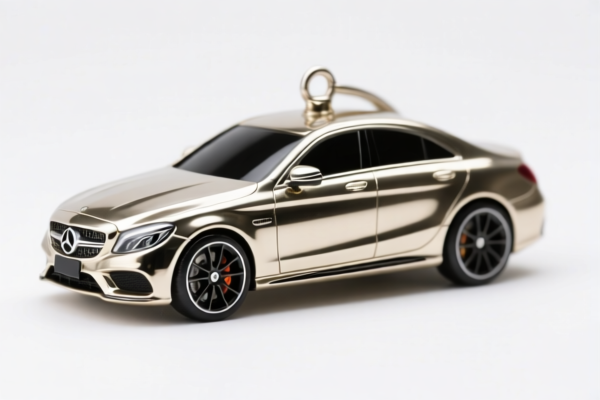
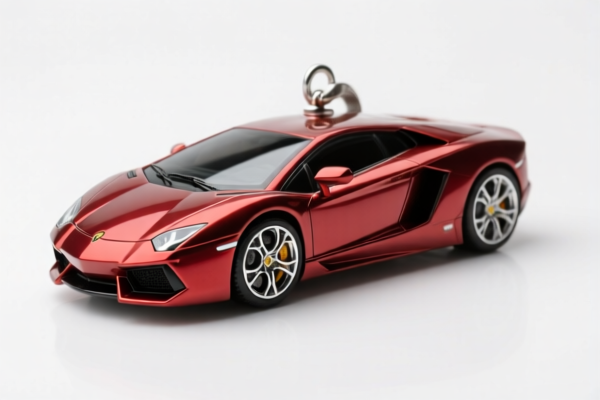
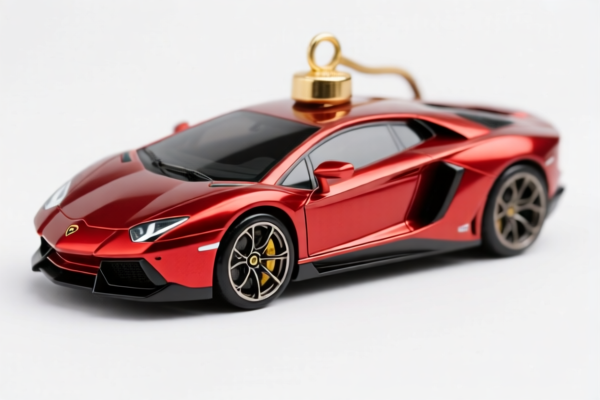
AI Analysis
🚗 Other Material Car Accessories: HS Code & Customs Clearance Strategy (US-China Trade)
🌐 HS Code Reference & Customs Clearance Guide | 2026 Latest Tariff Analysis | Professional Clearance Strategy
📌 I. Product Definition & Classification: What are "Other Material Car Accessories"?
"Other Material Car Accessories" is a broad, generic trade term typically referring to automotive parts, components, or accessories that do not fall into specific, high-profile categories like engines, tires, or glass. In international trade, these are often classified as miscellaneous parts and accessories for motor vehicles.
Key Characteristics: * Generic Description: The name "Other Parts and Accessories" is a classic "catch-all" phrase. * Material Ambiguity: The term "Other Material" implies the material is not the primary defining feature for a specific sub-category, or it is unspecified. This often triggers "default" or "bottom-line" classification rules. * Usage: These items are essential for vehicle function, repair, or decoration (e.g., trim, brackets, hoses, seals, interior fittings, exterior moldings).
⚠️ Critical Distinction: * If the accessory has a specific function (e.g., lights, wipers), it may belong to a more specific HS code. * If the function is generic or structural support, it falls under Chapters 40 (Rubber) or 8708 (Auto Parts). * Risk: Misclassification can lead to significant tariff differences, especially with current US trade policies.
📦 II. HS Code Classification Details (Based on Provided Data)
The following HS Codes are derived from the provided data, reflecting potential classifications based on material composition, function, and customs "catch-all" rules.
| HS Code | Product Description | Matching Logic (From Data) | Total Tax Rate (US/China) |
|---|---|---|---|
4016.99.60.10 |
Rubber Parts & Accessories | Matches "Other parts and accessories" with "Other... auto mechanical parts." Since material is unspecified, common sense infers it does not conflict with vulcanized rubber. Fits the "bottom-line category" rule. | 37.5% |
8708.29.51.60 |
Other Auto Parts & Accessories (Steel/Aluminum/Copper) | Matches "Other parts and accessories" and "Other parts and attachments." No material/form conflict. Fits the "Other" category bottom-line principle. Note: Higher tax for steel/aluminum/copper. | 87.5% (See Tax Detail) |
8708.29.51.60 |
Other Auto Parts & Accessories (General) | Same as above. Generic term "Auto Accessories" matches "Other parts and attachments." Bottom-line classification applies. | 87.5% (See Tax Detail) |
4016.93.10.50 |
Vulcanized Rubber Auto Parts | Matches "Other... kinds." Inferred as vulcanized rubber based on "auto parts" common sense. No obvious material/form conflict. | 37.5% |
8512.20.20.80 |
Vehicle Lighting/Signaling Equipment Parts | Classified as "Parts/Components." Matches "Lighting/Signaling equipment for vehicles." No material/form conflict. Follows "Parts default tendency to match" rule. | 35.0% |
🔍 Key Insight from Data: * The most common classification for generic "Other Material Car Accessories" is 8708.29.51.60 (General Auto Parts) or 4016 (Rubber Parts). * The material is the key differentiator. If the product is rubber, it goes to
4016. If it is metal or unspecified, it goes to8708. * Tariff Risk:8708.29.51.60carries a significantly higher tariff due to Section 232 (Steel/Aluminum) and Section 301 duties.
💰 III. 2026 Latest Tariff Rate Details (Including Additional Taxes)
✅ Applicable Country: United States (US) ✅ Origin: China (CN) ✅ Effective Time: Ongoing under current trade policies (Section 301, 232, IEEPA)
🎯 1. 4016.99.60.10 / 4016.93.10.50 —— Rubber Auto Parts & Accessories
| Item | Details |
|---|---|
| Basic Duty | 2.5% (ad valorem) |
| Section 301 Additional Duty | 25.0% |
| IEEPA Additional Duty | 10.0% (China/HK products, from Nov 10, 2025) |
| Total Tax Rate | 37.5% |
| Tax Calculation | CIF Value × 37.5% |
| De Minimis Exemption | ❌ Not Eligible (deny_de_minimis) |
| Legal Basis | IEEPA:9903.01.25 → IEEPA:9903.01.24 → USITC:4016... |
📌 Explanation: * Rubber parts are subject to Section 301 (25%) and IEEPA (10%). * Total 37.5% is high but lower than metal auto parts. * Recommendation: If the product is made of rubber (seals, gaskets, hoses), this is the likely classification.
🎯 2. 8708.29.51.60 —— Other Auto Parts (Steel/Aluminum/Copper)
| Item | Details |
|---|---|
| Basic Duty | 2.5% |
| Section 301 Additional Duty | 25.0% |
| IEEPA Additional Duty | 10.0% |
| Section 232 Additional Duty | 50.0% (For Steel, Aluminum, Copper products) |
| Total Tax Rate | 87.5% |
| Tax Calculation | CIF Value × 87.5% |
| De Minimis Exemption | ❌ Not Eligible |
| Legal Basis | IEEPA:9903.01.24 → USITC:8708.29.51.60 → FOOTNOTE:Section 232 |
📌 Explanation: * This is the highest risk category. * If the "Other Material" accessory contains steel, aluminum, or copper (e.g., brackets, clips, metal trim), it triggers the 50% Section 232 duty. * Total 87.5% is extremely high. Strict material verification is required. * If the part is made of plastic, glass, or other non-Section 232 materials, the 50% may not apply, but the provided data explicitly lists the 50% for this code, implying a high likelihood of metal content.
🎯 3. 8512.20.20.80 —— Lighting/Signaling Parts
| Item | Details |
|---|---|
| Basic Duty | 0.0% |
| Section 301 Additional Duty | 25.0% |
| IEEPA Additional Duty | 10.0% |
| Total Tax Rate | 35.0% |
| Tax Calculation | CIF Value × 35.0% |
| De Minimis Exemption | ❌ Not Eligible |
| Legal Basis | IEEPA:9903.01.24 → USITC:8512.20.20.80 |
📌 Explanation: * If the "accessory" is a lighting component (e.g., LED strip, reflector, bulb holder), it may fall here. * 35.0% is the lowest rate among the options. * Recommendation: If the item is a lighting-related accessory, argue for this classification to save 2.5%–52.5% compared to other codes.
🛠️ IV. Customs Clearance Practical Advice (Real-World Pitfall Guide)
✅ 1. Required Documentation Checklist
| Document | Must Provide | Description |
|---|---|---|
| ✅ Product Specification | ✔️ | Detailed description of the accessory, its function, and material composition. |
| ✅ Material Certificate | ✔️ | Crucial! Prove if the material is rubber, plastic, steel, aluminum, or mixed. |
| ✅ Product Photos | ✔️ | Clear images showing the item, including any labels, part numbers, and connections. |
| ✅ Bill of Lading/Invoice | ✔️ | Must match the HS code description exactly. Avoid vague terms like "Miscellaneous Parts." |
| ✅ Declaration Statement | ✔️ | Explicitly state: "This product consists of [Material] and is used for [Function]." |
✅ 2. Declaration Strategy (Key Mantra)
🔥 "Material Defines Code, Function Defines Sub-Code, Vague Names Trigger 87.5%!"
| Scenario | Correct Declaration | Wrong Practice |
|---|---|---|
| Rubber Gaskets/Seals | 4016.99.60.10 (Rubber Parts) |
Vague "Car Parts" → Risk of 8708 (87.5%) |
| Metal Brackets/Clips | 8708.29.51.60 (Auto Parts) |
Omit material → Triggers 50% Section 232 |
| Lighting Accessories | 8512.20.20.80 (Lighting Parts) |
Call it "Decorative Accessory" → Risk of higher tax |
| Mixed Material Parts | Break down by primary material | "Other Material" → Customs may choose highest tax code |
✅ 3. Special Case Handling
| Case | Handling Advice |
|---|---|
| Plastic Accessories | If no metal/rubber, argue for 8708 without Section 232. Provide plastic material certificate. |
| Textile/Leather Accessories | If interior trim, verify if it falls under 8708 or specific textile codes. |
| Electrical Components | If part of a lighting system, use 8512 to benefit from lower base duty (0%). |
| Unknown Material | DO NOT declare as "Other Material." Customs will default to the highest risk code. Test and verify. |
🌍 V. Global Market Clearance Comparison (2026)
| Country/Region | Recommended HS Code | Tariff (China Origin) | Certification | Notes |
|---|---|---|---|---|
| 🇺🇸 USA | 4016.99.60.10 / 8708.29.51.60 |
37.5% – 87.5% | No special certs | Highest Risk: Section 232 (Steel/Aluminum) and Section 301. |
| 🇨🇳 China | 4016.99.60.10 / 8708.29.51.60 |
~5% – 10% | CCC (if applicable) | Lower tariffs, less strict material verification. |
| 🇪🇺 EU | 4016.99.60.10 / 8708.99.99 |
~3% – 4.5% | CE (if electronic) | No Section 232/301 equivalent. Lower overall cost. |
| 🇬🇧 UK | 4016.99.60.10 / 8708.99.99 |
~3% – 4.5% | UKCA | Similar to EU post-Brexit. |
📌 Conclusion: * USA is the most expensive market for "Other Material Car Accessories" due to layered tariffs. * Material verification is the single most important step for US clearance. * Plastic parts are significantly cheaper than Metal parts.
📌 VI. Common Errors & Pitfalls (Lessons Learned)
❌ Error 1: Declaring "Car Accessories" without specifying material.
👉 Consequence: Customs assigns 8708.29.51.60 with 50% Section 232 → 87.5% total tax.
❌ Error 2: Declaring rubber parts as "Plastic Parts." 👉 Consequence: Misdeclaration penalty + back taxes + seizure.
❌ Error 3: Using "De Minimis" (Section 321) for shipments >$800. 👉 Consequence: Denied entry. Auto parts are exempt from De Minimis.
❌ Error 4: Not separating mixed-material items. 👉 Consequence: If a part is 50% rubber and 50% metal, it may be classified under the higher tax metal code. Break down shipments if possible.
✅ Correct Approach:
"Vulcanized Rubber Gasket, Auto Part, Model XYZ, Material: NBR Rubber, Function: Sealant" vs "Metal Bracket, Auto Part, Material: Stainless Steel, Model ABC"
🎯 VII. Conclusion: Professional Classification Saves Money!
🎯 Remember the Mantra:
🔹 "Rubber = 37.5%, Metal = 87.5%, Lighting = 35.0%." 🔹 "Don't say 'Other.' Say 'Material + Function.'" 🔹 "HS Code determines your profit margin."
📌 Tips:
* If your accessories are made of Plastic, ensure you have a Material Certificate to avoid Section 232 duties.
* If your accessories are Lighting-related, argue for 8512 to reduce the base duty from 2.5% to 0%.
* Always apply for an Advance Ruling with US Customs (CBP) if the product is complex or mixed-material.
📣 Immediate Action:
📞 Contact a licensed customs broker + Provide Material Certificates + Request HS Code Pre-Ruling 🚀 Ensure smooth clearance, avoid penalties, and maximize your profit margins!
✨ Professional Clearance Starts with Precise Classification! 💼 Every dollar of tax saved is pure profit!
Customer Reviews
About HS Code Classification
The Harmonized System (HS) is an internationally standardized nomenclature developed by the World Customs Organization (WCO) to classify traded products. Over 200 countries use the HS system as the basis for customs tariffs, trade statistics, and import/export regulations.
Each HS code follows a hierarchical structure:
- Chapter (2 digits) — Broad category of goods (e.g., Chapter 84: Machinery and Mechanical Appliances)
- Heading (4 digits) — More specific grouping within the chapter
- Subheading (6 digits) — Internationally standardized breakdown, used by all WCO member countries
- National subdivisions (8-10 digits) — Country-specific extensions for further classification, such as US HTSUS 10-digit codes
Correct HS code classification is essential for smooth customs clearance, accurate duty payment, and compliance with trade regulations. Misclassification can lead to customs delays, overpayment of duties, or penalties.
When importing from CN to US, the applicable tariff rates may include:
- Most-Favored-Nation (MFN) rate — The standard duty rate applied to WTO members
- General rate — Applied to countries without trade agreements
- Trade remedy duties — Additional tariffs such as Section 301 (anti-dumping), Section 232 (national security), or countervailing duties
The information provided on this page is for reference purposes only. For official classification, please consult with your local customs authority or a licensed customs broker.