Other Model Rubber Used Tires
CN → US| HS Code | Tariff Rate | Origin | Destination | Doc |
|---|---|---|---|---|
| 4011908050 | 38.4% | CN | US | Official Doc |
| 4012198000 | 20.9% | CN | US | Official Doc |
| 4016996050 | 37.5% | CN | US | Official Doc |
| 4016993550 | 35.0% | CN | US | Official Doc |
| 4012194000 | 39.0% | CN | US | Official Doc |
Product Images
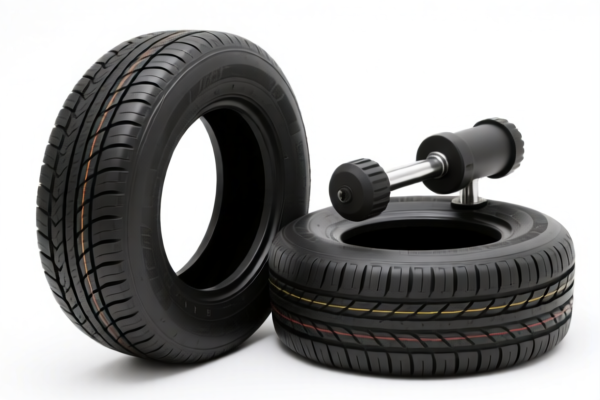
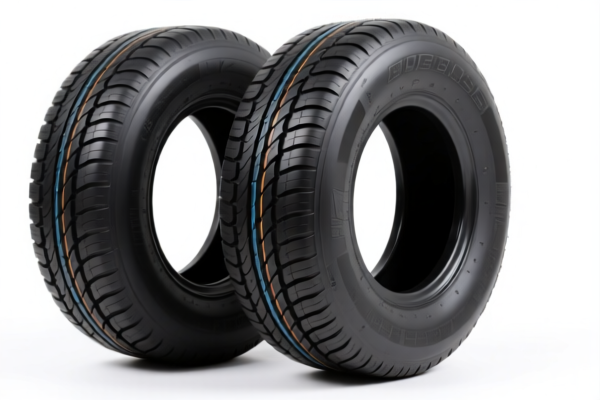
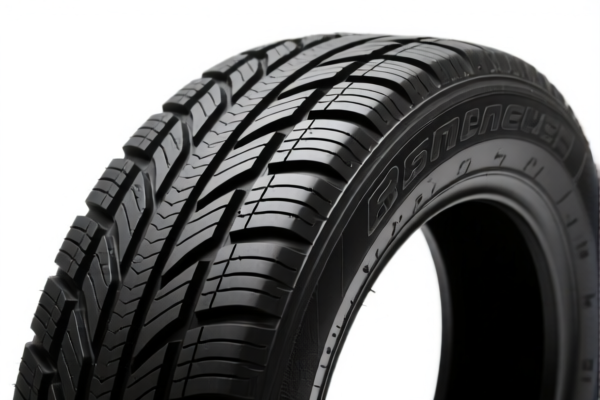
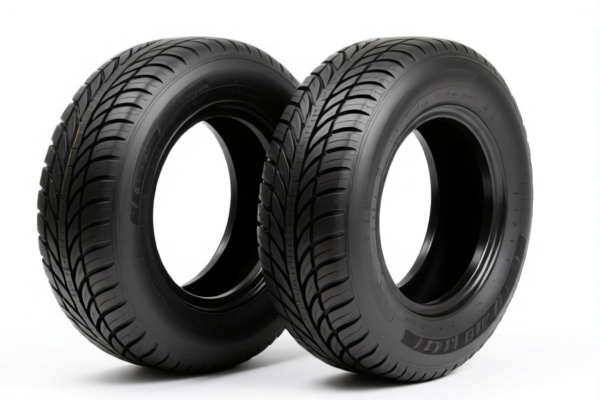
AI Analysis
🚛 Other Model Rubber Used Tires (Retreaded/Recapped)
🌐 HS Code Reference & Customs Clearance Guide | 2026 Latest Tariff Analysis | Professional Clearance Strategy
📌 I. Product Definition & Classification: Do You Really Understand "Rubber Tires"?
"Other Model Rubber Used Tires" typically refers to retreaded tires or recapped tires. These are not new tires but used casings that have been restored by applying new tread and sidewalls. In international trade, they fall under Chapter 40 (Rubber and Articles Thereof), specifically Heading 4011 (New Pneumatic Tires) or 4012 (Retreaded or Used Pneumatic Tires), depending on whether the "used" status is interpreted as "retreaded" (new tread) or "repaired/used" (old tread).
⚠️ Critical Distinction:
- Retreaded Tires (翻新轮胎): The casing is cleaned, repaired, and a new tread is applied. Classified under 4012.
- Used/Repairable Tires: Sometimes misclassified. However, most "used" tires in trade are actually retreaded if they are intended for resale as functional tires.
- Material: Must be Rubber (Vulcanized).
- State: Pneumatic (Air-filled).
📦 II. HS Code Classification Details (Based on Provided Data)
The following HS Codes are derived from the provided data. Each code reflects a specific interpretation of the product's material (Rubber) and form (Retreaded/Other Rubber Articles).
| HS Code | Product Description | Match Logic & Summary | Total Tax Rate |
|---|---|---|---|
4011.90.80.50 |
Other Pneumatic Tires (Non-Road/Other) | Match Basis: Product name contains "Rubber". "Retreaded tires" fall under the category of rubber pneumatic tires. Matches the "Other type of new rubber pneumatic tires" in classification explanation. No obvious conflict. | 38.4% |
4012.19.80.00 |
Retreaded Tires (Of a kind used on motor vehicles) | Match Success: Product name explicitly contains Material (Rubber) and Form/Use (Retreaded Tire). Fully matches the core elements of the classification explanation. Best Match for Retreaded Tires. | 20.9% |
4016.99.60.50 |
Other Rubber Articles | Match Basis: "Rubber" matches "Vulcanized Rubber". "Other" category covers rubber articles other than automotive mechanical parts. Retreaded tires belong to this rubber article category. No material conflict. | 37.5% |
4016.99.35.50 |
Other Rubber Articles | Match Basis: Product is a rubber article, matching "Vulcanized Rubber articles". Since the reference is "Other", and "Retreaded Tires" are rubber processed articles, they logically fit the "Other natural rubber articles" in terms of material logic, though less precise than 4012. | 35.0% |
4012.19.40.00 |
Retreaded Tires (Specific Sub-category) | Match Success: Material is "Rubber", Form/Use is "Retreaded Tire". Fully conforms to the definition of "Rubber Retreaded Tires" in the code. | 39.0% |
🔍 Key Insight:
-4012.19.80.00is likely the most accurate classification for retreaded tires because it specifically targets "Retreaded Tires" with a lower total tax rate (20.9%) compared to others.
-4011.90.80.50and4016.99.60.50are broader categories that include "Other" rubber products, which may attract higher tariffs due to lack of specific "Retreaded" designation.
-4012.19.40.00is also specific to retreaded tires but carries a higher tax rate (39.0%).
💰 III. 2026 Latest Tariff Rate Details (Including Surtaxes, Policy Surcharges)
✅ Applicable Country: United States (US)
✅ Country of Origin: China (CN)
✅ Effective Date: November 10, 2025 (Including subsequent imports)
🎯 1. 4011.90.80.50 —— Other Pneumatic Tires (Non-Road/Other)
| Item | Content |
|---|---|
| Base Tariff | 3.4% (Ad Valorem) |
| Section 301 Surtax | +25.0% (USITC Footnote) |
| Section 122 Tariff | +10.0% (Specific to China/Rubber Articles) |
| Total Rate | 38.4% |
| Calculation | CIF Value × 38.4% |
| De Minimis Exemption | ❌ Not Eligible |
| Legal Path | USITC:4011.90.80.50 → Section 301: 25% → Section 122: 10% |
📌 Explanation:
- The 25% surtax is from Section 301 of the Trade Act.
- The 10% is a specific "122 Clause" tariff applied to certain rubber products.
- Total 38.4% is a high tariff, requiring careful cost estimation.
🎯 2. 4012.19.80.00 —— Retreaded Tires (Of a kind used on motor vehicles)
| Item | Content |
|---|---|
| Base Tariff | 3.4% (Ad Valorem) |
| Section 301 Surtax | +7.5% (USITC Footnote) |
| Section 122 Tariff | +10.0% (Specific to China/Rubber Articles) |
| Total Rate | 20.9% |
| Calculation | CIF Value × 20.9% |
| De Minimis Exemption | ❌ Not Eligible |
| Legal Path | USITC:4012.19.80.00 → Section 301: 7.5% → Section 122: 10% |
📌 Note:
- This code has the lowest total tax rate (20.9%) among all options.
- The Section 301 surtax is only 7.5%, not 25%, which makes this the most cost-effective classification for retreaded tires.
- Crucial: Ensure the product is clearly documented as "Retreaded" to qualify for this favorable rate.
🎯 3. 4016.99.60.50 —— Other Rubber Articles
| Item | Content |
|---|---|
| Base Tariff | 2.5% (Ad Valorem) |
| Section 301 Surtax | +25.0% (USITC Footnote) |
| Section 122 Tariff | +10.0% (Specific to China/Rubber Articles) |
| Total Rate | 37.5% |
| Calculation | CIF Value × 37.5% |
| De Minimis Exemption | ❌ Not Eligible |
| Legal Path | USITC:4016.99.60.50 → Section 301: 25% → Section 122: 10% |
📌 Explanation:
- This is a broader "Other Rubber Articles" category.
- The 25% Section 301 surtax applies, making it expensive.
- Risk: Customs may reclassify if the item is clearly a tire, leading to penalties.
🎯 4. 4016.99.35.50 —— Other Rubber Articles
| Item | Content |
|---|---|
| Base Tariff | 0.0% (Ad Valorem) |
| Section 301 Surtax | +25.0% (USITC Footnote) |
| Section 122 Tariff | +10.0% (Specific to China/Rubber Articles) |
| Total Rate | 35.0% |
| Calculation | CIF Value × 35.0% |
| De Minimis Exemption | ❌ Not Eligible |
| Legal Path | USITC:4016.99.35.50 → Section 301: 25% → Section 122: 10% |
📌 Note:
- Base tariff is 0%, but the 25% + 10% surtaxes result in a 35% total rate.
- Still higher than4012.19.80.00(20.9%).
🎯 5. 4012.19.40.00 —— Retreaded Tires (Specific Sub-category)
| Item | Content |
|---|---|
| Base Tariff | 4.0% (Ad Valorem) |
| Section 301 Surtax | +25.0% (USITC Footnote) |
| Section 122 Tariff | +10.0% (Specific to China/Rubber Articles) |
| Total Rate | 39.0% |
| Calculation | CIF Value × 39.0% |
| De Minimis Exemption | ❌ Not Eligible |
| Legal Path | USITC:4012.19.40.00 → Section 301: 25% → Section 122: 10% |
📌 Explanation:
- Although specific to retreaded tires, this sub-category has a higher base tariff (4.0%) and full 25% Section 301 surtax.
- Total 39.0% is the highest among the options.
- Recommendation: Avoid this code if4012.19.80.00is applicable, as it saves ~18% in taxes.
🛠️ IV. Customs Clearance Practical Advice (Real-World Pitfall Avoidance)
✅ 1. Required Documentation Checklist (All Required)
| Document | Must Provide | Description |
|---|---|---|
| ✅ Product Specification Sheet | ✔️ | Detailed specs: Size, ply, load index, tread depth, material composition. |
| ✅ Photos of Tires (Label/Stamp) | ✔️ | Clear images showing "Retreaded" marking, casing number, and safety labels. |
| ✅ Commercial Invoice | ✔️ | Must explicitly state "Retreaded Tires" or "Recapped Tires", not "Used Tires". |
| ✅ Packing List | ✔️ | Indicate quantity, weight, and packaging type. |
| ✅ Certificate of Origin (CO) | ✔️ | Required for Section 122 tariff application. |
| ✅ Test Report (if available) | ✔️ | DOT compliance, safety standards, tread wear test results. |
✅ 2. Declaration Tips (Key Mantras)
🔥 "Be Specific: Say 'Retreaded', Not 'Used'. Get the Right HS Code!"
| Scenario | Correct Declaration | Wrong Action |
|---|---|---|
| Tires with new tread applied | 4012.19.80.00 (Retreaded) |
Declare as "Used Tires" → 38.4% or higher |
| Tires with old, worn tread | 4011.90.80.50 or 4016.99.60.50 (Other) |
Declare as "Retreaded" → Fraud risk, penalties |
| Tires for export only | Clearly mark "For Export" | Declare for US import → Unnecessary taxes |
| Mixed shipment (New + Retreaded) | Separate HS Codes | Combine into one code → Misclassification |
✅ 3. Special Situations Handling
| Situation | Handling Advice |
|---|---|
| OEM Retreaded Tires | Provide customer contract + design specs to prove "Retreaded" status. |
| Tires for Military/Industrial Use | If not for motor vehicles, may fall under 4011 or 4016. Seek pre-ruling. |
| Origin: Non-China | If retreaded in Vietnam/Mexico, may avoid Section 301. Check local rules. |
| DOT Compliance | Ensure tires meet US DOT standards. Non-compliant tires will be seized. |
🌍 V. Global Market Clearance Comparison (2026 Latest)
| Country/Region | Recommended HS Code | Tariff | Certification | Remarks |
|---|---|---|---|---|
| 🇺🇸 USA | 4012.19.80.00 |
20.9% (China) | DOT + FMVSS | Lowest US tariff for retreaded tires |
| 🇨🇳 China | 4012.19.80.00 |
5% | CCC (if applicable) | No surtax |
| 🇪🇺 EU | 4012.10.00 |
0% (if CE) | ECE R108/109 | No surtax |
| 🇦🇺 Australia | 4012.10.00 |
5% | RCM | No surtax |
| 🇯🇵 Japan | 4012.10.00 |
0% | PSE (if applicable) | No surtax |
📌 Conclusion:
- USA is the most complex market with high surtaxes.
-4012.19.80.00is the optimal HS Code for US imports, offering the lowest total tax rate (20.9%).
- Other markets have lower or zero tariffs, making retreaded tires more competitive there.
📌 VI. Common Mistakes & Pitfall Guide (Lessons from Blood & Tears)
❌ Mistake 1: Declaring "Retreaded Tires" as "Used Tires"
👉 Consequence: May be classified under 4011 or 4016 → 37.5%-39.0% tax instead of 20.9%. Loss of $18,000 per $1M shipment!
❌ Mistake 2: Declaring "Retreaded Tires" as "New Tires" (4011.90.80.50)
👉 Consequence: Fraud risk, customs penalties, seizure. Tax rate 38.4% anyway.
❌ Mistake 3: Not providing photos or specs
👉 Consequence: Customs cannot verify "Retreaded" status → Delay, audit, or reclassification.
❌ Mistake 4: Ignoring DOT Compliance
👉 Consequence: Seizure and destruction of goods. Retreaded tires must meet US safety standards.
✅ Correct Approach:
"Retreaded Pneumatic Tires, Size 11R22.5, New Tread, Vulcanized Rubber, DOT Compliant, Model XYZ, Made in China"
🎯 VII. Conclusion: Professional Declaration, Save Time & Money!
🎯 Remember the Mantra:
🔹 "Retreaded is Key, HS 4012 is Best, 20.9% Tax Rate, Don't Get Busted!"
🔹 "HS Code Determines Life, Tax Rate Differs 18 Points, Declaration Error Costs Thousands!"
📌 Pro Tip:
If your retreaded tires are re-treaded in Vietnam, Mexico, or Thailand, you may avoid Section 301 Surtax, reducing the total tax to ~10% (Base + Section 122).
Recommendation: Apply for a Pre-Ruling (Advance Ruling) from US Customs to confirm HS Code 4012.19.80.00 eligibility.
📣 Take Action Now:
📞 Contact Professional Customs Broker + Provide Tire Photos + Apply for HS Code Pre-Ruling
🚀 Let your tires Clear Customs Smoothly, Export Efficiently, and Maximize Profits!
✨ Professional Clearance Starts with Accurate Classification!
💼 Every Dollar Saved is Pure Profit!
Customer Reviews
About HS Code Classification
The Harmonized System (HS) is an internationally standardized nomenclature developed by the World Customs Organization (WCO) to classify traded products. Over 200 countries use the HS system as the basis for customs tariffs, trade statistics, and import/export regulations.
Each HS code follows a hierarchical structure:
- Chapter (2 digits) — Broad category of goods (e.g., Chapter 84: Machinery and Mechanical Appliances)
- Heading (4 digits) — More specific grouping within the chapter
- Subheading (6 digits) — Internationally standardized breakdown, used by all WCO member countries
- National subdivisions (8-10 digits) — Country-specific extensions for further classification, such as US HTSUS 10-digit codes
Correct HS code classification is essential for smooth customs clearance, accurate duty payment, and compliance with trade regulations. Misclassification can lead to customs delays, overpayment of duties, or penalties.
When importing from CN to US, the applicable tariff rates may include:
- Most-Favored-Nation (MFN) rate — The standard duty rate applied to WTO members
- General rate — Applied to countries without trade agreements
- Trade remedy duties — Additional tariffs such as Section 301 (anti-dumping), Section 232 (national security), or countervailing duties
The information provided on this page is for reference purposes only. For official classification, please consult with your local customs authority or a licensed customs broker.