Other Natural Rubber Sheets
CN → US| HS Code | Tariff Rate | Origin | Destination | Doc |
|---|---|---|---|---|
| 4005910000 | 35.0% | CN | US | Official Doc |
| 4001210050 | 35.0% | CN | US | Official Doc |
| 4005990000 | 35.0% | CN | US | Official Doc |
| 3913901000 | 35.0% | CN | US | Official Doc |
| 3913905000 | 41.5% | CN | US | Official Doc |
Product Images
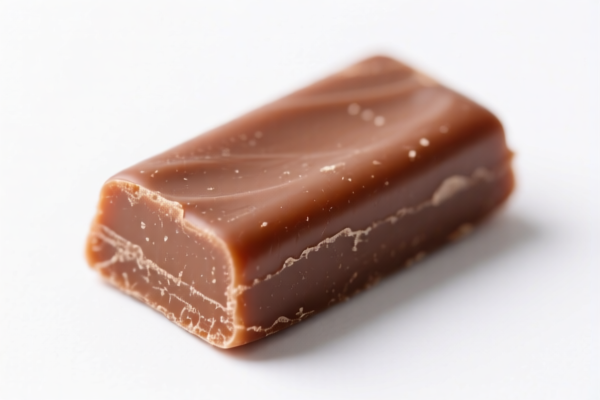



AI Analysis
🌿 Natural Rubber Sheets & Strips: The Ultimate Guide to US Import Classification & Tariffs (2026)
🌐 HS Code Reference & Customs Clearance Guide | 2026 Latest Tariff Analysis | Professional Clearance Strategy
📌 I. Product Definition & Classification: What Exactly Are "Other Natural Rubber Sheets"?
In international trade, Natural Rubber Sheets/Strips are primarily categorized under Chapter 40 (Rubber and Articles Thereof). However, because natural rubber can be processed into various forms (raw, sheet, strip, lump, scrap, or powder), it often overlaps with chapters dealing polymers or semi-finished goods.
Key Distinctions: * Natural Rubber (NR): Raw latex or coagulated rubber, unvulcanized, non-reticulated. * Vulcanized Rubber: Processed, hardened rubber (usually falls under different headings like 4016 if used as parts). * Synthetic Rubber/Polymers: Often confused with natural rubber but classified under Chapter 39 (Plastics).
⚠️ Critical Classification Point:
- If the product is Natural Rubber in sheet, strip, lump, scrap, or powder form, it generally falls under Heading 4001 or 4005.
- If it is a natural polymer in a primary form that doesn't fit specific rubber definitions, it might be misclassified under Chapter 39 (Plastics/Resins), leading to significant tariff discrepancies.
- Unvulcanized compounded rubber (mixed with additives but not cross-linked) falls under 4005.
📦 II. HS Code Classification Details (2026 Latest Tariff Authority Comparison)
Based on the provided dataset, here are the five potential HS Codes for "Other Natural Rubber Sheets/Strips," along with the logical reasoning for each classification.
| HS Code | Product Description | Classification Logic (Why this code?) | Tax Rate (Total) |
|---|---|---|---|
| 4005.91.00.00 | Other unvulcanized natural rubber compounds | Logic: Matches natural rubber material and strip/sheet shape. Fits the "other" category for compounded/unvulcanized rubber. No material conflict. | 35.0% |
| 4001.21.00.50 | Natural rubber sheets, strips (other than latex) | Logic: Matches natural rubber material and strip/sheet shape. Fits the "other" category definition. Standard raw rubber form. | 35.0% |
| 4005.99.00.00 | Other unvulcanized rubber articles | Logic: Matches unvulcanized compounded rubber material and strip shape. No material conflict; used as a fallback for specific unvulcanized forms. | 35.0% |
| 3913.90.10.00 | Natural polymers in primary forms | Logic: Matches natural polymer primary form and strip shape. Fits the "other" category logic for polymers not specified elsewhere. Risk: May be considered incorrect if it is clearly "rubber" per Chapter 40 notes. | 35.0% |
| 3913.90.50.00 | Other natural polymers | Logic: Matches natural polymer material and original strip shape. Fits the "other" category fallback logic for polymers. Higher Tax Risk. | 41.5% |
🔍 Key Insight:
- HS 4005/4001 are the correct classifications for Rubber.
- HS 3913 is for Polymers (often synthetic or chemically modified). Using 3913 for natural rubber may trigger audits or incorrect duty assessments.
- 3913.90.50.00 has a higher base tariff (6.5%), resulting in a total of 41.5%, making it the most expensive option if misapplied.
💰 III. 2026 Latest Tariff Rate Breakdown (Including Additional Taxes & Policies)
✅ Applicable Country: United States (US)
✅ Country of Origin: China (CN)
✅ Effective Date: From November 10, 2025 (and subsequent imports)
🎯 1. HS Codes 4005.91.00.00 / 4001.21.00.50 / 4005.99.00.00 / 3913.90.10.00
(Most Likely Correct Rubber Classifications)
| Item | Content |
|---|---|
| Base Tariff | 0.0% (ad valorem) |
| USITC Additional Tariff | +25.0% (under Section 301) |
| IEEPA Additional Tariff | +10.0% (Targeted at China/HK products, effective Nov 10, 2025) |
| Total Tariff | 35.0% |
| Calculation Basis | CIF Value × 35% |
| De Minimis Exemption | ❌ Not Applicable (deny_de_minimis) |
| Legal Basis Path | IEEPA:9903.01.25 → IEEPA:9903.01.24 → USITC:4005.91.00.00 → FOOTNOTE:9903.88.01 |
📌 Explanation:
- The 0% base rate might tempt importers to believe rubber is duty-free.
- However, the 25% Section 301 tariff and 10% IEEPA tariff stack on top, resulting in a 35% total.
- This is a high tariff for raw materials. Cost planning must account for this 35% levy.
🎯 2. HS Code 3913.90.50.00
(Higher Tax Risk – Polymer Classification)
| Item | Content |
|---|---|
| Base Tariff | 6.5% (ad valorem) |
| USITC Additional Tariff | +25.0% |
| IEEPA Additional Tariff | +10.0% |
| Total Tariff | 41.5% |
| Calculation Basis | CIF Value × 41.5% |
| De Minimis Exemption | ❌ Not Applicable |
| Legal Basis Path | IEEPA:9901.25 → IEEPA:9903.01.24 → USITC:3913.90.50.00 → FOOTNOTE:9903.88.01 |
📌 Warning:
- If customs determines your "natural rubber sheet" should have been classified under 3913.90.50.00 (due to polymer status or misclassification), you will pay 6.5% more base duty on top of the additional tariffs.
- Total 41.5% is significantly higher than the 35% for standard rubber codes.
🛠️ IV. Customs Clearance Operational Advice (Practical Pitfall Avoidance)
✅ 1. Required Documentation Checklist (Mandatory)
| Document | Must Provide | Explanation |
|---|---|---|
| ✅ Product Specification Sheet | ✔️ | Details: Material composition (100% Natural Rubber?), processing state (unvulcanized/vulcanized), form (sheet/strip/lump). |
| ✅ Technical Data Sheet (TDS) | ✔️ | Confirms if the product is compounded or raw. If compounded, it likely falls under 4005. |
| ✅ Product Photos | ✔️ | Clear images showing the physical form (sheet/strip) and any markings. |
| ✅ Commercial Invoice | ✔️ | Must clearly state "Natural Rubber Sheets/Strips, Unvulcanized." Avoid vague terms like "Polymer Sheets." |
| ✅ Certificate of Origin (CO) | ✔️ | Critical for determining origin-based tariffs. |
| ✅ Packing List | ✔️ | Detailing weight, dimensions, and packaging type. |
✅ 2. Declaration Tips (Key Mnemonic)
🔥 "Raw is 40, Polymers are 39, Unvulcanized is Key, Compounding Matters!"
| Scenario | Correct Declaration | Incorrect Action |
|---|---|---|
| Raw Natural Rubber Sheets | 4001.21.00.50 |
Misclassifying as 3913.90.50.00 → Pays 41.5% instead of 35%. |
| Compounded Unvulcanized Rubber | 4005.91.00.00 |
Declaring as "Raw Rubber" → May trigger audit if additives are present. |
| Vulcanized Rubber Sheets | Likely 4016.99 or other |
Declaring under 4005 → Major Compliance Violation (Vulcanized is different). |
| Natural Polymer (Non-Rubber) | 3913.90.10.00 |
Declaring as Rubber → May be rejected if material is not rubber. |
📌 Critical Note:
- Ensure the product is unvulcanized. If it has been vulcanized (hardened through heating), it no longer falls under 4001/4005.
- Clearly distinguish between Natural Rubber (NR) and Synthetic Rubber (SR). SR often falls under 4002.
✅ 3. Special Cases Handling
| Situation | Handling Advice |
|---|---|
| Blended Rubber (Natural + Synthetic) | If natural content is dominant, it may still fall under 4001/4005. If synthetic dominates, it may be 4002. Provide blend ratio. |
| OEM Custom Sheets | Provide client order + design specs. Ensure description matches physical product. |
| Imported from Non-China Origins | If origin is Vietnam, Thailand, etc., IEEPA 10% may not apply. Check for FTA benefits. |
| Misclassified as 3913.90.50.00 | If already declared under 3913, prepare for potential duty difference audit. Consider pre-ruling. |
🌍 V. Global Market Customs Comparison (2026 Latest)
| Country/Region | Recommended HS Code | Tariff (China Origin) | Certification Requirements | Notes |
|---|---|---|---|---|
| 🇺🇸 USA | 4001.21.00.50 / 4005.91.00.00 |
35% (0% base + 25% Sec 301 + 10% IEEPA) | None specific for raw rubber | High tariff impact; plan costs accordingly. |
| 🇨🇳 China | 4001.21.00.50 |
0% - 5% | None | Low import duty for raw materials. |
| 🇪🇺 EU | 4001 / 4005 |
0% | REACH Registration | No additional tariffs for rubber. |
| 🇦🇺 Australia | 4001 / 4005 |
5% | GSR | Moderate tariff. |
| 🇯🇵 Japan | 4001 / 4005 |
0% - 3% | None | Favorable rates for natural rubber. |
📌 Conclusion:
- The US is the only market imposing high additional tariffs (35%) on Chinese-origin natural rubber.
- EU, Japan, Australia offer much better tariff advantages.
- Consider supply chain diversification if targeting the US market with high-volume natural rubber products.
📌 VI. Common Errors & Pitfall Avoidance (Lessons Learned)
❌ Error 1: Declaring Vulcanized Rubber under 4005.
👉 Consequence: Customs rejection, fines, or reclassification to 4016 (possibly higher duties).
✅ Fix: Confirm unvulcanized status.
❌ Error 2: Using 3913.90.50.00 for Natural Rubber.
👉 Consequence: Paying 41.5% instead of 35%; potential audit for misclassification.
✅ Fix: Use 4001 or 4005 for natural rubber.
❌ Error 3: Vague Description ("Rubber Sheet").
👉 Consequence: Customs cannot determine if it is raw, compounded, natural, or synthetic. Leads to delays.
✅ Fix: Use precise descriptions: "Unvulcanized Natural Rubber Sheets, 2mm Thickness."
❌ Error 4: Ignoring IEEPA 10% Tariff.
👉 Consequence: Underestimating landed cost by 10%.
✅ Fix: Include IEEPA in cost calculations for all China-origin goods.
🎯 VII. Conclusion: Professional Declaration, Save Time, Cut Costs!
🎯 Remember the Mnemonic:
🔹 "Raw Rubber is 40, Polymers are 39. Unvulcanized is key, Compounding matters. US Tariff is 35%, Don't let it bury you!"
🔹 "HS Code defines duty, 6.5% base difference, one step wrong, thousands lost!"
📌 Pro Tip:
If your natural rubber is originated from Vietnam, Thailand, or Malaysia, the IEEPA 10% may not apply, reducing your total tariff to 25%.
Consider applying for an Advance Ruling with US Customs to confirm the correct HS Code before shipment.
📣 Immediate Action:
📞 Contact a professional customs broker + Provide product photos + Apply for HS Code Advance Ruling
🚀 Let your rubber sheets clear smoothly, reduce costs, and boost profits!
✨ Professional Customs Clearance Starts with Accurate Classification!
💼 Every dollar of cost is worth calculating precisely!
Customer Reviews
About HS Code Classification
The Harmonized System (HS) is an internationally standardized nomenclature developed by the World Customs Organization (WCO) to classify traded products. Over 200 countries use the HS system as the basis for customs tariffs, trade statistics, and import/export regulations.
Each HS code follows a hierarchical structure:
- Chapter (2 digits) — Broad category of goods (e.g., Chapter 84: Machinery and Mechanical Appliances)
- Heading (4 digits) — More specific grouping within the chapter
- Subheading (6 digits) — Internationally standardized breakdown, used by all WCO member countries
- National subdivisions (8-10 digits) — Country-specific extensions for further classification, such as US HTSUS 10-digit codes
Correct HS code classification is essential for smooth customs clearance, accurate duty payment, and compliance with trade regulations. Misclassification can lead to customs delays, overpayment of duties, or penalties.
When importing from CN to US, the applicable tariff rates may include:
- Most-Favored-Nation (MFN) rate — The standard duty rate applied to WTO members
- General rate — Applied to countries without trade agreements
- Trade remedy duties — Additional tariffs such as Section 301 (anti-dumping), Section 232 (national security), or countervailing duties
The information provided on this page is for reference purposes only. For official classification, please consult with your local customs authority or a licensed customs broker.