Other New Pneumatic Rubber Tires Low Rolling Resistance
CN → US| HS Code | Tariff Rate | Origin | Destination | Doc |
|---|---|---|---|---|
| 4012909000 | 37.7% | CN | US | Official Doc |
| 4012904500 | 39.2% | CN | US | Official Doc |
| 4011908050 | 38.4% | CN | US | Official Doc |
| 4011105000 | 38.4% | CN | US | Official Doc |
Product Images
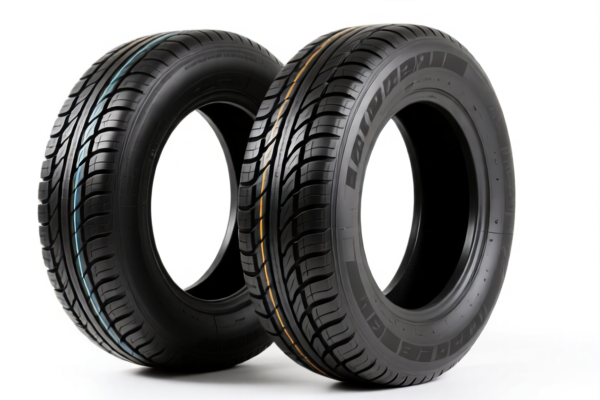
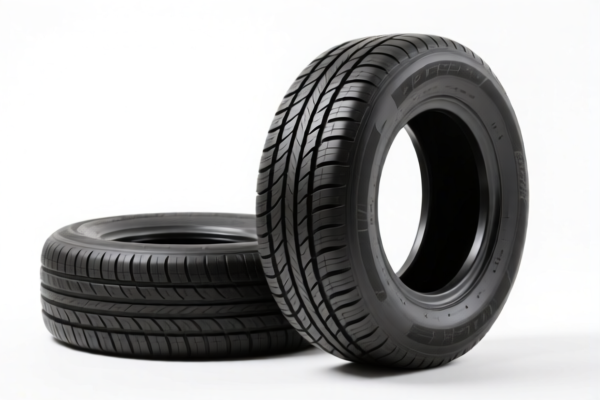
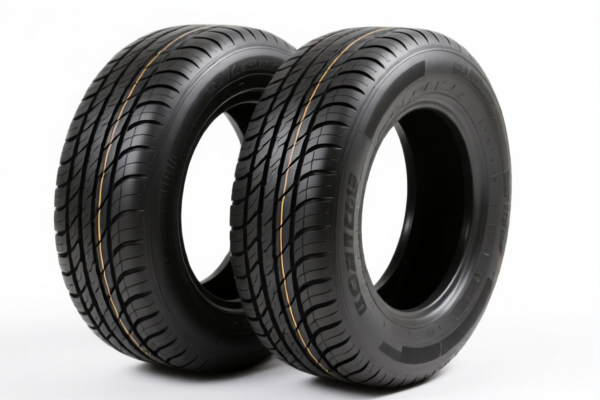
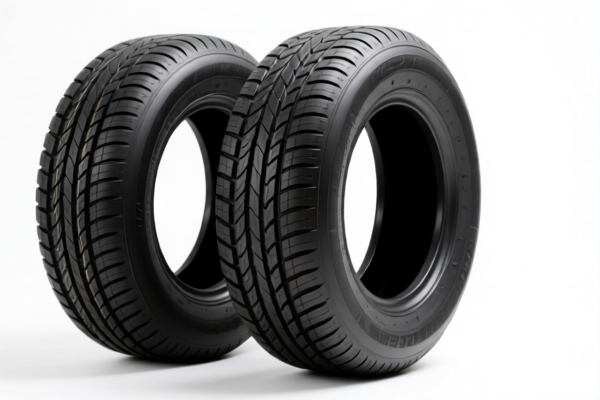
AI Analysis
🚗 High-Performance Tires: Low Rolling Resistance Pneumatic Rubber Tires
🌐 HS Code Reference & Customs Clearance Guide | 2026 Latest Tariff Analysis | Professional Clearance Strategy
📌 I. Product Definition & Classification: What Are "Low Rolling Resistance Tires"?
Low rolling resistance (LRR) pneumatic tires are specialized rubber tires designed to minimize energy loss during rolling, thereby improving fuel efficiency and extending battery range in electric vehicles (EVs). In international trade, these fall under Chapter 40 (Rubber and Articles Thereof), specifically focusing on new pneumatic tires.
⚠️ Key Classification Distinction:
- If the tires are designed for motor cars (sedans, SUVs, station wagons, racing cars) →归入 4011.10.50.00
- If the tires are for other vehicles (trucks, buses, aircraft, motorcycles, agricultural machinery, etc.) →归入 4011.90.80.50
- Crucial Point: "Low rolling resistance" is a performance feature, not a distinct HS Code category. The classification depends entirely on the vehicle type the tire is designed for.
📦 II. HS Code Classification Details (2026 Latest Tariff Authority Comparison)
| HS Code | Product Description | Applicable Scenario | Vehicle Type |
|---|---|---|---|
4011.10.50.00 |
New pneumatic tires, of rubber: Of a kind used on motor cars (including station wagons and racing cars): Other | Passenger car tires, SUV tires, EV tires, sports car tires | Motor Cars (Passenger Vehicles) |
4011.90.80.50 |
New pneumatic tires, of rubber: Other: Other Other | Truck tires, bus tires, aircraft tires, motorcycle tires, agricultural tires | Other Vehicles (Non-Passenger) |
🔍 Important Reminder:
- L tires for passenger cars MUST be classified under 4011.10.50.00, regardless of tread pattern or compound technology.
- L tires for commercial or industrial vehicles MUST be classified under 4011.90.80.50.
- Do NOT confuse with retreaded or used tires (Chapter 4012). The description explicitly states "New pneumatic tires".
💰 III. 2026 Latest Tariff Rate Details (Including Additional Taxes & Policy Surcharges)
✅ Applicable Country: United States (US)
✅ Country of Origin: China (CN)
✅ Effective Date: From November 10, 2025 (including subsequent imports)
🎯 1. 4011.10.50.00 —— New Pneumatic Tires for Motor Cars
| Item | Content |
|---|---|
| Base Tariff Rate | 3.4% (ad valorem) |
| Section 301 Additional Tariff | +25.0% (Added tariff for Chinese origin goods under US Trade Act Section 301) |
| Total Tariff Rate | 28.4% |
| Tax Calculation | CIF Value × 28.4% |
| De Minimis Exemption Available? | ❌ No (deny_de_minimis) |
| Legal Basis Path | USITC:4011.10.50.00 → SECTION_301:25% |
📌 Explanation:
- The 3.4% base rate is the standard Most Favored Nation (MFN) duty for tires imported into the US.
- The 25% additional tariff is imposed under Section 301 of the Trade Act of 1974 targeting Chinese-made goods, specifically including rubber tires.
- Total burden: 28.4%. This is a high tariff barrier, significantly impacting cost competitiveness.
🎯 2. 4011.90.80.50 —— New Pneumatic Tires for Other Vehicles
| Item | Content |
|---|---|
| Base Tariff Rate | 3.4% (ad valorem) |
| Section 301 Additional Tariff | +25.0% (Added tariff for Chinese origin goods under US Trade Act Section 301) |
| Total Tariff Rate | 28.4% |
| Tax Calculation | CIF Value × 28.4% |
| De Minimis Exemption Available? | ❌ No (deny_de_minimis) |
| Legal Basis Path | USITC:4011.90.80.50 → SECTION_301:25% |
📌 Note:
- Identical tax structure to passenger car tires.
- Applies to truck tires, bus tires, motorcycle tires, etc.
- Even if the tire has advanced LRR technology, the tariff remains 28.4% if originating from China.
🛠️ IV. Customs Clearance Practical Advice (Real-World Pitfall Avoidance Guide)
✅ 1. Required Documentation Checklist (All are Mandatory)
| Document | Must Provide | Description |
|---|---|---|
| ✅ Product Specification Sheet | ✔️ | Must specify tire size (e.g., 205/55R16), load index, speed rating, and intended vehicle type. |
| ✅ Product Photos (with Label) | ✔️ | Clear image of the tire sidewall showing brand, model, size, and "Made in China" marking. |
| ✅ Commercial Invoice | ✔️ | Must explicitly state: "New Pneumatic Tires of Rubber" and specify HS Code. |
| ✅ Packing List | ✔️ | Detail number of tires per carton/pallet. Avoid mixing different tire types in one shipment if possible. |
| ✅ Certificate of Origin (CO) | ✔️ | Essential for proving Chinese origin; if origin is elsewhere, different rates may apply. |
| ✅ Declaration of New Condition | ✔️ | Explicitly state "New" (not retreaded, not used) to avoid misclassification under Chapter 4012. |
✅ 2. Declaration Tips (Key Mnemonics)
🔥 "New vs. Retread, Car vs. Other, 28.4% is the cost!"
| Scenario | Correct Declaration | Incorrect Practice |
|---|---|---|
| Passenger Car LRR Tires | HS Code: 4011.10.50.00 |
Misdeclare as "Truck Tires" → Risk of penalty |
| Truck/Bus LRR Tires | HS Code: 4011.90.80.50 |
Misdeclare as "Car Tires" → Risk of penalty |
| Retreaded Tires | HS Code: 4012.90.90.00 or 4012.90.45.00 |
Declare as "New" → Smuggling/Fraud Risk |
| Mixed Shipment (Car + Truck) | Split declaration by HS Code | Combine under one HS Code → Customs Hold & Audit |
✅ 3. Special Circumstances Handling
| Scenario | Handling Advice |
|---|---|
| EV-Specific Tires | Still classified under 4011.10.50.00 if for passenger cars. No special tariff preference solely for "EV tires." |
| OEM Brand Tires | Provide OEM authorization letter if requested, but tariff rate remains the same. |
| Tires with Tubeless Valves | Still classified under the same HS Code. Valves are considered accessories of the tire. |
| Tires for Agricultural Machinery | Must be declared under 4011.90.80.50. Provide machinery type documentation if audited. |
🌍 V. Global Market Clearance Comparison (2026 Latest)
| Country/Region | Recommended HS Code | Tariff Rate (CN Origin) | Certification Requirements | Remarks |
|---|---|---|---|---|
| 🇺🇸 United States | 4011.10.50.00 / 4011.90.80.50 |
28.4% | DOT (Department of Transportation) Mark Mandatory | High tariff due to Section 301. |
| 🇨🇳 China | 4011.10.50.00 / 4011.90.80.50 |
~0-6% | CCC (if applicable) | Lower import duty for foreign tires. |
| 🇪🇺 European Union | 4011.10 / 4011.90 |
0-3% | E-Mark (ECE Regulation) | No Section 301 equivalent, but anti-dumping duties may apply for certain Chinese tires. |
| 🇬🇧 United Kingdom | 4011.10 / 4011.90 |
0-4% | UKCA Mark | Post-Brexit rules apply. |
| 🇦🇺 Australia | 4011.10 / 4011.90 |
5-10% | ADR Compliance | No additional punitive tariffs. |
📌 Conclusion:
- The US market imposes a significant 25% punitive tariff on Chinese tires, making the total cost burden 28.4%.
- EU and other major markets have much lower baseline tariffs but may enforce anti-dumping duties or strict safety certifications (E-Mark/UKCA).
- Strategy: For US-bound goods, consider supply chain diversification (e.g., production in Vietnam, Thailand, or EU) to avoid Section 301 tariffs.
📌 VI. Common Mistakes & Pitfall Avoidance Guide (Lessons Learned)
❌ Mistake 1: Declaring "Low Rolling Resistance" as the product name without specifying vehicle type.
👉 Consequence: Customs cannot determine HS Code → Shipment Delay or Rejection.
✅ Correct: "New Pneumatic Tires for Passenger Cars, Low Rolling Resistance, Size 205/55R16."
❌ Mistake 2: Misclassifying passenger car tires as "Other Tires" (4011.90) to seek lower rates (if any).
👉 Consequence: Customs audit reveals mismatch → Back Taxes + Penalties.
✅ Correct: Strictly follow vehicle type classification.
❌ Mistake 3: Forgetting to mark "New" on the invoice.
👉 Consequence: Ambiguity may lead to classification under Chapter 4012 (Retreaded/Used), which has different rates and legal requirements.
✅ Correct: Always explicitly state "NEW PNEUMATIC TIRES".
❌ Mistake 4: Ignoring DOT Marking requirements for the US.
👉 Consequence: Goods rejected at port or destroyed.
✅ Correct: Ensure every tire has a valid DOT code molded into the sidewall.
🎯 VII. Conclusion: Professional Declaration, Cost Control, and Efficiency!
🎯 Remember the Mnemonic:
🔹 "New Tires, Car or Other, 28.4% for China, DOT Mark is Key!"
🔹 "HS Code decides tax, 3.4% base plus 25% surcharge, declare accurately, save money!"
📌 Pro Tip:
If your tires are originating from Vietnam, Thailand, Mexico, or the EU, you MAY be exempt from the 25% Section 301 tariff, reducing the total rate to just 3.4%.
Recommendation:
1. Apply for Advance Ruling (Ruling Letter) from US Customs (CBP) to confirm HS Code.
2. Obtain Certificate of Origin for non-Chinese origins to claim lower duties.
3. Ensure DOT Compliance before shipment to avoid port rejection.
📣 Immediate Action:
📞 Contact Professional Customs Broker
📸 Provide Product Photos & Specs
📄 Apply for HS Code Advance Ruling
🚀 Ensure Compliance, Efficiency, and Cost-Effectiveness for Your Tire Export!
✨ Professional Customs Clearance Starts with Precise Classification!
💼 Every Cent of Your Cost Deserves to Be Calculated Precisely!
Customer Reviews
About HS Code Classification
The Harmonized System (HS) is an internationally standardized nomenclature developed by the World Customs Organization (WCO) to classify traded products. Over 200 countries use the HS system as the basis for customs tariffs, trade statistics, and import/export regulations.
Each HS code follows a hierarchical structure:
- Chapter (2 digits) — Broad category of goods (e.g., Chapter 84: Machinery and Mechanical Appliances)
- Heading (4 digits) — More specific grouping within the chapter
- Subheading (6 digits) — Internationally standardized breakdown, used by all WCO member countries
- National subdivisions (8-10 digits) — Country-specific extensions for further classification, such as US HTSUS 10-digit codes
Correct HS code classification is essential for smooth customs clearance, accurate duty payment, and compliance with trade regulations. Misclassification can lead to customs delays, overpayment of duties, or penalties.
When importing from CN to US, the applicable tariff rates may include:
- Most-Favored-Nation (MFN) rate — The standard duty rate applied to WTO members
- General rate — Applied to countries without trade agreements
- Trade remedy duties — Additional tariffs such as Section 301 (anti-dumping), Section 232 (national security), or countervailing duties
The information provided on this page is for reference purposes only. For official classification, please consult with your local customs authority or a licensed customs broker.