Other PVC Plastic Sheets
CN → US| HS Code | Tariff Rate | Origin | Destination | Doc |
|---|---|---|---|---|
| 3921190090 | 41.5% | CN | US | Official Doc |
| 3921905050 | 39.8% | CN | US | Official Doc |
| 3926909987 | 22.8% | CN | US | Official Doc |
| 3926909989 | 22.8% | CN | US | Official Doc |
| 3920995000 | 40.8% | CN | US | Official Doc |
| 3920992000 | 39.2% | CN | US | Official Doc |
Product Images
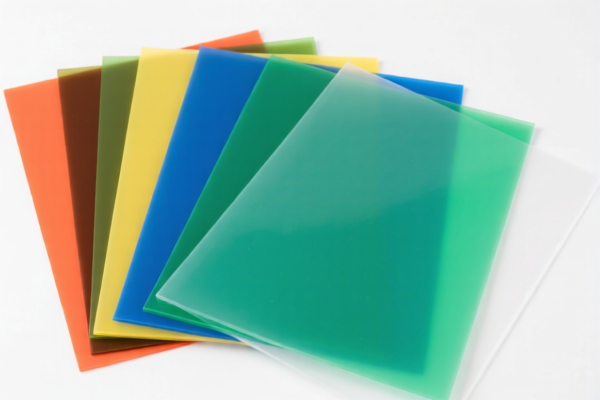
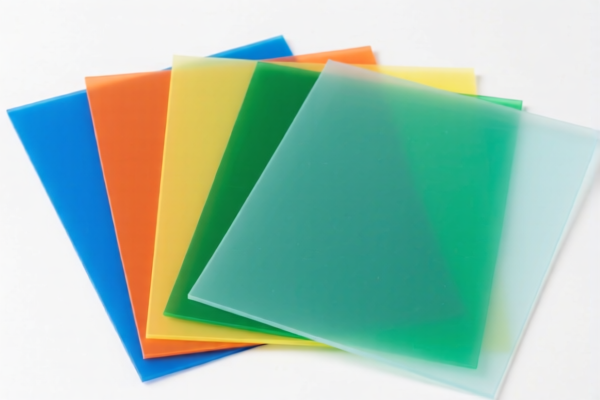
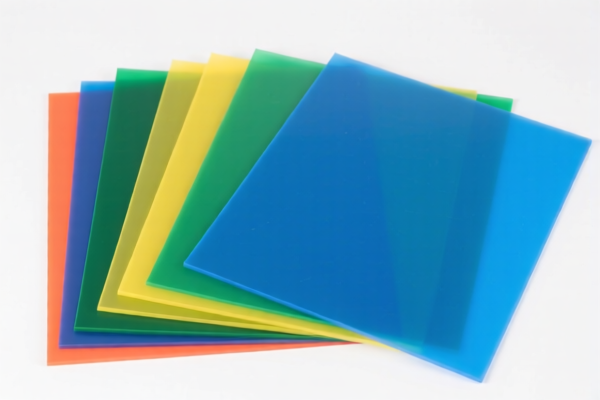
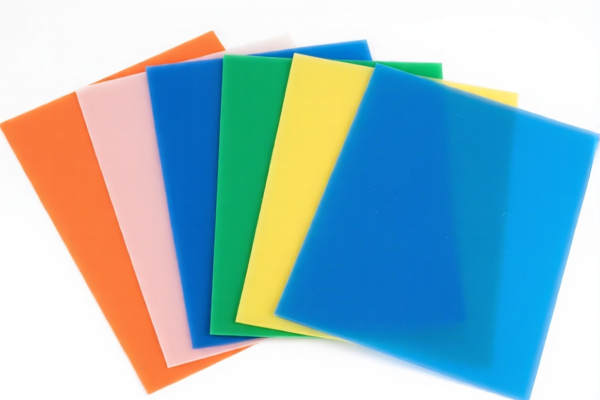
AI Analysis
🧱 Other PVC Plastic Sheets
🌐 HS Code Reference & Customs Clearance Guide | 2026 Latest Tariff Analysis | Professional-Grade Clearance Strategy
📌 I. Product Definition & Classification: What Exactly Are "PVC Plastic Sheets"?
PVC (Polyvinyl Chloride) Plastic Sheets are versatile industrial materials used in construction, signage, medical devices, and packaging. In international trade, they are primarily classified under Chapter 39 (Plastics and Articles Thereof).
However, the exact subheading depends on: 1. Thickness & Form: Are they rigid plates, thin films, or flexible sheets? 2. Reinforcement: Are they reinforced with metal, paper, or other materials? 3. Specific Use: Are they for electrical insulation, medical use, or general industrial application?
⚠️ Critical Distinction:
- Rigid Plates/Sheets → Often fall under 3920 (Non-cellular plastics, plates/sheets/film/foil) or 3921 (Other plates/sheets/film/foil).
- Reinforced Plastics → If reinforced with metal/paper, they may fall under 3921 or 3926.
- "Other" Categories → If no specific subheading fits, they fall under 3926.90 (Other plastic articles).
📦 II. HS Code Classification Details (2026 Latest Tariff Authority Comparison)
| HS Code | Product Description | Application Scenario | Reinforcement |
|---|---|---|---|
3921.19.00.90 |
Other plates, sheets, film, foil and strip, of plastics | Rigid PVC sheets, non-reinforced, general industrial use | ❌ No |
3921.90.50.50 |
Other plates, sheets, film, foil and strip, of plastics | PVC sheets with specific properties not covered elsewhere | ❌ No |
3926.90.99.87 |
Other articles of plastics and articles of other materials of heading 3901 to 3914 | PVC sheets deemed "other" or n.e.s. (not elsewhere specified) | ❌ No |
3926.90.99.89 |
Other articles of plastics and articles of other materials of heading 3901 to 3914 | PVC sheets classified as "other plastic articles" | ❌ No |
3920.99.50.00 |
Other plates, sheets, film, foil and strip, of plastics | PVC sheets not specified in other 3920 subheadings | ❌ No |
🔍 Key Reminder:
- 3920 vs. 3921: 3920 is for non-cellular plastics (rigid/flexible sheets). 3921 is for "other" plastic plates/sheets, often including reinforced or composite materials.
- 3926: Used as a "catch-all" for plastic articles that don’t fit into the "plates/sheets" categories (3920/3921) or when the product is considered an "article" rather than a raw sheet material.
- No Material Conflict: All codes above are compatible with PVC (Plastic) material.
💰 III. 2026 Latest Tariff Rate Details (Including Additional Taxes & Policy Add-ons)
✅ Applicable Country: United States (US)
✅ Country of Origin: China (CN)
✅ Effective Date: November 10, 2025 (Including subsequent imports)
🎯 1. 3921.19.00.90 —— Other Plastic Plates/Sheets (Non-Cellular)
| Item | Content |
|---|---|
| Base Tariff | 6.5% |
| Section 301 Additional Tariff | +25.0% |
| Section 122 Tariff | +10.0% |
| Total Tariff Rate | 41.5% |
| Tax Calculation | CIF Value × 41.5% |
| De Minimis Eligible? | ❌ No (deny_de_minimis) |
| Legal Basis Path | Base: 3921.19.00.90 → Section 301: 25% → Section 122: 10% |
📌 Explanation:
- 6.5% is the standard MFN (Most Favored Nation) duty for PVC sheets under 3921.
- +25% is the Section 301 tariff imposed on Chinese goods.
- +10% is the Section 122 tariff (national security-related).
- Total: 41.5% – A high-cost category. Pre-clearance planning is essential.
🎯 2. 3921.90.50.50 —— Other Plastic Plates/Sheets (Specific Properties)
| Item | Content |
|---|---|
| Base Tariff | 4.8% |
| Section 301 Additional Tariff | +25.0% |
| Section 122 Tariff | +10.0% |
| Total Tariff Rate | 39.8% |
| Tax Calculation | CIF Value × 39.8% |
| De Minimis Eligible? | ❌ No (deny_de_minimis) |
| Legal Basis Path | Base: 3921.90.50.50 → Section 301: 25% → Section 122: 10% |
📌 Note:
- Slightly lower base rate (4.8%) than 3921.19.00.90, but still subject to the same 35% in additional tariffs.
- Total 39.8% remains high. Ensure product specifications match this subheading precisely.
🎯 3. 3926.90.99.87 —— Other Plastic Articles (Catch-All)
| Item | Content |
|---|---|
| Base Tariff | 5.3% |
| Section 301 Additional Tariff | +7.5% |
| Section 122 Tariff | +10.0% |
| Total Tariff Rate | 22.8% |
| Tax Calculation | CIF Value × 22.8% |
| De Minimis Eligible? | ❌ No (deny_de_minimis) |
| Legal Basis Path | Base: 3926.90.99.87 → Section 301: 7.5% → Section 122: 10% |
📌 Advantage:
- Significantly lower total tariff (22.8%) compared to 3921/3920 codes.
- This is because Section 301 additional tariff is only 7.5% for this subheading (vs. 25% for others).
- Strategic Note: If your PVC sheets can be reasonably classified under "other plastic articles" (e.g., customized shapes, specific industrial components), this code offers major cost savings.
🎯 4. 3926.90.99.89 —— Other Plastic Articles (Catch-All Variant)
| Item | Content |
|---|---|
| Base Tariff | 5.3% |
| Section 301 Additional Tariff | +7.5% |
| Section 122 Tariff | +10.0% |
| Total Tariff Rate | 22.8% |
| Tax Calculation | CIF Value × 22.8% |
| De Minimis Eligible? | ❌ No (deny_de_minimis) |
| Legal Basis Path | Base: 3926.90.99.89 → Section 301: 7.5% → Section 122: 10% |
📌 Note:
- Identical tariff structure to3926.90.99.87.
- Used when the product doesn’t fit the specific criteria of 87 but still falls under "other plastic articles."
- Total: 22.8% – Highly competitive for cost optimization.
🎯 5. 3920.99.50.00 —— Other Non-Cellular Plastic Plates/Sheets
| Item | Content |
|---|---|
| Base Tariff | 5.8% |
| Section 301 Additional Tariff | +25.0% |
| Section 122 Tariff | +10.0% |
| Total Tariff Rate | 40.8% |
| Tax Calculation | CIF Value × 40.8% |
| De Minimis Eligible? | ❌ No (deny_de_minimis) |
| Legal Basis Path | Base: 3920.99.50.00 → Section 301: 25% → Section 122: 10% |
📌 Explanation:
- Classified under 3920 (Non-cellular plastics), which carries the full 25% Section 301 tariff.
- Total 40.8% is among the highest.
- Avoid this code unless your product is strictly a non-cellular PVC sheet without reinforcement.
🛠️ IV. Customs Clearance Practical Advice (Real-World Pitfall Avoidance Guide)
✅ 1. Document Preparation Checklist (None of These Can Be Omitted)
| Document | Required | Description |
|---|---|---|
| ✅ Product Specification Sheet | ✔️ | Dimensions, thickness, weight, material composition (100% PVC?), surface finish |
| ✅ Material Safety Data Sheet (MSDS) | ✔️ | Critical for PVC due to chemical composition |
| ✅ Product Photos | ✔️ | Clear images of sheets, rolls, packaging, and any markings |
| ✅ Commercial Invoice | ✔️ | Must explicitly state "PVC Plastic Sheets" and HS Code |
| ✅ Packing List | ✔️ | Detail weight, dimensions, and number of packages |
| ✅ Certificate of Origin (CO) | ✔️ | If claiming preferential treatment (not applicable here due to US-China tariffs) |
| ✅ Third-Party Test Report | ✔️ | ASTM, ISO, or RoHS compliance if applicable |
✅ 2. Declaration Tips (Key Mantra)
🔥 "Material + Form + Use = Accurate HS Code. Don’t Guess, Specify!"
| Scenario | Correct Declaration | Incorrect Practice |
|---|---|---|
| Rigid PVC Sheets (Non-reinforced) | 3920.99.50.00 or 3921.19.00.90 |
Misclassifying as "Plastic Parts" → Higher duty |
| Reinforced PVC Sheets | 3921.90.50.50 |
Calling it "Plastic Article" → Risk of misclassification |
| Custom-Shaped PVC Components | 3926.90.99.87 / 3926.90.99.89 |
Calling it "Sheet" → Higher duty (41.5% vs 22.8%) |
| PVC Films (Thin) | Check subheading for film vs. sheet | Confusing film with sheet → Classification error |
✅ 3. Special Case Handling
| Scenario | Handling Advice |
|---|---|
| Custom-Cut PVC Sheets | If cut into specific shapes for end-use, consider 3926 for lower tariffs. Provide design specs. |
| Reinforced PVC Sheets | If reinforced with metal/paper/fabric, must declare under 3921. Do not misclassify as plain PVC. |
| PVC Rolls vs. Sheets | Ensure declaration matches physical form. Rolls may have different subheadings. |
| Medical/Grade PVC | If used for medical devices, ensure compliance with FDA standards. May still fall under 3920/3921. |
🌍 V. Global Market Clearance Comparison (2026 Latest)
| Country/Region | Recommended HS Code | Tariff | Certification | Notes |
|---|---|---|---|---|
| 🇺🇸 USA | 3926.90.99.87 |
22.8% | None specific | Lowest tariff option for PVC sheets/articles |
| 🇪🇺 EU | 3920.99.00.00 |
~6.5% | REACH, RoHS | No additional Section 301/122 tariffs |
| 🇨🇳 China | 3921.19.00.90 |
6.5% | CCC (if applicable) | Base rate only |
| 🇬🇧 UK | 3920.99.00.00 |
~6.5% | UKCA | Post-Brexit standards apply |
| 🇯🇵 Japan | 3920.99.00.00 |
~4-6% | JIS | Low base tariffs |
📌 Conclusion:
- USA has the highest effective tariffs due to Section 301 and 122.
- EU/UK/Japan offer much lower base rates.
- Strategy for US Imports: Optimize classification under 3926 to reduce tariffs from ~41% to 22.8%.
📌 VI. Common Mistakes & Pitfall Guide (Lessons Learned)
❌ Mistake 1: Declaring custom-shaped PVC parts as "Plastic Sheets"
👉 Consequence: Classification under 3920/3921 → 41.5% tariff.
✅ Fix: If part is shaped for specific use, classify under 3926 → 22.8% tariff.
❌ Mistake 2: Ignoring Section 122 Tariff
👉 Consequence: Underpayment by 10% → Penalties + Back Taxes.
✅ Fix: Always include Section 122 in total cost calculation.
❌ Mistake 3: Misidentifying "Reinforced" PVC Sheets
👉 Consequence: If reinforced, must use 3921. Misclassification → Audit Risk.
✅ Fix: Clearly state material composition (e.g., "PVC reinforced with fiberglass").
❌ Mistake 4: Assuming "Plastic Sheets" = One HS Code
👉 Consequence: Overpayment or underpayment due to wrong subheading.
✅ Fix: Evaluate thickness, reinforcement, and end-use to select the most accurate code.
🎯 VII. Conclusion: Professional Declaration, Cost Efficiency, Risk Mitigation!
🎯 Remember the Mantra:
🔹 "Shape & Use Matter: Sheets to 3920/3921 (High Tax), Articles to 3926 (Low Tax)."
🔹 "Section 301 & 122 Double-Whammy: 25% + 10% on Sheets, Only 7.5% + 10% on Articles."
🔹 "Total Tariff Range: 22.8% (3926) vs. 41.5% (3920/3921). Choose Wisely!"
📌 Pro Tip:
If your PVC sheets are custom-cut, shaped, or intended for specific industrial applications, consider declaring under 3926.90.99.87 or 3926.90.99.89 to save ~19% in tariffs.
👉 Action: Consult a customs broker to confirm if your product qualifies as an "article" rather than a "sheet."
📣 Immediate Action:
📞 Engage a licensed customs broker + Provide product specs + Apply for Pre-Ruling (Ad Valorem) if uncertain.
🚀 Clear your PVC sheets efficiently, minimize duties, and maximize profit!
✨ Professional clearance starts with precise classification!
💼 Every percentage point saved is pure profit!
Customer Reviews
About HS Code Classification
The Harmonized System (HS) is an internationally standardized nomenclature developed by the World Customs Organization (WCO) to classify traded products. Over 200 countries use the HS system as the basis for customs tariffs, trade statistics, and import/export regulations.
Each HS code follows a hierarchical structure:
- Chapter (2 digits) — Broad category of goods (e.g., Chapter 84: Machinery and Mechanical Appliances)
- Heading (4 digits) — More specific grouping within the chapter
- Subheading (6 digits) — Internationally standardized breakdown, used by all WCO member countries
- National subdivisions (8-10 digits) — Country-specific extensions for further classification, such as US HTSUS 10-digit codes
Correct HS code classification is essential for smooth customs clearance, accurate duty payment, and compliance with trade regulations. Misclassification can lead to customs delays, overpayment of duties, or penalties.
When importing from CN to US, the applicable tariff rates may include:
- Most-Favored-Nation (MFN) rate — The standard duty rate applied to WTO members
- General rate — Applied to countries without trade agreements
- Trade remedy duties — Additional tariffs such as Section 301 (anti-dumping), Section 232 (national security), or countervailing duties
The information provided on this page is for reference purposes only. For official classification, please consult with your local customs authority or a licensed customs broker.